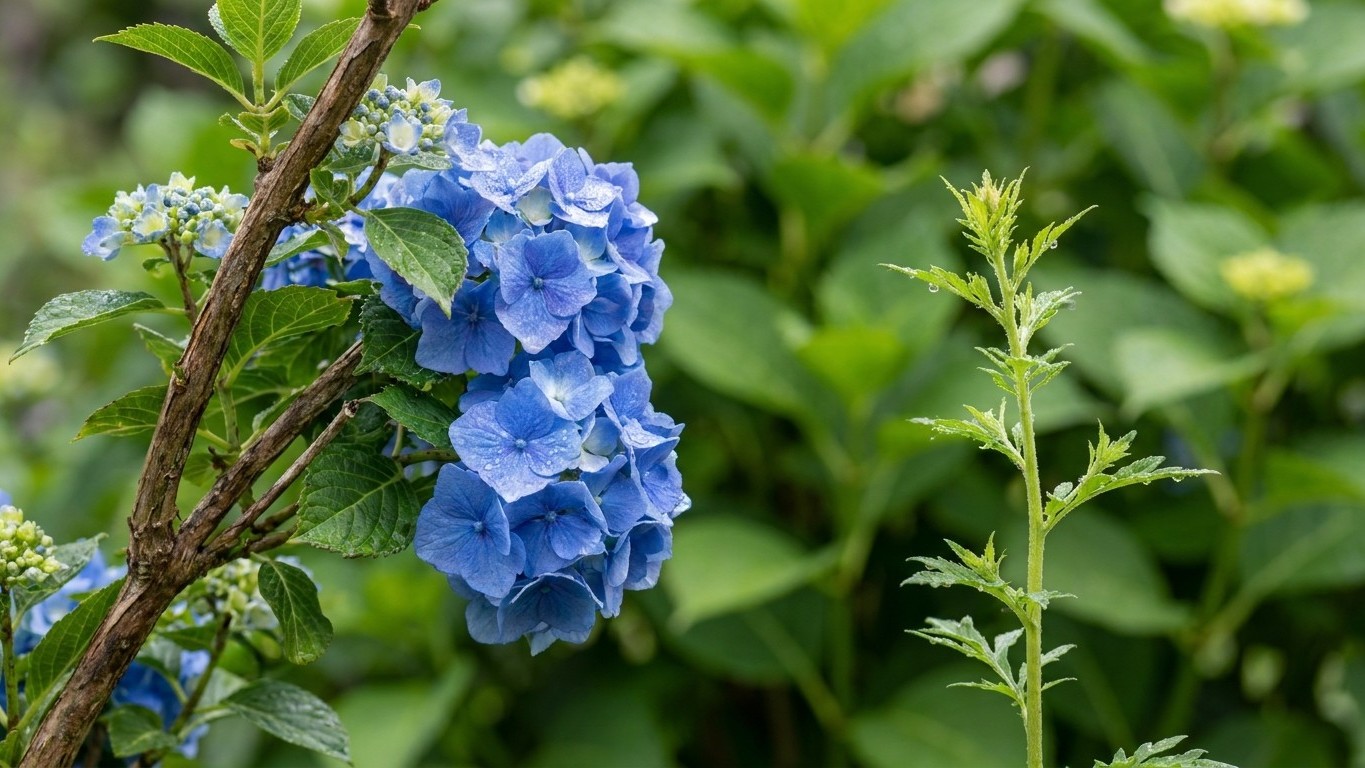

Most hydrangeas in Rhode Island need little more than a mulch ring and a deep watering before the ground freezes. Bigleaf types are the exception. They set next summer’s flower buds on this year’s stems, so a hard winter can cost them every bloom. Panicle and smooth hydrangeas flower on new growth and bounce back from nearly any winter. Protecting the old wood on the bigleaf types is most of the job.
What this comes down to in Rhode Island

At Providence, the reference city for the frost dates here, the first fall frost arrives between October 24 and November 3, and the last spring frost falls between April 7 and April 17 (NOAA NCEI U.S. Climate Normals, 32°F freeze probabilities). That leaves hydrangeas exposed to freezing nights for the better part of half the year, so protection goes on after the leaves drop and comes off in stages once the April window passes.
Those dates come from an airport weather station. Suburban and rural yards often see the last spring frost a week or two later and the first fall frost a week or two earlier, and hilltops can run further behind.
Which hydrangeas lose flowers to winter cold?
Bigleaf hydrangeas (Hydrangea macrophylla), the mopheads and lacecaps with blue or pink flowers, form flower buds at the stem tips by late summer. Nikko Blue is a classic example. A stem killed back over winter takes its buds with it, and the plant leafs out from the base with plenty of foliage and no flowers. Reblooming bigleafs such as the Endless Summer line flower on both old and new wood. A bad winter can delay their show, but it rarely erases it. Oakleaf hydrangeas also bloom on old wood, though their buds hold up better against cold.
Panicle types such as Limelight and smooth types such as Annabelle bloom on wood grown in the current season. They can freeze to the ground and still flower that summer. They only need a few inches of mulch over the roots in their first two winters.
How does winter damage the buds?
Midwinter cold is only part of the story. The USDA Plant Hardiness Zone Map puts the state at 6b to 7b, a range built on one variable, the average annual extreme minimum temperature. It says nothing about thaw cycles, drying wind, or a freeze after buds have started to swell. Those three can injure bigleaf buds as much as, or more than, a single cold night does. A mild spell in late winter wakes the plant up, and the next hard freeze catches tender tissue.
Working it out for your own garden
A fixed calendar date will not survive a move or an odd year. A method that starts from your own yard will.
How do you time winter protection for your yard?
Start with the frost window and adjust it. At Providence the first fall frost falls between October 24 and November 3. A yard in the interior or on a hillside runs one to two weeks earlier, so its window opens in mid-to-late October. Mulch and cages go on after that window opens, once the leaves have dropped and the soil surface stiffens on cold nights. A deep watering a few days before the ground freezes sets the plant up for the winter.
Coming off works the same way in reverse. Providence’s last spring frost falls between April 7 and April 17. Add a week or two for a suburban or inland yard and you land between mid-April and the start of May. Open the cage and pull back the mulch gradually across that stretch. Keep a bedsheet or frost cloth handy until the window has clearly passed.
Will a bigleaf hydrangea bloom after a hard winter?
Take a Nikko Blue mophead in an exposed backyard. Its buds were formed last August, and they sit on stems that have to survive until June. With no protection, stems often die back to the snow line or lower, and the plant gives a mound of leaves and no flowers. Surround the same shrub with a wire cage and fill it with shredded leaves or pine needles, and the upper buds usually make it through. An Endless Summer type in the same spot may lose its early flowers but should still bloom later from new growth. Limelight in that spot needs no cage at all. The line falls at old-wood bloomers, and the less cold-tolerant the plant, the more the cage matters.
How can you tell what actually went wrong in spring?
Scratch a stem with a thumbnail. Green underneath means it is alive. Brown and dry means it is dead. Buds that are plump and green are fine. Wait until the shrub has leafed out, which can run into May, before cutting anything, because bigleafs are slow to wake. Blackened, wilted tips on new leaves point to a late frost. Healthy leaves with no buds usually point to dead old wood, fall pruning, or too much shade.
What changes across the state
Rhode Island is small, but the 6b to 7b zone range shows how much its winters vary. The bay and the south coast hold heat from the water into late fall and release it slowly in spring. Frosts there can come later in autumn and earlier in spring than the Providence figures, so check your own county.
Does the coast need different protection than the inland hills?
Coastal yards face a different problem. Wind and salt spray dry out stems and buds, and a burlap windscreen on the exposed side often does more than extra mulch. Bigleafs do well near the water in summer, but their winter buds still need shelter from wind that comes straight off the ocean.
The northwestern interior is the opposite. Elevation, open fields and cold air draining into low spots bring earlier fall frosts, later spring frosts, and colder minimums. Gardeners there should plan on a full cage for any bigleaf and a longer wait before uncovering it.
Do microclimates inside one yard matter?
They matter a good deal. A hydrangea on the south side of a house, out of the wind, can sit through a winter that kills the same variety in an open lawn. A plant in a low corner where cold air settles is more exposed than the same plant ten feet uphill. Dense urban areas hold some warmth as well. Where a shrub sits can shift its odds more than the choice of mulch does.
The mistakes this state punishes

What goes wrong with covering too early or too tightly?
Mulching in October while the soil is still warm invites voles and mice to nest in the cozy pile. Wrapping a shrub in plastic traps moisture and heat on sunny days, then lets buds freeze hard overnight. Use a breathable cover such as burlap or an open wire cage filled with dry leaves, and wait until the weather has turned. A plastic bag over the shrub is the one thing to skip entirely.
Uncovering all at once is the other common slip. A warm week in late March tempts people to strip everything off. A frost in the first half of April, still inside the reference window, can then hit tender new growth. Open the cage in steps and keep frost cloth ready.
What goes wrong with pruning and feeding at the wrong time?
Cutting bigleaf hydrangeas back in fall removes the buds you want to protect. Leave old stems standing until spring, then trim only what is clearly dead. Late-summer fertilizer pushes soft growth that has no time to harden before frost. Stop feeding by midsummer.
Planting a young shrub in late autumn is risky too. A plant that has not had time to root in cold ground heaves out of the soil during repeated freezes and thaws. Plant in spring or early fall, and give new shrubs extra mulch for their first winter.
Checking this against your county
The Providence figures are a starting point, not an instruction for your yard. Local frost dates can shift by a week or two, and your soil, slope and wind exposure all matter. The University of Rhode Island Cooperative Extension can tell you what your own area runs like. For general care, see our guide to growing hydrangeas in Rhode Island.
Common questions
Do all hydrangeas need winter protection in Rhode Island?
No. Panicle and smooth hydrangeas bloom on new wood and need only a mulch layer. Bigleaf hydrangeas, and to a lesser degree oakleaf, benefit most from cages and wind shelter because their flower buds overwinter on the stems.
When should I put protection on and take it off?
Apply it after the first fall frost window opens and the leaves have dropped. At Providence that window runs from October 24 to November 3, and inland yards usually see it a week or two sooner. Remove protection gradually once the April 7 to April 17 spring window passes, adding a week or two for inland or higher ground.
Is burlap or plastic better for wrapping a hydrangea?
Burlap, or an open cage stuffed with dry leaves or pine needles. Both let air move through. Plastic traps moisture and heat and can damage buds.
My hydrangea looks dead in April. Should I cut it back?
Wait. Bigleafs are slow to leaf out. Scratch a stem to check for green tissue, and prune only the wood that stays brown after the shrub has leafed out, often by May.