
Shallots grow well in Rhode Island, and the decision that matters most is when to plant. Spring sets can go in once the bed is workable, which around Providence means the early-to-mid April frost window. Autumn planting also works, with winter wet as the main risk. The sections below cover the dates, the length of the season, the heat and water picture, and how to choose a type.
When the soil is warm enough in Rhode Island
At the Providence airport station in NOAA’s 1991-2020 U.S. Climate Normals, the last spring 32°F freeze falls between April 7 and April 17. That is the band where the chance of a freeze sits between 30 and 70 percent, and like any frost date it is a probability, not a promise. It is also a reference-city figure. Suburban and rural gardens typically see the last spring frost later, often by one to two weeks, and higher ground more, so check your own county before you mark a calendar.
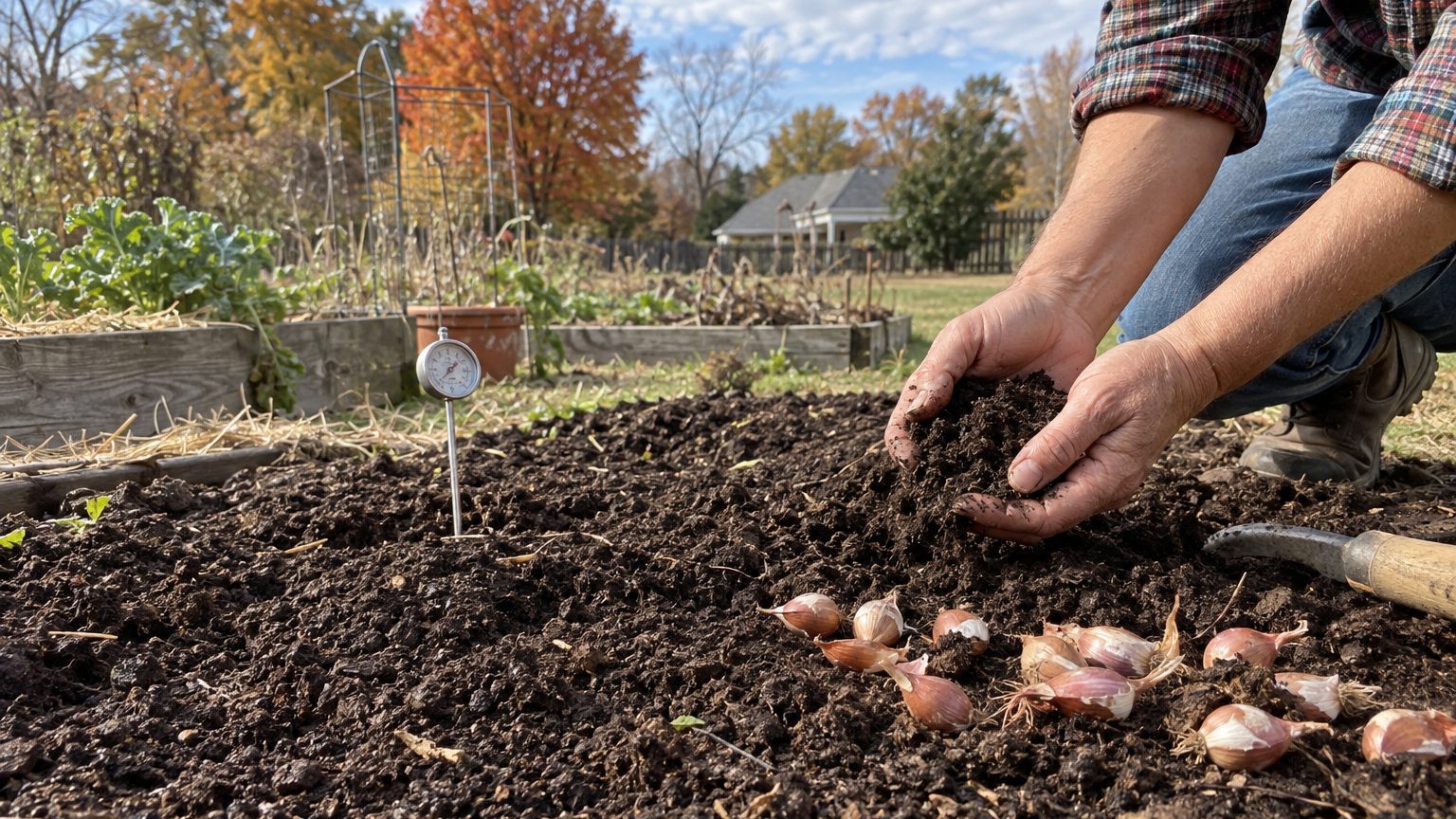
The frost date is a stand-in for what shallots care about, which is the soil. Shallots shrug off a light frost better than most vegetables, but their roots need ground that has thawed, drained, and begun to warm. Soil warms after the frost risk ends, not with it. A bed can sit cold and soggy for weeks after the last freezing night, especially heavy clay or a spot that stays in shade until midmorning. Sets pushed into that bed mostly sit and sulk, and some rot.
A better test than the calendar is a squeeze. Grab a handful from planting depth. If it crumbles, the bed is ready. If it smears into a sticky ball, wait a few days. A soil thermometer adds a number to that judgment, and your state extension service can tell you the soil temperature it recommends for spring alliums. The University of Rhode Island runs that service, and University of Rhode Island Cooperative Extension is the place to ask.
Autumn planting follows much the same logic as garlic. What differs for shallots is size. A shallot set is smaller than a garlic clove and sits shallower, which makes it easier for repeated freezing and thawing to push it up out of the ground. After a hard thaw, walk the bed and press any lifted sets back into the soil.
Rotation is the other shared rule. Shallots are alliums, so they should not follow onions, garlic, or leeks in the same bed if you can help it. The general method is in Growing Shallots: One Bulb In, a Handful Out.
The ones that perform in Rhode Island are the ones trialled here, and your extension office has that list.
How long the season lasts here
The first fall frost at the same Providence station arrives between October 24 and November 3. Set that against the spring window and the arithmetic is simple. April 7 to October 24 is 200 days, and April 17 to November 3 is also 200. Pair the earliest spring date with the latest fall one and you get 210 days. Pair the latest spring with the earliest fall and you get 190. So the frost-free stretch at the airport runs about 190 to 210 days.
That is the airport, not your yard. If a rural garden sees its last frost one to two weeks later and its first one to two weeks earlier, the window shrinks by roughly two to four weeks. Even so, it is a generous season for a crop that does most of its growing in cool weather.
A long window allows more than one planting. A spring planting of sets for bulbs fits easily, with room for the tops to fall over and the bulbs to cure before autumn weather turns damp. Green shallots, harvested young for their tops, can be staggered every few weeks through spring, because they do not need to reach full size. The autumn planting for next year’s bulbs is, in effect, the second sowing of the year.
Length also settles whether transplanting is worth the effort. Shallots grown from seed need a head start, and with a window this long you can start them indoors and move them out as the bed warms. Transplanting only pays if you check the roots first. Slide a seedling out of its cell and look for white, branching roots rather than a dense circling mat. Pot-bound seedlings recover slowly. Sets planted directly skip that step entirely. In a short-season garden, which for Rhode Island means a cold inland site on the late side of those frost dates, the margin is thinner, and a root-checked transplant can be worth the extra work. At a coastal site near the reference station, sets in the ground by spring are usually enough.
Heat and water in Rhode Island
What can be said is that a New England state with Atlantic influence tends to have heat spells rather than a heat season, and the more common summer trouble for alliums is humidity and wet stretches. The hot-climate advice of shade cloth and deep daily watering is not the main story here.
A cool, damp summer brings its own list of problems. Foliar diseases such as downy mildew like long wet leaves. Tops stay green and refuse to fall over on schedule, so ripening drags. Bulbs lifted in a wet spell are hard to cure and more prone to neck rot in storage. Give plants room and air by thinning crowded clumps, keep the bed weeded, water at the soil rather than over the leaves, and stop irrigating as the tops begin to yellow. A layer of mulch keeps roots cooler during a hot spell and the soil from splashing onto leaves in a downpour.
Winter decides the autumn-versus-spring question. The mean daily minimum of the coldest month at Providence is 22.1°F (NOAA Climate Normals, 1991-2020). That means nights regularly drop well below freezing, though the average low is far from brutal. The USDA Plant Hardiness Zone Map 2023 puts Rhode Island at 6a to 7b, a range, so inland and elevated spots run colder than the coast. The bulbs themselves are not the worry. Wet, frozen ground is what rots or heaves autumn-planted sets.
| Planting time | What it gives you | What can go wrong |
|---|---|---|
| Autumn | Roots established before winter, bigger and earlier bulbs in a milder winter | Rot in wet soil, heaving after freeze-thaw cycles |
| Spring | Safer on heavy or poorly drained ground and colder inland sites | Smaller, later bulbs, and harvest running into damp summer weather |
My read is that autumn planting suits well-drained or raised beds, especially near the coast, with a mulch layer over the top. Spring is the safer call on heavy clay, low spots, and colder inland gardens. If you cannot decide, split the planting. For contrast, Growing Shallots in Iowa deals with a much harsher winter, and Growing Shallots in Kansas deals with a hotter, drier summer.
Which shallots suit Rhode Island
Choose by type, using the territory’s own conditions as the guide. Humidity comes first. In a state where summers can stay damp and dew lingers on the leaves, disease tolerance should be the leading criterion. Look for trial notes on foliar disease and neck rot rather than a catalog’s general claims of toughness.
A long window of roughly 190 to 210 days at the reference station means you do not have to hunt for the very earliest-maturing types, but inland gardens with later springs and earlier falls should lean toward them. Earlier types also finish before late-summer humidity peaks, which helps at harvest and curing time. Heat is a minor factor here, though plants in a hot spell still benefit from mulch, airflow, and shade at the root.
There is also the choice between sets and seed. Sets are the simpler route and give a more predictable bulb. Seed-grown types need an early start indoors and a root check at transplant, but they can offer more variety and a clean start from disease carried in older stock. Keep seed and sets separate from your garlic and onion beds for rotation.
A variety that performs well in one climate can fail in another, and the only recommendation that carries weight is one tested in Rhode Island soil and weather. The trial results are held by University of Rhode Island Cooperative Extension, and a call or visit there will tell you more than a catalog will.
Whatever you plant, curing and storage need honest inspection. Cure bulbs in a dry, shaded, well-ventilated place, and handle them gently. Before storing, check each bulb. A neck that is still soft or damp, or a base showing mold, ends the question for that bulb: discard it. A bulb that looks fine on the outside is not proof that it is sound. Shallots follow it with smaller bulbs and a little less margin for error.
Common questions
Can I plant shallots in the fall in Rhode Island?
Yes, in well-drained soil. The coldest-month mean minimum at Providence is 22.1°F, so winters are cold but not extreme at the reference station. Mulch the bed and check after thaws, because wet ground and freeze-thaw cycles are what rot or heave sets. Heavy clay and colder inland sites favor spring planting.
What is the last frost date in Rhode Island?
At the Providence airport station, the last spring 32°F freeze falls between April 7 and April 17, according to the NOAA 1991-2020 normals. Suburban and rural gardens typically see the last frost one to two weeks later, and more at elevation, so check your county.
Do I have to wait for the last frost to plant spring shallots?
Not strictly, since shallots tolerate light frost. What they need is workable soil that crumbles in your hand and is not waterlogged. Cold, saturated ground is the real hazard, and the frost window is a rough marker for when it starts to ease.
How do I know my shallots are cured and safe to store?
Look at the neck and the base. The neck should be dry and tight, and the base should be firm with no mold. A soft neck or a moldy base means the bulb should be discarded, however good the rest looks. No keeping time can be promised, so check stored bulbs regularly and remove any that start to soften.