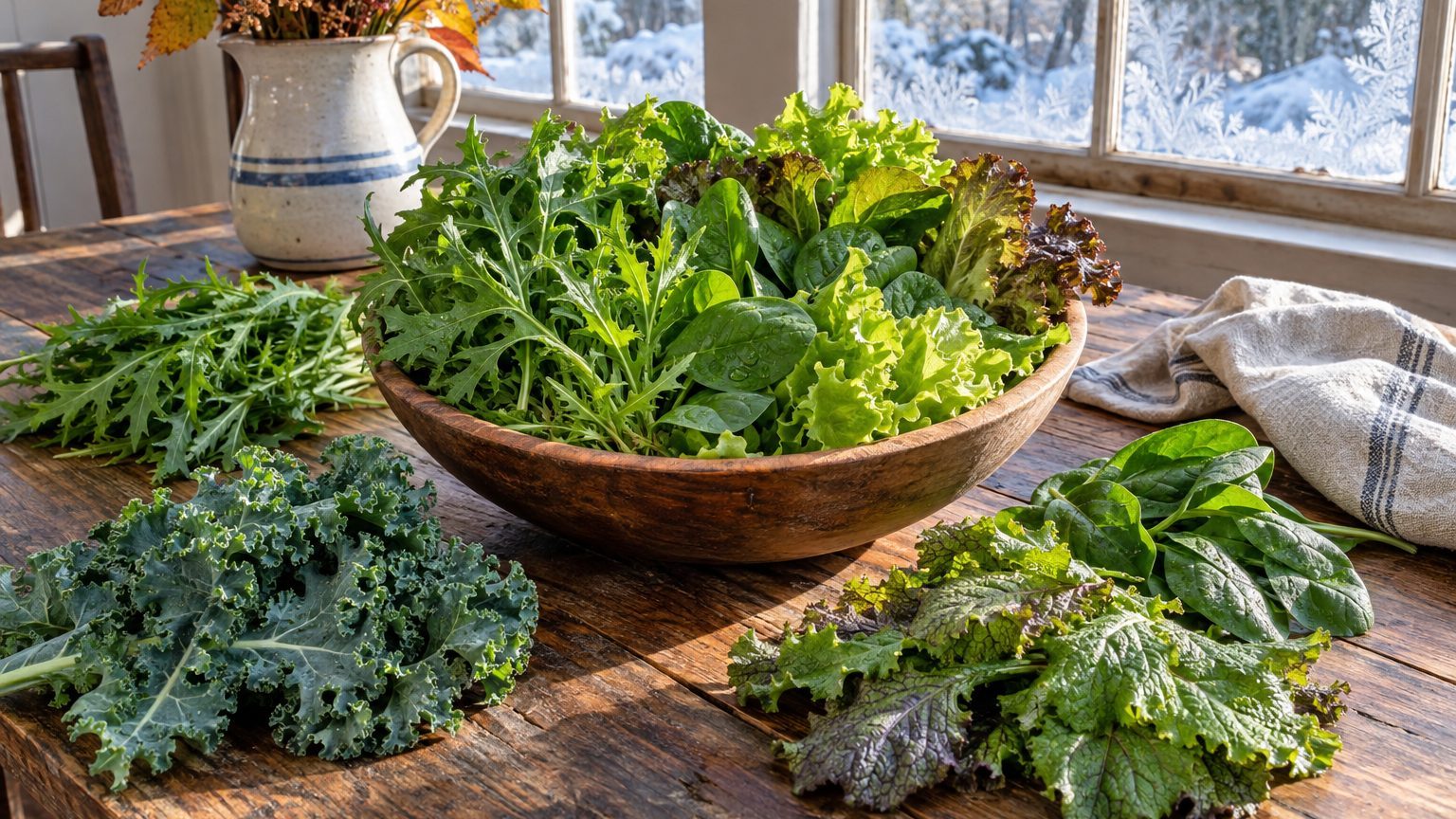

The best winter salads for Rhode Island are the cold-hardy greens: mâche, spinach, claytonia, kale and the toughest Asian mustards, with row cover over the rest. In Providence the coldest month averages a daily low of 22.1°F, which these crops shrug off and unprotected lettuce does not. Choose by type first, variety second, and sow in early fall so the plants are nearly full size before the short days arrive.
The short answer for Rhode Island
The Providence reference station puts the first fall freeze (32°F) somewhere between October 24 and November 3, the band where the odds run from 30 to 70 percent. The last spring freeze falls between April 7 and April 17 on the same measure. Those are airport numbers. Suburban and rural gardens usually freeze later in spring and earlier in fall, often by one to two weeks, and more so on hills. A garden inland may see its first hard freeze in mid-October.
The first freeze matters less for salads than for tomatoes. The hardy greens keep going through it. What stops them is light. Once days shorten in late fall, growth nearly halts. Whatever size a plant reaches by then is the size you harvest all winter, so the work happens in September and early October.
Which winter salad greens are the hardiest here?
Mâche (corn salad), spinach and claytonia (miner’s lettuce) take the top spots. A mean daily low of 22.1°F in the coldest month is well within what they tolerate, and they often come through January in the open, though a light cover keeps the leaves cleaner. Kale and collards also sweeten after frost, and small leaves of kale make a fine salad. Choose winter-labeled spinach and mâche varieties, since they are bred to stay low and tolerate cold.
Which ones need a cover?
Lettuce, arugula, mizuna, tatsoi and endive want protection once nights fall into the low 20s. A floating row cover over hoops or a cold frame adds several degrees and keeps wind off the leaves. Escarole and radicchio sit in the middle, tougher than leaf lettuce but happiest under cover.
| Type | Cold tolerance | Setup for Rhode Island |
|---|---|---|
| Mâche, claytonia, spinach | Highest | Open bed, or a light cover in January |
| Kale, collards (baby leaves) | High | Open bed; flavor improves after frost |
| Mizuna, tatsoi, arugula | Moderate | Row cover or low tunnel |
| Escarole, radicchio, endive | Moderate | Cover from the first hard freeze |
| Lettuce (cold-hardy types) | Lower | Cold frame or tunnel, vented on sunny days |
For a first winter, a four-type bed covers most of the risk: one hardy green in the open, one under row cover, one lettuce in a frame, and kale at the edge. Each handles a different kind of weather.
What will not work here

Tender lettuce left in an open bed through January is the usual failure. A coldest-month average low of 22.1°F means plenty of nights well below that, and the soft leaves of summer lettuce turn to mush after a few of them. Cold-hardy lettuce types do better, but they still need a frame or tunnel in this climate.
Why does sowing too late fail in Rhode Island?
Plants started in late October or November never reach harvest size before the light fades. A bed sown then sits as tiny seedlings until late February, then bolts or gets eaten before it produces much. Slow crops suffer most: heading radicchio, big-headed endive and anything that needs a long season of growth. If the first freeze can arrive as early as October 24 (and sooner inland), the best sowing window for most salads closes in early to mid-September, and for the quickest crops, by the end of that month. The When to Sow Winter Salads in Rhode Island guide lays out the dates crop by crop.
Does summer heat get in the way of fall sowing?
Yes, for lettuce. Lettuce seed often refuses to germinate in soil that is still too warm, and early September beds can still be that warm. Sowing in the shade of taller plants, watering the row before and after sowing, or starting seed indoors for a week and transplanting solves it. Spinach has the same habit and does better once the soil cools.
Do damp, coastal conditions cause trouble?
Humid, maritime air near Narragansett Bay and the shore favors gray mold and slugs, especially on crowded plantings under cover. A frame that stays closed on a mild, wet day becomes a greenhouse for fungus. Space plants as the seed packet suggests, vent frames on any day above freezing, and pull yellowing outer leaves promptly.
Snow load is the last failure to plan for. Wet snow flattens flimsy hoops and tears row cover. Use sturdier wire or conduit hoops and brush heavy snow off the cover before it sags onto the plants.
What changes across Rhode Island
The state spans USDA hardiness zones 6a to 7b (USDA Plant Hardiness Zone Map, 2023), so there is no single answer for the whole state. That range is the average annual extreme minimum temperature, and it runs from the warmer shoreline and islands to the colder northwest corner. The Providence figures sit in the middle of the spread.
A gardener near the water often gets weeks of extra outdoor harvest. The bay moderates cold snaps, so mâche and spinach can stay in the open with only a light cover, and a low tunnel may carry mizuna or lettuce through most winters. The coast also brings wind and salt spray, so a windbreak, or at least anchored covers, is worth the effort.
In the colder northwest, the hardy greens still work, but the margins shrink. The first hard freeze comes earlier, and the soil can freeze solid for stretches. Sow a week or two sooner in the fall than the Providence-based dates suggest, put every non-hardy crop under double protection (a row cover inside a cold frame or tunnel), and lean on mâche, claytonia and spinach as the backbone of the bed. Elevation does the same thing in smaller measure: a hilltop garden can run colder than the valley below it.
The Winter Salads for Rhode Island Gardens overview covers the full list of crops, and the zone question starts with the official USDA map. Look up your own location there rather than assuming the state average applies. Gardens a few miles apart can fall into different zones, and the zone changes how much cover you need in January.
Where to check this for your own county
The University of Rhode Island Cooperative Extension is the place to confirm anything above. It is the state’s land-grant extension service, and its staff and Master Gardeners work with local conditions every year.
Two things are worth looking for. The first is a local planting calendar: sowing and transplanting dates for fall and winter crops, ideally broken out by region of the state. The second is the list of varieties that have actually been grown and compared in Rhode Island, since a variety that shines in a trial a few miles away tells you more than a catalog description. If a fall vegetable-gardening factsheet is available, read it for crop-by-crop timing, and ask about season extension with cold frames and low tunnels, which is where extension advice is most specific.
A county or local recommendation beats a state one. The dates and varieties here describe Rhode Island as a whole, and they lean on the Providence reference station. Real gardens can differ by a week or two in frost timing and by a full zone in winter cold. When the extension office gives a narrower answer for your area, follow it.
Extension offices also run soil testing and answer plant-health questions. A test in late summer shows whether the bed needs lime or compost before fall sowing, and it costs far less than losing a planting to a nutrient problem.
Checking this against your own garden
Your own observations outrank every date above. Three are worth watching, and none need any equipment.
Soil warmth by feel. In late summer and early fall, push your hand a couple of inches into the bed in the morning. If it feels cool, lettuce and spinach will germinate. If it still feels warm like bathwater, wait or shade the row. A bed that cools quickly is probably open and exposed, and one that stays warm may be sheltered by a wall or paving, which can buy you extra weeks in winter.
First true leaves. After the seed leaves come the first true leaves, which look like a miniature version of the adult plant. A fall sowing should have two or three true leaves before the days shorten sharply. If your seedlings are still at the seed-leaf stage in mid-October, they are behind, and a cover is no longer optional.
Where frost lands first. Note which tender plants, such as basil or squash leaves, blacken first, and where. A low corner that frosts a week before the rest of the yard is a cold pocket. Put your hardiest greens there and your lettuce on the warmer side near a south-facing wall.
Keep a note of the dates for a season or two. Your own first freeze and your own sowing results will refine any calendar better than a regional average.
Common questions
What is the easiest winter salad green to grow in Rhode Island?
Spinach and mâche are the easiest. Both tolerate the cold of a coldest-month average low of 22.1°F, both can be sown directly in the bed, and both keep producing small harvests through winter with little more than a light cover.
Do I need a greenhouse?
No. A cold frame or a row cover over hoops handles most of what Rhode Island winters throw at it. Reserve those for lettuce, arugula, mizuna and the other crops that need more than the hardy greens do.
When is it too late to sow winter salads?
For most types, early to mid-September is the practical cutoff. The first freeze at the Providence reference station arrives between October 24 and November 3, and colder inland spots see it sooner. Seeds sown after the days shorten tend to sit as small seedlings until spring. Mâche is the exception and tolerates a somewhat later start.
Can winter salads survive snow?
The hardy ones can, and often taste better afterward. Spinach, mâche and claytonia come through snow cover well. The danger is the weight of wet snow crushing hoops and covers, so use sturdy supports and brush off heavy accumulation.