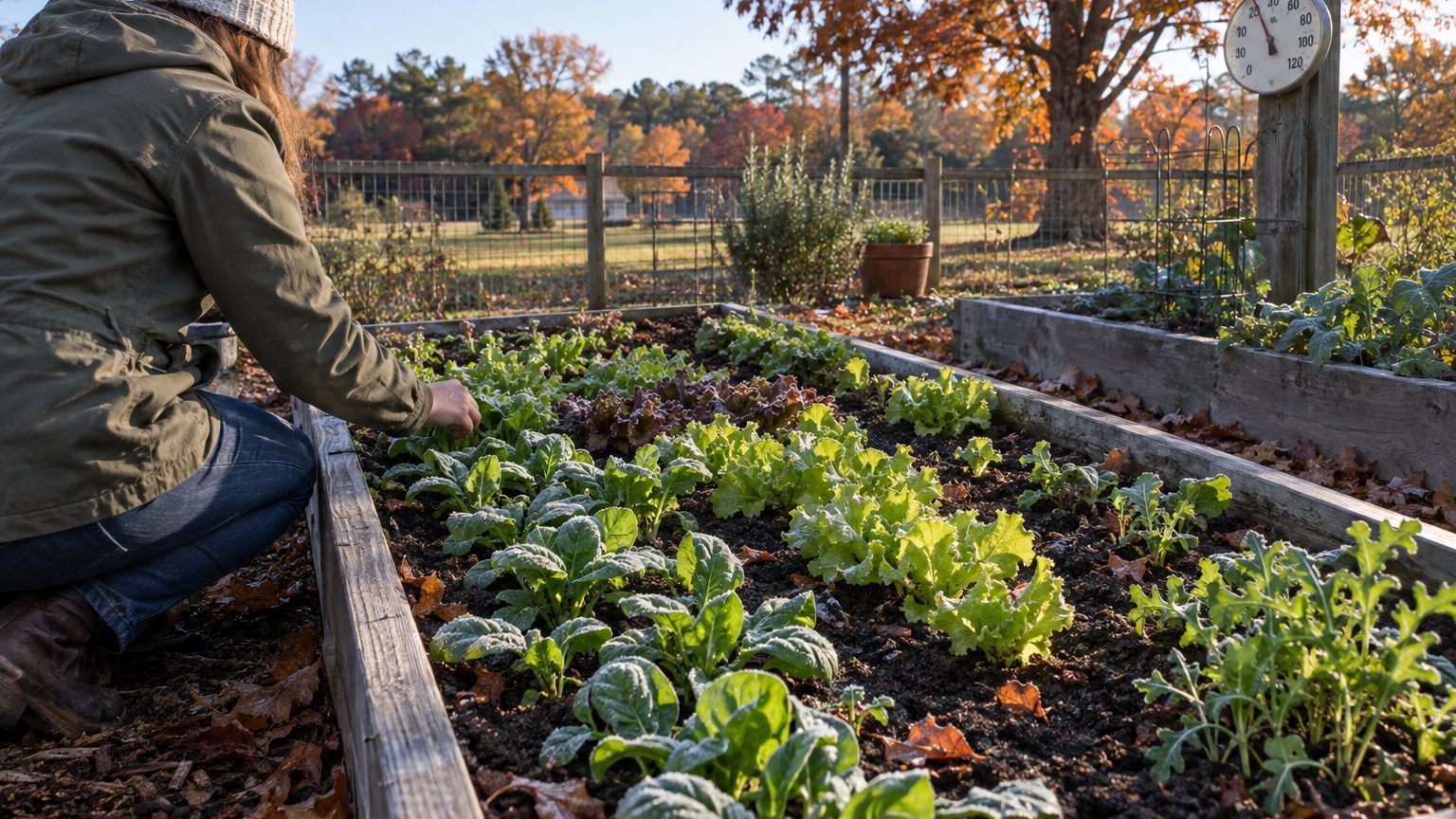

Sow winter salads in Rhode Island from mid-August to late September, with the hardiest greens going in first. By October the days are too short for seedlings to grow into harvestable plants outdoors. A second, smaller window opens in late winter under cover. For variety picks, see The Best Winter Salads for Rhode Island. The wider overview is in Winter Salads for Rhode Island Gardens.
The short answer for Rhode Island
Count backward from the first fall freeze and sow in the weeks before it, from mid-August to late September. The reference-city dates, from NOAA’s 1991-2020 U.S. Climate Normals for the Providence airport station, are April 7 to April 17 for the last spring frost and October 24 to November 3 for the first fall frost. Both are probabilities of a 32°F freeze. Each span is the band where the odds sit between 30 and 70 percent, so a freeze after April 17 or before October 24 is still possible in any given year.
The reference station has about 200 frost-free days between the mean last spring frost and the mean first fall frost. That is plenty for summer crops and more than winter salads need, but the number to watch in fall is growing light. Once days shorten in November, growth slows to a crawl. Winter salads are sown early enough to be nearly full size by then, and after that they mostly hold in the cold and get harvested leaf by leaf.
These figures come from an airport weather station. Suburban and rural gardens typically see the last spring frost later and the first fall frost earlier than the reference city, often by one to two weeks, and more at elevation. If your garden sits inland, treat October 24 as the optimistic end of the range and plan around an earlier date.
| Type of green | When to sow | Why then |
|---|---|---|
| Slower hardy greens (kale, collards, spinach) | Mid-August to early September | They need the longest run of warm days to reach size before growth slows |
| Fast hardy greens (arugula, mizuna, mâche) | Early September to late September | They mature in a few weeks, so later sowings still make it |
| Tender lettuces under a cold frame or tunnel | Early to mid-September | They grow quickly but need cover once nights drop below freezing |
| Hardy greens for spring harvest | Early to mid-October | They overwinter as small plants and take off in March |
Seed packet days to maturity on these direct-sown greens count from sowing, not from transplanting. A packet that says 50 days needs 50 days from seed in good fall growing weather, and a few extra weeks once light fades. Add that cushion before you pick a sowing date.
The second window comes in late winter. Seed sown under cover as soon as the ground can be worked gives early salad greens, and plants that overwintered resume growth on their own in March. Outdoors without cover, wait until the April 7 to April 17 band has passed for tender types.
What will not work here

Sowing outdoors in late October is the most common mistake. By then the first fall frost is days away in an average year, earlier inland. Seedlings that small do not grow into winter salad. They sit through the cold and begin producing in March, which is useful but is a spring crop. If you want to eat in December, the seed had to go in weeks earlier.
Tender lettuces without cover also fail. The mean daily minimum of the coldest month at the reference station is 22.1°F, so a typical January night already sits about ten degrees below freezing, and plenty of nights run colder. Spinach, kale, mâche and many Asian greens take that. Most butterhead and leaf lettuces turn to mush once the nights hold in the low 20s unless a cold frame or a double layer of row cover sits over them.
Why do August sowings fail in Rhode Island?
Mid-August is the start of the window, and it is also still summer. Lettuce seed often refuses to sprout in hot soil, and spinach is just as fussy. Sow in the evening, water the row daily until seedlings are up, and shade the bed with a board or a sheet of shade cloth for the first few days. Seedlings that dry out once in warm weather rarely recover. A weekly soak, which is fine for established plants, will not carry a row of seeds through a late-summer heat spell.
Humidity causes the opposite problem later. Coastal fog and damp fall air keep leaves wet, and crowded plants under a closed frame invite mildew and rot. Space seedlings at the distance on the packet rather than packing them in for a bigger harvest. Vent the frame on any day above freezing, even a cloudy one, and pull back row cover in the morning when the air is damp and mild.
Wet snow and wind can also wreck a setup that survived the cold. Low hoops with thin wire collapse under a heavy, wet snowfall, and a nor’easter will peel row cover off if the edges are only weighted with a few stones. Pin the fabric down with soil or boards, and brush snow off a tunnel before it settles.
What changes across Rhode Island
Rhode Island is small, but it does not sit in a single hardiness zone. The USDA Plant Hardiness Zone Map (2023 version, built on 1991-2020 normals) places the state anywhere from 6a to 7b. That system uses one variable, the average annual extreme minimum temperature, so it measures how cold the worst nights get rather than how long the growing season runs. With a spread of several zones, no single sowing date fits every garden.
The milder end sits along the coast and around Narragansett Bay, where water holds heat into fall. Gardens there can lean toward the late end of the window, and cold-hardy greens may keep growing longer into December. The colder end runs through the inland and northwestern parts of the state, where nights bottom out lower and the first freeze arrives earlier than the reference city’s October 24 to November 3. A reader in those areas should shift every sowing in the table about one to two weeks earlier and favor the hardiest greens.
Elevation and low spots matter too. A hilltop drains cold air downhill, while a hollow collects it, so two beds a few hundred feet apart can differ by more than the gap between two towns. Sheltered gardens beside a south-facing wall or a house foundation run warmer than open lawn.
To find where your garden falls, look up your location on the USDA Plant Hardiness Zone Map by ZIP code. Use the zone as a rough guide to how cold your worst nights get, and use the frost dates above only as a starting point.
Where to check this for your own county
University of Rhode Island Cooperative Extension is the place to confirm these windows. Look for a fall vegetable planting calendar for your area, and for any variety trial results from nearby farms or demonstration gardens. A variety that does well in a southern coastal town may struggle inland, and local trials show which ones hold up in your conditions. The Master Gardener program often has a helpline or local contacts for exactly this kind of question.
When you read a calendar there, check the frost dates it uses and the crops it covers. Some list only spring and summer vegetables. The fall and winter listings, or the notes on cold frames and row cover, are the ones that matter here.
A recommendation tied to your county or town beats a statewide one every time. Any statewide calendar, including the windows above, rests on a single airport reference station and then adds general guidance. It gets the broad picture right, but it cannot know whether your lot sits in a frost pocket, on a warm slope, or beside open water. Treat the dates in this article as a starting range and let the extension’s local numbers shift them.
Checking this against your own garden
Your own observations outrank every date here. Three are worth watching, and none needs a gadget.
- Soil warmth by feel. In late August, push your hand into the bed. If the soil an inch or two down still feels warm, like bathwater, lettuce and spinach seed will likely sit or sprout poorly, so wait or shade the bed. Check the soil temperature in each spot of the garden before sowing.
- First frost damage on tender plants. Note the morning basil, zinnias or squash vines first blacken. Compare it with the airport window of October 24 to November 3. If yours blacken earlier, your garden runs colder, and your sowing dates should move earlier too.
- First true leaves. The first true leaves are the ones after the rounded seed leaves. Note the date they appear, then check how big plants are by early November. If they are still tiny, sow earlier next year. Seedlings in one corner of a bed that lag behind another show you the warm and cool spots.
Keep a few dated notes in a notebook or on your phone, because one fall’s record becomes next year’s calendar.
Common questions
Can I still sow winter salads in October in Rhode Island?
Yes, for spring harvest. Hardy greens such as spinach sown in early to mid-October overwinter as small plants and grow quickly in March. They will not give you a December salad, because the days are too short for seedlings to size up first.
Do I need a cold frame or row cover?
For hardy greens like kale, spinach and mâche, cover helps but is not always required. For tender lettuces, it is close to necessary. With a mean coldest-month minimum of 22.1°F at the reference station, nights regularly drop well below freezing.
Does the airport frost date apply to my garden?
Only as a starting point. Suburban and rural gardens often see the last spring frost later and the first fall frost earlier than the airport, usually by one to two weeks, and more at elevation. Use the earlier end for sowing in fall.
What zone is Rhode Island?
The USDA system puts the state at 6a to 7b, based on the average annual extreme minimum temperature. Check the USDA Plant Hardiness Zone Map for your own location.