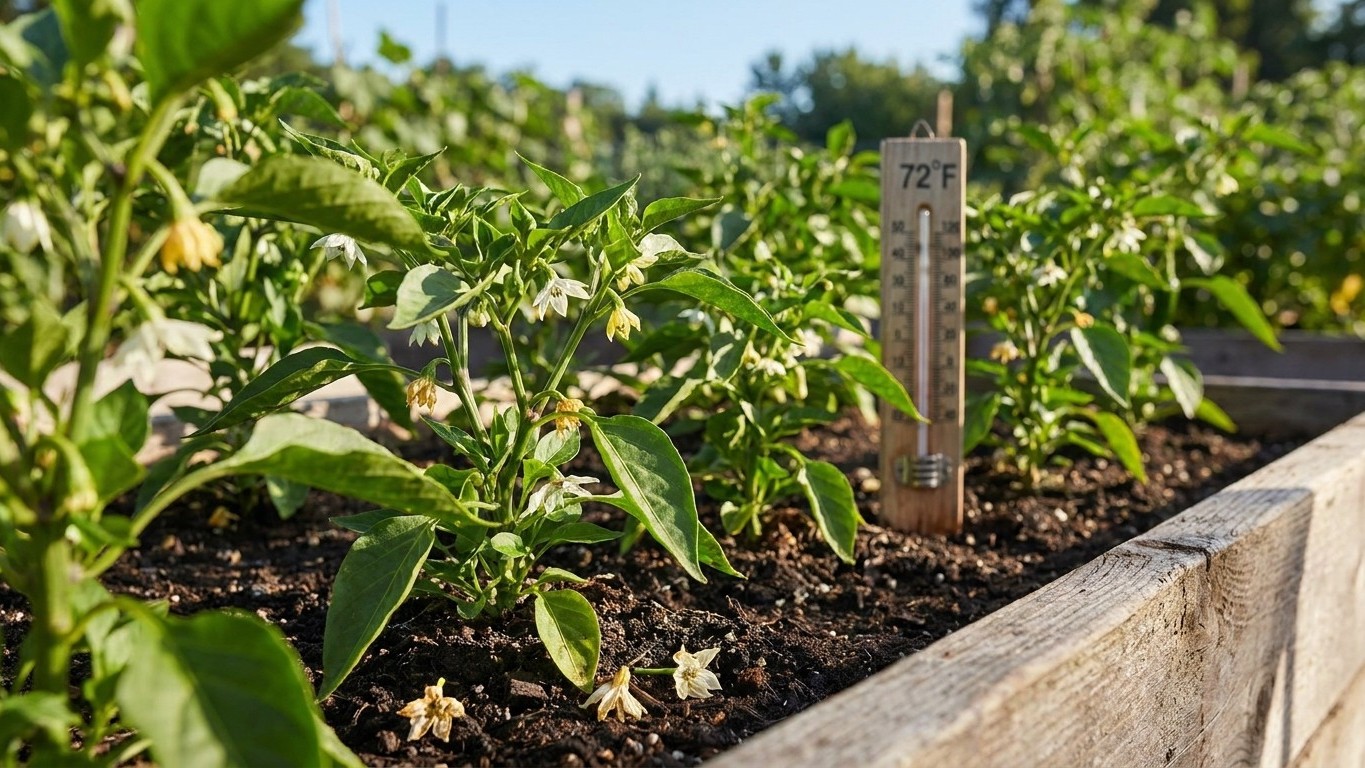

In Saskatchewan, start pepper seed indoors 8 to 10 weeks before you plan to transplant outside, and count your transplant date from two things: the day frost risk has passed and the day your soil reads 60 F. At the Saskatoon reference station, the average last spring frost falls on May 18, which puts most indoor seed starting in early-to-mid March. But that average hides real variation, and the rest of this page shows why the exact week matters more than the calendar month.
The short answer
Start with the heat side of the pepper equation, because Saskatchewan mostly gets a pass on it. At the Saskatoon reference station, the average count of days a year reaching 90 F or higher is 0.0, according to Environment and Climate Change Canada’s 1981-2010 climate normals. That number is not a rounding error. It means that in a typical year, the province’s growing season simply doesn’t produce the kind of sustained heat load that stalls pepper flowers elsewhere. Pepper fruit set fails when daytime temperatures climb above 90 F for stretches, because pollen loses viability and flowers abort rather than set fruit. With an average of zero such days, that failure mode is rare here in a way it isn’t in hotter states.
That doesn’t mean it never happens. A short, sharp heat spike in July can still push a thermometer past 90 F for an afternoon or two, even where the yearly average sits at zero. Gardeners who’ve had a bad pepper year despite a mild summer overall have usually run into exactly this: a handful of hot days concentrated right when the plants were flowering.
Now flip to the other end, because this is where Saskatchewan growers actually need to pay attention. Pepper fruit set fails just as reliably when nights drop below 55 F. The flower may look fine, the plant may look healthy, but the fruit simply doesn’t set. This site tracks daytime heat extremes for Saskatchewan, but it does not carry summer night minimum temperatures for this province. That’s a real gap, and it matters here specifically because prairie nights can run cool well into what feels like full summer, especially in low-lying areas, near water, or in the north of the province.
The practical move is to watch your own nights rather than guess. Don’t assume a specific low temperature based on how far north you are or on how cold your winters get. Summer night minimums don’t scale neatly with latitude, and they don’t follow winter cold in any predictable way either. A basic outdoor min-max thermometer on your own property, checked through June and into early July, tells you far more than any regional average could.
When to start seed here
The math is straightforward once you have your two anchor dates: your frost-free date and the date your soil hits 60 F. Here’s how to work it out for your own county, using the Saskatoon-area figures as a worked example.
- Start with the mean last spring frost date. For the Saskatoon SRC station, that’s May 18, based on Environment and Climate Change Canada’s 1981-2010 climate normals. This is a mean, not a guarantee. In one year out of two, frost actually arrives later than that date. Treat it as the midpoint of a window, not a safe cutoff.
- Check your soil temperature, not just the calendar. Peppers need soil at 60 F before transplanting, according to Utah State University Extension. Air temperature can feel mild while soil several inches down is still cold, particularly in a province with a short, intense spring warm-up. A simple soil thermometer pushed a few inches into the bed is the only reliable way to know.
- Use whichever date comes later. If your soil reaches 60 F before the frost-free date arrives, wait for frost safety anyway. If frost passes but the soil is still cold, wait for the soil. Your actual transplant date is the later of the two.
- Count back 8 to 10 weeks from that transplant date. That backward count gives you your indoor seed-starting window. Using May 18 as a placeholder: eight weeks back lands on roughly March 23, and ten weeks back lands on roughly March 9. Most Saskatchewan gardeners land somewhere in that early-to-mid March stretch.
- Adjust for your own district. Saskatchewan is not one climate. The Saskatoon SRC station is a reference point, not a province-wide rule. Northern districts and upland or higher-elevation areas typically run behind Saskatoon by a matter of weeks, which pushes both the frost date and the seed-starting window later. Southern and lower-elevation districts may run slightly ahead of it.
- Re-check before you commit transplants outdoors. Because the frost date is a mean and not a safe cutoff, many experienced growers build in an extra week or two of cushion before setting pepper transplants outside, rather than transplanting the moment the calendar hits the average date.
One more note on timing: if you’re counting toward harvest rather than transplant, remember that the 35 to 45 days often cited for pepper development run from flowering, not from the sowing date and not from transplant. A plant can sit in the garden for weeks before it even flowers, so don’t use that figure to back-calculate your seed-starting date.
What goes wrong here
- Blossom drop during a hot spell. Even with an average of zero days above 90 F, an occasional heat spike during flowering can still cause flowers to drop without setting fruit. If a hot stretch is forecast while plants are flowering, extra watering and light afternoon shade cloth reduce the stress enough to save some blooms.
- Blossom drop from a cool night. This is the more common Saskatchewan problem. Nights below 55 F stall fruit set even when the plant otherwise looks healthy. Since this site doesn’t carry night minimum data for the province, track your own overnight lows with a basic thermometer through late spring and early summer, and hold off setting transplants outside until nights are reliably above that threshold, using row cover or a cloche if an early cool snap catches young plants outdoors.
- Sunscald on exposed fruit. Prairie sun is intense and largely unfiltered by humidity, so fruit exposed after heavy pruning or leaf loss can scald and develop pale, papery patches. Avoid over-thinning foliage, and add shade cloth over exposed plants during the brightest stretch of summer afternoons.
- Blossom-end rot. This shows up as a dark, sunken patch on the bottom of the fruit, usually tied to uneven watering rather than a true calcium shortage in the soil. Sandy prairie soils dry out and rewet unevenly, which makes this worse. Consistent watering on a schedule, plus a layer of mulch to hold soil moisture steady, is the standard fix.
Common questions
Can I direct-sow pepper seed outdoors in Saskatchewan?
Not reliably. The frost-free window here is too short and starts too late in the season for peppers to mature from a direct-sown seed. Starting indoors 8 to 10 weeks before transplant, per Utah State University Extension guidance, gives the plant enough of a head start to actually flower and fruit before fall frost returns.
What soil temperature does a pepper transplant actually need?
Utah State University Extension puts the threshold at 60 F. Air temperature alone isn’t a reliable stand-in, since soil several inches down warms more slowly than the air above it, especially through a prairie spring where warm days can be followed by a cold snap.
How long does it take a pepper to go from flower to ripe fruit?
Utah State University Extension cites 35 to 45 days, but that count starts at flowering, not at sowing or transplanting. A pepper plant can spend several weeks in the garden growing foliage before it flowers at all, so this figure isn’t a shortcut for estimating your total season length from seed.
Does Saskatchewan ever get too hot for peppers to set fruit?
Rarely, on average. The Saskatoon reference station shows an average of 0.0 days a year reaching 90 F, the threshold at which pepper fruit set typically fails on the hot end. Occasional short heat spikes can still happen in any given year, but the province’s average heat load is not the limiting factor for pepper growers here. The cool end, nights below 55 F, is the threshold Saskatchewan gardeners actually need to watch.