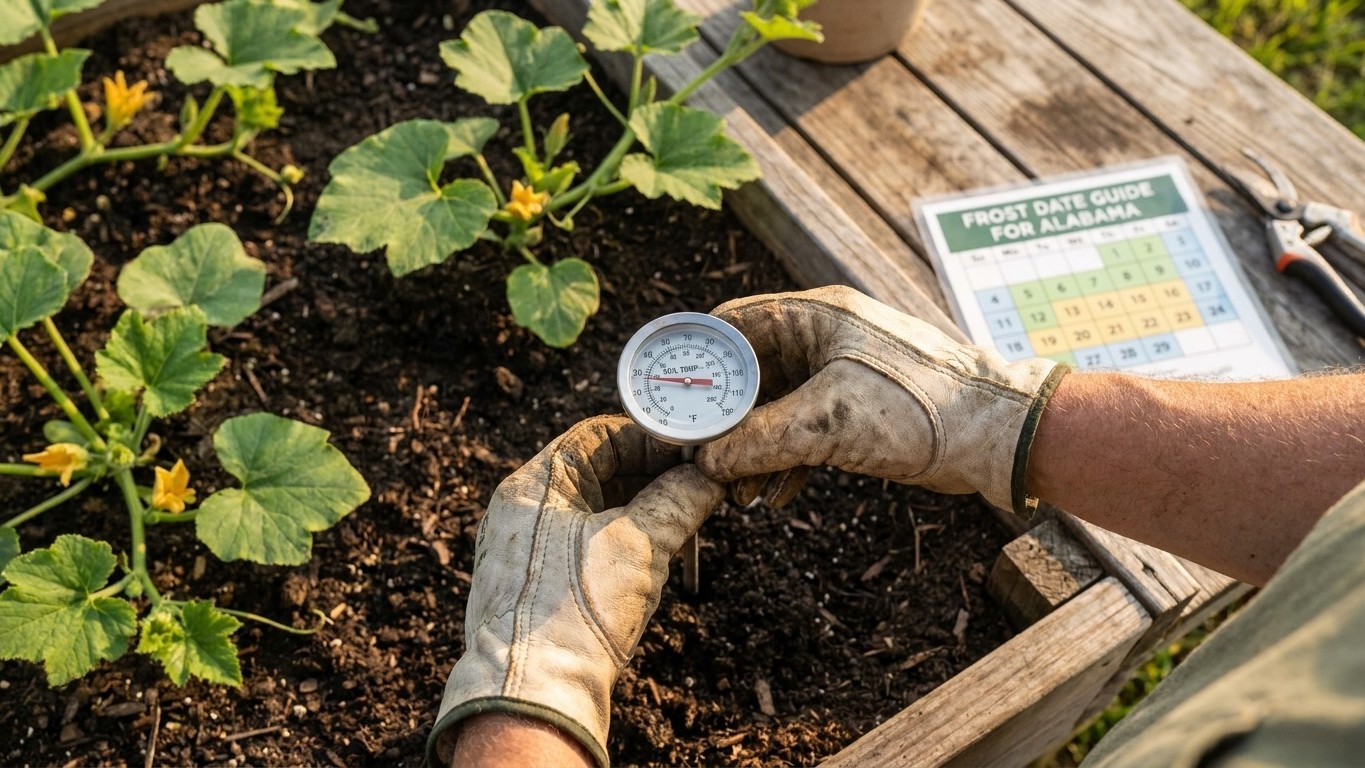

In Saskatchewan, pumpkin seed goes into the soil once it warms to 65°F, which typically happens in late May to early June, well after the average last frost has come and gone. Wait past that soil-temperature mark and the vines start behind schedule; wait past the flowering deadline that follows and the season simply runs out before the fruit finishes ripening.
The short answer
Saskatoon’s official climate record puts the average first fall frost at September 18. That single date is the anchor for everything else, because a pumpkin needs 45 to 55 days after its flowers open, not after the seed goes into the ground, to finish and harden its skin. Count backward from September 18 and the picture gets tighter fast.
Fifty-five days back from September 18 lands on July 25. Forty-five days back lands on August 4. That gives a window, not a single cutoff: flowers need to open somewhere between July 25 and August 4 at the latest, depending on which end of the maturity range a variety falls on. A pumpkin that takes the full 55 days to ripen after flowering has almost no room past July 25. A quicker type at the 45-day end can afford to flower as late as the first days of August and still have a shot at coloring up before frost.
That September 18 figure is worth treating with some suspicion, and not because the station is unreliable. It’s a mean drawn from the official 1981-2010 climate normals for the Saskatoon SRC station, which means it’s a midpoint, not a guarantee. In roughly half of all years, frost arrives later than September 18. In the other half, it arrives earlier, sometimes considerably earlier if a cold snap moves in ahead of schedule. Treat the date as the center of a range rather than a safe deadline, and build in cushion rather than sowing right up against it.
There’s also a geography problem baked into any single-station figure. Saskatchewan is not one climate zone. A reading from Saskatoon doesn’t automatically apply to a garden in the Peace River country to the northwest, or up toward the forest fringe, where frost tends to arrive earlier and the growing window shrinks accordingly. Southern valley locations along river corridors sometimes run a little warmer and later than the station average suggests. Anyone gardening outside the immediate Saskatoon area should treat the July 25 to August 4 flowering window as a starting point, then lean earlier if their own site has a history of early frost.
The practical takeaway: work backward from whichever end of that window matches the variety being grown, then work backward again to figure out when the seed needs to go in the ground to hit that flowering date. That second calculation is where soil temperature, not the frost calendar, takes over.
When to sow here
- Start with the average last spring frost, then discard it as a sowing date. Saskatoon’s average last spring frost lands on May 18. That date matters for tender transplants and frost-sensitive seedlings already in the ground, but it is not the pumpkin-sowing date. Soil and air temperature don’t move together, and soil is the one that counts here.
- Wait for the soil, not the calendar, to hit 65°F. Cold ground slows germination to a crawl and rots seed before it sprouts, according to Utah State University Extension. Soil takes real time to catch up to spring air temperatures, especially in a prairie climate where nights stay cool well into late spring. In practice, that means the ground in a typical Saskatchewan garden doesn’t reach a reliable 65°F until roughly two to three weeks after that May 18 average last frost, putting the earliest realistic sowing date somewhere in the first half of June for most years.
- Use a soil thermometer instead of guessing. Push a thermometer four inches into the bed, check it in the morning before the sun has warmed the surface, and look for several consecutive days holding at or above 65°F. A single warm afternoon doesn’t count; the reading needs to hold.
- Factor in what row covers buy. Floating row covers trap heat at the soil surface and can advance a sowing date by about two weeks compared with bare, uncovered ground. That means a gardener willing to use covers over the seed bed can realistically sow in late May rather than waiting for open-ground soil to reach 65°F on its own, buying back some of the days lost to a short season.
- Check the sowing date against the flowering deadline. A first-half-of-June sowing gives roughly six to eight weeks before flowering typically begins on a healthy vine, which lines up reasonably well with the July 25 to August 4 window described above. Sowing later than mid-June starts eating into that margin fast, and there’s very little slack left in a Saskatchewan season to absorb a slow start.
What goes wrong here
- A flower opens after the deadline and the fruit never colors. Once a flower opens past the safe window, the fruit behind it simply runs out of days before frost, staying green and hard no matter how the vine is tended afterward. The remedy is upstream: choose a variety at the shorter end of the 45-to-55-day maturity range and sow as close to early June as soil temperature allows, so flowering happens well inside the window rather than at its outer edge.
- A nearly-ripe fruit gets caught by an early frost. Because September 18 is only an average, plenty of years bring frost days or even weeks sooner. A fruit that’s colored but hasn’t fully hardened its skin can still be lost to a surprise cold snap in early September. Watching a local forecast closely from late August onward, and covering vulnerable fruit with a blanket or tarp on a predicted frost night, buys extra days without needing to harvest early.
- The vine collapses before the skin has hardened. Powdery mildew and vine borers can take down foliage weeks before frost is even a concern, cutting off the sugars the fruit needs to finish developing. A vine that dies back early leaves fruit stranded at whatever stage it happened to reach. Keeping vines healthy through the season, watering at the base rather than overhead, and giving plants enough space for airflow reduces the odds of an early collapse. Pressure from squash bugs and cucumber beetles can also weaken vines well ahead of schedule, so scouting for both early in the season matters as much as watching the calendar.
- Harvesting too early because frost seems imminent. A fruit pulled before its stem has started to dry and its rind has hardened won’t keep the way a properly matured one does. If frost threatens but the fruit still looks unfinished, a temporary cover often protects it through one or two cold nights, giving the pumpkin a few more days to finish rather than forcing an early cut. Utah State University Extension notes only that harvested fruit should be kept somewhere it won’t freeze, without giving a specific storage temperature or keeping time, so plan on using or processing pumpkins reasonably soon after harvest rather than expecting long-term storage figures that aren’t published for this crop.
Common questions
Can I start pumpkin seeds indoors in Saskatchewan to get ahead of the soil?
Starting seed indoors a couple weeks before the outdoor soil hits 65°F can shave time off the season, but pumpkins resent root disturbance and transplants need to go out promptly once soil has warmed, not before. Indoor starting doesn’t remove the need to wait for warm ground; it just shifts where the waiting happens.
What if the average last frost of May 18 comes and goes but nights are still cold?
That’s normal. May 18 is a midpoint from the historical record, not a promise, and soil temperature lags air temperature by design. Rely on a soil thermometer reading of 65°F held for several days rather than the calendar date itself.
Is it worth sowing earlier than the 65°F soil mark just to gain time?
Cold, wet soil is far more likely to rot pumpkin seed than to produce an early head start. Row covers are the safer way to gain those extra two weeks, since they warm the soil surface without exposing seed to cold, damp ground.
Does the September 18 frost date apply the same way across all of Saskatchewan?
No. That figure comes from the Saskatoon SRC station specifically. Northern, upland, or forest-fringe locations tend to see frost earlier, so gardeners outside the immediate Saskatoon area should shift their flowering deadline earlier as a precaution rather than relying on the station average directly.