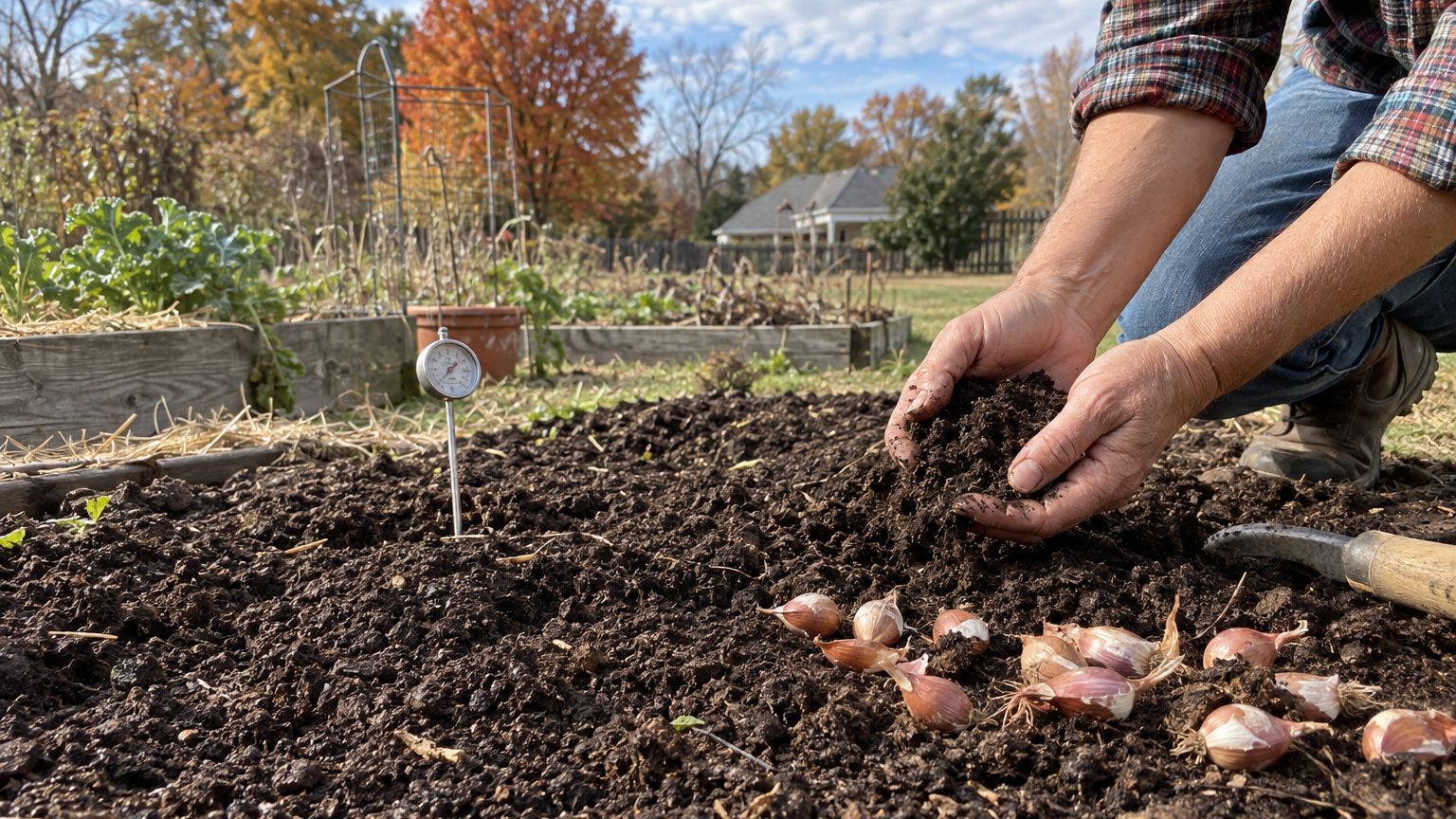

Shallots grow well in Saskatchewan, and spring planting is the safer plan. At Saskatoon the average last spring frost is May 18, and the mean daily minimum of the coldest month is -20.7 °C. That winter cold settles the autumn-versus-spring debate. Plant sets once the soil has thawed and warmed, give them the full short season, and cure the crop with care before anything goes into storage.
When the soil is warm enough in Saskatchewan
The date most gardeners are after is May 18. That is the average last spring frost at the Saskatoon SRC station (climate ID 4057180), from Environment and Climate Change Canada’s Canadian Climate Normals for 1981-2010. Read it as the midpoint of a window. It is a mean, so in one year out of two the last frost falls later, and a frost date is a probability, not a promise. Northern and upland districts run weeks behind this station, because one weather station does not speak for a whole province.
Frost is only a proxy anyway. Shallots wait for warm soil, and soil warms after the frost risk ends, not alongside it. In a prairie spring the top few inches can thaw, refreeze overnight and sit cold and saturated for days after the air feels mild. A set pushed into that ground does not grow. It sits and invites rot. The practical test is simple: the bed should be fully thawed, crumble in your hand instead of smearing or forming a wet ball, and drain within a day or two of rain. Once roots have established, a light frost on the leaf tips is rarely the danger. Cold, waterlogged soil around the bulb is.
Sets, seed and what the short season prefers
Two types of planting stock exist. Sets are small bulbs that each multiply into a cluster, and seed-grown types start from true seed sown indoors or direct. Sets are the usual choice on the northern prairies because they skip the slowest stage of the year. Seed-grown plants can work, but they spend the early weeks as thin seedlings that need an indoor start and a careful move outside. For the general method, from one bulb to a handful, see Growing Shallots: One Bulb In, a Handful Out.
Where the garlic pages carry over
Shallots share several practices with garlic, and this site’s garlic section covers each in depth: autumn planting, curing, storing and allium rotation. Rather than repeat those pages, here is what differs for shallots. A shallot set is a smaller bulb than a garlic clove, with less reserve to ride out a hard winter in the ground, which is one more reason autumn planting is a gamble here. Rotation is the same principle (keep shallots out of beds that recently held onions, garlic or leeks, since they share the same pests and diseases), but shallots multiply into clusters, so each planting takes up more room than the bulbs you put in.
Curing and storage are where food safety enters. Let the tops dry down in a dry, airy, shaded place until the necks are tight and papery. Then inspect every bulb. A soft neck or a moldy base ends the question, and that bulb goes in the compost, not the pantry. A bulb that merely looks sound is not proven sound. Check stored bulbs regularly and pull anything that softens, sprouts or smells off.
How long the season lasts here
Both ends of the season are on record for Saskatoon SRC. The average last spring frost is May 18, and the average first fall frost is September 18. Counting from one to the other gives 123 days. Both are means from the same 1981-2010 Environment and Climate Change Canada normals, so in half of all years the spring frost comes later and the fall frost comes later too. The window can open late, close early, or both.
| Measure (Saskatoon SRC, 1981-2010 normals) | Average date |
|---|---|
| Last spring frost | May 18 |
| First fall frost | September 18 |
| Days between the two | 123 |
What does 123 days allow? Not much slack. A long window leaves room for a second sowing weeks after the first, and a short one makes the first sowing the only one that counts. Saskatchewan sits firmly on the short side of that line. If the bed is ready in mid-May, a second batch planted in late June would be racing the fall frost with a plant that needs time to size up, and shallots that never finish ripening cure poorly and store worse.
The short window also changes the transplanting math. Starting seed-grown shallots indoors buys a head start, but every transplant takes a root check: a pause of days while disturbed roots re-anchor. In a long-season climate that pause is cheap. Here it comes out of a budget with no spare days, which is why sets, already carrying their own reserves, suit the province better than seedlings. If you want to stretch the harvest anyway, stagger plantings a week or two apart in the first half of the window instead of trying a late sowing. This site’s succession sowing guide lays out how to space those batches.
One caution on the numbers: Canadian normals cover 1981-2010, while the US figures elsewhere on this site cover 1991-2020. The two sets of dates should not be set side by side as if they were measured the same way.
Heat and water in Saskatchewan
The number that matters most here is the winter one. The mean daily minimum of the coldest month at Saskatoon is -20.7 °C (-5.3 °F, given only so US readers can compare). That is an average of the coldest nights, not a record low, and it is the figure that decides what survives the winter. Natural Resources Canada places Saskatoon in Canadian hardiness zone 3a. That is the Canadian system, built on seven climate variables, and it does not convert to a USDA zone.
Against that backdrop the autumn-versus-spring question mostly answers itself. Autumn planting is grown for one reward: larger, earlier bulbs, because the roots establish before winter and the plant starts moving at the first thaw. That reward belongs to places with milder winters, such as the Kentucky gardens covered in Growing Shallots in Kentucky. Where the ground freezes hard and stays wet through thaw and refreeze, autumn-planted sets rot in saturated soil or heave out as the frost lifts them. The loss is silent until spring, when you find bulbs sitting on the surface or nothing at all. For most Saskatchewan gardeners, spring is the safer call. Anyone who wants to test autumn planting should do it on a small scale, in well-drained, raised ground, and treat any survivors as a bonus.
The failure modes of a cool, damp summer are well known. Shallots grown close together in humid, still air are prone to mildew on the foliage. Wet weather slows the tops from falling over and drying down, which delays ripening, and a late ripening crop is the one most likely to be caught by fall frost or cured badly. Damp soil around swelling bulbs also raises the odds of base rot. The defense is cultural: wider spacing, a bed that drains, water in the morning instead of the evening, and no overhead soaking in late summer. In a dry year the opposite applies, and a steady drink during bulb swelling does more good than heavy rain followed by drought. Easing off water as the tops start to yellow helps the bulbs finish and cure.
For a neighboring perspective on a similarly cold interior climate, Growing Shallots in Alberta covers the province next door, though its figures come from its own stations and should not be borrowed for Saskatchewan.
Which shallots suit Saskatchewan
The choice here comes down to type, not name. A 123-day average window between frosts favors the earliest-maturing types over the late, slow ones. A bulb that needs every last warm week to size up is a poor bet when the fall frost can arrive on the average date or earlier. Shallots grown from sets generally beat seed-grown types for the same reason, since they skip the seedling stage.
A cool, sometimes damp summer adds a second criterion. Disease resistance, particularly to foliage mildew and base rots, should rank high on the list, and so should an upright habit that lets air move through the row. Types that finish and cure quickly after the tops fall are easier to dry down properly in a short fall. Heat tolerance and shade at the root matter far less in this climate than they would in a hot one, since cold is the main constraint here, not heat.
Variety recommendations only mean something when they come from trials on local soil, at local frost dates, under local disease pressure. A shallot that thrives in a milder or more humid region can fail outright in a Saskatchewan spring.
The better source is the province itself. The Government of Saskatchewan’s agriculture pages are the place to start for locally relevant growing guidance, and they can point you toward regional specialists who know what has been trialled in your district. Local garden clubs and seed growers who sell stock adapted to prairie conditions can also tell you what has actually finished in your area. Ask them which types ripened reliably in cool, short seasons, then buy from a supplier who can say the same.
Common questions
Can I plant shallots in the fall in Saskatchewan?
You can try, but the odds are poor. The coldest month’s mean daily minimum at Saskatoon is -20.7 °C, and where the ground freezes hard and stays wet, autumn-planted sets tend to rot or heave. Spring planting is the safer plan. If you experiment, do it on a small, well-drained raised bed, and keep spring-planted stock as your main crop.
Is May 18 a safe planting date?
No. May 18 is the average last spring frost at the Saskatoon SRC station, so in one year out of two the last frost falls later. It is also only a proxy. Shallots need warm, workable soil, and that comes after the frost risk ends. Northern and upland areas run weeks behind Saskatoon, so check your own conditions before planting.
What hardiness zone is Saskatoon?
Natural Resources Canada lists Saskatoon in Canadian zone 3a. That figure belongs to the Canadian system, which uses seven climate variables, and it does not translate into a USDA zone. It describes the reference city, not the whole province.
How do I know a cured shallot is safe to store?
Inspect each bulb for a tight, dry neck and a clean, firm base. A soft neck or a moldy base ends the question, and the bulb should be discarded. Check stored bulbs regularly and remove any that soften, sprout or smell off.