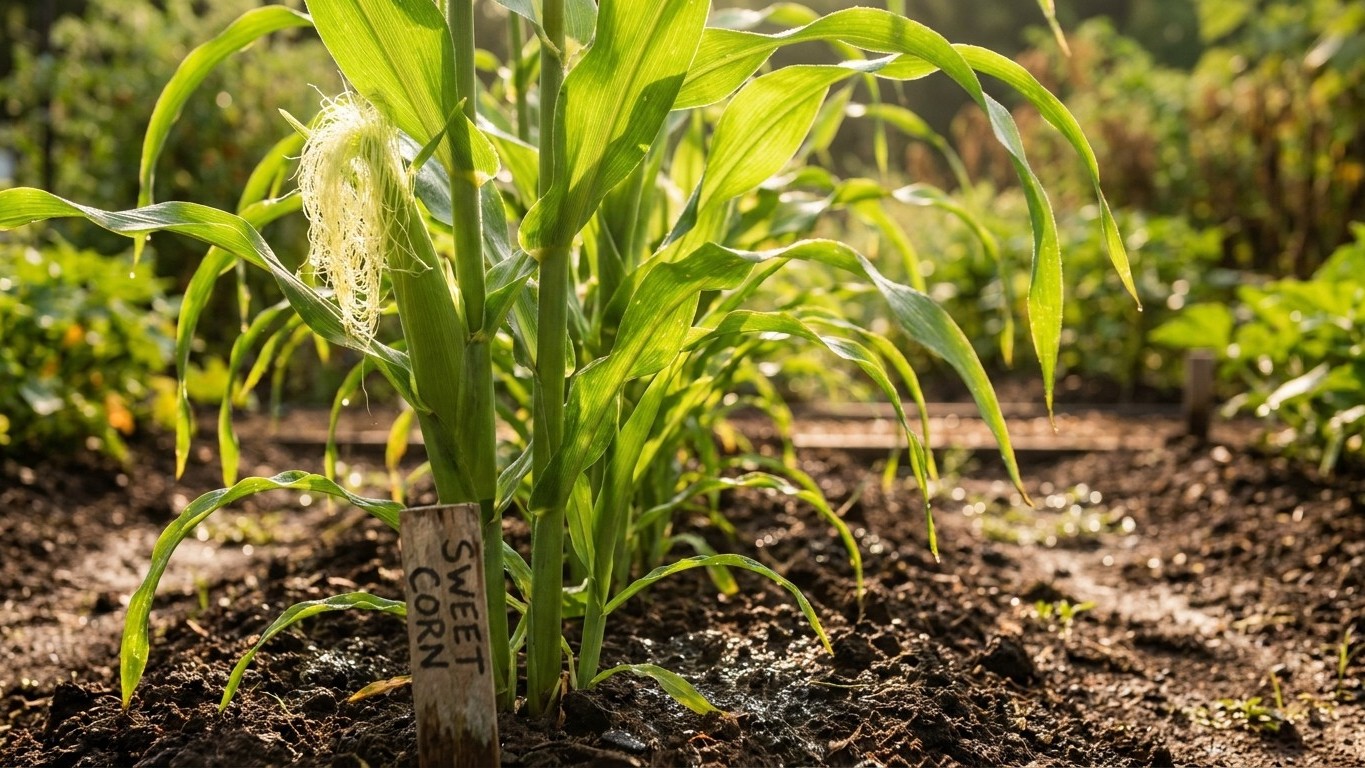

Sweet corn can ripen in Saskatchewan, but only if the calendar cooperates. With soil that needs to warm past 60 F before seed goes in the ground, and a mean first fall frost landing September 18, the growing window is tight rather than generous. A short-season variety works. A long-season one is gambling with a frost that, in half of all years, arrives even earlier than that average date.
The short answer
Start with the soil, not the calendar on the wall. Sweet corn seed rots or simply sits dormant in cold ground, and it needs the soil itself, not the air, to sit above 60 F before it’s worth planting. That threshold does not arrive on the same day the last frost clears. Soil lags air temperature by weeks this far north, so the window for planting opens meaningfully later than the mean last spring frost of May 18 recorded at the Saskatoon reference station. Anyone circling that frost date on a calendar and dropping seed the next morning is planting into ground that almost certainly hasn’t caught up yet.
That May 18 figure also deserves a second look before anyone treats it as a guarantee. It’s a mean date pulled from the 1981-2010 climate normals, which means in roughly one year out of two, frost shows up later than that. Saskatchewan is not one climate either. The Saskatoon SRC station is a reference point, not a promise for every farm and backyard garden in the province, and land to the north or at higher elevation typically runs behind it by a further stretch.
On the other end of the season, the mean first fall frost sits at September 18. Between a soil-warming date that trails May 18 by some margin and a frost date that averages out to September 18, the realistic growing season lands closer to three months than four. Utah State University Extension puts sweet corn’s need at 60 to 90 days from planting to harvest, once soil is warm enough to plant at all. Squeeze that against a start that’s already later than the frost date and an end that arrives, in half of all years, before September 18, and the math gets uncomfortable fast for anything at the long end of that range.
None of this is helped or hurt much by summer heat, because there isn’t much of it to speak of. The reference station averages 0.0 days a year at or above 90 F. That’s a genuinely cool summer profile. It means less heat stress and less water stress than corn growers further south deal with, but it also means fewer of the warm days that push a corn plant through its growth stages quickly. A short season and a mild summer together point toward one conclusion: this is a place for the fast end of the maturity scale, not the slow end.
Does a late variety fit here?
The 60-to-90-day range Utah State University Extension gives isn’t a single number, it’s a spread, and where a given variety falls inside that spread matters enormously once the season itself is this compressed.
A 60-day variety
A variety at the fast end of that scale has real breathing room here. Even accounting for soil that warms well into the growing calendar rather than right at the frost date, a 60-day corn planted once the ground is genuinely warm still has a comfortable stretch of time to reach the first fall frost average of September 18. It’s the closest thing to a safe bet the facts support: enough days to mature, and enough slack left over to absorb a cool stretch of weather or a slightly later start than planned.
A 90-day variety
The far end of the range is a different story. Ninety days from a planting date that already sits later than the May 18 frost mean, run against a first fall frost that averages September 18 and that arrives even earlier in roughly half of all years, leaves little to no margin. In a favorable year with an early warm-up and a late frost, it might scrape by. In an average or unfavorable year, a 90-day variety simply does not fit this territory’s window. That’s the plain answer: the long end of the maturity scale is not a reasonable bet for Saskatchewan, and Utah State University Extension’s own 60-to-90-day range shows exactly why once you line it up against local frost data.
| Variety type (maturity) | Fits Saskatchewan’s window? | Why |
|---|---|---|
| 60-day (short season) | Yes, with margin | Fits comfortably between later soil warm-up and the September 18 mean frost |
| 90-day (long season) | No, unreliable | Leaves little to no buffer once soil-warming delay and average frost date are both accounted for |
What goes wrong here
- Soil sown too cold. Planting on the calendar date of the mean last frost, rather than waiting for the ground itself to clear 60 F, is the single most common failure. Seed sits in cold soil, germinates poorly or rots outright. The remedy is simple patience: check the soil, not just the sky, and hold off until it has genuinely warmed past that mark, even if that means planting later than instinct suggests.
- A variety too late for the season. Choosing something from the 90-day end of Utah State University Extension’s range is asking the plant to do more than the local frost window allows. The fix is to shift toward the shorter end of the 60-to-90-day range from the start, rather than discovering mid-August that the ears are still too far from ready.
- Sweetness lost to a nearby tasseling neighbor. This one has nothing to do with Saskatchewan’s climate at all. Su, se, and sh2 sweet corn types cross-pollinate when they tassel at the same time, and the result is corn that loses the sweetness a gardener planted it for in the first place. The fix isn’t distance, it’s timing: make sure different types don’t tassel together, whether that means growing only one type in a given season or staggering plantings so their tasseling windows don’t overlap. Corn should also go in blocks of three or more rows rather than single rows, which is a matter of how the garden is shaped for good pollination, not a date on the calendar.
Common questions
Can I plant sweet corn right after the last frost in Saskatchewan?
Not if the soil hasn’t caught up. The last frost date is a mean of May 18, but soil takes additional time beyond that to warm past the 60 F mark sweet corn needs. Planting on the frost date alone, without checking the ground, is one of the most common mistakes in this climate.
Is a 90-day sweet corn variety ever worth trying in Saskatchewan?
It’s a poor bet given the facts. With soil warming later than the May 18 frost mean and the first fall frost averaging September 18, a 90-day variety leaves little to no margin most years, and none at all in a year where frost arrives early, which happens in roughly half of all years given how these normals work.
Does Saskatchewan’s cool summer hurt sweet corn?
It removes heat stress, since the reference station averages 0.0 days a year at 90 F or higher, but it doesn’t speed up growth either. A short, cool season is exactly why the fast end of the 60-to-90-day maturity range is the safer choice here.
How do I stop two types of sweet corn from ruining each other’s flavor?
Keep su, se, and sh2 types from tasseling at the same time. Utah State University Extension doesn’t publish a separation distance for this, so the practical approach is timing: grow one type per season, or stagger plantings so tasseling windows don’t overlap, rather than relying on any specific spacing.