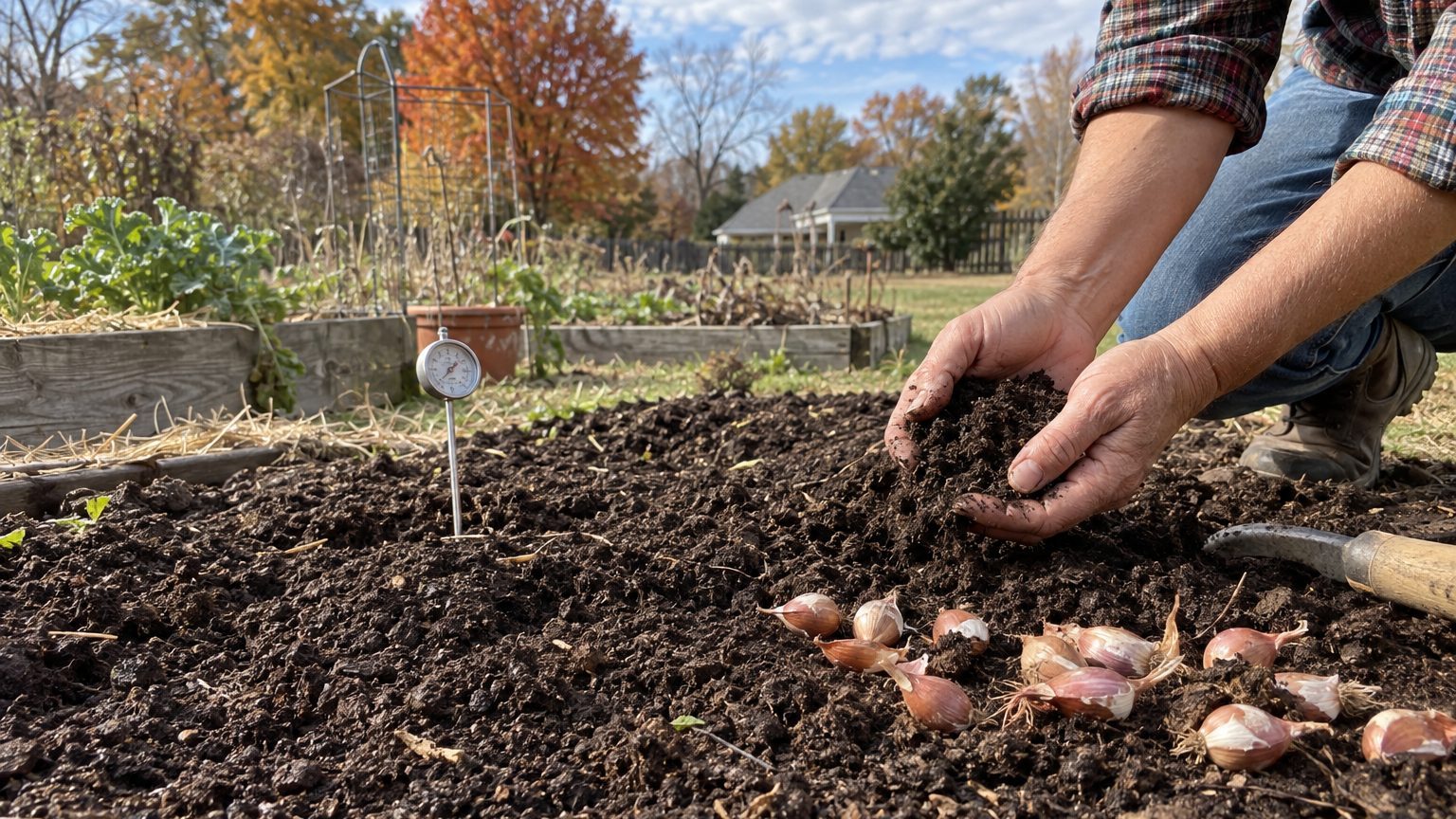

Most South Dakota gardeners should plant shallots in spring, as soon as the soil can be worked. Using the reference frost dates for the state’s airport weather station, that usually means late April through May. Autumn planting is a gamble across much of the state because of how cold the winters get. The sections below explain the dates, the length of the season, the heat and water picture, and how to choose a type.
When the soil is warm enough in South Dakota
The last spring frost at the NOAA reference station falls between April 29 and May 9. That range comes from the NOAA NCEI 1991-2020 Climate Normals (station USW00014944), based on the 30 to 70 percent probability band for a 32°F freeze. It is a probability, not a promise: some years the last freeze comes earlier, and some years it comes later.
This is the figure for one airport station, not for the whole state. Gardens in the suburbs and the countryside usually see the last spring frost later than the airport, often by one to two weeks, and more at elevation. Check your own county before you pencil in a date.
Frost date is a proxy, not the target
Shallots do not wait for the frost to end. They wait for the soil. Cold ground holds back root growth, and the soil warms after the frost risk is over, not at the same moment. A bed can be frost-free on paper and still be cold and soggy at trowel depth.
Shallots tolerate a light spring chill better than most vegetables, so you do not need to hold off until every frost threat has passed. The practical test is the soil itself. Take a handful from planting depth and squeeze it. If it crumbles, the bed is workable. If it smears into a wet ribbon, wait a few days. Planting into mud invites rot before the roots establish.
Why spring is the default here
Autumn planting is the usual practice in milder regions, and garlic growers know it well. Shallots differ in a few ways. A shallot set is a small bulb with less in reserve than a fat garlic clove, so a hard winter hurts it more. Shallots also multiply into a cluster, which means one rotted bulb costs you a whole cluster.
Cultivar names only help when they come from trials run near you. South Dakota State University Extension is the right place to ask which types have been trialed where you live. For a broader picture of the crop’s habits, see Growing Shallots: One Bulb In, a Handful Out.
How long the season lasts here
The same station gives a first fall frost between September 24 and October 4. Putting both dates together, the frost-free window runs from 138 to 158 days, depending on which ends of the two ranges you pair up.
| Pairing of dates | Last spring frost | First fall frost | Frost-free days |
|---|---|---|---|
| Early end of both ranges | April 29 | September 24 | 148 |
| Late end of both ranges | May 9 | October 4 | 148 |
| Shortest window | May 9 | September 24 | 138 |
| Longest window | April 29 | October 4 | 158 |
Those are airport numbers. Since rural and suburban gardens often lose one to two weeks at each end, a farm garden could land well under the 138-day figure. If your place sits at a higher elevation or in a frost pocket, you should plan for the short side.
What does that length allow? For shallots, it mostly allows one crop and one sowing. A season this size supports a single planting that has time to bulb up and cure. A second, staggered sowing is a stretch. A later batch has less time to size up before fall, and it also leaves you with a late harvest that has to cure in cooling weather. If you want to spread out your harvest anyway, the succession sowing guide on this site explains how to space plantings, and in this state the spacing should lean toward the early side.
The window also affects whether transplanting is worth the effort. Starting shallots from seed indoors buys weeks, and it can pay off when the outdoor season is short. But a transplant arrives with a root system you have to check and handle carefully. Look for white, healthy roots, avoid tearing them when you separate the plugs, and do not set them out into cold ground. A transplant that stalls for two weeks gives back much of the head start it earned. Sets planted directly in workable soil avoid the root check altogether, which is one reason they suit a short northern season well.
Gardeners comparing climates can look at Growing Shallots in Idaho, where the calendar and the water situation differ, to see how much the same crop shifts with the region.
Heat and water in South Dakota
For local numbers, use the NOAA climate normals for the station nearest you, or ask the extension service.
Winter cold is the figure that can be sourced, and it matters most here. At the Sioux Falls reference station, the mean daily minimum of the coldest month is 8.5°F, per the NOAA NCEI Climate Normals for 1991-2020. That is an average of the nightly lows, not the record low, so individual nights run colder. The USDA Plant Hardiness Zone Map (2023) puts the state in zones 3b to 5b, a wide range based on the average annual extreme minimum, and your own zone could be at either end.
Autumn against spring
That cold decides the planting season. Where the ground freezes hard and stays wet through thaws, autumn-planted sets can rot in the cold mud or heave out of the soil as it freezes and thaws. Spring is the safer call across most of South Dakota. A milder winter is what lets autumn planting pay off, with bigger bulbs that start growing earlier. Some sheltered pockets might manage it, but a heavy mulch is the only reasonable insurance, and it is still a gamble. If you want to try it, plant a small test row beside your main spring planting and compare the results.
Summer: handle both extremes
Plan for either type of year. In a hot, dry stretch, steady watering and a layer of mulch keep the soil from swinging between dry and soaked, and that matters most while the bulbs are sizing up. In a cool, damp summer, the risks change. Foliage stays wet, mildew and other leaf diseases take hold, and ripening slows. Wide spacing and a bed with good airflow help in both cases. Gardeners in the humid Northeast face that second set of problems every year, and Growing Shallots in Maine covers them in depth.
Whatever the weather, ease off the water once the tops start to fall over. Bulbs that are still taking up moisture at that point cure poorly.
Which shallots suit South Dakota
Choose by type. The varieties trialed in South Dakota are the only recommendation worth following. Ask South Dakota State University Extension, or a county office, which types have performed in your area.
The facts of the territory still narrow the choice. The frost-free window is between 138 and 158 days at the airport station and probably shorter on a farm lot, so earlier-maturing types make sense. A type that needs the whole season leaves no room for a cool spring or an early fall frost. Short-season gardeners should also lean toward sets over seed-grown plants, unless they are willing to start seedlings indoors and manage the transplants.
Disease pressure is the second criterion. Given how much a damp summer can matter, a type with a reputation for sturdy, healthy foliage is worth more than one with a nicer bulb shape. Buy planting stock from a source that sells it for planting rather than from the grocery produce aisle, and never plant bulbs that show soft spots or mold at the base. Rotate your allium beds as well, since onion-family diseases linger in soil. Shallots follow the same rules.
For heat, which can come in July and August, favor open, well-drained beds where air moves through the rows and the roots are not baking. A little afternoon shade at the root zone, from mulch or neighboring plants, helps in a hot spell.
When harvest comes, cure the bulbs somewhere dry and airy. Inspect each one before you store it. A soft neck or a moldy base ends the question: throw that bulb out. A bulb that merely looks firm is not proven sound, and no storage duration is guaranteed, so check your stored shallots regularly and use up any that begin to soften.
Common questions
When should I plant shallots in South Dakota?
Plant in spring once the soil is workable. At the NOAA reference station the last spring frost falls between April 29 and May 9, but rural gardens usually run one to two weeks later. Squeeze a handful of soil: if it crumbles, you can plant.
Can I plant shallots in the fall in South Dakota?
It is risky. The coldest-month mean daily minimum at Sioux Falls is 8.5°F, and where soil freezes hard and stays wet, autumn-planted sets can rot or heave. Spring planting is the safer choice for most of the state.
Is the frost date right for my garden?
Probably not exactly. The dates come from one airport station, and outlying gardens usually see the last spring frost later and the first fall frost earlier. Check your own county’s figures, and treat any date as a probability.
How can I tell whether my cured shallots are safe to store?
Inspect each bulb. A soft neck or a moldy base ends the question, and that bulb should go in the trash. Looking firm is not a guarantee, so keep checking stored bulbs and use any that start to soften first.