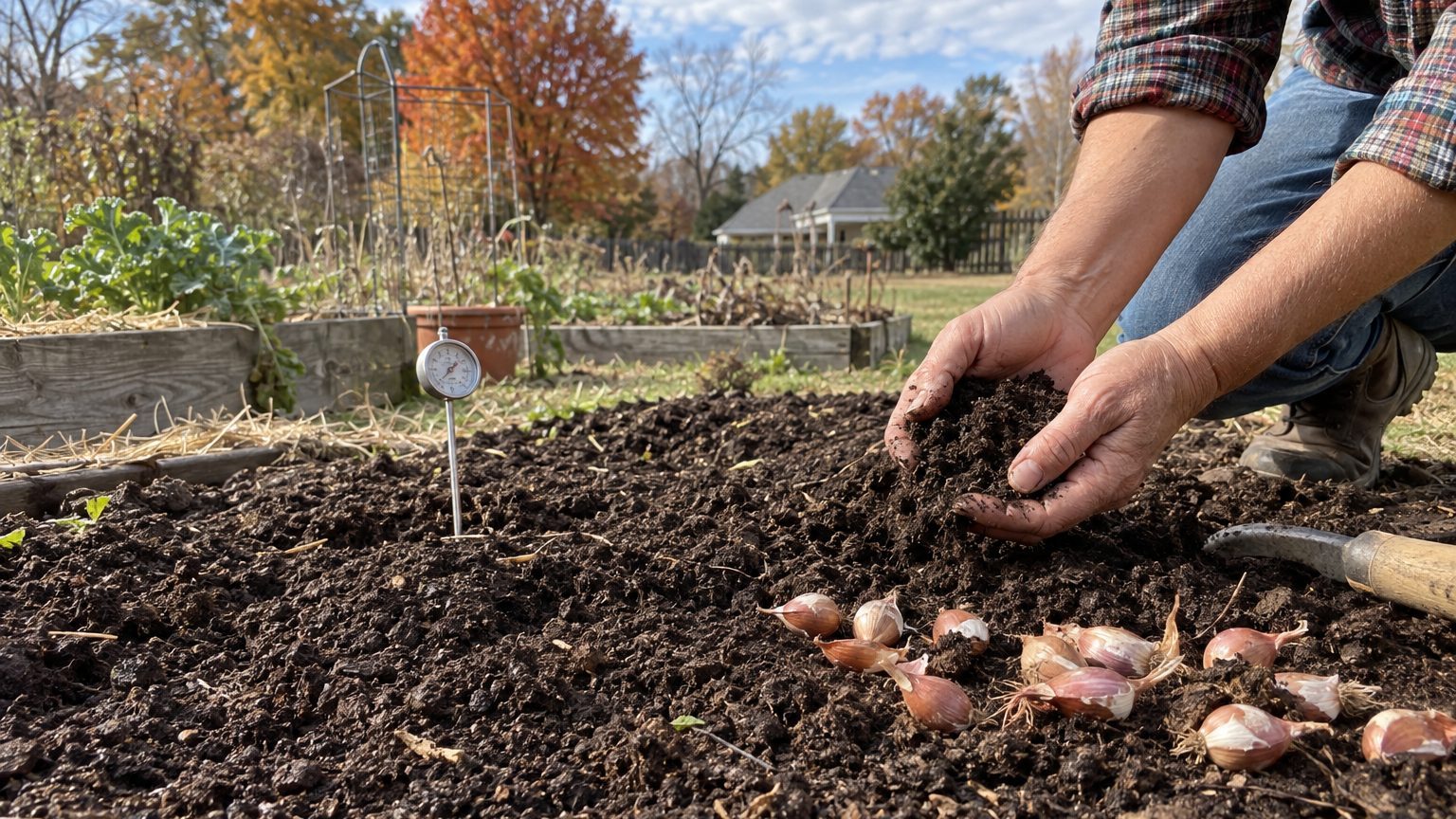

Plant shallots in Idaho once the soil can be worked and has started to warm. In the Boise valley that means late April into early May, and later almost everywhere else in the state. Autumn planting is possible in the milder low valleys, but it is a bet on the winter. Below are the dates, the length of the season, the cold and water question, and the type of shallot to look for.
When the soil is warm enough in Idaho
The last spring freeze at Boise falls between April 23 and May 7, according to the NOAA NCEI 1991-2020 Climate Normals (32°F freeze probabilities, 30-70% band, station USW00024131). That is a probability band, not a promise, so a late cold snap outside it can still happen. Boise sits in a low valley, and most of Idaho is higher and colder, so your own date is probably later. Treat the Boise window as the early edge of the state.
A frost date is a stand-in for what shallots care about, which is the soil. Air temperature swings by the hour, but soil holds its cold. It warms after the frost risk ends, not at the same moment, and a bed that was frozen in March can still be cold and soggy on the day the last freeze passes. Plant into soggy ground and the sets sit in cold mud, where rot gets its start.
How to read your own bed
Skip the calendar and test the ground. Take a handful from trowel depth and squeeze it. If it crumbles when you poke it, it is ready. If it holds a wet, glossy lump, wait a few days. A cheap soil thermometer pushed in a couple of inches takes the guesswork out, and it works the same in Pocatello, Coeur d’Alene or Twin Falls. Gardeners at higher elevations, in places like the Wood River Valley or the upper Snake River country, should expect the workable-soil date to arrive weeks after Boise’s. The University of Idaho Extension county office can tell you what is normal for your valley.
Shallots and garlic are close cousins, and they share a lot: autumn planting, curing, storage, and the rule about not planting alliums where alliums grew recently. This site has a full garlic section that covers those practices in detail, so there is no reason to repeat it here. What differs for shallots is the planting depth, since the small bulbs go in with their pointed tips right at the soil surface or barely covered, and the way each bulb splits into a cluster. One planted bulb comes up as several, which is the whole idea behind Growing Shallots: One Bulb In, a Handful Out. It also means any disease left in the soil gets passed to a bigger crop, so rotation matters.
When the bulbs are lifted, do not rely on how they look. Check that the neck has dried and tightened, and that the base is firm and clean. A soft neck or a moldy base ends the question: that bulb does not go into storage.
How long the season lasts here
The first fall freeze at Boise falls between October 7 and October 21, from the same NOAA station and the same probability band. Set that beside the spring window of April 23 to May 7 and the stretch between them runs from 153 days (May 7 to October 7) to 181 days (April 23 to October 21). The same caution applies: Boise is a low valley, and the season shrinks fast as you climb.
| Boise reference station (NOAA 1991-2020) | Date band |
|---|---|
| Last spring 32°F freeze | April 23 to May 7 |
| First fall 32°F freeze | October 7 to October 21 |
| Days between the two bands | 153 to 181 |
A number like that only matters for what it allows. In the valley, a window that long gives you room to stagger two plantings a few weeks apart. The first gives you the main bulb crop, and the second spreads out the harvest or supplies shallots to pull young and eat green. The shallot overview covers the crop’s basic habit, and this site’s succession sowing guide covers the spacing of plantings in more detail.
Where the season is shorter, the first sowing is the only one. A short window also changes the math on transplants. A seedling started indoors and moved outside loses time while its roots recover from the move, and in a short season that lost week is a larger share of what you have. If you transplant, harden the plants off first, then check the roots before they go in the ground. Healthy roots are white and loose, not circling the cell. In a short season, sets planted straight into the bed skip that risk completely.
It helps to compare notes with other cold-winter places. Growing Shallots in South Dakota and Growing Shallots in Ontario show how the same questions play out in other northern climates. The comparison is useful for the high country, where Idaho’s season looks less like Boise’s and more like theirs.
Heat and water in Idaho
This page does not have a verified count of days above 90°F or a summer rainfall total for Idaho, so it will not invent one. Both vary enormously across a state that runs from low, dry river valleys to high mountain basins. Look up the normals for the weather station nearest you before you draw conclusions about your own bed. What the data does support is the winter, and winter is what decides the big question here: autumn or spring.
Autumn against spring
At the Boise reference station, the mean daily minimum of the coldest month is 25.4°F (NOAA NCEI Climate Normals 1991-2020). That is below freezing but not brutal, and it is a monthly average, not the record low. The USDA Plant Hardiness Zone Map (2023, based on 1991-2020 normals) places Idaho across zones 3b to 7b, a spread so wide that no single recommendation covers the state. It measures the average annual extreme minimum, which is a harsher number than a monthly mean.
The rule follows from that. Where the ground freezes hard and stays wet, autumn-planted sets can rot or heave. Repeated freezing and thawing pushes small bulbs up toward the surface and exposes them. In those places spring planting is the safer call. In milder low valleys, a winter closer to Boise’s gives the larger, earlier bulbs that autumn planting is grown for. A layer of mulch over the bed helps either way, and the garlic pages on this site cover the autumn routine that shallots mostly follow.
If summer runs cool and damp
Idaho’s higher country can have a summer that stays cool and sometimes wet. That brings a different set of troubles from a hot-climate bed: downy mildew and other fungal disease on the foliage, slow ripening, and bulbs that are slow to cure. Give the plants wide spacing and airflow, and water at the base rather than from overhead. Where summers are hot and dry instead, steady watering through bulb swelling matters more, and a mulch keeps the root zone cooler. Cut back on watering as the tops start to fall over, because bulbs finishing in wet soil are the ones that go soft in the neck.
Which shallots suit Idaho
Choose by type, not by name. A short season favors the earliest-maturing types, because the first planting is the only one and fall freezes arrive sooner at elevation. A hot, dry stretch favors plants given airflow and some shade at the root, which mulch and good spacing supply. A damp, humid summer makes disease resistance the first thing to look for. Idaho can show you all three within a day’s drive, so the right type in Boise may be the wrong one in Stanley.
This page names no varieties, and that is deliberate. A variety recommendation means something only if it was trialled where you garden, under your winters and your water. This page has no trial data for Idaho, and a name pulled from memory or a catalog would be a guess dressed up as advice. The University of Idaho Extension office in your county is the place to ask what has actually done well locally, and its publications and Master Gardener volunteers are the more reliable source.
A few other choices matter more than most people expect. Sets (small bulbs) and seed-grown plants behave differently, and sets are the simpler route where the season is short. Buy from a source that sells planting stock meant for growing, not grocery shallots, which may carry disease or have been treated to stop sprouting. And before you plant, look at the sets: reject any that feel soft or show mold at the base.
Common questions
Can I plant shallots in the fall in Idaho?
In the milder low valleys, yes, and it can produce larger, earlier bulbs. Where winters are harsher and the ground stays wet, spring is the safer choice because autumn-planted sets can rot or heave. Check your zone first, since Idaho spans USDA zones 3b to 7b.
How late can I plant in spring?
As soon as the soil is workable, and no later than you must. The Boise window for the last freeze is April 23 to May 7, and other parts of the state run later. Earlier planting gives the bulbs more of the season to grow.
Do shallots need rotation like garlic and onions?
Yes. Avoid planting any allium where garlic, onions or shallots grew recently, because soilborne disease builds up. The garlic section of this site covers the rotation principle in more depth.
How do I know shallots are fit to store?
Look at the neck and the base. The neck should be dry and tight, and the base firm and clean. A soft neck or a moldy base ends the question, and that bulb should not be stored. A good appearance alone does not make a bulb sound, so inspect the stored bulbs from time to time and discard any that turn soft.