
Sweet potatoes can be grown in South Dakota, but the window is tight and the crop needs help. Slips go into the ground a couple of weeks after the last spring frost, once the soil has warmed, and the roots must be dug before the first fall frost. Black plastic, raised ridges and an early-maturing type are what separate a decent harvest from a bed of pencil-thin roots.
When the soil is warm enough in South Dakota

The Sioux Falls reference station puts the last spring freeze between April 29 and May 9. That is the 30 to 70 percent probability band for a 32 F reading in the NOAA NCEI 1991-2020 Climate Normals, so a freeze after May 9 still turns up in some years. Slips should not go out on those dates anyway.
Frost is the stand-in everyone uses for planting time, but sweet potatoes wait for warm soil, and the soil warms after the frost risk ends. This is a tropical vine, and it stalls when its roots sit in cold ground. Planting day therefore usually lands a couple of weeks after the last freeze, around the last week of May or the first week of June at the reference station. Gardens outside the city often see the last frost one to two weeks later than the airport, and more at higher elevation. Check the date for your own county before you plan around the city numbers.
How warm does the soil need to be for sweet potatoes?
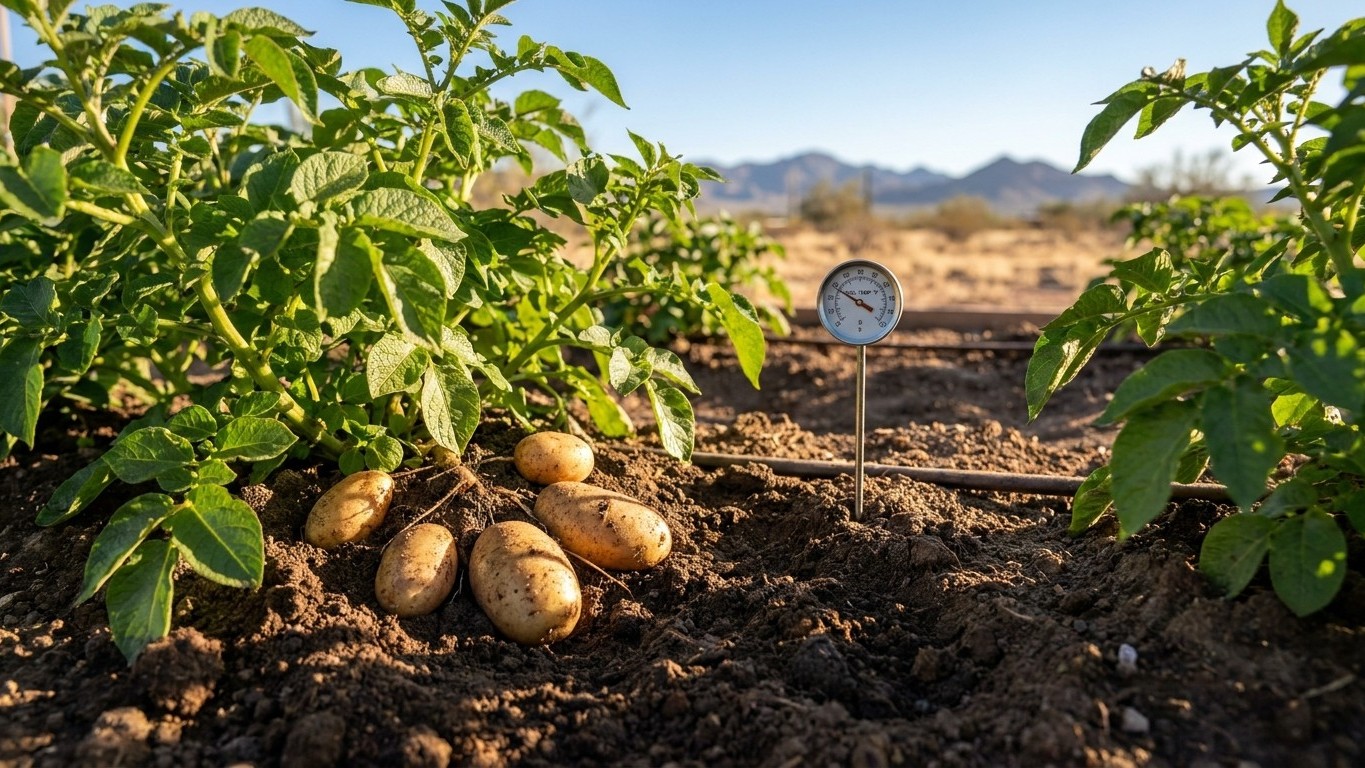
Aim for soil that feels warm to the touch, read in the morning on several days in a row. A cheap soil thermometer settles the question better than the calendar. Nights matter too: if lows are still dipping into the 40s, plants will sit and wait. Black plastic laid over the bed one to two weeks before planting warms the top few inches faster, and it is the most dependable fix for a cool spring. A cold snap after planting calls for a row cover, because one 32 F night kills the vines above ground.
Can you plant sweet potato slips earlier in South Dakota?
Not in the ground. Slips are sprouts grown from a mature root, and they are as tender as basil. Start them indoors before planting day, or buy them timed to arrive when the soil is ready, and keep them in pots until the thermometer agrees. Harden them off outdoors for a few days first. The state falls in USDA hardiness zones 3b to 5b (2023 map, built on winter minimum temperatures), but that number says little here. The crop is grown as an annual and the first frost ends it. Slip basics, including how to sprout your own, are covered in Growing Sweet Potatoes: Slips, Heat, and a Careful Cure.
How long the season lasts here
At the Sioux Falls reference station, the frost-free stretch runs from the April 29 to May 9 band in spring to the September 24 to October 4 band in fall, roughly four and a half to five months. Rural gardens often lose a week or two at each end, so check your county’s dates.
For sweet potatoes the usable season is shorter than that count suggests. Growth starts when the soil is warm, so the working season begins in late May and ends when frost threatens the vines. That allows one planting. Lettuce, bush beans and radishes can be re-sown every few weeks, but a sweet potato set out in July meets the fall frost with roots the size of a finger. Spare slips are better used as replacements for losses in the first couple of weeks.
With no second chance, check every slip before it goes in. Roots or small white nubs along the stem mean it will take hold quickly. A cutting with none can stand in a jar of water for several days until nubs show. A rooted slip starts growing within days, while an unrooted one spends its first weeks making roots, and a short season has none to spare.
Gardeners in other short-season states work within the same limits. The notes on Growing Sweet Potatoes in Idaho and Growing Sweet Potatoes in Maine show how a cooler or shorter summer changes the plan.
When should you dig sweet potatoes before frost?
Frost blackens the vines. When that happens, cut them back and dig within a few days, because roots left in cold, wet soil are damaged. Use a fork set well away from the row and work on a dry day, since the skin bruises easily. Roots then need curing in a warm, humid place before storage in a spot that stays cool, such as an interior closet. Never store sweet potatoes in a refrigerator or a cold cellar. Cold injury below that range is permanent, and it is among the most common ways a good harvest is lost. Inspect roots every week or two while they are stored. A soft patch or a weeping spot ends the question, and that root goes out.
Heat and water in South Dakota

Sioux Falls averages 13.8 days a year at 90 F or higher, according to the NOAA NCEI 1991-2020 normals for that station. It is a count at one airport, not a map of the state, and it is a modest number.
Sweet potatoes want accumulated warmth and warm nights, which a tally of 90-degree days does not capture. A low tally still hints that the summer does not hold heat the way it does across the Southeast, where the crop is routine. Here it becomes a project with three parts: black plastic on the bed, ridges of loose soil that drain and warm quickly, and an early-maturing type. A low tunnel of row cover over the plastic holds extra heat in the first weeks. Vent or remove it once the vines reach the edges of the bed or the days turn hot.
A cool, damp summer brings a different set of troubles: slow vine growth, roots that stay small, mildew on the leaves, and rot in soil that stays wet. Ridges, well-drained ground and generous spacing for airflow are the defense. So is moving the planting away from any bed where roots rotted the year before.
How much rain do sweet potatoes get in a South Dakota summer?
The reference station averages about 10.8 inches of rain across June, July and August, out of 27.9 inches for the year. By month, that is 4.23 inches in June, 3.25 in July and 3.34 in August. July is the driest, which is about what the crop wants, so a dry spell leaves little margin. These are normals for 1991-2020, what the region can usually expect and no forecast. A rain gauge on your own plot tells you more than any station.
Soil changes the picture. A sandy bed lets rain through within the day and may need watering every few days even in a wet month, while clay holds it for a week. Summer thunderstorms that drop an inch in an hour mostly run off, especially from a raised ridge, so a storm is less useful than it sounds.
Rain also decides how the roots finish. Steady moisture lets them swell evenly. A long dry spell followed by a soaking makes them swell fast and split. Mulch the aisles once the soil is warm, water deeply through dry stretches, and ease off in the last couple of weeks before digging.
Which sweet potatoes suit South Dakota
Choose by type. A short season favors the earliest-maturing types, the ones sold for northern gardens. Compact, bush-habit vines fit a ridge under plastic and take less room. With only 13.8 hot days in a typical year, heat tolerance is not the first criterion. In damp summers, disease resistance moves to the top, and catalog descriptions list it.
Variety names are left out on purpose. An “early” label in a catalog often comes from trials in warmer states, and a variety that thrives in Georgia can stall on the northern Plains. The ones trialled nearby are the only recommendation that means anything. South Dakota State University Extension and your county office can point you to what has been grown successfully in your area, and to suppliers of certified disease-free slips.
Roots from the grocery store make a poor starting point. Their variety is unknown and they may carry disease that the new plants will pass along. Buy slips from a supplier that sells certified planting stock.
Labels cause confusion here too. A sweet potato is a relative of morning glory and has no link to the nightshade family, so potato rotation rules do not apply to it. The “yam” in the supermarket is nearly always a sweet potato, since true yams are a different tropical crop. Give sweet potatoes their own rotation, and keep them out of any bed where roots rotted.
Common questions
Can you really grow sweet potatoes in South Dakota?
Yes, with a warm start. Black plastic, ridged beds, rooted slips and an early-maturing type compensate for a short summer. Expect smaller harvests in a cool year.
When do you plant sweet potato slips in South Dakota?
When the soil feels warm four inches down, usually a couple of weeks after the last frost. At the Sioux Falls reference station that points to the last week of May or the first week of June. Rural and higher-elevation gardens run later.
Is black plastic worth it?
In a state with 13.8 days a year at 90 F or higher, it is the most dependable way to warm the soil early and hold the warmth through cool nights. It also suppresses weeds. Pull it back or vent any tunnel when hot weather arrives.
Can you store sweet potatoes in the refrigerator?
No. Cure them first in a warm, humid spot, then keep them where it stays around 55 to 60 F. A refrigerator or a cold cellar causes cold injury that cannot be reversed. Any root that develops a soft patch or a weeping spot should be thrown out.