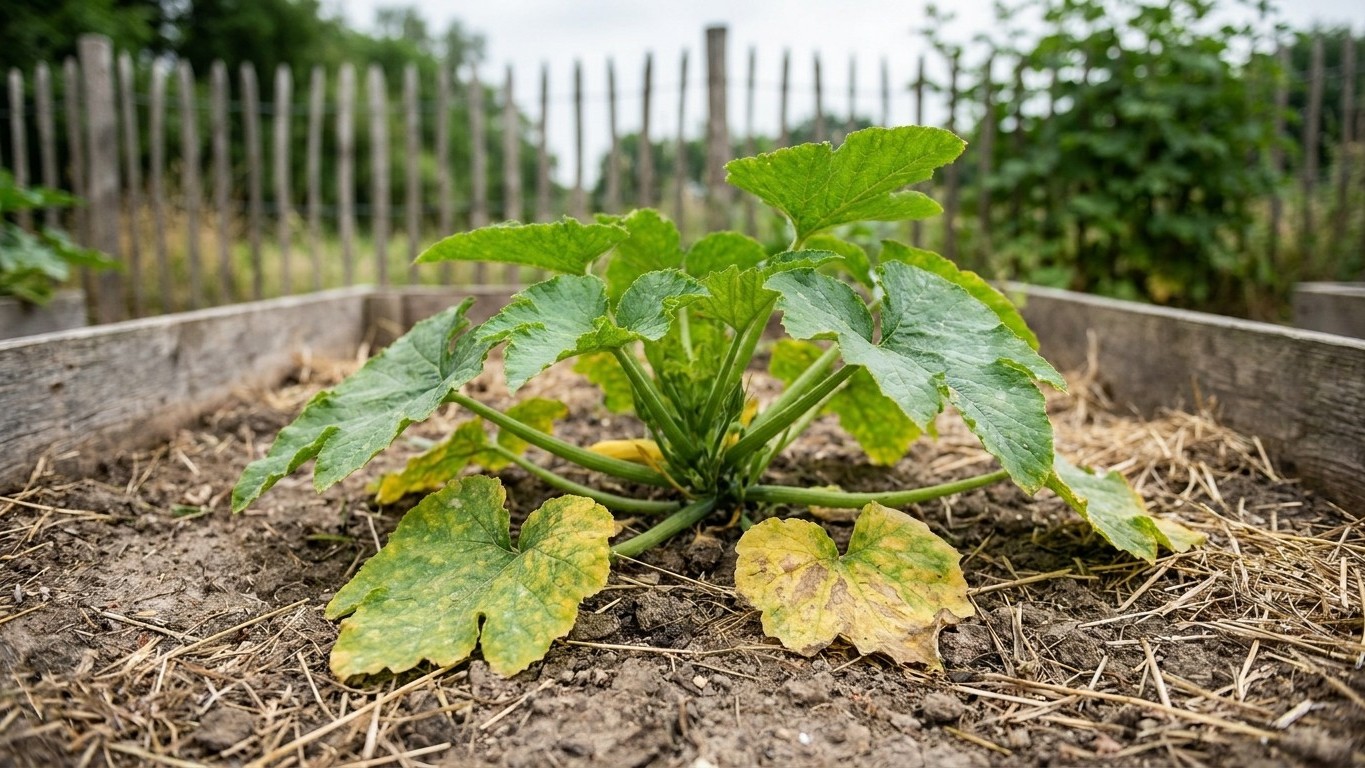

South Dakota gardeners get one shot at winter squash: seed outdoors once soil has warmed past the last-frost window, and count backward from the first fall frost to make sure the fruit has time to mature and cure. The reference dates for the state’s most-monitored weather station put that window in mid-to-late May, with harvest pressure starting in late September. Everything else on this page is about how much that answer shifts once you leave the airport where the data comes from.
The short answer for South Dakota
NOAA’s 1991-2020 climate normals for station USW00014944 put the last spring frost (32°F) between April 29 and May 9, and the first fall frost between September 24 and October 4. Those aren’t fixed calendar dates. They’re a probability band: the 30-70% range for when a freeze happens. Planting right at April 29 means you’re gambling on the early end of a band where a freeze is still fairly likely. Waiting until after May 9 puts you past the point where freeze odds drop below 30%, which is the safer bet for a crop that dies outright at 32°F.
Winter squash isn’t just frost-sensitive, though. It’s a warm-soil crop. Seeds sit and rot in cold, wet ground even if the air temperature is technically frost-free. That’s why most South Dakota gardeners push direct-seeding to the second or third week of May, a week or two past the tail end of the frost window, rather than planting the moment frost risk clears.
Counting forward from there to the first fall frost gives a growing season of roughly 138 to 158 days at the reference station, depending on which end of each frost band you use. Winter squash varieties typically need 80 to 110 days from seed to harvest, plus another two to three weeks of curing time before the first hard freeze if you’re leaving fruit on the vine. That math works at the reference station. It gets tighter fast once you move toward the shorter, cooler seasons found elsewhere in the state, which is the subject of the next two sections.
If a seed packet or a national planting guide gives you a date that doesn’t match this window, treat this page’s numbers as the ones tied to actual South Dakota climate data, not a generic national average.
What will not work here
The most common failure isn’t frost. It’s water management during the hottest stretch of summer. The reference station averages 13.8 days a year at or above 90°F, concentrated in July, which is also the driest month of the growing season at just 3.25 inches of rain. Squash plants set fruit right around that same window. A gardener watering on a fixed weekly schedule, the way you might for a lawn, is very likely under-watering during exactly the stretch when blossom drop and stunted fruit are most common. Winter squash needs deep, consistent soil moisture through flowering and fruit set, and 3.25 inches of rain spread unevenly across a month with nearly two weeks of 90-plus heat doesn’t reliably deliver that on its own.
Long-season varieties in short-season pockets
The second failure point is variety choice mismatched to season length. A winter squash that needs 110 to 120 days to mature, some of the larger Hubbard and banana types fall in that range, is cutting it close even under the 138-to-158-day window at the reference station. In the parts of the state with a shorter frost-free stretch, that same variety can run out of season before the fruit finishes curing, leaving you with squash that looks ripe but has thin, soft skin that won’t store past a few weeks.
Transplanting too early causes a quieter version of the same problem. Winter squash transplants set out before soil has genuinely warmed sit in place, sulking, rather than growing, and often lose whatever head start they were supposed to provide. Direct-seeding into warm soil after the frost window frequently outperforms an early transplant that stalled for two or three weeks. None of this is a humidity problem, South Dakota summers are dry rather than muggy, so tight spacing isn’t the main disease risk here the way it would be in a wetter region. The risk in this state is heat and a compressed season, not fungal pressure from crowding.
What changes across South Dakota
South Dakota’s USDA Plant Hardiness Zones (based on average annual extreme minimum winter temperature) span 3b to 5b, a two-and-a-half-zone spread across one state. That range alone tells you there’s no single statewide planting date. A zone 3b location and a zone 5b location can differ by several weeks in both when the ground is workable in spring and when the first killing freeze shows up in fall.
| Zone tendency | General planting shift | Variety strategy |
|---|---|---|
| Colder end (3b) | Later start, earlier fall risk | Favor shorter-maturity types (80-95 days), consider transplants started indoors 3-4 weeks ahead |
| Warmer end (5b, closer to the reference station) | Matches the reference window fairly closely | Room for mid-to-longer maturity types (95-110 days) |
This table is directional, not a lookup for your address. The hardiness zone map measures winter extreme cold, not frost-free season length, so it’s a proxy for growing conditions rather than a direct planting calendar. Still, the pattern holds in practice: gardeners toward the colder end of that range are generally safer treating the reference station’s window as a floor, not a target, pushing their own planting a bit later and their variety choice a bit shorter. Gardeners closer to the warmer end have more room to work with the numbers in the first section as written.
Don’t try to guess your own zone from this description. The USDA map is built for exactly that lookup, and it’s more precise than any regional description in an article like this one.
Where to check this for your own county
South Dakota State University Extension runs the state’s land-grant extension service, and it’s the source built to answer the question this page can only answer at the state level. The address is extension.sdstate.edu.
Once there, look for two specific things rather than browsing generally. First, a county-level or regional planting calendar, since SDSU Extension publishes guidance that accounts for local frost data rather than the single reference station cited throughout this page. Second, look for variety trial results. Extension offices run their own test plots and track which winter squash varieties actually finished and cured well in local conditions over multiple seasons, information that goes well beyond a seed packet’s generic “80 days” claim.
A state-level page, this one included, is built to be directionally correct across a large and climatically varied territory. A county recommendation from your own extension office is built around your actual conditions: your soil type, your local frost pattern, your elevation. When the two disagree, trust the county-specific source over the state-level one. That’s not a caveat added out of caution, it’s simply how extension data is structured, from national USDA hardiness zones down to state normals down to county trial data, each layer getting more specific and more useful for an actual planting decision.
If your county doesn’t have a published planting calendar of its own, the SDSU Extension office can typically point you toward the nearest regional data that applies, which is still a better fit than a single statewide date.
Checking this against your own garden
Every date on this page comes from long-term averages, not from what’s happening in your yard this particular spring. Three things your plants can tell you outrank any calendar.
Soil warmth by feel is the first and most useful check. Winter squash seed wants soil that feels warm and crumbly to the hand, not cold and clumped, even at a few inches down. If a handful of soil in mid-May still feels chilly and damp rather than warm, the ground hasn’t caught up to the calendar yet, whatever the frost-date average says, and seed sown into it will likely sit and stall rather than germinate.
The first flush of male flowers is the second signal. Squash plants produce male blooms before female ones, often by a week or two, and a healthy, timely appearance of those first yellow flowers tells you the plant is tracking normally for its variety and your particular microclimate. A long delay past what the seed packet describes suggests the plant is running behind, whether from cool soil, thin sun exposure, or a rougher-than-average spring.
The appearance of the first true leaves, the second set that emerges after the initial rounded seed leaves, is the third marker worth watching. True leaves signal the seedling has moved past its most fragile stage and is drawing energy from its own photosynthesis rather than the seed’s stored reserves. A slow or uneven emergence of true leaves across a bed is often the clearest early hint that a particular spot in your yard runs cooler or wetter than the rest, information no state-level planting date can give you.