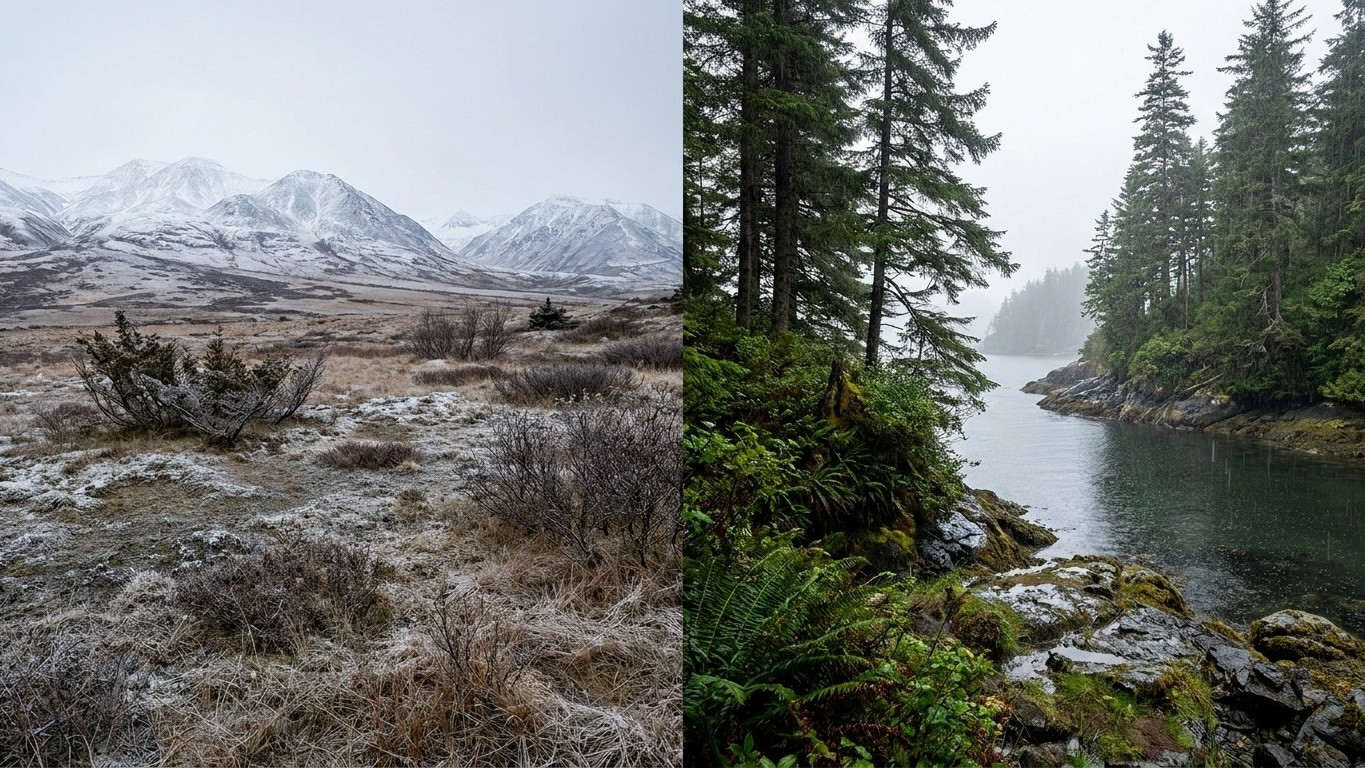

Tennessee’s hardiness range runs from 5b to 8a on the USDA scale, a spread wide enough that a shrub thriving in Memphis can struggle in Mountain City. Cross that range against the 65 landscape plants this site tracks and the numbers land firmly in the state’s favor: 57 are hardy across the whole territory, 8 only in part, and none fail everywhere. That last number is the one worth sitting with for a second.
What will not survive a winter in Tennessee

Start with the mechanism, because it explains everything that follows. The USDA hardiness system is built on one number: the average annual extreme minimum temperature recorded at a given location over a multi-decade period. Zone 5b sits at the cold end of that scale, zone 8a at the warm end, and Tennessee’s state line runs through both. A plant rated hardy for zones 5 through 8 will tolerate whatever winter the state throws at it, from the Cumberland Plateau to the Mississippi bottomlands.
Here is the plain result of crossing that range against the plant list this site documents: zero. No tree, shrub, or perennial in the 65-plant set fails across the entirety of Tennessee. That is not the same as saying every plant on earth grows here, only that among the species this site has checked, none are locked out of the whole state.
That is a meaningfully different statement from “everything grows everywhere in Tennessee.” A plant can be rated hardy here and still be unhappy here, because the warm edge of a hardiness rating is often a heat limit rather than a cold one. A species that just clears zone 8a on the warm side is being told it can survive the winter, not that it will look good doing it through a hot, humid Memphis July. Hardy means the plant lives. It says nothing about whether it thrives, blooms on schedule, or resists the fungal pressure that comes with Southern humidity.
So the honest framing for this state is not a list of failures. It is a reminder that the real filtering work happens one level down, in the plants that only cover part of the range, and in factors that have nothing to do with winter cold at all: soil drainage, summer rain, and timing. Those are the sections that actually separate a good planting decision from a mediocre one here.
The plants that work in part of the state and not the rest
This is the section a single-state guide cannot skip, because Tennessee’s zone range is genuinely split. Eight of the 65 documented plants are hardy in part of the state’s zones and not the rest. None of them is a flat yes or a flat no. A reader in Bristol and a reader in Memphis reading the same plant name need two different answers, and giving them one verdict would be wrong for whichever one didn’t get lucky.
The table below lists each plant with the zones of Tennessee’s own range where it does not hold up, grouped by which end of the state that failure sits on.
| Plant | Category | Fails in these Tennessee zones |
|---|---|---|
| Ficus carica (fig) | Fruit | 5b, 6a, 6b (cold end) |
| Hydrangea macrophylla (bigleaf hydrangea) | Shrub | 5b (cold end) |
| Lagerstroemia indica (crape myrtle) | Tree | 5b (cold end) |
| Magnolia grandiflora (southern magnolia) | Tree | 5b (cold end) |
| Weigela florida | Shrub | 7a, 7b (mid-warm zones) |
| Syringa vulgaris (common lilac) | Shrub | 7b, 8a (warm end) |
| Picea abies (Norway spruce) | Tree | 8a (warm end) |
| Thuja occidentalis (arborvitae) | Tree | 8a (warm end) |
The pattern splits cleanly. Fig, bigleaf hydrangea, crape myrtle, and southern magnolia drop out at the coldest end of the state’s range, zone 5b, which covers the highest elevations of the Cumberland Plateau and the far northeast corner. Lilac, Norway spruce, and arborvitae drop out at the opposite end, zone 8a, which sits along the far southwestern edge near Memphis. Weigela is the odd one, failing in the middle-warm zones 7a and 7b rather than at either extreme. The facts here name where each plant fails; they don’t say why, and guessing at a mechanism would be less reliable than the zone list itself.
Finding out which of those zones covers your own property means checking a county-level zone map rather than relying on “Tennessee” as a single answer. The insulation guide for Tennessee carries that county-by-county zone picture and is the fastest way to confirm which side of these splits a given address falls on.
The soil and the summer they will be planted into
Winter cold gets the attention, but drainage quietly kills more woody plants than any freeze does. Tennessee’s representative soil, the Dickson series, is an Ultisol: an old, heavily weathered, naturally acid soil with a surface pH around 5.0, a texture that runs 11 percent sand, 20 percent clay, and 68 percent silt, and organic matter around 1.5 percent. It’s classified as moderately well drained rather than excessively drained, which matters more than the acidity for most of the plants on this page.
A silt-heavy soil like this holds water longer than a sandy one and drains it more slowly than a straight clay would, which means root zones can stay saturated after a heavy rain longer than a plant used to sharper drainage would prefer. That’s the condition that rots roots over a wet winter, not the cold itself. The Dickson series is what USDA lists as representative for the state, not a guarantee about any individual yard: river bottoms, hill country, and any lot a builder has graded or filled will differ, sometimes completely, which is why a soil test of the actual planting site is worth more than any state-level figure.
Layer summer rainfall on top of that picture. Tennessee averages about 12.3 inches of rain across June, July, and August, with June the wettest month at 4.36 inches and August the driest at 3.79. That’s a solid summer rainfall total by national standards, but the number doesn’t translate directly into a watering plan. The same inch of rain behaves differently depending on what it lands on: on the state’s characteristic silt-clay soil it soaks in and lingers longer than it would on sand, which can be an advantage in a dry stretch and a liability during a wet one. Cross the rainfall figure with the soil rather than treating it as a stand-alone watering guide, and remember these are normals for one reference station, not a promise for any specific yard.
When to plant, here
The frost dates set the calendar, but the reasoning behind them matters more than the dates themselves. A newly planted tree or shrub needs time to grow roots into the surrounding soil before it’s asked to do anything demanding, whether that’s pushing out a full canopy of leaves in a hot summer or standing through a hard freeze with a root system still Confined to its original planting hole.
| Window | Typical dates | Best suited to | Main risk |
|---|---|---|---|
| Spring | After March 31 to April 12 | Plants that need a full growing season to root in before their first winter | Late freeze damaging new growth if planted before the average last frost |
| Autumn | Before October 28 to November 8 | Trees and shrubs that benefit from cool-season root growth without leaf or heat stress | Not enough time to establish roots before hard freeze, especially at the cold end of the state |
Those dates, March 31 to April 12 for the last spring frost and October 28 to November 8 for the first fall frost, are averages drawn from a single reference station over the 1991-2020 period, not a hard promise for any specific spring or fall. East Tennessee and the Cumberland Plateau run cooler and later than Nashville on both ends of the calendar, which shortens the autumn planting window in the state’s coldest zones considerably. A plant that ships bare-root or in a small container in late October has noticeably less time to establish roots in Mountain City than it does in Memphis.
Whichever window is used, water through the entire first growing season regardless of what the plant’s mature drought tolerance rating says. Those ratings, the ones that describe a species as drought-tolerant or low-water, are written for established plants with a root system already spread through the surrounding soil. A first-year planting hasn’t earned that rating yet.
Where to read about each one
Among the 65 documented species, the 57 hardy across all of Tennessee’s zones split across three categories worth knowing by name. Trees include red maple, sugar maple, serviceberry, river birch, American hornbeam, eastern redbud, flowering dogwood, ginkgo, eastern red cedar, sweetgum, black gum, eastern white pine, American sycamore, white oak, red oak, and American linden. Shrubs include red chokeberry, boxwood, summersweet, dwarf fothergilla, panicle hydrangea, inkberry holly, winterberry holly, Virginia sweetspire, mountain laurel, ninebark, Japanese spirea, and arrowwood viburnum. Perennials include yarrow, threadleaf bluestar, butterfly weed, false indigo, milfoil, purple coneflower, alumroot, Siberian iris, English lavender, bee balm, garden phlox, black-eyed Susan, woodland sage, and showy stonecrop.
The plant data behind all of this comes from the North Carolina Extension Gardener Plant Toolbox, a university extension database, crossed on this site against Tennessee’s own USDA hardiness range. These are hardiness ranges, describing where a species survives winter, and they should stay separate from the adaptation ranges used elsewhere on this site for apple varieties, which measure something different: how well a fruit variety performs in a given climate, not simply whether it lives through the winter. Treating the two as interchangeable would blur a distinction the source data itself keeps apart.