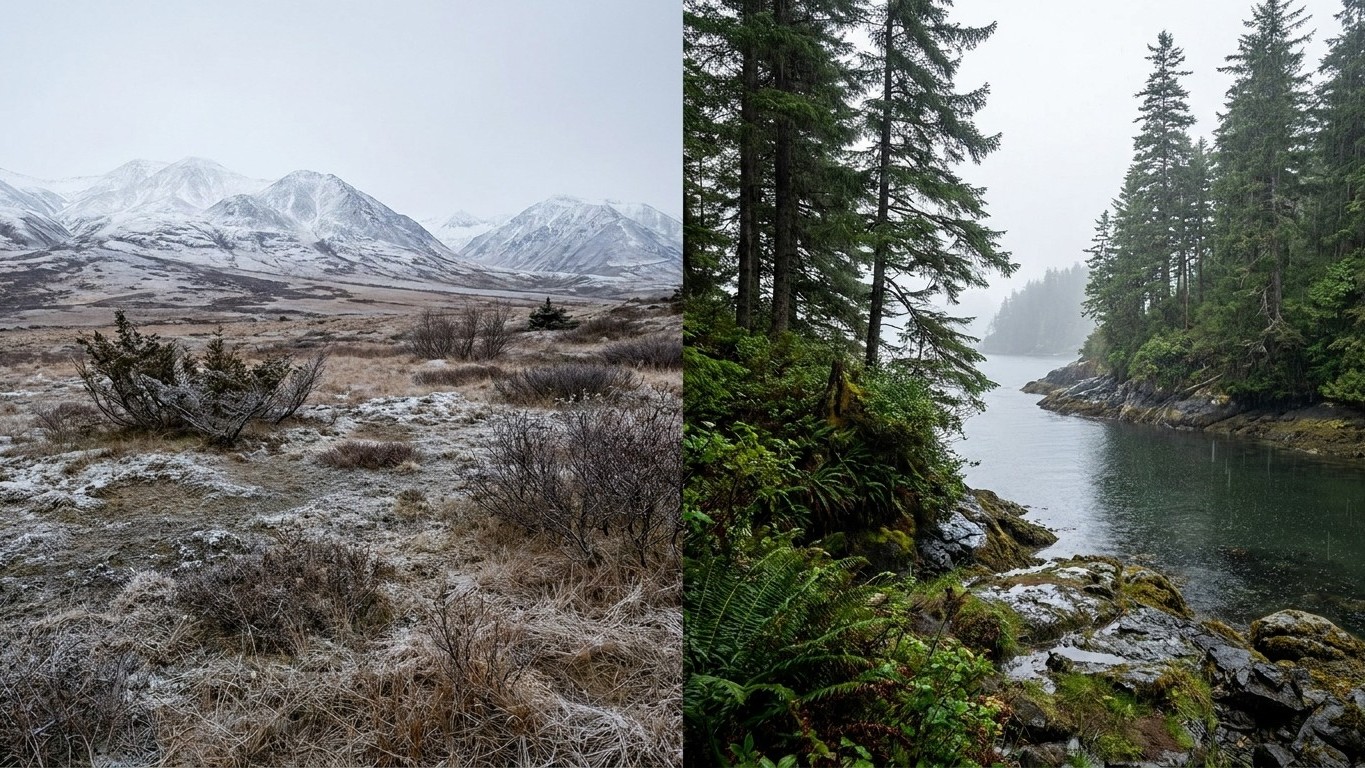

Nevada’s USDA hardiness range runs from 4a to 10a, one of the widest spans in the country. Cross that against the 65 Trees, Shrubs and Perennials documented on this site and the answer is blunt: none survive the whole range, but none fail across all of it either. What actually happens depends entirely on which end of the state a reader is standing in.
What will not survive a winter in Nevada

Start with the range itself. Zone 4a sits at the edge of survivable cold for most ornamental woody plants, the kind of winter low that splits bark and kills roots outright. Zone 10a is the opposite problem: barely a frost most years, summers that punish anything bred for a real dormant season. Nevada’s official range covers both, from high mountain valleys to the low desert around Las Vegas.
Run the 65 documented plants against that full span and the “fails everywhere” bucket comes back empty. Every species on the list is hardy in at least part of Nevada’s zone range. That is not a loophole in the data, it is what a state this large and this varied looks like when you check plant by plant instead of state by state.
That result deserves a caveat before anyone reads it as a green light. Hardy means survival, not comfort. A plant rated to the warm end of its range is often hitting a heat ceiling there, not a cold one, and it can technically live through a Nevada summer while looking stressed and thin the whole time. Being present in the “not hardy anywhere” bucket would mean total exclusion from the state; being absent from that bucket does not mean any given plant is happy in any given Nevada yard.
The real work in this dataset happens one level down. Because Nevada’s zone range is so wide, the plants that are excluded show up excluded from only part of it, not the whole thing. That is the next section, and it is the one that actually decides what a Nevada gardener should plant.
The plants that work in part of the state and not the rest
All 65 documented plants land in this middle bucket, and the split falls into two clear patterns. Fifty of them run out of range at the warm end, meaning they drop out somewhere around zone 9a through 10a, the low-desert corner of the state. The other fifteen fail at both ends: too cold for Nevada’s coldest valleys, too warm for its hottest desert floor, workable only in the middle zones.
| Plant | Type | Fails in these Nevada zones |
|---|---|---|
| Quercus alba | Tree | 10a |
| Acer saccharum | Tree | 9a, 9b, 10a |
| Ginkgo biloba | Tree | 10a |
| Cornus florida | Tree | 4a, 4b, 10a |
| Magnolia grandiflora | Tree | 4a, 4b, 5a, 5b, 10a |
| Viburnum dentatum | Shrub | 9a, 9b, 10a |
| Buxus sempervirens | Shrub | 4a, 4b, 9a, 9b, 10a |
| Syringa vulgaris | Shrub | 7b, 8a, 8b, 9a, 9b, 10a |
| Echinacea purpurea | Perennial | 9a, 9b, 10a |
| Lavandula angustifolia | Perennial | 4a, 4b, 10a |
| Achillea millefolium | Perennial | 10a |
| Prunus persica | Fruit | 4a, 4b, 10a |
| Vaccinium corymbosum | Fruit | 9a, 9b, 10a |
That table is a sample, not the full 65. But the pattern holds across the whole dataset: most exclusions cluster at the desert-hot end of Nevada’s range, a smaller group needs the state’s middle zones and cannot handle either extreme. Nobody reading this should flatten that into a single yes or no. A gardener in a cold mountain valley and one in the Las Vegas valley are getting different answers from the same plant name.
Finding out which end applies means knowing your own zone, not the state’s range as a whole. The insulation guide for Nevada on this site carries the county-level zone picture, which is the fastest way to place a specific address inside this 4a-to-10a span before picking anything off the list above.
The soil and the summer they will be planted into
Nevada’s state soil is the Orovada series, an Aridisol with a surface pH around 7.5, meaning alkaline. It runs sandy, about 66 percent sand against 8 percent clay, with organic matter around 1.4 percent, and it drains well. For a woody plant, that combination matters more than the temperature swing does in a lot of cases: winter wet kills more roots on perennials and shrubs than winter cold does, and a well-drained, sandy-alkaline soil like Orovada sheds water fast enough that soggy roots are rarely the failure point here.
The soil the Orovada series represents is not the soil in every Nevada backyard. Riverbottom ground, hillside cuts, and anything a builder has scraped or filled will differ, sometimes completely. A soil test on the actual planting site is the only way to know whether a given yard tracks that alkaline, sandy profile or runs closer to clay.
Summer rainfall across the reference station’s June, July and August averages about 0.7 inches total, with June the driest month at just 0.04 inches and July and August each bringing a bit more. That number does not double as a watering schedule, and it is not a humidity reading either. It has to be read against the soil it falls on: an inch of rain on Orovada’s sandy surface moves through and is gone within the day, while the same inch on a heavier clay soil elsewhere in the state sits around for days. Combine a sandy, fast-draining surface with a summer that delivers well under an inch of rain total, and newly planted roots are relying almost entirely on supplemental water rather than sky water to get established, no matter what the plant’s mature drought rating says.
When to plant, here
The frost dates on record for Nevada come from the Las Vegas reference station: last spring frost between January 7 and February 1, first fall frost between December 8 and December 23. Those numbers describe an unusually warm, low-desert pocket of the state, the kind that comes with an urban heat island built in. They are not a planting calendar for Reno, Carson City, or anywhere at elevation, where frost arrives months earlier in fall and lingers months later in spring. A county extension office is the right source for a local frost window; these figures only establish how differently the two ends of Nevada behave.
| Window | What it suits | Risk |
|---|---|---|
| Spring, after the last frost | Letting roots establish before summer heat and low rainfall arrive | A late, unseasonal frost snap, more likely the higher the elevation |
| Autumn, before the first frost | Root growth in soil that is still warm, ahead of winter dormancy | A shorter effective window in the coldest parts of the state, where frost can arrive weeks or months earlier than the desert reference date |
The reasoning behind both windows is the same: a young woody plant needs time to grow roots before it is asked to carry a full set of leaves through summer heat, or to sit through a hard freeze with a root system that has not yet spread. In the coldest slice of Nevada’s range, autumn planting leaves noticeably less runway before the ground locks up, which tips the balance toward spring in those areas. Whichever window is used, water through the entire first growing season regardless of what the plant’s drought tolerance rating says. Those ratings describe an established plant with a developed root system, not one still settling into the ground.
Where to read about each one
Among the trees on the list, names like Quercus alba, Acer rubrum, Ginkgo biloba, Cercis canadensis and Pinus strobus all clear part of Nevada’s range, mostly the cooler and mid-elevation zones. Shrubs follow the same pattern: Viburnum dentatum, Physocarpus opulifolius, Spiraea japonica and Kalmia latifolia hold up through the middle of the state but drop out toward the desert floor. Among perennials, Echinacea purpurea, Salvia nemorosa, Achillea millefolium and Baptisia australis cover a wide slice of Nevada’s zones without reaching the hottest edge. And in the fruiting category, Prunus domestica, Vaccinium corymbosum and Rubus idaeus show the same warm-end cutoff as the ornamentals.
Every hardiness figure used across this page comes from the North Carolina Extension Gardener Plant Toolbox, a university-run database, crossed against the USDA zone range this site holds for Nevada. That crossing is what produces the “fails at the warm end” or “fails at both ends” labels used throughout, not a guess about climate mechanics. It is also worth keeping separate from the apple variety adaptation zones found elsewhere on this site: those describe fruiting adaptation for named apple cultivars, a different kind of range built from a different table, and mixing the two would blur what each one is actually measuring.