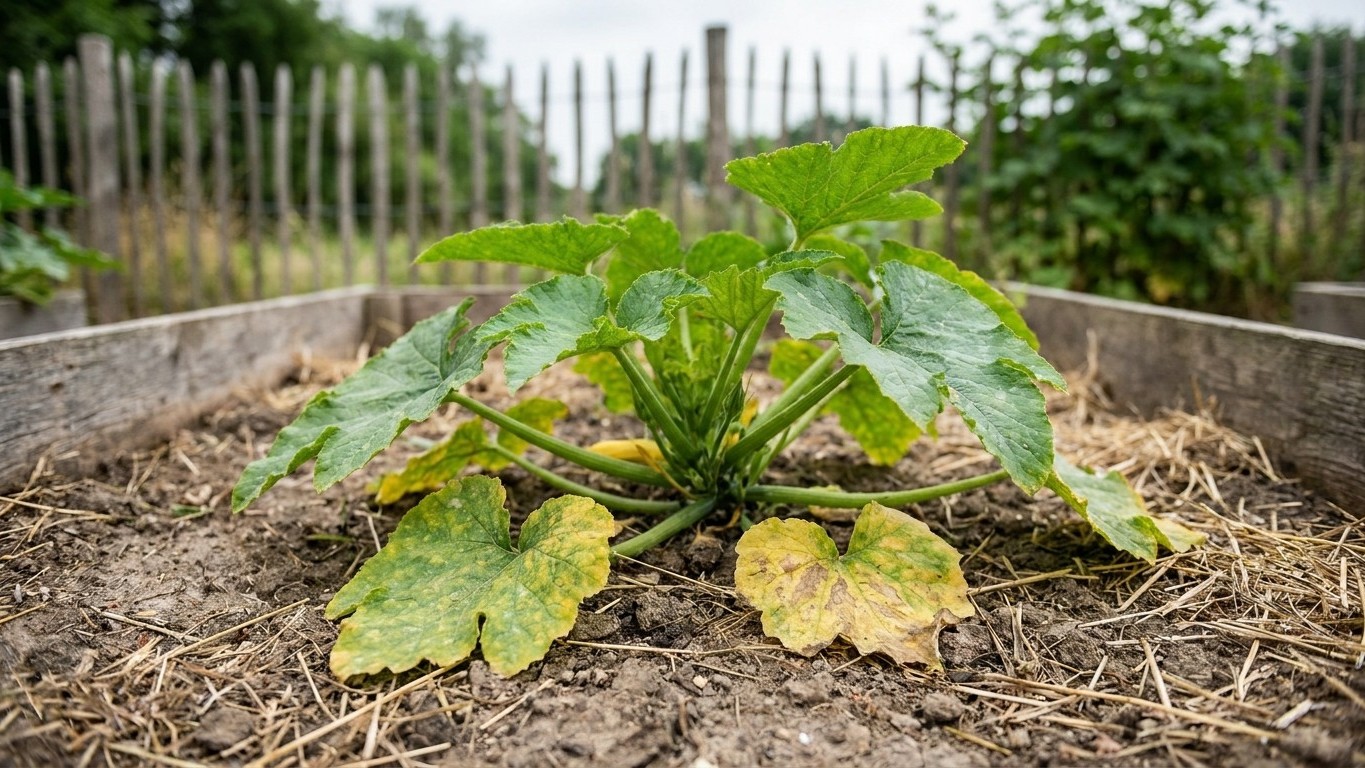

Winter squash goes into Tennessee ground after the last spring freeze, which at the Nashville reference station means after April 12, and once the soil has warmed. The deadline on the other end is the first fall freeze, between October 28 and November 8. Those dates leave about 200 days, enough for most varieties if you plant on time. For the broader picture, see Growing Winter Squash in Tennessee.
The short answer for Tennessee
Sow seed outdoors once the spring frost band is behind you (April 12 at the Nashville station), then keep sowing only as long as your variety’s days to maturity still fit before October 28. Both dates come from NOAA’s 1991-2020 Climate Normals for Nashville (station USW00013897). They are probabilities of a 32°F freeze, not promises.
The spring window runs March 31 to April 12. That is the 30-70% band of 32°F freeze probabilities, the stretch of the calendar where a freeze goes from likely to unlikely. On March 31 a freeze is still a real possibility, and by April 12 it has become the exception. The fall window works the same way, from October 28 to November 8. A freeze can land at either end of it, and some years it lands outside it.
A warm day in the first week of April does not make it planting time. Squash seed sitting in cold soil rots or sulks, and a late freeze kills the seedlings that do come up. Waiting until the later end of the spring band costs you a week or two. A frozen seedling costs you the whole planting.
Do the arithmetic once. From April 12 to October 28 is about 199 days. Seed packets list days to maturity, and the ripe fruit needs to come off before the fall band opens, with time left over for the vines to finish. If you plant in mid-April, nearly any variety fits. If you plant much later, the packet’s number starts to decide for you. The Best Winter Squash to Grow in Tennessee covers which types give you the most room.
What will not work here

Planting in March fails. The Nashville spring band starts on March 31, so a mid-March sowing sits entirely inside the freeze risk. A warm spell in March tempts people every year, and the frost that follows is the reason the band exists.
Counting on a short season is the wrong worry, because Tennessee’s is long. The risk is the opposite: planting casually, because the calendar feels generous, and then running into the fall band with fruit that is not mature. A slow variety planted late gives you immature squash and a vine that dies at the first 32°F night.
Heat is the other problem. Nashville averages 40.0 days a year at 90°F or higher. That is a lot of days when evaporation pulls moisture out of the soil faster than you think, and the plants lose water through big leaves. Stress from hot, dry stretches is when plants shed flowers and stall.
Rain looks generous on paper and misleads people. Summer brings about 12.3 inches across June, July and August (50.5 inches over the year), but it does not arrive evenly.
| Month | Rainfall (inches) |
|---|---|
| June | 4.36 |
| July | 4.16 |
| August | 3.79 |
August is the driest month at 3.79 inches, and it falls just as fruit is sizing up. Those are Nashville normals, not a forecast. Rain that arrives as one summer thunderstorm mostly runs off, especially on clay or a slope. On sandy soil even a good rain can drain away within the day. A weekly watering routine fits neither case, so a rain gauge on your own plot tells you more than the normals do.
Close spacing also fails in a wet June. With 4.36 inches that month, leaves stay damp and air barely moves through a crowded planting, which favors fungal disease. Give vines room, and water the soil rather than the foliage.
What changes across Tennessee
There is no single answer for the state. The USDA Plant Hardiness Zone Map (2023, built on 1991-2020 normals) places Tennessee in zones 5b through 8a, a spread of several zones inside one border. Hardiness zones rest on one variable, the average annual extreme minimum temperature, so they say nothing about summer heat or rain. They do show how different the cold end of the state is from the warm end.
Every date here is for Nashville, the reference station. East Tennessee and the Cumberland Plateau are cooler and run later in spring. If you garden in either, treat March 31 to April 12 as the earliest your own band could start, not as your band. Shift your sowing later, and expect the fall freeze to come earlier than the Nashville range as well. What it can tell you is the direction: later in the spring, earlier in the fall, and a shorter margin than the 199 days above.
The shift matters most with slow varieties. A gardener on the Plateau who plants a long-season type on the Nashville schedule may find the packet’s days to maturity running into the first freeze. A faster type gives the same grower more room.
Do not take a zone from a neighbor. Look up your own location on the USDA map, which is searchable by ZIP code, and use it only to see where you sit between 5b and 8a. Remember that a valley, a ridge or a city lot can run warmer or colder than the map’s average.
Where to check this for your own county
A county recommendation beats a state one. Frost dates, soils and elevation change from county to county. The people who track them are at University of Tennessee Institute of Agriculture Extension, which has an office serving each county.
Two things are worth looking for there. The first is a local vegetable planting calendar, which will give dates tuned to your county’s frost pattern rather than to Nashville’s. The second is the list of varieties that have been trialled in your county or nearby, with notes on how they handled heat, disease and the length of the season. A variety that did well in a trial plot a few miles away is a better bet than one chosen from a catalog.
If you call or visit, bring your approximate planting date and the variety you have in mind, and ask how it fits your area’s first fall freeze. County staff can also tell you about local pest and disease pressure, which is not something state-level normals can show.
The calendars in our reference notes are Clemson’s lawn-care publications, which cover lawn grasses and not squash, so they do not apply here. When you find your county’s calendar, trust it over the dates above.
Checking this against your own garden
Your own observations outrank every date here, because your garden is a single plot and the normals are a regional average. Three signs are worth watching, and none needs equipment.
- Soil warmth by feel. Dig a hand-deep hole in the afternoon and press your bare hand into the bottom. If it feels cold, the seed will sit. If it feels neutral to warm, you can sow. Compare a sunny bed to a shaded one to see how much your microclimate varies.
- The first true leaves. After the seed leaves open, the first rough-textured leaf marks real growth. If yours come noticeably later than a neighbor’s, your site runs cooler and you should lean toward the later end of the band.
- The first flush of male flowers. Male blooms open before female ones. When they appear tells you how fast your plot warms, and how much of the season is left for fruit to set and ripen.
Write the dates down each year. After two or three seasons you will have a calendar that is more accurate for your yard than any regional one, and a record of how your garden compares with the Nashville normals.
Some gardeners also time this by the Moon: when to plant winter squash by the moon, as almanac tradition rather than fact.
Common questions
Can I Plant Winter Squash in March in Tennessee?
It is a gamble. At the Nashville station the spring freeze band runs March 31 to April 12, so a March planting sits inside the risk window. Wait until the band has passed and the soil feels warm.
When does fall frost end the season?
At the Nashville reference station, the first fall freeze comes between October 28 and November 8, based on NOAA’s 1991-2020 normals. Aim to have fruit mature and harvested before that band opens.
Does August rain cover the plants’ water needs?
Not reliably. August is the driest summer month at 3.79 inches, and Nashville has 40.0 days a year at 90°F or above. Rain that falls in one storm mostly runs off, and sandy soil drains fast. A rain gauge in your garden tells you what your plants actually got.
Do East Tennessee and the Plateau follow the Nashville dates?
No. Both are cooler and run later in spring than Nashville, so your planting and your first fall freeze will both differ. Your county’s extension office can give you dates for your location.