
Winter squash needs warm soil and a long, uninterrupted run to maturity, and Tennessee’s climate splits sharply between its western lowlands and its eastern highlands. Plant after soil warms in mid-to-late spring, expect a growing window of roughly six and a half months in most of the state, and match the type to your local heat, humidity and season length rather than chasing a single variety name.
When the soil is warm enough in Tennessee
The question every gardener asks first is “when do I put seed in the ground,” and the honest answer starts with frost, even though frost isn’t really the thing that matters. At the reference station used for Tennessee’s climate normals (NOAA NCEI, station USW00013897), the last spring frost falls between March 31 and April 12, based on the 1991-2020 Climate Normals and their 32F freeze probability band. That’s a 30-70% probability window, not a guaranteed date, and it’s worth sitting with that for a second: it means frost risk doesn’t vanish on a single calendar day, it fades out over roughly two weeks.
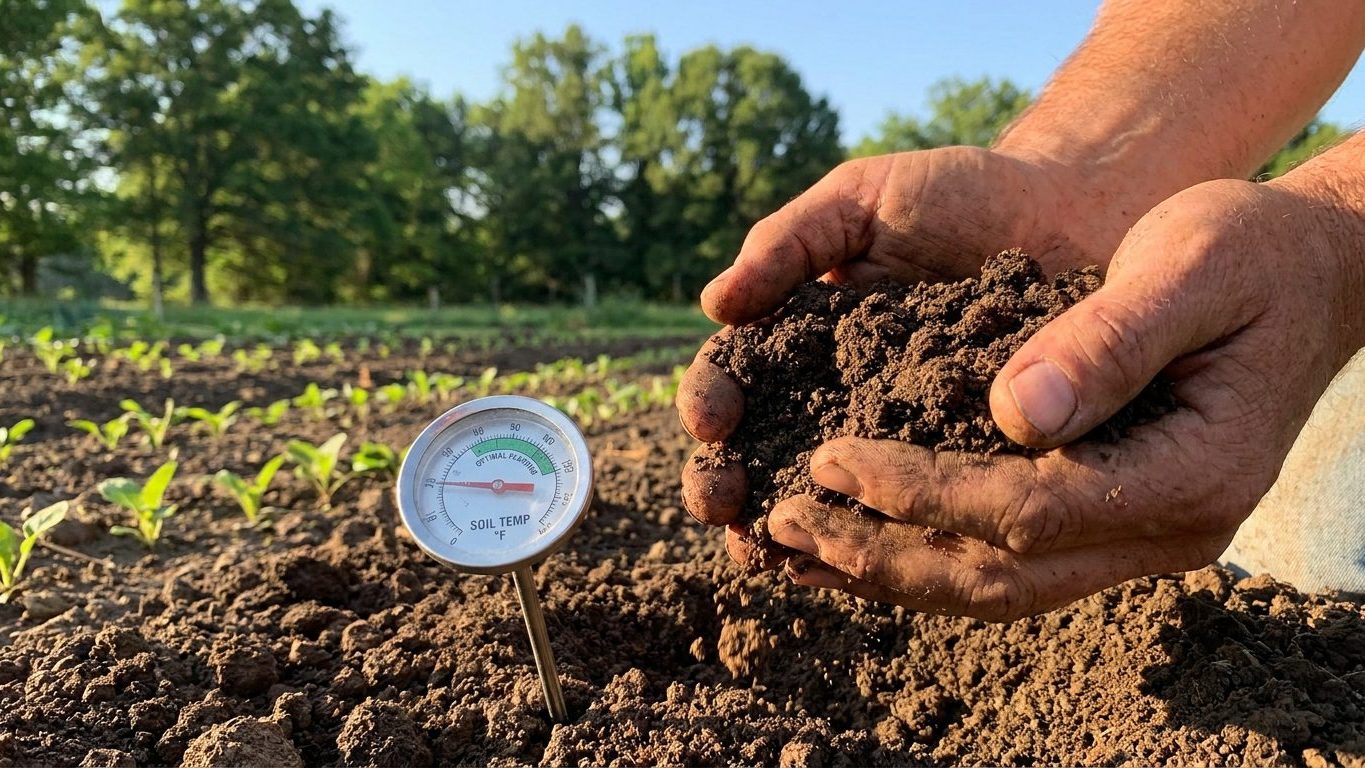
Winter squash doesn’t actually care about frost risk directly. It cares about soil temperature, and soil takes time to catch up once the air stops freezing. Squash seed sulks in cold ground, germinates unevenly, and is more prone to rot before it ever gets a chance to sprout. So the practical move is to treat that early-to-mid April frost window as a floor, not a starting gun, and wait until the soil itself has warmed before direct-seeding or setting out transplants. A simple soil thermometer pushed a few inches down tells you more than the calendar does.
There’s also a real split within the state that the statewide frost window doesn’t fully capture. East Tennessee and the Cumberland Plateau sit at higher elevation and run cooler and later in spring than the Nashville area, which is where this reference station sits. A gardener in the mountains east of the Plateau should expect their own safe planting window to land later than the statewide date, sometimes by a couple of weeks, depending on elevation and local terrain.
What this means in practice: don’t fixate on hitting an exact date from a calendar app. Watch the soil, watch the ten-day forecast, and lean on regional knowledge rather than a single statewide number. The University of Tennessee Institute of Agriculture Extension tracks county-level conditions and can tell you what local growers are actually seeing in a given spring, which is more useful than any national frost map when you’re deciding the week to plant.
How long the season lasts here
Subtract the two frost dates from NOAA’s normals and you get the shape of the growing season. Spring frost risk fades between March 31 and April 12, and fall frost risk begins building between October 28 and November 8, both from the same 1991-2020 Climate Normals at station USW00013897. Counting from the later end of the spring window to the earlier end of the fall window gives a frost-free stretch of roughly six and a half months, call it 199 days at the tightest reading. That’s a genuinely generous season by national standards, and it changes what’s worth attempting in the garden.
A window that long opens the door to succession sowing, something gardeners in shorter-season states simply can’t consider. Winter squash is slow, most types need a solid three to four months from seed to a cured, storable fruit, and a six-and-a-half-month frost-free stretch gives enough slack to sow a second round in early-to-mid summer if the first planting gets hit by a pest problem, a patchy germination, or squash vine borer damage that guts the main crop. It’s not a given that every gardener needs a second sowing, but the option exists here in a way it doesn’t in a Zone 4 mountain valley with a 120-day season.
That slack also changes the calculus on transplanting versus direct-seeding. Winter squash resents root disturbance, its taproot doesn’t love being moved, so gardeners in short-season territories often accept the transplant shock anyway because they can’t afford to lose the early weeks to direct-seeded germination time. In Tennessee’s longer window, there’s less pressure to transplant at all. Direct-seeding once the soil has warmed, then thinning to the strongest seedlings, is a perfectly viable path, and it sidesteps the root check entirely.
For a full walkthrough of how to stage a second planting, spacing it against your local frost dates and your first harvest, the site’s succession sowing guide covers the timing logic in more depth than fits here.
Heat and water in Tennessee
Season length gets a squash to the finish line, but heat and water decide how rough that trip is. At the Nashville reference station, NOAA’s 1991-2020 Climate Normals count an average of 40.0 days a year reaching 90F or higher. That’s a meaningful heat load, not extreme by Deep South standards, but enough to matter for a crop that’s setting fruit through the hottest stretch of summer. Forty days above 90F means real water demand during flowering and fruit fill, the two stages where a squash plant is least forgiving of a dry stretch.
Rainfall doesn’t disappear during those hot months, but it thins out. Summer rainfall across June, July and August averages about 12.3 inches at the same reference station, broken down as 4.36 inches in June, 4.16 in July, and 3.79 in August, the driest of the three. August is the month where heat and dryness overlap most, which is exactly when a maturing squash needs steady moisture to finish filling out. That combination, a moderate heat load riding on top of a summer that gets progressively drier, is the practical argument for irrigation rather than a reason to panic. A soaker hose or drip line run through the row, checked whenever a week passes without rain, does more for fruit quality than almost any other single practice.
None of these are small numbers, and they don’t describe a mild, damp climate the way some cooler, higher-elevation pockets of the state might feel in a given year. But they don’t describe a desert either. Winter squash is the crop where the whole season has to work: an immature fruit pulled off the vine before it’s fully ripe won’t cure properly and won’t store, no matter how well it looked growing. In a hot, moderately dry Tennessee summer, that means the fruit generally has the runway it needs to finish, provided the plant isn’t stressed dry through August. Where local rainfall runs even lower, or where a garden sits on sandy soil that drains fast, the water gap between what falls and what the plant needs only widens, and a rain gauge on the actual plot is the only way to know for sure how often that garden needs a hand.
The one caution worth repeating: 40 days above 90F is a count at one reference station, not a blanket description of the whole state. A garden up on the Cumberland Plateau or tucked into an eastern valley runs cooler than that number suggests, and the water math shifts accordingly.
Which winter squash suit Tennessee
Given a six-and-a-half-month window, a moderate heat load, and a summer that dries out toward August, the honest answer is to think in types rather than named varieties. A long season like this doesn’t force a grower into only the earliest-maturing types the way a short northern season would; there’s room here for slower, larger-fruited types that need the full stretch to size up and cure properly.
Heat and airflow matter more than the calendar once summer sets in. Types bred with some tolerance for heat stress, or simply given room to breathe with wider spacing and mulch at the root to keep soil temperatures down, handle the 90F days better than anything crowded into a tight bed with poor circulation. Humidity, even a moderate summer humidity rather than a truly wet one, is where powdery mildew and other foliar diseases get their start, so disease resistance and airflow between plants deserve to be the first filter a Tennessee gardener applies, ahead of fruit size or shape.
What this page won’t do is hand over a list of cultivar names. That’s a deliberate choice, not an oversight. Variety trial results shift from year to year and from region to region within a single state, and a name that performed well in a university trial plot near Nashville doesn’t necessarily hold up on a shaded lot in the Smokies or a sandy stretch out toward Memphis. Naming a specific squash here would mean guessing at conditions this page has no way to verify, and that’s the one kind of advice a gardener figures out is wrong the moment the fruit fails to size up.
The reliable move is to check what’s actually been trialled locally. The University of Tennessee Institute of Agriculture Extension publishes variety recommendations built on trials run in Tennessee conditions, updated as new types come through, and organized by county so the advice reflects the elevation and climate split described earlier in this piece. That’s the list worth reading before ordering seed, not a generic national roundup.