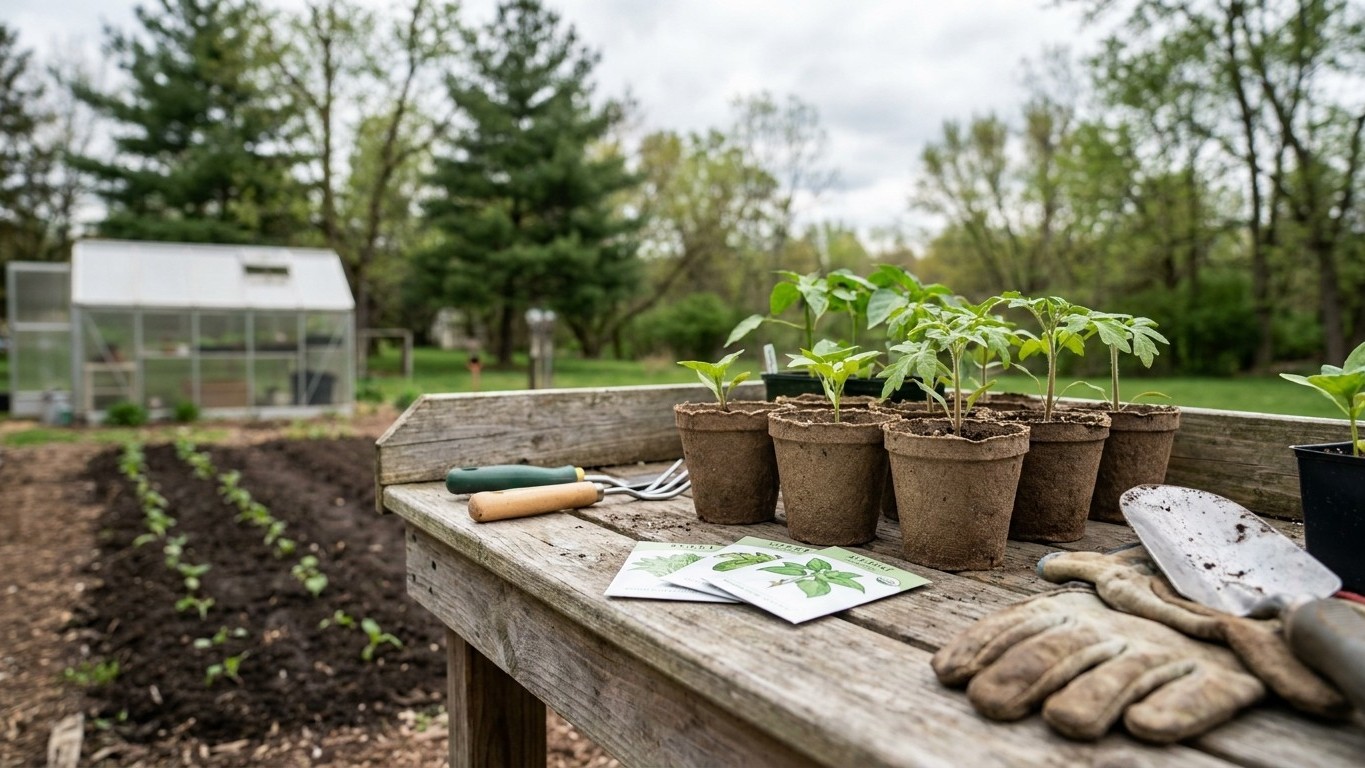

April is the month Texas gardens hit full stride. With the last frost already behind most of the state, this is prime time to get tomatoes, peppers, squash, beans, and okra into the ground, while cool-season crops planted earlier wind down and head to the kitchen. What changes the answer county to county is elevation and how far north you are, not the calendar page.
What goes in the ground in April

Soil temperature drives this month, not the date on a seed packet. Houston’s last spring freeze typically falls between February 4 and March 1, based on NOAA’s 1991-2020 climate normals for the IAH station. That means by April, soil across most of the Gulf Coast and Central Texas has warmed well past the point where cold-sensitive roots rot or seeds simply sit and stall.
Warm-season crops are the headline act now. Tomato and pepper transplants started indoors earlier in the year go into the garden this month, along with direct-sown squash, cucumbers, beans, corn, and okra. Sweet potato slips can go in once nights stay reliably above the mid-50s. Basil and other tender herbs move outdoors alongside them.
Cool-season holdouts still have a window, but it’s closing fast. Lettuce, spinach, and other leafy greens planted now will bolt as temperatures climb, so treat any cool-season sowing this month as a race against heat rather than a sure bet. Root vegetables like carrots and beets can still go in early in the month in the milder Gulf Coast zones, but gardeners in North Texas or higher elevations should watch their own local frost data before committing.
Where the gamble still exists
The caution here matters: Texas stretches across USDA hardiness zones 6a to 10a. The Houston frost window above is the mild end of that range. In the Panhandle and parts of North Texas, a cold snap can still reach into April, and pushing warm-season transplants out too early there risks losing the whole tray to a single bad night. If you’re outside the Gulf Coast corridor, hold new transplants a week or two and watch nighttime lows before planting heat-lovers outright.
What to start under cover
Because Texas is already past its main frost risk in most regions by April, starting seeds under cover this month is less about dodging cold and more about staging the next wave of crops. Melons, cantaloupe, and winter squash varieties that need a long runway benefit from a few weeks under a cold frame or in trays before they go into open beds, giving roots a head start before the ground gets hot enough to stress young seedlings.
Work backward from your own last-frost window rather than a fixed date. If your area’s frost risk closed in early March, seeds started under cover in early April and hardened off over ten to fourteen days can go into the garden by late April or early May with strong, sturdy stems rather than the pale, stretched growth that comes from too much time indoors.
The two failure modes to watch for are familiar to anyone who has started seeds before. Sow too early under cover and you end up with rootbound, leggy plants that sulk for weeks after transplant. Sow too late and you lose growing days that matter once summer heat arrives and cool-season options disappear. In Panhandle and North Texas counties still flirting with frost, a cold frame or low tunnel buys insurance for transplants already moved outside, letting you cover them for a night or two if a late cold front rolls through without losing the whole planting.
What is ready to pick
April is a harvest month as much as a planting one. Cool-season crops seeded back in late winter are finishing their run: lettuce, spinach, and other greens are at peak quality right before they bolt in the heat, so pick them promptly rather than letting them linger. Broccoli and cabbage planted earlier in the season often reach harvest size this month, and English peas sown in late winter typically come in now as well.
Strawberries planted the previous fall hit their main fruiting window in April across much of Texas, and onions started from sets or transplants over winter are bulking up, though most won’t be ready to pull until closer to early summer. Check them by feel: a bulb that has pushed the soil aside and shows a firm neck is close, while one still buried and tight isn’t ready yet.
Root crops like carrots and beets sown earlier can be pulled as needed rather than all at once. Test a single carrot at the edge of the row; if the shoulder diameter looks right, the rest of the row is likely ready too. Anything left in the ground too long into rising heat tends to turn woody or bitter, so April harvests should move at a steady clip rather than waiting for a single big pull.
The jobs that matter this month

Staking and caging go in now, before tomatoes and vining crops sprawl into a tangle that’s hard to manage later. A cage set after the plant has already flopped over does far less good than one installed while the stem is still upright and manageable.
Mulching pays off heavily this month. As temperatures climb, a two to three inch layer of straw, shredded leaves, or bark around new transplants slows moisture loss and keeps soil temperatures from swinging as wildly between a cool night and a hot afternoon. Skip mulching now and you’ll be watering more often all season to compensate.
Watering rhythm needs adjusting as heat builds. Early morning watering, deep and less frequent rather than shallow and daily, encourages roots to grow downward instead of staying near the surface where they dry out fast. Succession sowing of beans, squash, and corn every two to three weeks through the month keeps harvests coming steadily rather than all at once in midsummer.
Pest scouting starts in earnest now too. Aphids, squash bugs, and early cutworm activity pick up as temperatures rise, and catching an infestation on a handful of leaves is far easier than dealing with it once it’s spread across a bed. Check the undersides of leaves on new transplants every few days rather than waiting for visible damage.
What not to do in April
The most common mistake this month is trusting warm air over cold soil. A string of 80-degree afternoons can feel like permission to plant, but if overnight lows are still dipping and soil hasn’t warmed through, seeds like corn and beans will simply rot rather than germinate. Check soil temperature at planting depth, not just the forecast, before committing seed.
Uncovering cold frames or row covers too early after a mild stretch is another classic misstep, especially in North Texas and the Panhandle where the frost window runs later than the Gulf Coast figures cited above. One warm week doesn’t mean the risk has passed; pull covers gradually and keep an eye on extended forecasts rather than acting on a single comfortable afternoon.
Nitrogen timing trips up a lot of gardeners this month too. Heavy nitrogen feeding on tomatoes and peppers right as they’re setting fruit pushes leafy growth at the expense of blooms and fruit set. A balanced feed, or one lower in nitrogen and higher in phosphorus and potassium, serves fruiting crops better once they’ve established and started flowering. Save the nitrogen-heavy feeding for leafy greens and young transplants that are still building structure.
Skipping the hardening-off step is another expensive shortcut. Seedlings raised under cover need several days of gradually increasing outdoor exposure before they’re planted permanently. Move them out for a few hours at first, then longer, rather than transplanting straight from a sheltered tray into full sun and open air.
Checking this against your own county
A statewide month is a starting point, not an instruction. Texas covers USDA hardiness zones 6a through 10a, and the frost figures cited here come from the Houston area, the mild end of that range. Elevation change in the Hill Country, the lag of cold fronts pushing through North Texas, and the earlier, harsher freezes typical of the Panhandle all shift these windows by weeks in either direction. Even within the Houston metro, Hobby airport runs about two weeks milder than the IAH station referenced above.
For a planting window matched to your own county, check the Texas A&M AgriLife Extension office serving your area before locking in a planting date.
Common questions
Is it too late to plant tomatoes in Texas in April?
No. April is one of the best months for setting out tomato transplants across most of the state, since the Gulf Coast’s last frost window (February 4 to March 1) has already passed. Gardeners further north or at higher elevation should confirm local frost data before planting.
Can I still direct-sow lettuce and spinach in April?
You can early in the month in milder zones, but expect a short window before rising heat triggers bolting. Treat any cool-season sowing this month as a race against temperature rather than a full-season planting.
What vegetables are ready to harvest in Texas gardens in April?
Lettuce, spinach, broccoli, cabbage, and English peas planted earlier in the season typically reach harvest in April, along with strawberries hitting their main fruiting window.
Why does the Panhandle differ so much from the rest of the state for spring planting?
The Panhandle sits at a colder end of Texas’s hardiness range (zone 6a versus the Gulf Coast’s 10a), meaning frost risk can extend later into spring there than the Houston-based figures used as a statewide reference. Local extension data is the more reliable guide for that region.
Gardeners who plant by the Moon can check the April 2027 moon planting calendar, a tradition rather than a proven method.