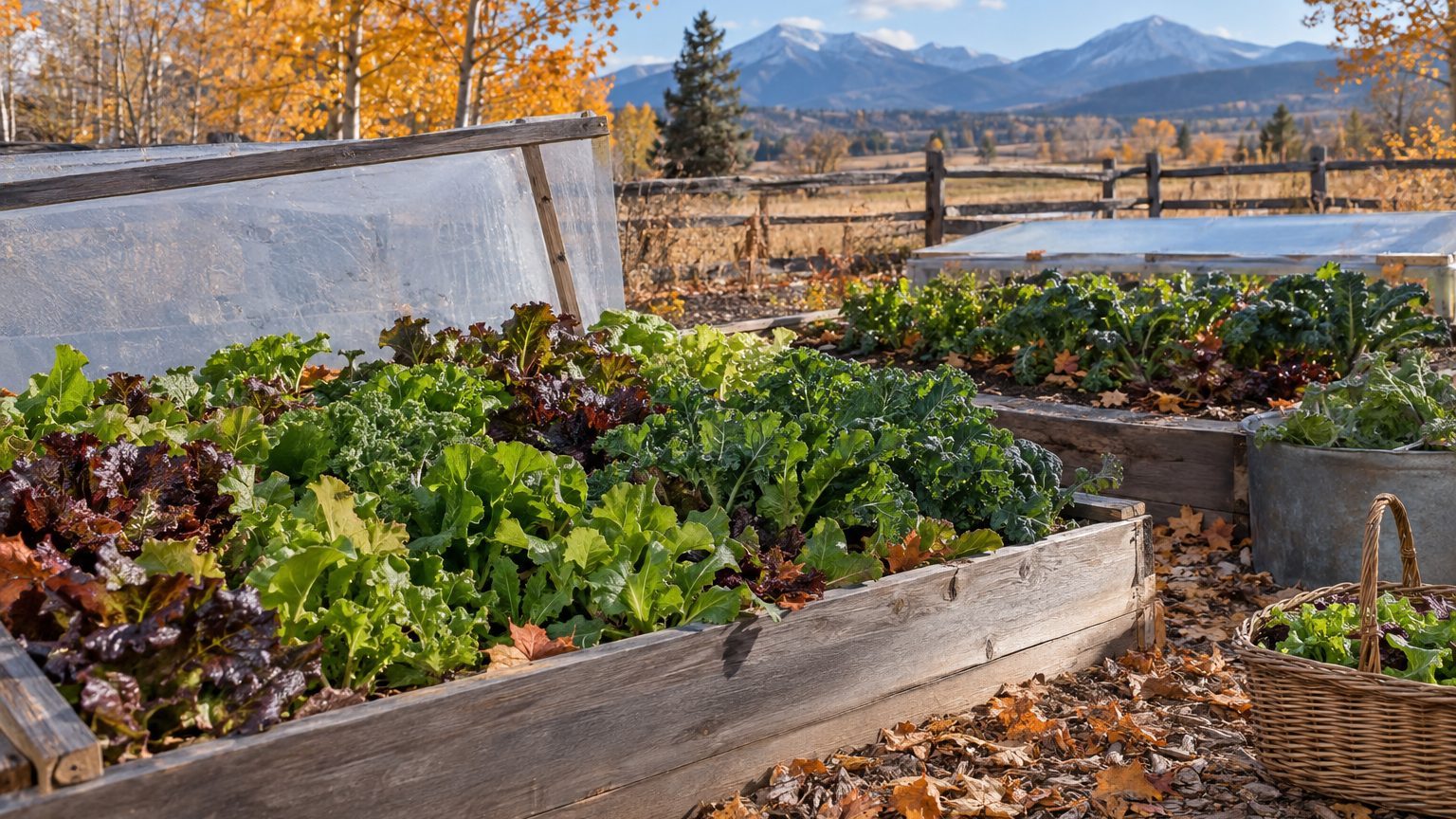

In Utah, winter salads start as a calendar problem and end as a cold problem. At the Salt Lake City reference station, the last spring freeze falls between April 12 and April 29, and the first fall freeze between October 18 and October 29. Those two bands frame the whole crop. They set when beds open, how late a sowing can still reach picking size, and which greens need a cover once the coldest-month nights average 24.2 F.
When the soil is warm enough in Utah
The date most gardeners ask about is the last spring frost, and the NOAA NCEI 1991-2020 Climate Normals give it as April 12 to April 29. That range comes from the 32F freeze probabilities (the 30-70% band) at station USW00024127 in Salt Lake City. It is a probability, not a promise, and a late freeze outside that band is always possible.
Frost is a stand-in for what the plants actually care about. Winter salads, and the spring sowings of the same greens, wait for workable, warm SOIL, and the soil warms after the frost risk ends, not at the same moment. A bed can be frost-free on paper and still be cold, wet and slow underneath. Seed sown into it sits, rots, or germinates unevenly.
Why the Salt Lake dates are a starting point
Salt Lake sits in a mild valley. Most of Utah is higher and colder, and southern Utah is warmer. A garden on a bench above the valley floor, or in a mountain town, will see the last freeze later in spring and the first one earlier in fall than the figures above. A garden in the south will see the reverse. Treat the Salt Lake band as the reference point and shift it by what your neighbors with long-running gardens tell you.
A soil check that costs nothing
Pick up a handful from a few inches down. If it crumbles when you squeeze and tap it, rather than staying in a sodden clump, the bed is workable. If it still feels raw and cold against your palm, wait another week. That is a judgment call, not a number, and it beats sowing on a date that merely looked safe.
The crop that gives the page its name is sown later than any of this. Winter salad is planted in late summer or early fall and counted backward from the first fall freeze (October 18 to October 29 at the same station). The spring frost date still matters because it tells you how much of the year is left behind the fall sowing, which the next section works out.
One note on sourcing. This site grows salad greens in beds and containers, and that is the only kind of harvest described here. Nothing on these pages involves gathering greens from ditches, streams or roadsides. Wild watercress growing in water grazed by livestock can carry liver fluke, and several plants that look like young salad leaves are seriously toxic. Grow it, then cut it.
On varieties: this page talks in types, such as spinach-type greens, mustards, chicories and heading lettuces. The varieties trialled where you garden are best found through Utah State University Extension, and the last section explains why.
How long the season lasts here
Take the two sets of dates from the same NOAA station. The last spring freeze runs April 12 to April 29, and the first fall freeze runs October 18 to October 29. Pair the latest spring date with the earliest fall date (April 29 to October 18) and the frost-free window is 172 days. Pair the earliest spring date with the latest fall date (April 12 to October 29) and it stretches to 200 days. In a given year, the Salt Lake reference station lands somewhere between those two.
What a window that long allows
The number matters less than what it permits. A window near 200 days is enough for a spring sowing of quick greens to be cut and cleared, and then for a second bed to be seeded in late summer for fall and winter picking. That second sowing is the one this series is about. It also gives room to stagger: a few short rows every couple of weeks in late summer, rather than one big sowing that all matures in the same fortnight and then stalls when the light drops.
Shorten the window and the arithmetic changes. In a higher Utah garden, where spring freezes linger and fall ones arrive early, the first sowing may be the only one. Then you lose the luxury of replanting after a failure. Sowing dates get tighter, and the cold-hardy types rise to the top of the list because they are the only ones that finish before the season closes.
Transplanting follows the same logic. Starting seedlings indoors or in a protected corner gains a few weeks, but every transplant takes a root check, a short stall while roots recover from the move. On a long window that stall costs little. On a short one, it can eat the margin you were trying to gain, and direct sowing, where the roots never get disturbed, often comes out ahead for greens that dislike being moved.
For the fall crop, count backward from the early edge of the first-freeze band, October 18, using the days to maturity printed on the seed packet. Add a buffer, because growth slows sharply as days shorten, and a crop that is almost ready in late October may sit at that size for weeks. The Winter Salads: What Grows When Lettuce Will Not guide covers the broader logic across climates, and the succession sowing guide on this site lays out spacing between sowings in more detail.
Heat and water in Utah
This page does not carry a count of days above 90 F or a summer rainfall total for Utah, and a number recalled from memory would be worse than none. So the page will not write a hot-climate paragraph on guesswork. What it can say is that a fall sowing goes into warm ground and needs the top inch of soil kept damp through germination, whatever your local rainfall turns out to be. Shade cloth over the seedbed, a mulch of straw on the surface, or a spot that gets afternoon shade from a fence or a taller crop all help keep the root zone cooler.
The deciding factor for winter salad is the cold, and here the page does have figures. At the Salt Lake City reference station, the mean daily minimum of the coldest month is 24.2 F (NOAA NCEI Climate Normals 1991-2020). That is an average of the nightly lows, not the record low, so individual nights run colder. It is the number that tells you whether a plant survives the winter at all.
What the cold sorts out
Against a coldest-month night near 24 F, greens fall into three rough groups. These are general tendencies, not trial results, and local conditions shift them.
| Type of green | Uncovered | With a cover | Notes |
|---|---|---|---|
| Spinach-type and corn-salad-type greens | Usually stand | Stay cleaner and pick easier | Among the hardiest salad types |
| Mustards and arugula | Hold in mild spells, damaged in hard ones | Reliable through the winter | Quick to regrow when cut |
| Chicories and endive | Often take some cold | Better quality leaves | Outer leaves may brown and need trimming |
| Heading and tender lettuces | Poor | Edible only under a cover | Often cannot manage in a hard winter even with cover |
A low tunnel, a cold frame or a floating row cover adds a few degrees of shelter, and that margin is what separates a harvestable bed from a mush of frozen leaves. It does not turn a tender lettuce into a hardy one.
The USDA Plant Hardiness Zone Map (2023, built on the 1991-2020 normals) rates Utah from zone 4a to 9a. That map uses a single variable, the average annual extreme minimum temperature, and the range is huge. For planning, use the nearest reference city rather than the range, and remember that your valley, bench or elevation may sit well away from Salt Lake City.
The first fall freeze sets the other limit. A sowing has to reach useful size before October 18 to October 29, because after that the short days slow growth to a crawl. Sowings that miss the window do not die. They sit small under their cover and resume growing as the light returns in late winter.
Which winter salads suit Utah
Choose by type, and let the territory’s own numbers lead. A short season, as in higher Utah gardens, favors the earliest types: quick baby-leaf greens, mustards and spinach-type crops that can be cut young. A garden with warm late-summer ground favors greens that get airflow and shade at the root, which means wider spacing, a mulch, and shade cloth until seedlings are up. Wherever a cover traps moisture, as low tunnels do on still days, disease resistance printed on the seed packet becomes a first criterion, and venting the cover on mild days does as much as any trait.
The hardiest types, such as spinach-type and corn-salad-type greens, are the safest default for a bed left uncovered through a Utah winter. Mustards and arugula suit gardeners who want fast, repeated cuttings in fall and again in early spring. Chicories reward a gardener willing to trim browned outer leaves. Heading lettuces are the gamble. Reserve them for a cold frame or a tunnel, and do not count on them in a hard winter.
This page names no varieties, and that is deliberate. Cultivar performance depends on elevation, soil, and the local freeze pattern, and the only recommendation worth following is one from trials run near you. Utah State University Extension and its county offices know which varieties have been trialled in Utah conditions, and I do not have that data. A variety name copied from another state’s list can fail here, and a gardener finds out only after the bed has been sown.
Gardeners comparing climates may find the contrast useful. Winter Salads for New York Gardens and Winter Salads for Massachusetts Gardens deal with wetter, more humid conditions, where mildew and rot are the main risks.
Common questions
When should I sow winter salad greens in Utah?
There is no single date for the whole state. Count backward from your first fall freeze, which is October 18 to October 29 at the Salt Lake City reference station, using the days to maturity on the seed packet plus a buffer for slowing light. Sow into soil you have checked by hand, not by the calendar alone.
Will winter salads survive a Utah winter without cover?
The hardiest types often will. The coldest-month mean daily minimum at the Salt Lake City reference station is 24.2 F, but that is an average, and individual nights run colder. Tender lettuces need a cover to stay edible, and some will not manage even then.
Can I use the Salt Lake City dates for my own garden?
Only as a starting point. Salt Lake sits in a mild valley, most of Utah is higher and colder, and southern Utah is warmer. USDA hardiness zones across the state run from 4a to 9a, so a garden elsewhere may sit several zones away from the reference city.
Where do I find varieties that suit my part of Utah?
Ask Utah State University Extension or your county office, since they know what has been trialled locally. While you are there, ask for frost data near you. The dates on this page are the middle 30-70% probability band at one station, so a freeze before or after that range is entirely possible.