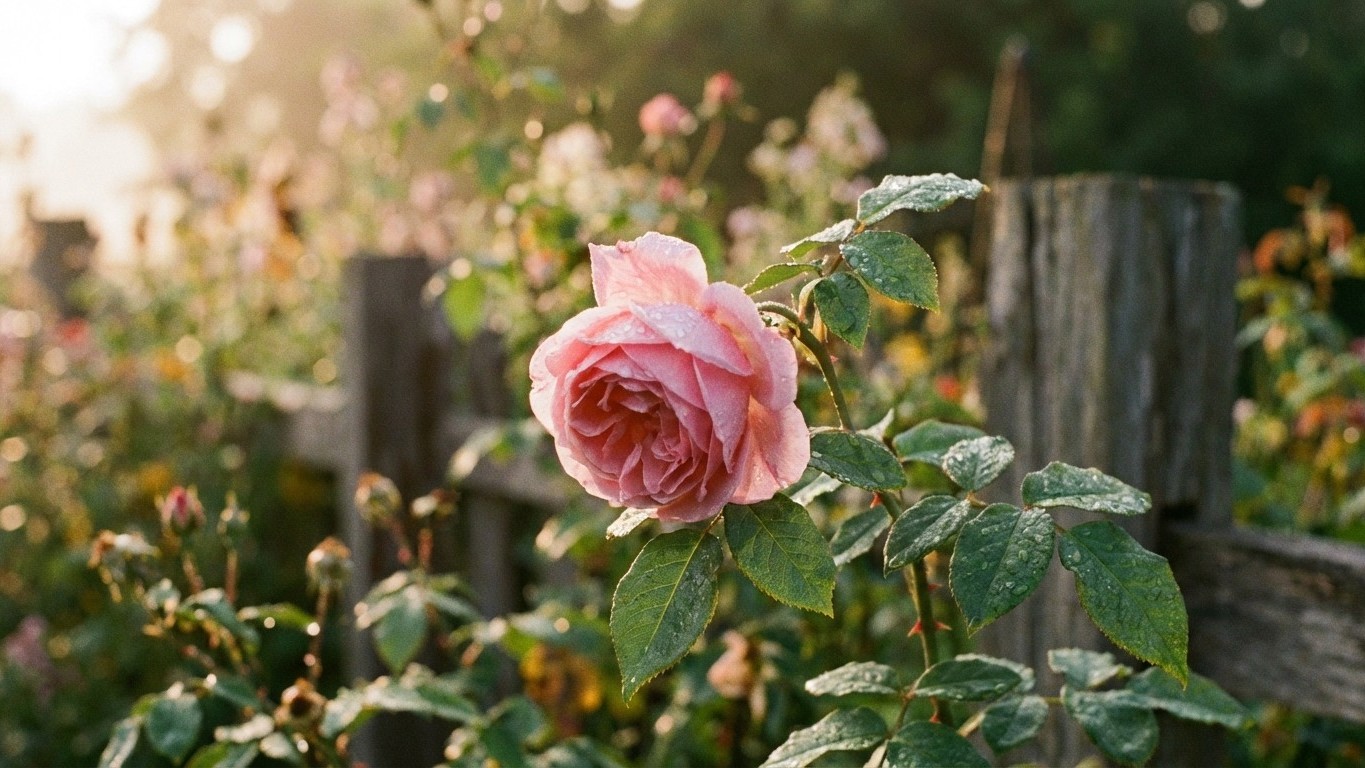

Plant bare-root roses in Virginia while they are dormant, from late winter until the buds start to swell. Container roses can go in from spring through early fall. Pick varieties with proven resistance to black spot and powdery mildew, since humid Virginia summers favor both. Japanese beetles, aphids, thrips and spider mites are the insects to watch. Dates, varieties and care below.
When to plant Roses in Virginia

The frost numbers for Virginia Beach come from the NAS Oceana weather station. The NOAA NCEI 1991-2020 Climate Normals put the last 32°F freeze there between March 20 and April 3, and the first fall freeze between November 10 and November 24. Those ranges span the 30% to 70% probability points. Coastal Virginia Beach is the mild end of the state. The Blue Ridge and southwest Virginia run weeks later in spring and earlier in fall, so ask your county office for local dates.
Bare-root and container roses
Roses are tough about frost. A dormant bare-root plant shrugs off cold, and the main risk is new growth that leafs out just before a late freeze. So the usual approach is to plant bare-root roses in late winter, as soon as the soil is workable and not frozen or soggy, so roots establish before the leaves emerge. Soak the roots in a bucket of water for several hours or overnight before planting. At Oceana’s dates, that means February into March. Inland, wait until March or early April.
Container roses from a nursery are more flexible. Plant them after the last freeze in your area, through early summer, with fall as the second window. If the plant came from a greenhouse with soft, leafy growth, harden it off first: a few hours of outdoor shade on day one, then longer stretches and more sun over five to seven days.
Starting from seed, with the count-back
Most gardeners never do this, because named hybrids do not come true from seed and the seeds need a long chill. But if you collect hips from a species or shrub rose and want to try, the arithmetic works backward from the last freeze. Seeds typically need about 12 weeks of cold, moist stratification in the refrigerator. Count back 12 weeks from March 20 and you land on December 26. Count back from April 3 and it is January 9. Sown seedlings then grow under bright light until the last freeze has passed in your area. Harden them off over a week to ten days and set them out. Expect variable, often single-petaled flowers. They will not match the parent.
Fall planting
Fall is a strong second window because the soil is still warm and roots grow while the top rests. Plan on about six weeks before the first hard freeze. At Oceana, counting back six weeks from November 10 gives September 29, and from November 24 gives October 13. So at the coast, the window is closing about now. Inland gardeners need to count back from their own, earlier, fall date. If you miss it, bare-root season is only a few months away. For comparison, the neighboring Growing Roses in Tennessee: Planting Dates, Varieties and Local Pests guide shows how the calendar shifts a few hundred miles west.
Soil and site preparation
Six hours of direct sun is the floor, and morning sun matters most because it dries the dew off the leaves early. In Virginia’s humidity, wet foliage is an open invitation to black spot. Pick a spot with open air movement and avoid the crowded corner between a fence and a foundation wall, where leaves stay damp all morning.
Drainage decides more rose failures than fertility does. Dig a hole about 12 inches deep, fill it with water, let it drain, then fill it again. If water is still standing after the second fill a day later, build a raised bed or choose another spot. Roses tolerate a lot, but not constantly wet crowns.
Texture varies across the state, from sandy ground near the coast to heavy red clay in many inland yards, so a soil test is worth the few dollars. A slightly acidic to neutral pH, around 6.0 to 6.5, is the commonly cited target for roses. Lime works slowly, so test and adjust a couple of months before planting, ideally in fall for a spring planting. Your local extension office can tell you how to collect and submit a sample.
In the weeks before planting day, loosen the bed to about a foot deep and work in 2 to 3 inches of compost. Sand needs the organic matter to hold water. Clay needs it to open up. Skip piling fertilizer into the planting hole, which can burn new roots. Mark spacing in advance:
- Compact shrub and groundcover roses: about 3 feet apart
- Hybrid teas and floribundas: 2 to 3 feet apart
- Large shrub roses: 4 feet or more
- Climbers: 6 to 8 feet from the next big plant, with the trellis installed first
Never replant a rose into the exact hole where an old one died. Rose replant problems are real, and fresh soil or a different spot gives the new plant a cleaner start. Dig the hole about 18 inches wide, set the plant so the bud union sits at or just below the soil surface, and water in thoroughly.
Varieties that suit Virginia
A long, humid growing season with warm nights is hard on roses. Look at traits before names. Disease resistance, especially to black spot, saves the most work. Repeat bloom matters because a once-blooming rose gives you a few weeks of flowers, while a repeat bloomer cycles roughly every six weeks until frost. Heat tolerance keeps blooms from scorching in July. Growth habit also counts: compact shrub roses fit small beds, climbers need a structure, and own-root plants send up true-to-variety shoots even if the top dies back, unlike grafted ones, where a sucker from the rootstock can take over.
These are widely sold varieties that carry useful traits. This is a list of what the plants are known for, not an endorsement from any institution.
| Variety | Type | Good for | Watch for |
|---|---|---|---|
| Knock Out series | Shrub | Low-maintenance repeat bloom, strong black spot resistance | Can be vulnerable to rose rosette disease |
| Drift series | Groundcover | Edging, slopes, containers, compact size | Needs full sun for best bloom |
| Carefree Beauty | Shrub | Fragrant pink flowers, general toughness | Large size at maturity |
| The Fairy | Polyantha | Late-season bloom, small clusters, mass planting | Flowers are small and not fragrant |
| Old Blush | China rose | Heat tolerance, long repeat bloom, old-garden charm | Looser, less formal habit |
| New Dawn | Climber | Fences, arbors, pale pink repeat bloom | Vigorous, needs yearly training and pruning |
Hybrid teas such as Peace remain popular for cut flowers and form, but they usually need more spraying or tolerance for spotted leaves in this climate. If you want those long-stemmed blooms, plant a few and surround them with tougher shrub roses. And buy plants labeled for disease resistance when you can, since many garden centers carry the same varieties year after year.
What to plant alongside
Roses perform better when neighbors keep the soil covered and draw beneficial insects. Low, flowering groundcovers such as sweet alyssum and catmint do both. They shade the soil, which cuts weeds and evaporation, and their small blooms attract hoverflies and parasitic wasps, which feed on aphids. The evidence for flowering insectary plants lowering aphid numbers is reasonable, though no companion eliminates them.
Plants that tolerate similar sun and drainage make easy partners. Salvia, coneflower, and ornamental grasses all qualify, and they leave air gaps between stems. Lavender is a classic pairing, but in Virginia’s humid, rainy summers it can rot in heavy soil, so give it a raised or gravelly spot at the edge of the bed or skip it.
Garlic and chives are the pairing gardeners swear by for repelling aphids. The folklore is old, but solid trial data is thin. Plant them because they look good and cost little, not as pest control. French marigolds have a better record, though mainly as a rotation crop against root-knot nematodes, not as a casual edging.
Keep other roses crowded together and you share black spot and mildew spores between plants, so leave air space. Avoid planting under trees whose roots will outcompete the rose for water and nutrients. Mint and other aggressive spreaders will invade the bed. Lawn is another problem: sprinklers wet the foliage, and turf herbicides drifting onto leaves can twist new growth, so keep a mulched border of a couple of feet between the two.
Watering, feeding and support
Water deeply and less often. About an inch a week, counting rainfall, is a sound target, delivered at the base with a soaker hose or by hand. A shallow daily sprinkle trains roots to stay near the surface and wets leaves, which feeds black spot. Water in the morning so any splash dries quickly. In the first season, check new plants twice a week in dry spells, since roots have not spread yet.
Mulch with 2 to 3 inches of shredded bark or compost and keep it a few inches back from the canes. It holds moisture through humid heat and blocks weeds, and it cuts the soil that splashes onto lower leaves in heavy rain, which carries fungal spores upward.
For feeding, wait until new growth appears in spring, then apply a balanced rose fertilizer or compost according to the label. Feed again after each major flush of blooms through summer. Stop about six weeks before your first fall freeze, because late nitrogen pushes soft growth that winter will kill. At Oceana, that cutoff would fall in late September or early October, and earlier inland. Overfeeding gives you leaves instead of flowers, so measure.
Prune in late winter, as buds begin to swell. Remove anything dead, damaged or crossing, and cut back to an outward-facing bud. Hybrid teas are often cut down to about 12 to 18 inches, shrub roses more lightly. Once-blooming old roses and many climbers bloom on old wood, so prune them right after they flower. Deadhead repeat bloomers by cutting above a leaf with five leaflets, which encourages the next flush.
On grafted roses, suckers come from below the bud union and look different from the main plant, often with seven leaflets and a different growth habit. Follow the sucker down and tear it off at the root rather than snipping it at ground level, or it will return. Tie climbers loosely to a trellis, training canes sideways, since horizontal canes produce more flowering shoots than vertical ones.
Common problems

Black spot is the one most Virginia rose growers meet. Round black spots with fringed edges appear on leaves, which then yellow and drop, starting at the bottom of the plant. It spreads with splashing water. Pick up fallen leaves, water at the base, space plants for airflow, and consider a labeled fungicide for susceptible varieties. Powdery mildew shows up as a white coating on new growth and buds, usually in cool nights and humid days. Improve air movement and remove badly affected shoots.
Rose rosette disease is the serious one. Look for witches’-broom clusters, unusually red, thick, soft shoots, and a surplus of thorns. There is no cure, and the usual advice is to remove the whole plant, roots included. Early removal protects neighbors. Send a photo to your county extension office if you are unsure.
On the insect side, the Virginia Cooperative Extension guide Insects Commonly Found on Vegetables in Virginia is written for vegetable gardens, so it does not list rose pests as such. But several insects on its list also attack roses: Japanese beetles, aphids, thrips and spider mites. Japanese beetles skeletonize leaves and chew blooms, and hand-picking into soapy water in the morning works on small plantings. Aphids cluster on new shoots and buds, and a firm spray of water knocks them down. Thrips leave brown, streaked petals and buds that will not open. Spider mites cause stippled, bronzed leaves with fine webbing, mostly in hot dry spells.
Other trouble is less dramatic. Yellow leaves with green veins suggest iron deficiency, often from soil pH that is too high. Buds that rot before opening, called balling, follow wet weather. Canes that die back from the tip may have borers, or just winter injury. Cut them back to healthy, white-centered wood. Your county office can identify the specific insect or disease and advise on controls.
Cut flowers and end of season care
Cut roses in the morning, when stems are full of water. Choose blooms at the loose bud stage, when the outer petals are just starting to unfurl, and cut above a leaf with five leaflets, at a slant. Strip the lower leaves, put the stems in clean water right away, and keep them cool. Roses cut as tight buds will open indoors, though not all will, and fully open flowers fade fast. A floral preservative and fresh water every couple of days extend vase life.
Roses stay in the garden for years, so end of season is about setup. Stop deadheading in early fall on varieties that make hips, such as rugosas, so the plant slows down and the hips color. At Oceana, the first fall freeze arrives between November 10 and November 24, and inland that date comes sooner. After a hard freeze, clean up fallen leaves and trash, since they harbor black spot spores. Skip heavy pruning until late winter.
Add a fresh layer of mulch after the ground cools, and for new plantings or climbers in colder western areas, mound mulch or soil about 8 to 10 inches around the base. Most Virginia gardeners need far less winter protection than what the Growing Roses in Minnesota: Planting Dates, Varieties and Local Pests guide describes, though higher elevations are the exception. Water newly planted roses in dry fall spells until the ground freezes.
Local help
Frost dates, soil, and pest pressure change from the coast to the mountains, so check with Virginia Cooperative Extension for county-level planting dates, soil test kits and help identifying a bug or leaf spot. More statewide material is collected in our Virginia guides, and the general technique behind everything above is in How to Grow Roses: The Complete Guide.
Common questions
What is the best month to plant roses in Virginia?
For bare-root roses, late winter to early spring while plants are dormant. For container roses, spring and fall are best. At Virginia Beach, the last freeze falls between March 20 and April 3, but mountain and southwest areas run later.
Can I plant roses in summer?
Container roses can go in, but they need steady watering, shade cloth in the first heat wave, and mulch. Spring and fall are easier on the plant, and summer-planted roses dry out quickly.
Which roses need the least spraying in Virginia?
Disease-resistant shrub and groundcover types, like the Knock Out and Drift series, usually need the least care. Hybrid teas tend to need the most attention in humid weather.
Why do my rose leaves have black spots and drop off?
That pattern is typically black spot, a fungal disease spread by water splash and humid weather. Clear fallen leaves, water at the base, improve airflow and mulch. For repeated outbreaks, ask your county extension office about labeled fungicides.
When should I stop fertilizing roses before winter?
About six weeks before your first fall freeze. At Oceana that is late September or early October, since the first freeze arrives between November 10 and November 24. Inland gardeners should stop sooner.