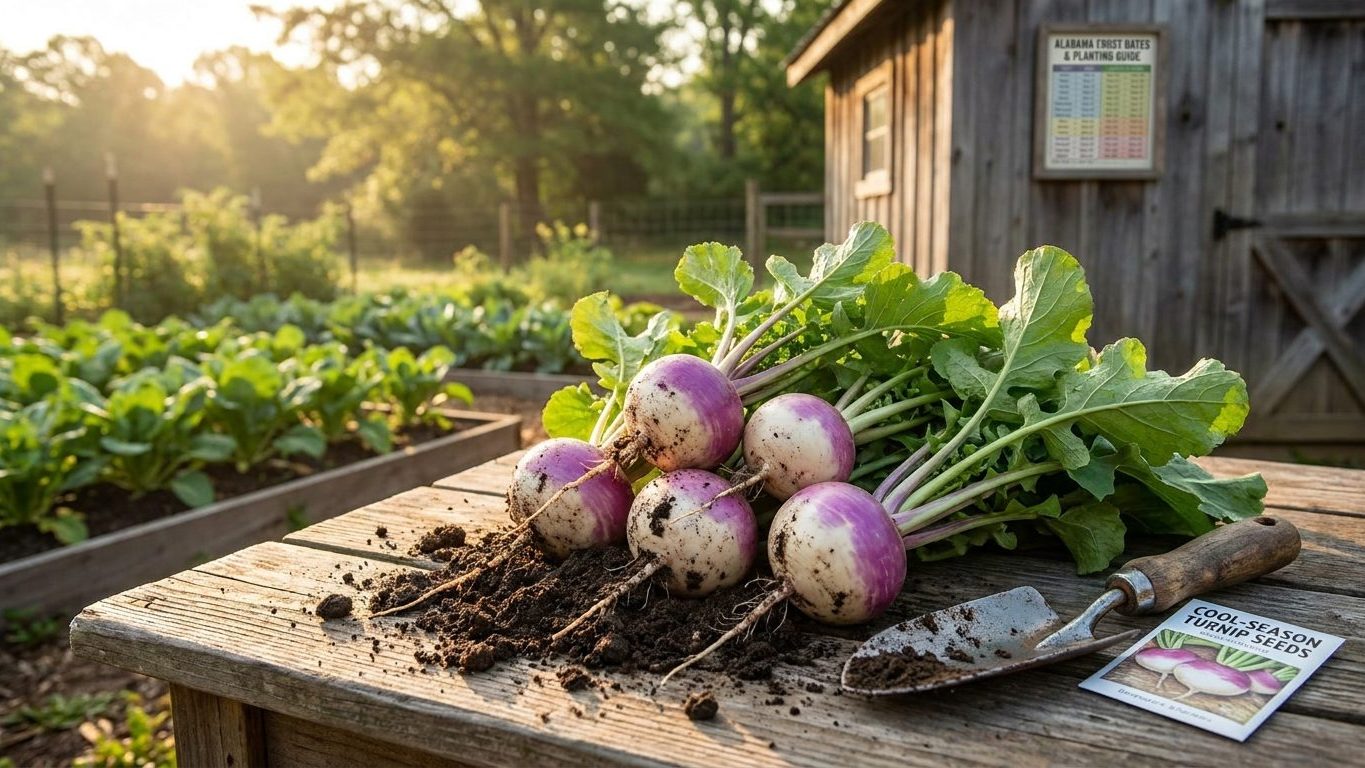

Turnips go in the ground twice a year in Virginia: in early spring as soon as the soil can be worked, and again from late summer into early fall. Both windows hang on frost dates, and those dates move by weeks between Virginia Beach and the Blue Ridge. This page gives the coastal numbers, explains what they measure, and shows how to shift them. For the full growing picture, start with Growing Turnips and Rutabaga in Virginia.
The short answer for Virginia
Sow spring turnips around the last spring frost window of March 20 to April 3, and sow the fall crop so the roots finish before the first fall frost window of November 10 to November 24. Both ranges come from NOAA NCEI 1991-2020 Climate Normals for the NAS Oceana station at Virginia Beach, which sits at the mild end of the state.
Each range is a probability, not a promise. It marks the band where the chance of a 32°F freeze runs between 30 and 70 percent. A freeze can still land outside the band in any given year, and the dates say nothing about your yard if you live in the mountains.
| Sowing | Frost anchor (Virginia Beach reference) | How to use it |
|---|---|---|
| Spring | Last spring frost: March 20 to April 3 | Sow in the weeks around this band, as soon as the soil can be worked |
| Fall | First fall frost: November 10 to November 24 | Count back from the early edge of this band using the days to maturity on the seed packet |
Spring sowing
Turnips are a cool-season root. They want to size up before warm weather arrives, so the spring sowing belongs in the weeks around the last-frost band, not after it. Seedlings of a hardy crop like this shrug off a light freeze, which is why gardeners don’t wait for the band to close. The real limit is soil that is frozen or sodden. Sowing into mud only rots seed.
Fall sowing
The fall crop works backward. Take the days to maturity printed on the packet, count back from November 10, and that is your latest sensible sowing date at the coast. Rutabaga needs more days than turnips, so it needs an earlier start. Late summer is the usual starting point for both.
One more figure helps here. The mean daily minimum of the coldest month at Virginia Beach is 31.6°F, so winter nights at the coast hover right at the freezing line. A fall planting there often keeps its tops through much of the winter. That is an average, though. Some nights run colder, and a hard freeze will still damage a row.
What will not work here
The most common failure is copying coastal dates statewide. The frost data on this page comes from one station on the coast, and the Blue Ridge and southwest Virginia run weeks later in spring and earlier in fall. A March 20 sowing in those areas can land on frozen or waterlogged ground. A coastal-style fall sowing can get caught by frost while the roots are still the size of a marble.
Late spring sowing also tends to disappoint. The coastal window opens in late March and early April, and every week past it pushes root development toward warm weather. This page has frost dates and winter lows, not summer highs or rainfall, so what follows is general horticulture. Turnips grown into heat tend to turn woody or sharp-tasting, or they bolt. Flea beetles also pile onto tender spring leaves.
Rutabaga on a spring-only plan is a poor bet. It is the slowest crop of the pair, and it wants a long cool stretch to finish. In Virginia that stretch is the fall, so rutabaga fits the later window far better than the early one. Varieties matter here too, and The Best Turnips and Rutabaga for Virginia covers which ones suit that fall schedule.
Tight spacing is another trap. Virginia’s humid air keeps leaves damp longer, and a crowded row holds that moisture against the foliage, which invites leaf disease. Thin seedlings to the spacing on the packet even when it feels wasteful.
Finally, don’t let the 31.6°F figure lull you into sowing in December. A mild average low means the cold won’t kill plants outright, but it does not mean they will grow. Roots need time and light to fatten before growth slows for winter. Seed sown after the fall frost window will mostly give you greens, if that.
What changes across Virginia
Virginia is not one garden. The USDA Plant Hardiness Zone Map (2023, built on 1991-2020 normals) places the state anywhere from zone 5a to 8b. That is four full zones, and there is no single answer for the whole state. The USDA system rests on one variable, the average annual extreme minimum temperature, so it describes how cold the worst nights get.
That matters for perennials, less for turnips. A turnip sown in March or August is governed by frost dates and the length of the cool season, not by the coldest night of the year. Still, zone and frost dates travel together. Places with colder winter extremes also tend to freeze later in spring and sooner in fall, which shortens the sowing windows on both ends.
If you garden in the Blue Ridge, the Shenandoah Valley or southwest Virginia, shift the coastal calendar in two directions. Push the spring sowing later by weeks, and pull the fall sowing earlier by weeks. Rutabaga should get its start earliest of all, because its long maturity leaves the least margin before frost.
Elevation inside a county can matter as much as latitude. A hollow where cold air pools will frost sooner than the ridge above it. I won’t tell you which zone you are in, because that depends on where your own plot sits. Look up your location on the USDA Plant Hardiness Zone Map and read the result for yourself.
Where to check this for your own county
This page is the state-level view, built on one coastal station. A county recommendation beats it every time, because county extension staff work from local conditions and local trials. Start at Virginia Cooperative Extension, the state’s land-grant extension service, and find the office that serves your county.
Two things are worth looking for there. The first is a local planting calendar for cool-season vegetables, which should give sowing windows tied to your area’s frost dates rather than the coast’s. The second is any list of varieties that have been trialled or recommended in your county, since a turnip that thrives in Tidewater may sulk at altitude. This page doesn’t have a specific publication number to hand you, so use the site’s search and your county office.
Many offices staff a Master Gardener helpline or run local workshops. Those volunteers know which neighborhoods frost early, which soils stay cold into April, and which fall plantings held up last year. Ask them for the local date when they say something that differs from the coast, because their number is the one to trust.
Checking this against your own garden
Three observations in your own yard outrank every date above, and none needs an instrument.
- Soil feel in spring. Grab a handful from a few inches down. If it crumbles and doesn’t stick in a cold, wet clump, it is workable. If your bed reaches that point days before the neighbor’s shaded one, you have a warm pocket and can sow earlier there.
- The first true leaves. After the seed leaves come the first rough, lobed true leaves. When they appear, it is time to thin. How many days they take after sowing tells you how warm your soil really is, since cold ground stretches that wait.
- The first frost on your own lawn. Note the morning frost first whitens the grass, and where it lingers longest. Low spots that frost first mark the cold pockets in your yard. Keep your fall crop away from them, or sow it earlier there.
Write those dates down for a season or two. A notebook of your own first frost and your own workable soil will quickly correct any calendar, including this one.
Some gardeners also time this by the Moon: when to plant turnips by the moon, as almanac tradition rather than fact.
Common questions
Can I sow turnips in Virginia in the middle of summer?
Midsummer is a poor time to sow, since the crop would mature in the heat that spoils turnips. Late summer is the better starting point for the fall crop, counted back from your first fall frost window using the days to maturity on the packet.
Do I have to wait until after the last spring frost?
No. Turnip seedlings tolerate light frost, which is why sowing is aimed at the weeks around the last-frost band. The real test is whether the soil can be worked without being frozen or soggy.
Is it too late to sow after November 10?
At the coast, November 10 to November 24 is the first fall frost window, so sowing after it leaves little time for roots to fatten. You may still get greens. In the mountains the window arrives earlier, so the cutoff comes earlier too.
Do these dates apply in Roanoke, Blacksburg or the Shenandoah Valley?
Not as written. They come from a coastal Virginia Beach station, and the Blue Ridge and southwest Virginia run weeks later in spring and earlier in fall. This page does not have frost dates for those places, so check with your county extension office.