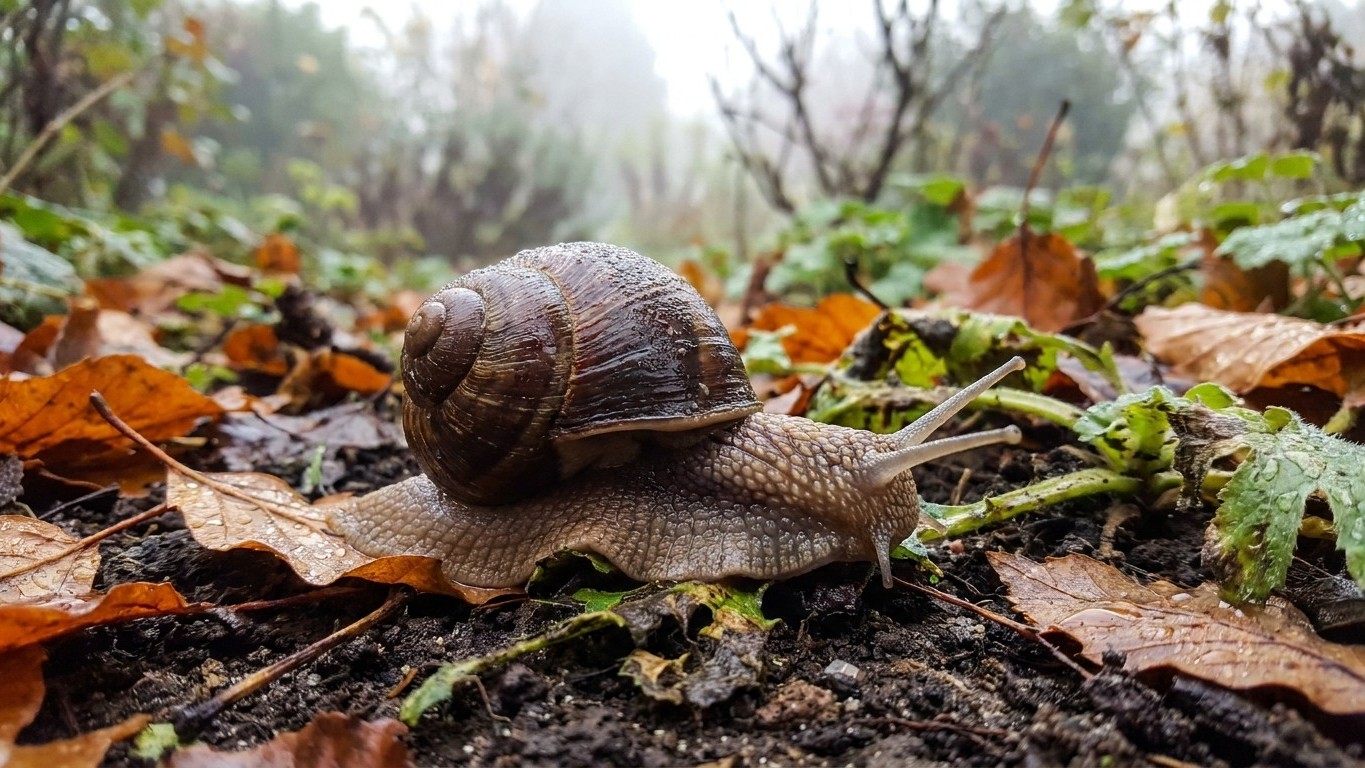

Brown garden snail is present across California nearly year-round wherever fog, irrigation, or coastal humidity keeps the ground damp, which means there’s no single “season” to circle on a calendar the way there is for a true seasonal insect. In the Central Valley and drier inland pockets, activity still slows during peak summer heat and winter cold snaps, but it never fully disappears. Control depends less on timing sprays than on removing the damp hiding spots the snail needs to survive daylight hours.
The weeks to watch
There isn’t a start date and end date for brown garden snail in California, because its activity tracks moisture rather than a fixed calendar window. The University of California’s Master Gardener Program and UC IPM Pest Notes describe snails and slugs as active at night and on foggy days, and note that in mild southern coastal areas they can be active year-round. That’s the closest thing to an official window this species gets, and it’s a pattern, not a set of dates.
Coastal vs. inland activity
Along the coast, from the Bay Area down through Los Angeles and San Diego, fog and mild winters mean brown garden snails can feed, mate, and lay eggs in almost any month. Inland, in the Central Valley or foothill towns where summer days regularly clear 100°F and humidity drops hard, snails retreat into shade, mulch, and irrigation-box crevices during the hottest and driest stretches, then resume activity once evening watering or fall rains return moisture to the surface. Gardeners in those inland zones tend to see two rough surges, one in spring and one in fall, bracketing the dry, brutal middle of summer, but UC’s own guidance doesn’t break that into a formal spring generation and fall generation the way it does for some insects. Treat any inland “quiet period” as temporary, not gone.
Reading the calendar from your last spring frost
For most home gardeners, planning around the last spring frost is standard practice. Brown garden snail breaks that habit almost everywhere in California, because frost itself is largely absent from the picture. NOAA’s climate data for the state’s mild coastal and southern zones shows no computable freeze normal at all, in effect a 365-day Frost-Free season. Northern California, the Central Valley, and the Sierra foothills are the exception; they do freeze, and gardeners there still plan transplants around a real spring frost date.
- Step one: identify which California you’re gardening in. If you’re coastal or southern with a frost-free record, skip the frost-date math entirely, since snail activity there is governed by fog and irrigation, not by soil warming after the last freeze.
- Step two: if you’re in a zone that does freeze, use your local last-frost date only as a planting-schedule reference, not a snail-control tool. Snail eggs overwinter in soil regardless of frost, and adult snails can be active again within days of any mild, damp stretch, freeze or no freeze.
The practical upshot: a gardener transplanting seedlings in a frost-free coastal bed should expect snail damage to show up within days, not weeks, of setting plants out, because there’s no cold snap holding the population back. Covers and barriers need to go on at transplant time, not on some calculated later date.
What it attacks, and what the damage looks like
Most gardeners notice the wreckage before they ever spot the snail itself. New transplants disappear overnight, seedlings get chewed down to a bare stub, and older leaves on established plants show ragged, irregular holes with the edges left intact, unlike the neat notches insects tend to leave. A silvery, dried slime trail across soil, mulch, or a nearby pot is usually the giveaway that confirms a mollusk rather than a caterpillar or beetle did the damage.
Brown garden snail isn’t picky, and it will work through a wide range of garden plants, especially anything tender and low to the ground:
- Leafy greens like lettuce, chard, and spinach
- Seedlings and transplants of nearly any vegetable
- Strawberries, especially low-hanging fruit in contact with soil
- Basil and other tender herbs
- Citrus seedlings and young bark on citrus trees
Both juvenile and adult snails feed, but newly hatched juveniles do the most damage to seedlings because a single small snail can strip a young plant’s first true leaves in one night, killing it outright, while a mature plant simply shows cosmetic holes. That distinction matters for treatment: protecting seedlings in the first few weeks after transplant matters more than trying to manage adult populations once plants are established and can tolerate some feeding.
How California sits in this pest’s range
California doesn’t sit at the edge of brown garden snail’s range in the way some pests are limited to one corner of a state. It’s established broadly across the mild, irrigated parts of the state, coastal counties, urban and suburban gardens throughout the Los Angeles basin and Bay Area, and irrigated valley agriculture. What changes from region to region within California isn’t presence, it’s degree and timing: coastal fog belts support near-constant activity, while the hot, dry interior forces the snail into a more seasonal, moisture-dependent pattern with quiet stretches during peak summer heat.
UC’s statewide guidance treats brown garden snail as a general California garden pest rather than a regional specialty, and doesn’t single out one part of the state as the primary source of local recommendations. That’s different from pests where a state relies on a neighboring state’s extension data; here, California’s own UC IPM and Master Gardener programs publish the guidance directly, because the snail has been established statewide for well over a century in mild-climate gardens.
What actually works against it
Cheapest, least effort options come first, and they’re also the ones with the clearest mechanism behind them.
- Hand-pick at night. Since snails feed after dark, a flashlight check an hour or two after sunset lets you physically remove them before they lay eggs or do more damage. This works at any point in the season and stops working only in the sense that it needs repeating; there’s no stage where it becomes useless.
- Clear daytime hiding spots. Boards, dense ground-level mulch, weedy borders, and stacked pots give snails a cool, damp place to wait out daylight. Removing that shelter forces them into the open, where predators and hand-picking catch more of them.
- Water in the morning, not the evening. Snails need surface moisture to move and feed. Evening watering leaves the soil surface wet exactly when they become active; morning watering lets the surface dry out by dusk.
- Install physical barriers before eggs hatch. Copper tape, gritty ash, or diatomaceous earth around raised beds and pots are common home remedies. Copper is often sold on the idea that it creates a small electric charge against snail mucus, but this hasn’t been demonstrated, and trials on its real-world effectiveness don’t reach a clear conclusion. Diatomaceous earth works as a dry, abrasive barrier, but loses its effect once it gets wet and needs reapplying after rain or irrigation.
- Rotate vulnerable crops and clear old debris at season’s end. Removing spent plants and garden litter reduces the shelter and food available for eggs already in the soil to hatch into. This step matters most before a new round of seedlings goes in, since barriers placed after eggs have already hatched beneath the soil surface won’t stop that generation from reaching the surface.
Common questions
Are brown garden snails and slugs the same thing in California gardens?
No. Both are mollusks with similar feeding habits and both show up in UC’s combined “snails and slugs” guidance, but the brown garden snail carries a visible shell while garden slugs don’t. They’re often managed with the same methods, hand-picking, barriers, moisture control, since the underlying mechanism, damp shelter and nighttime feeding, is identical for both.
Do coffee grounds or eggshells keep snails away?
Both are popular home remedies, and plenty of gardeners swear by them, but neither has consistent research behind the claim. If you use them, treat them as a low-cost experiment layered on top of hand-picking and shelter removal, not a standalone fix.
Can brown garden snails survive California’s dry summers without water?
They can, by sealing themselves into their shell with a dried mucus membrane and going dormant in a shaded, protected spot until moisture returns. That’s why populations that seem to vanish during a hot, dry August often reappear within days of the first fall irrigation or rain.