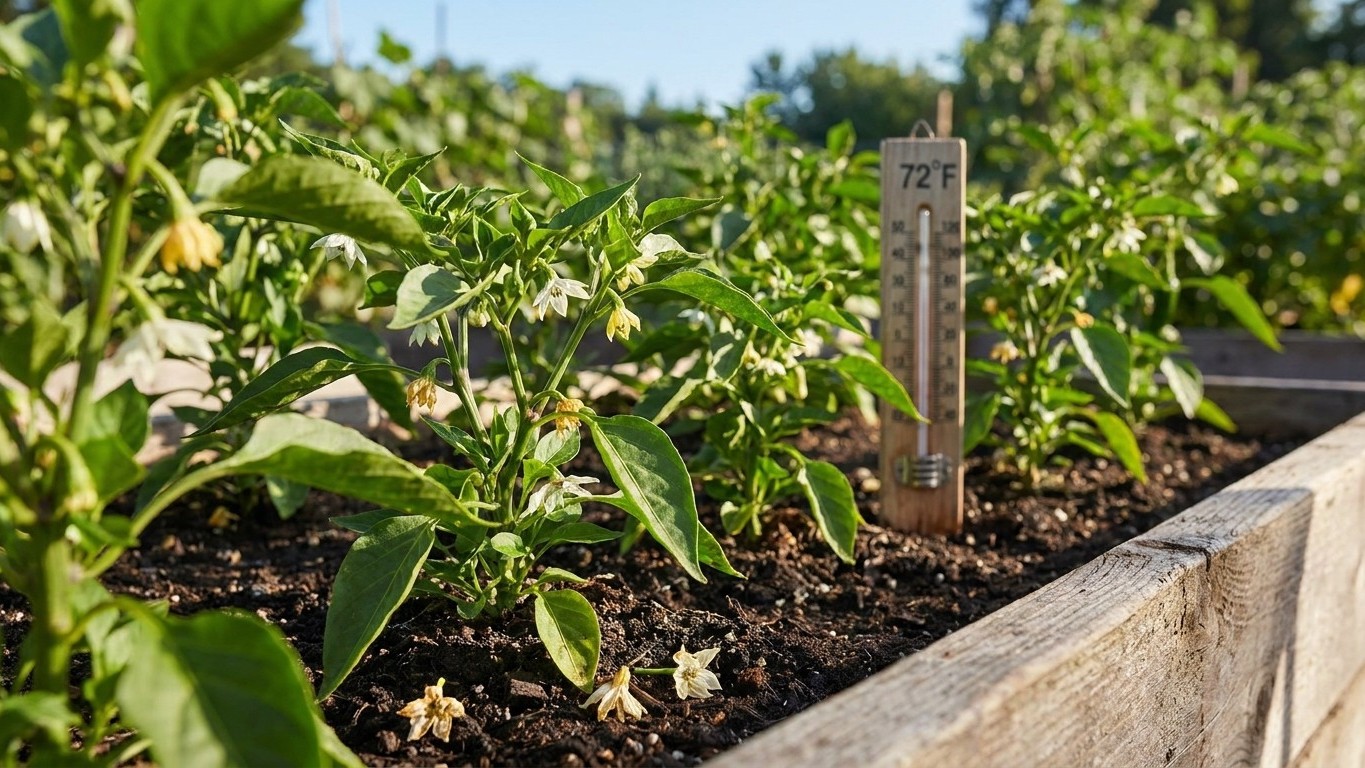

In western Washington, start pepper seed indoors sometime between mid-January and late February, counting 8 to 10 weeks back from the day your garden soil hits 60°F, not from the last frost date. Soil that’s still cold and wet holds pepper transplants back long after frost risk has passed, so treat frost as the floor for your calendar, not the trigger.
The short answer
Seattle’s reference station logs an average of just 3.0 days a year at or above 90°F, based on NOAA NCEI Climate Normals for 1991-2020. That’s a strikingly low number compared to most of the country, and it matters for one specific reason: pepper fruit set collapses when daytime temperatures push past 90°F for a stretch, because the flowers abort rather than hold and swell into fruit. With so few days crossing that line in western Washington, heat-driven fruit drop is rarely the problem gardeners on the coastal side of the Cascades need to plan around. The bigger risk in this half of the state runs the other direction entirely.
Pepper fruit set also fails at the cool end, when nights drop below 55°F, according to Utah State University Extension. That threshold is the one western Washington gardeners actually need to track, because a cool coastal spring or a marine air intrusion in early summer can easily push overnight lows under that mark even after the calendar says summer has arrived. This site does not carry summer night minimum data for Washington, so there’s no shortcut here: pull up your own overnight low readings for the weeks you’re setting fruit, whether that’s from a home thermometer, a nearby weather station, or a mobile forecast app you check daily.
Don’t try to guess those night lows from where you sit on the map. Latitude tells you almost nothing about a specific spring’s overnight temperatures, and neither does the coldest month of the year, since a mild January says nothing about a chilly June night near Puget Sound. The only sound approach is to watch actual nighttime readings during flowering and fruit set, which the source notes runs 35 to 45 days after the plant starts blooming, not from the day you sowed the seed or even the day you set the transplant in the ground. That distinction matters if you’re troubleshooting a bare pepper plant in July: the clock you’re checking against started at first flower, not at planting.
Put those two pieces together and the western Washington picture is fairly clear. Heat stress serious enough to blow out fruit set stays uncommon on this side of the state, given the 3.0-day average above 90°F. Cold-night stress during flowering is the wildcard, and it’s the one you have to check yourself, week to week, once your plants start blooming.
When to start seed here
The math for a start date isn’t complicated once you break it into pieces. It just has to run in the right order, and the order matters more than any single number.
- Start with the frost window. NOAA NCEI’s 1991-2020 Climate Normals put the last spring freeze for western Washington’s reference station somewhere between February 27 and March 18. That’s the earliest edge of the season, and it applies specifically to the mild, maritime western half of the state. Eastern Washington, on the other side of the Cascades, is high desert with a much shorter frost-free stretch, so this window should never be applied statewide.
- Don’t stop at frost, wait for soil. A frost date this early doesn’t mean an early planting date. Cold, wet soil and thin late-winter light hold pepper transplants back for weeks after the freeze risk clears. The real trigger, per Utah State University Extension, is soil temperature reaching 60°F, which in a maritime climate like western Washington’s typically lands well after the last frost date, not right on top of it.
- Count back 8 to 10 weeks from that soil-warm date. Once you have a realistic estimate for when your own soil will sit at 60°F, that’s your transplant target. Subtract 8 to 10 weeks from it, and that’s your indoor sowing window. If your soil typically warms in early-to-mid May, an 8 to 10 week countback lands seed-starting in early-to-mid March; gardeners in a warmer microclimate or a raised bed that warms faster can push earlier.
- Adjust for your own microclimate. A south-facing raised bed against a house wall warms faster than an open, low-lying yard a few miles inland. Track your own soil temperature with a simple probe thermometer rather than relying on a regional average, and shift your sowing date accordingly, since the whole chain of math depends on that one number.
Redo this arithmetic for your specific county or even your specific yard rather than borrowing someone else’s date wholesale. The frost window is regional, the soil-warming date is local, and the 8 to 10 week indoor head start is the one fixed constant in the chain.
What goes wrong here
- Blossom drop during a rare hot spell. Even with only 3.0 days a year averaging 90°F or above, a short heat spike during flowering can still knock blossoms off before they set fruit. Give plants afternoon shade with row cover or a shade cloth on the handful of days a heat warning is called, and keep soil moisture even so the plant isn’t fighting drought stress on top of heat.
- Blossom drop from a cool night during bloom. This is the more common failure point west of the Cascades. A marine air push or a cool, cloudy stretch can drop overnight lows under 55°F during flowering, and the plant simply won’t hold fruit through it. Track your own nightly lows during bloom (this site doesn’t publish them for Washington), and if a cold night is forecast, cover plants or move containers under an eave to hold in a few extra degrees.
- Sunscald on exposed fruit. Western Washington’s summer sun, even without extreme heat, can scald pepper skin on fruit left exposed after aggressive pruning strips away leaf cover. Leave a full canopy of foliage around developing peppers rather than cutting plants back hard mid-season, and stake heavy-fruited plants so branches don’t snap and expose fruit to direct afternoon sun.
- Blossom-end rot from uneven watering. Dark, sunken patches on the bottom of the fruit usually trace back to inconsistent soil moisture rather than a soil nutrient gap alone. Water on a steady schedule instead of letting containers or raised beds swing between soaked and bone-dry, and mulch to buffer soil moisture during the dry stretches that show up even in a generally wet climate.
Common questions
Can I direct-sow pepper seed outdoors in Washington?
Direct-sowing works against you in most of Washington’s climate. Peppers need warm soil to germinate reliably, and by the time western Washington soil reaches a workable temperature, an 8 to 10 week indoor head start already has transplants well ahead of anything sown straight into the ground. Starting indoors and moving to transplants once soil hits 60°F is the more reliable path here.
Does the last frost date tell me when to transplant peppers?
Not on its own. The February 27 to March 18 window from NOAA NCEI marks when freeze risk clears in western Washington, but cold, wet soil and low late-winter light hold pepper transplants back well past that date. Wait for soil to reach 60°F before moving transplants outside, regardless of how early the frost date falls.
Why are my pepper plants flowering but not setting fruit?
Check both ends of the temperature range during the 35 to 45 days after the plant’s first flowers open. Fruit set fails when nights drop below 55°F or when days climb above 90°F, per Utah State University Extension. In western Washington, the cool-night failure is far more likely given how rarely the region sees 90°F days, so watch your overnight lows during bloom rather than assuming heat is the issue.
Is the frost date the same across all of Washington?
No, and this is a common mix-up. The February 27 to March 18 window applies to western Washington’s mild, maritime climate. Eastern Washington, across the Cascades, is high desert with a shorter growing season and a different frost pattern entirely, so that window should never be used as a statewide figure.