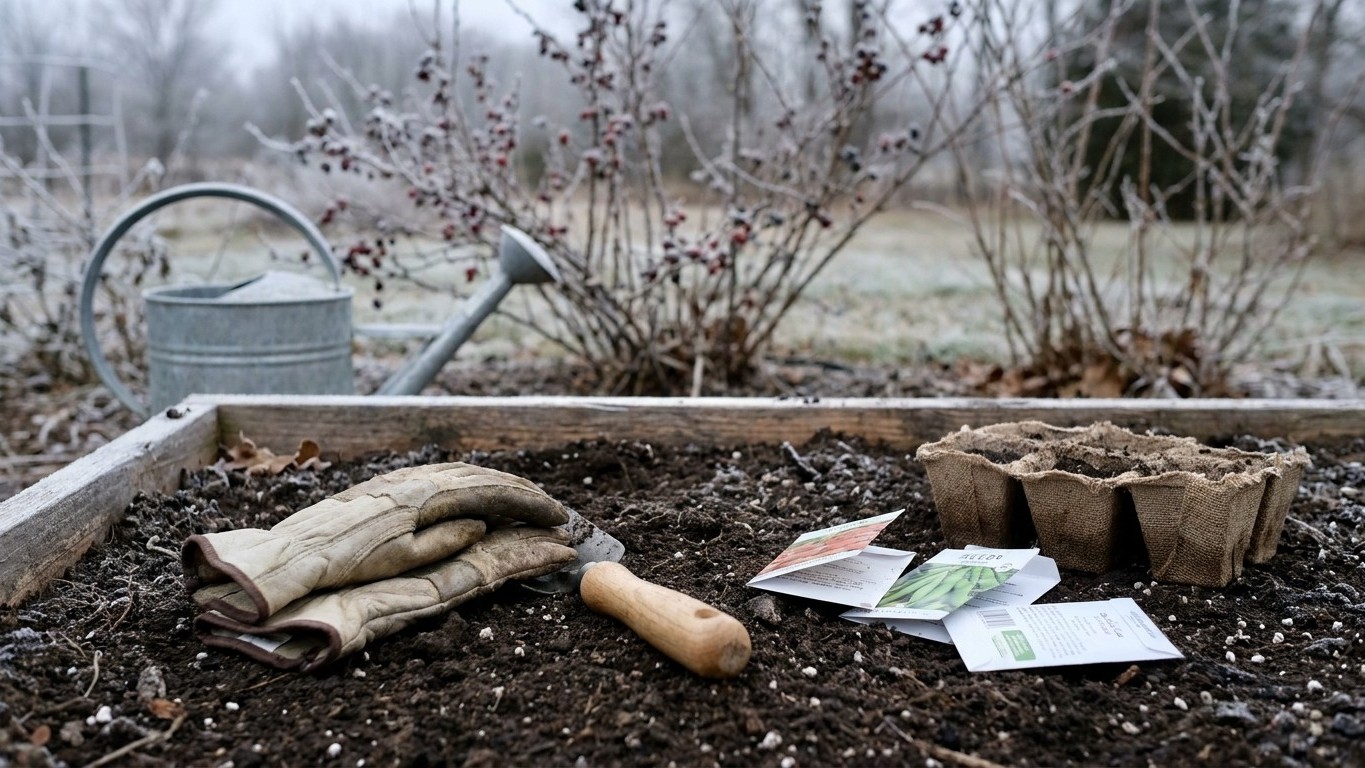

Very little goes into open ground anywhere in Washington this month, and that is not a failure of the calendar, it’s the frost window doing its job. In western Washington, last frost runs February 27 to March 18, so much of the month sits before that window even opens. Garlic and shallots, bare-root plantings, and cold frames carry the outdoor work. Everything else waits, or starts indoors.
What goes in the ground in February
The decision here isn’t the date on the wall. It’s two numbers: soil temperature and where you sit relative to the last-frost window. For the reference station in western Washington, that window runs February 27 to March 18, according to NOAA’s 1991-2020 Climate Normals. Most of February falls before that range even starts, which means the ground itself is still cold, often waterlogged, and unwilling to support new seedlings even on a mild afternoon.
So the honest line: for most of the state, nothing new gets direct-sown outdoors in February. What does work is narrower but real. Shallots can still go into workable ground where the soil isn’t frozen or saturated. Bare-root fruit trees, cane berries, and roses are sold dormant this time of year specifically because they can be planted while they’re not pushing growth, letting roots settle before the top growth starts demanding water. Cold frames and low tunnels let a gardener push hardy greens, spinach, mâche, a few lettuce varieties, weeks ahead of open-ground planting, because the covering raises soil and air temperature just enough to matter. Forcing rhubarb crowns or Belgian endive chicons indoors is a February job too, and it produces something to eat while the outdoor beds are still asleep.
Western vs. eastern Washington
The Cascades split this state into two different growing worlds, and a single statewide answer flattens that difference in a way that costs gardeners real transplants.
| Region | Climate character | February reality |
|---|---|---|
| Western Washington (Seattle reference) | Maritime, mild, wet winters | Ground often workable in patches; shallots, bare-root, cold frames possible |
| Eastern Washington | High desert, continental, colder and drier | Soil frequently frozen or too cold to work; outdoor planting waits longer than the western frost window suggests |
The USDA Plant Hardiness Zone Map puts the state anywhere from 4a to 9a, a spread wide enough that citing “Washington” alone tells you almost nothing. Seattle sits toward the mild end of that range; high-elevation and eastern counties sit much colder.
What to start under cover
Indoor seed-starting in February is math, not guesswork, and the math runs backward from the frost window rather than forward from today. Tomatoes typically want six to eight weeks under lights before they’re ready to go outside, and peppers often need closer to eight to ten. Line that up against a last-frost window of February 27 to March 18 in western Washington, and starting tomatoes and peppers in February puts transplants at the right size roughly when the ground has a chance of being safe, though cold, wet soil frequently holds the actual transplant date back further still.
Onions started from seed run on a longer clock, often needing ten to twelve weeks before they’re transplant-sized, which is why serious onion growers are usually already past the starting date by February and simply tending seedlings that began earlier. Brassicas for spring, broccoli, cabbage, that sort of thing, sit on a shorter four-to-six-week clock and slot comfortably into a February start for an outdoor move once the frost window opens.
Two ways this goes wrong. Start too early, and a gardener ends up with rootbound, leggy plants sitting in small pots for weeks past their prime, waiting on soil that refuses to warm. Start too late, particularly in eastern Washington’s shorter, harsher season, and there isn’t enough growing window left to bring a crop to maturity before fall frost returns. Both mistakes trace back to the same habit: counting from the calendar instead of counting back from the actual frost window for your part of the state.
What is ready to pick
Outdoors, the honest answer is close to nothing in most of the state during February. What’s still feeding a household comes mostly from what survived the winter rather than anything freshly grown. Overwintered kale holds on through mild spells and actually sweetens after cold exposure. Leeks left in the ground since fall are often at their best right now, pulled as needed rather than harvested all at once. Brussels sprouts stalks left standing can still be picked from, one stem’s worth of sprouts at a time.
Cold frames extend this list. Spinach, mâche, mizuna, and some hardier lettuces planted under cover the previous fall are often ready to cut this month, sometimes repeatedly, since cool growth tends to be slow but steady rather than a single flush. Indoors, sprouts and microgreens fill the gap on a much shorter cycle, ready in days rather than weeks, and they don’t depend on outdoor weather at all.
Stored crops need a check-in now too. Squash, potatoes, and onions put into storage back in fall are heading toward the point where the weakest specimens start to turn. Squash with a soft spot or a sweet smell should be used first, not left to spread rot to the rest of the bin. Potatoes sprouting eyes are still edible once the sprouts are removed, but they’re on borrowed time. Onions gone soft at the neck are the ones to cook this week, not save for later.
The jobs that matter this month
Dormant pruning is the headline task, and February is the last comfortable window for it before buds start swelling toward the frost window’s opening. Apple, pear, and other fruit trees, along with cane berries like raspberries and blackberries, are pruned while they’re fully dormant so the cuts don’t stress active growth and so the plant’s shape gets set before a single leaf appears. Wait too long and you’re cutting into growth that’s already started, which sets the plant back rather than shaping it.
Seed ordering belongs here too, and not as an afterthought. Popular varieties, particularly disease-resistant tomato lines and anything marketed as short-season for cooler eastern counties, sell out during this stretch every year. Ordering in February beats discovering in April that the variety you wanted is gone.
Soil work pays off precisely because nothing is growing yet to get in the way. A soil test now gives time to amend before planting season arrives, whether that means lime for acidity, compost for structure, or a targeted fertilizer based on what the test actually shows rather than a guess. Turning an existing compost pile speeds decomposition and gets finished compost ready for spring beds. Tool maintenance, sharpening pruners, cleaning and oiling blades, replacing a cracked hoe handle, is unglamorous but it’s the difference between clean cuts that heal fast and ragged ones that invite disease later. Raised beds, fencing, and trellising all benefit from repair now, before they’re loaded with plants and impossible to fix without disturbing roots. And that stored-crop check from the section above isn’t a one-time task; it’s worth repeating on a rotation through the month so rot doesn’t spread through a whole bin unnoticed.
What not to do in February
The classic mistake is planting by the thermometer instead of the calendar’s actual meaning: a run of 55-degree afternoons feels like spring, and gardeners put tomatoes, peppers, or squash starts straight into the ground. The soil several inches down is still cold regardless of how the air feels, and warm-season transplants set out this early typically stall, yellow, or die outright once a cold night follows the mild spell, which it usually does in February.
Uncovering cold frames or low tunnels too early after a stretch of mild weather is the same mistake in a different form. Plants that hardened under cover haven’t been exposed to open-air temperature swings, and pulling the cover during what looks like an early break in the weather leaves them exposed right when a return to normal cold does the most damage.
Nitrogen feeding is the third trap. Applying a nitrogen-heavy fertilizer to overwintered plants or newly bare-root trees this early pushes soft new growth right at the moment frost risk is highest, and that tender growth is exactly what gets burned first. Better to hold nitrogen until growth is already underway and frost risk has genuinely passed, feeding for the season ahead rather than trying to force it early. Pruning frost-tender plants, figs and hydrangeas among them, too early carries a similar risk: fresh cuts and any new growth they trigger are more vulnerable to a late cold snap than dormant, unpruned wood.
Checking this against your own county
A statewide month is a starting point, nothing more. Elevation alone can shift a frost window by weeks, and Washington’s geography adds the Cascades divide on top of that, separating a mild maritime climate from a continental high-desert one within the same state line. North-south differences matter too, and local microclimates, a south-facing slope, a valley that pools cold air, a spot near a large body of water, can move the practical planting date further still from any statewide figure.
The Washington State University Extension service tracks these county-level differences and is the better source for a planting date specific to your address rather than the state as a whole.
Common questions
Can I plant vegetables outdoors in Washington in February?
Mostly no, for direct-sown or transplanted vegetables. Shallots and hardy overwintered greens under cover are the exceptions; most crops wait until the last-frost window opens, February 27 to March 18 in western Washington, and later in colder inland areas.
What is the last frost date in Washington?
For the western Washington reference station, NOAA’s 1991-2020 Climate Normals put it between February 27 and March 18. Eastern Washington’s high-desert climate runs colder, and that specific window doesn’t apply there.
Is it too early to start seeds indoors in February?
For tomatoes and peppers, February is generally the right window given their six-to-ten-week head-start requirement. Onions from seed are usually better started earlier; brassicas can often wait a bit longer without losing much.
Why can’t I plant tomatoes outside just because it feels warm?
Air temperature and soil temperature are different measurements. A mild February afternoon doesn’t mean the soil several inches down has warmed, and warm-season transplants set into cold soil typically stall or die once a normal cold night follows.