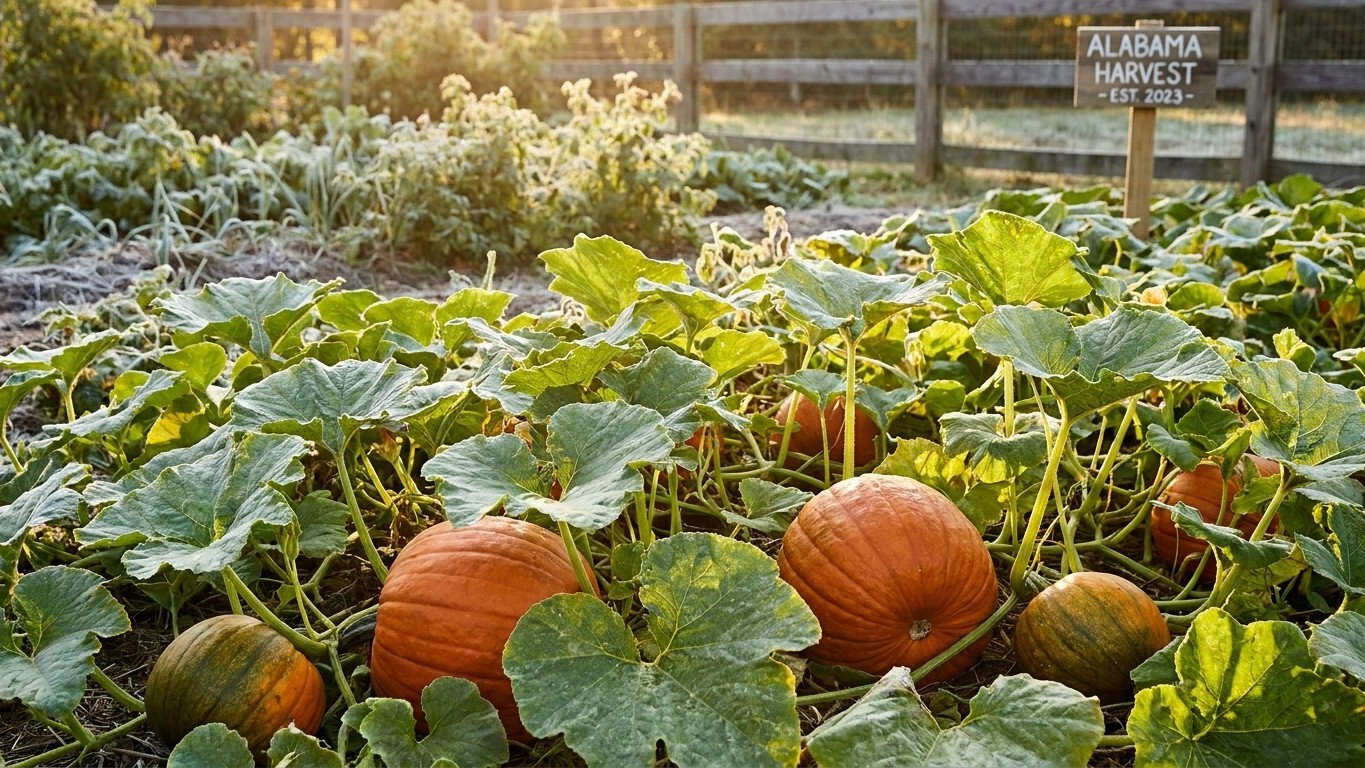

In western Washington, most pumpkins sown once the soil hits 65°F have enough season left to ripen before the first fall frost, which lands between November 13 and November 30. The math runs off flowering, not planting, and it leaves less room than most gardeners assume. East of the Cascades, where the growing season runs weeks shorter, this same window doesn’t apply, and the answer changes entirely.
The short answer
Start from the frost date, not the calendar page you’re on right now. Western Washington’s first fall frost, based on NOAA climate normals for the Seattle-area station, arrives somewhere in that November 13 to November 30 stretch. Utah State University Extension puts pumpkin maturity at 45 to 55 days after flowering, not after seeding and not after transplanting. That distinction is the whole calculation. A vine can look strong, sprawl across a garden bed, and still miss the deadline if its flowers open too late.
Run the two numbers against each other and you get a range, not a single deadline. If frost hits on the early side of the window, November 13, and a fruit needs the full 55 days, its flower had to open by roughly September 19. If frost holds off until November 30 and the fruit only needs 45 days, a flower opening as late as mid-October still has time. That gives a practical target: for comfortable margin, aim for flowers open by late September. Anything blooming into November is a gamble, and a bad one.
This is where the maritime climate cuts both ways. Western Washington’s mild frost dates feel generous compared to colder inland states, but that same mild, cloudy, wet spring also delays sowing, which delays flowering, which eats into the very cushion the late frost seems to offer. A long frost-free window on paper doesn’t automatically translate into a long effective growing season for a vine that needs warm soil and steady sun to flower on schedule.
None of this applies east of the Cascades. That side of the state sits in high desert conditions with a shorter, hotter, drier season and frost dates that don’t resemble the Seattle-area numbers at all. Anyone gardening in Spokane, Yakima, or the Tri-Cities area needs a separate calculation built on their own local frost data, not the western Washington figures used here.
When to sow here
Soil temperature, not the last frost date, is the real starting gun. Western Washington’s last spring frost falls between February 27 and March 18, but 65°F soil, the threshold Utah State University Extension sets for pumpkin sowing, arrives well after that. Cold, waterlogged ground and the region’s famously low spring light hold soil temperatures down for a stretch measured in weeks, not days, after the air has already warmed past freezing. Treating the last frost date as a green light for sowing is one of the more common mistakes gardeners make here.
- Check the soil, not the sky. Push a soil thermometer four inches deep on a dry afternoon. Air temperature in the 60s means nothing if the soil underneath is still sitting in the 40s or low 50s, which is common in this region well into spring.
- Expect a real gap between frost and sowing. The last frost clears by mid-March in a typical year, but the soil often doesn’t cross 65°F until sometime in May, sometimes later in a cool, wet year. That gap is the arithmetic behind sowing dates here: subtract a cold, slow spring from a mild frost date and what’s left is a shorter effective window than the frost date alone suggests.
- Use row cover to buy back time. A layer of row cover or black plastic over the bed traps daytime heat in the soil and can pull the 65°F threshold forward by roughly two weeks compared to bare, exposed ground. That’s often the difference between flowers opening in early September, with margin to spare, and flowers opening in late September, right at the edge of safe.
- Count backward from frost before committing to a sowing date. Once the soil crosses 65°F, add the weeks a vine typically needs to reach flowering, then add the 45 to 55 days from flower to ripe fruit, and check the total against the November frost window. If the math doesn’t leave room, an early-maturing variety or a head start under cover is worth the effort.
What goes wrong here
The gap between a mild-sounding frost date and a genuinely short flowering-to-ripening window causes a small, predictable set of failures every fall in this region.
- A late flower that never colors. When sowing gets pushed into a cool, wet late spring, flowering slides later too, sometimes into October. A fruit that sets from an October flower is racing the 45 to 55 day clock against a frost that could land as early as November 13. The remedy is sowing as soon as soil hits 65°F rather than waiting for a comfortable-looking calendar date, and leaning on varieties bred for shorter seasons where a shorter run is genuinely useful, names like Sugar Pie, Baby Bear, Wee-B-Little, Jack Be Little, or New England Pie.
- A fruit caught by frost before it hardens. Skin that hasn’t fully hardened is vulnerable to a hard freeze, and a pumpkin frozen on the vine won’t finish ripening after the fact. Watch the frost window closely once fruit is set, and harvest with the stem attached at the first sign of a frost warning rather than waiting for a “perfect” color that may never fully arrive in a compressed season.
- A vine that dies back before the skin hardens. Vines weakened by squash bugs or cucumber beetles often collapse weeks before frost, cutting the plant’s ability to finish hardening the fruit’s rind even if the calendar still allows time. For identifying and managing those pests in this state, see the dedicated pages on squash bugs in Washington and cucumber beetles in Washington rather than waiting until the vine has already failed.
Common questions
What happens if frost arrives before a pumpkin finishes ripening?
A fruit caught by frost before its rind hardens generally stops developing color and won’t continue ripening once cut from a frost-damaged vine. The safest move is watching the frost forecast closely as fruit approaches maturity and harvesting with the stem attached ahead of a hard freeze rather than gambling on a few extra days of color.
Can a green pumpkin ripen after it’s picked?
Utah State University Extension doesn’t publish a storage temperature or keeping-time figure for this, only guidance to store harvested pumpkins somewhere they won’t freeze. That’s a narrower claim than “ripens indoors,” and this page won’t stretch it further than the source does.
Does eastern Washington follow the same frost and flowering math?
No. The frost dates in this article come from a western Washington station and reflect a mild, maritime climate. Eastern Washington’s high desert conditions run a shorter, hotter season with different frost timing, and applying the Seattle-area numbers there would give a misleading answer.
How many days before frost should a pumpkin flower open, to be safe?
Working from the 45 to 55 day maturity window and this region’s November 13 to November 30 frost range, flowers opening by late September carry the most comfortable margin. Flowers opening into October can still finish, but with less room for a cool, cloudy stretch to slow things down.