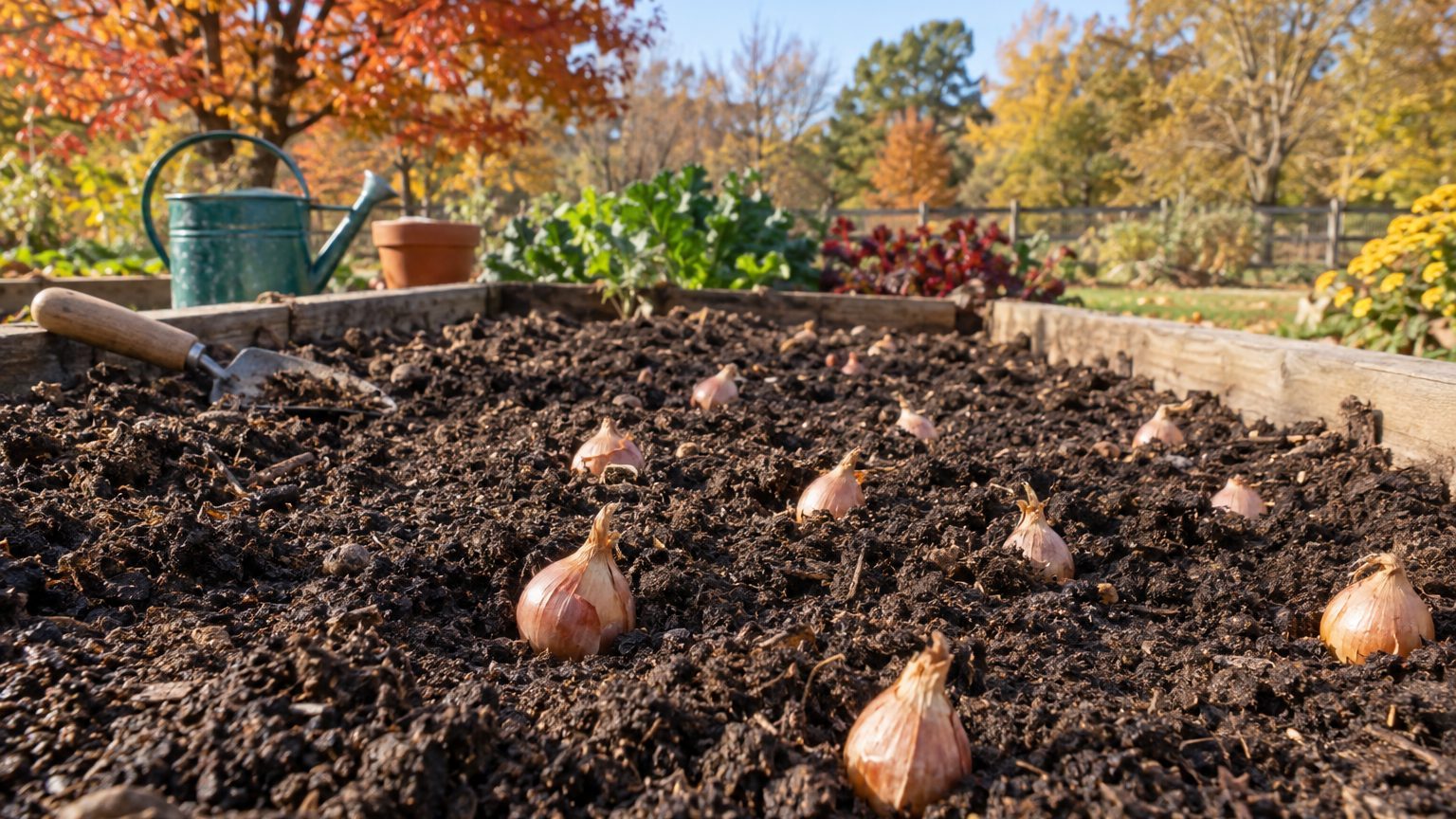

In western Washington, shallots go in the ground in two windows: October into early November for fall planting, and late February through March for spring planting. The Seattle reference station puts its last spring freeze between February 27 and March 18 and its first fall freeze between November 13 and November 30. East of the Cascades the calendar shifts hard, and those dates do not carry over.
The short answer for Washington
Plant shallots in western Washington from October into early November, or in spring from late February through March once the soil drains and crumbles. Fall planting usually wins. The bulbs root through a mild winter and take off as soon as the days lengthen.
The frost dates come from the NOAA 1991-2020 Climate Normals for the Seattle station. Each one is a probability of a 32°F freeze. Between February 27 and March 18, the odds of another freeze run from 70 percent down to 30 percent. Between November 13 and November 30, the odds of the first freeze climb through that same band. A mild maritime climate like this one blurs the line between winter and spring, so the dates are a range, not a single day.
When do you plant shallots in fall?
Aim for October into early November, ahead of the first fall freeze window. The goal is a set of roots before winter, with little or no top growth. Bulbs planted this way sit through the cold months and push green shoots in late winter. They usually bulb up earlier than spring plantings, which gives you a head start on summer harvest.
When do you plant shallots in spring?
Spring planting runs from late February through March, and in a wet year it slides into April. The last-freeze window does not set this date. Cold, saturated soil and low winter light hold the crop back well past the last freeze, so the soil’s condition is the real trigger.
| Planting | Window in western Washington | What sets the date |
|---|---|---|
| Fall | October into early November | Roots form before the November 13 to November 30 first-freeze window |
| Spring | Late February through March | Soil that drains and crumbles, even after the February 27 to March 18 window |
The coldest month at the reference station has a mean daily minimum of 37.1°F, which is above freezing. A shallot in the ground through a typical western Washington winter is rarely in danger from the cold itself. Wet feet are the bigger threat, and that is where most failures start.
What will not work here

Applying the Seattle window to the whole state fails first. Eastern Washington is high desert with a far shorter season, and a calendar built on a Puget Sound station will put bulbs in the ground at the wrong time there, usually too late for fall rooting or too early for frozen spring soil.
Can you plant shallots in February because the last frost has passed?
Only if the soil is ready, and in most years it is not. A mild frost date does not mean an early planting date here. Cold, soggy ground in late winter keeps roots from growing, and a bulb that sits in it can rot before it sprouts. Take a handful of soil and squeeze it. If it holds as a wet ball that smears, wait. If it breaks apart in your fingers, plant.
What goes wrong with wet winter soil?
Western Washington winters are long, gray and wet, and fall-planted shallots live through all of it. Beds that hold standing water for days will lose bulbs. A raised bed or a low ridge of soil, a few inches high, keeps the root zone drained. Heavy clay benefits from compost worked in before planting.
Tight spacing makes the damp worse. Leaves that touch stay wet after rain, and disease moves easily between crowded plants. Six inches between bulbs gives each one air. Setting bulbs shallow helps as well, with the tip at or just under the surface in heavy ground.
Late planting causes a different problem. A bulb planted in mid-December has little time to root, and low light slows it further. Spring plantings that go in late, say May, hit warm, dry weather before the plant has built much foliage, and the bulbs come out small. Summers here run dry, so spring shallots also need steady water into early summer, until the tops begin to yellow. Letting a bed dry out in June is how plantings that started well end up undersized.
What changes across Washington
Washington has no single answer. The USDA Plant Hardiness Zone Map (2023 edition) covers the state from zone 4a to 9a. That system rests on one variable, the average annual extreme minimum temperature, so it measures how cold the worst nights get, not how long the season runs. The Seattle reference station sits toward the mild end of that range, and the dates above are built on it.
A spread from 4a to 9a means a gardener in the Okanogan, the northeast corner, a mountain valley or the high plateau is working with a different calendar. Nobody can tell you your zone from a distance. Look up your own location on the USDA Plant Hardiness Zone Map by ZIP code and compare it with the reference city.
How should gardeners in eastern Washington or the mountains adjust?
Shift fall planting earlier so the roots set before the ground freezes, and cover the bed with a few inches of straw once the soil has cooled. Where winters are hard, many growers skip fall planting and put bulbs in as soon as the ground thaws and can be worked. Springs come later and the season is shorter, so choose varieties that mature without a long wait. The Best Shallots to Grow in Washington covers which types suit each climate.
In the other direction, a sheltered garden near Puget Sound can stretch the fall window toward the end of its range, because the ground rarely freezes solid. For the whole growing cycle in one place, see Growing Shallots in Washington.
Where to check this for your own county
Start with Washington State University Extension. Every county has an office, and the staff and Master Gardener volunteers know the soil and weather in your valley, not just the state’s.
Where do you find a shallot planting calendar for your county?
Look for the local planting calendar on the extension site, then search under your county for vegetable guides. Many counties publish a month-by-month list for home gardens, and the onion family usually appears in it. If you cannot find one, call or email the county office and ask directly.
What should you ask your county extension office?
A few questions get you the most useful answers:
- What is the usual planting window for shallots in your county, fall and spring?
- Which shallot varieties have been trialled locally, and how did they do?
- Does the area have a known drainage, disease or pest problem for onions?
- When do local growers usually harvest?
A county recommendation beats a state one, because it accounts for your elevation, your rain and your soil. A statewide calendar gives you a sensible starting point, and the extension office tells you how far to move it.
Checking this against your own garden
Your own observations outrank every date here. Three things are worth watching, and none needs equipment.
First, feel the soil. In late winter, push your hand a few inches into the bed. If the soil is cold enough to ache and clings in a wet lump, it is not ready. Beds that warm and crumble first are your early spots, often on a slope or against a south-facing wall. Beds that stay cold are the late ones.
Second, watch standing water after a heavy rain. A puddle that is still there a day later tells you the spot will drown fall-planted bulbs. That bed needs raising or a different location.
Third, track the first green shoots. When fall-planted shallots show leaves, and how fast they grow, shows how your garden runs relative to a neighbor’s. Early shoots mean a mild, sheltered site. Late ones mean a cooler pocket, and next year’s planting should go in a bit sooner. Keep a note of the dates, and your own calendar will be better than any printed one within a couple of seasons.
Common questions
Is it too late to plant shallots now?
In western Washington, late October is still inside the fall window. Plant soon, before the November freeze band and before the soil gets soggy. East of the Cascades, check with the county extension office, because the ground may already be too cold.
Do shallots have to be planted in fall?
No. Spring planting works wherever the soil can be worked, and it is the standard choice where winters are harsh. Fall planting just uses the mild season in the west to give the bulbs a head start.
How deep and how far apart do you plant shallots?
Set bulbs pointed end up, with the tip at or just under the soil surface in wet or heavy ground, and about an inch deep in lighter soil. Leave roughly 6 inches between bulbs so leaves dry quickly after rain.
Will a late frost hurt shallots that are already growing?
Established shallots tolerate light frosts. A hard freeze can nip the tops, but the bulb underground usually survives and regrows. Tender new growth on bulbs that sprouted early is the part most at risk.