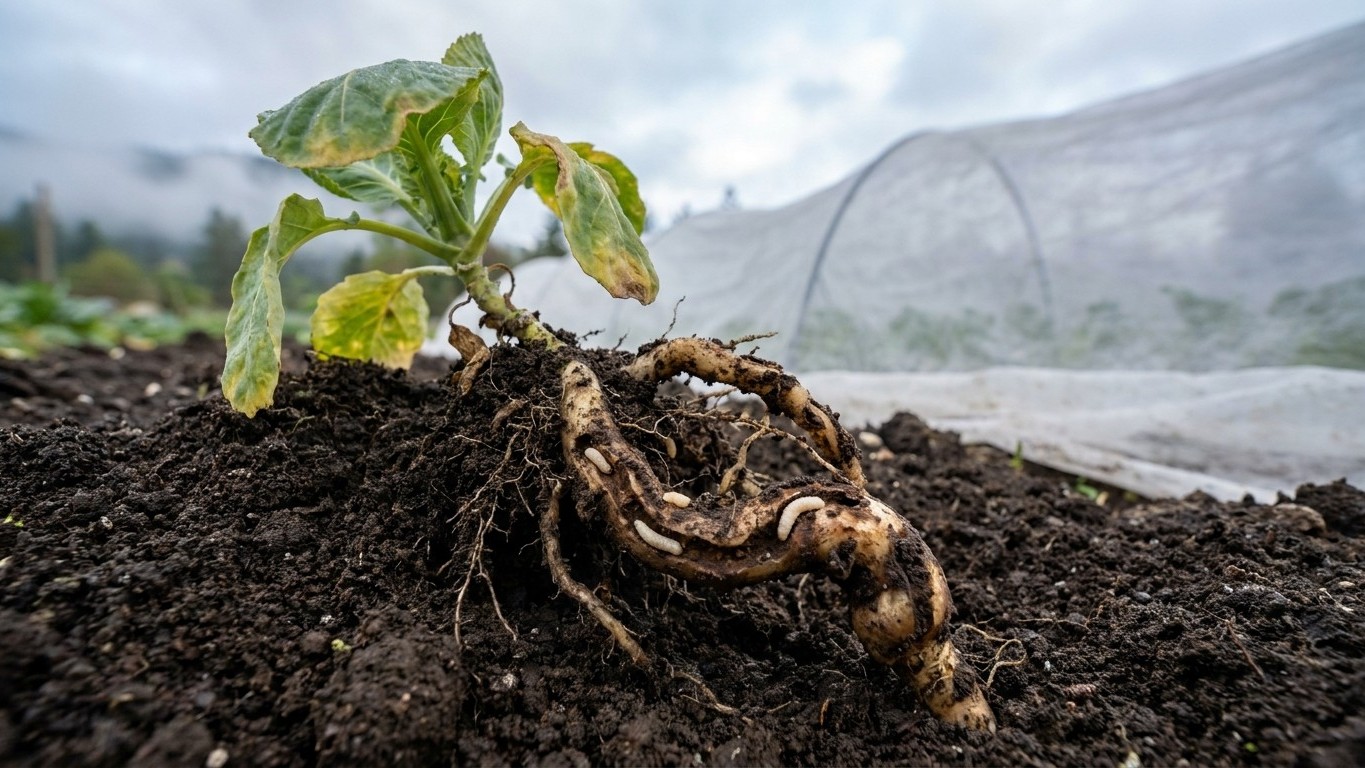

Sweet potatoes are a stretch crop in Washington, and a workable one west of the Cascades if you wait for warm soil rather than a frost date. Seattle’s climate normals put the last freeze between February 27 and March 18, yet ground warm enough for slips often arrives months later. Cool nights, wet springs and a short run of hot days shape every choice after that: planting date, soil warming and the type you buy.
When the soil is warm enough in Washington

The date most gardeners ask about comes from NOAA’s 1991-2020 Climate Normals for the Seattle-Tacoma station (USW00024233). In the 30 to 70 percent probability band for a 32°F freeze, the last spring freeze falls between February 27 and March 18. That range is a set of odds, and a given year can still deliver a late freeze.
For sweet potatoes the frost date only tells you when the killing risk is over. The crop itself waits for warm soil, and soil warms well after the air stops freezing. These plants come from the tropics, and slips set into cold ground sit still and invite rot. A common rule is to wait until the soil at 4 inches deep holds around 65°F in the morning. A cheap soil thermometer settles the question better than any calendar.
Western Washington makes that wait longer than the frost date suggests. A mild maritime climate means an early last freeze, but spring brings cold, wet ground and low light that hold warm-season crops back for weeks. In many years the soil does not reach planting condition until late May, and sometimes later. Gardeners who plant in April because the frost risk has passed usually watch their slips sulk for a month.
You can shorten the wait. Lay black plastic over a raised ridge or bed two to three weeks before planting, and the soil underneath warms faster than open ground. A low tunnel over the planted slips holds heat on cool nights. Raised ridges also drain, which matters in a region where a wet spring leaves clay soils cold and heavy.
Eastern Washington runs on a different clock. Beyond the Cascades the land is high desert with a far shorter season and much bigger swings between day and night. The Seattle window should not be carried east. Growers there should check local conditions with Washington State University Extension. The USDA Plant Hardiness Zone Map (2023) spans zones 4a to 9a across the state, which shows how much the territory varies.
One point of botany saves trouble. A sweet potato is not a yam, and it is not a potato. It belongs to the morning glory family, is not a nightshade, and does not rotate with potatoes or tomatoes. The “yam” label in the supermarket is wrong. For the general method of slips, heat and curing, see Growing Sweet Potatoes: Slips, Heat, and a Careful Cure.
How long the season lasts here
The same station gives a first fall freeze between November 13 and November 30. Counting from the latest mean last spring freeze to the earliest mean first fall freeze, that leaves about 240 frost-free days. On paper that is a generous window, longer than most gardeners in the northern states get.
The usable window is shorter, because the crop needs warm soil to grow. Count from the day the slips go into warm ground, often late May or June, to the point in autumn when the soil chills and rain returns. That period holds the whole growing run. A long frost-free stretch on the calendar gives you room for error but does not add warm weeks.
What the long window does allow is flexibility. If spring stays cold, you can hold the planting back a week or two without risking a frost loss at the other end. You can also stagger plantings of slips, the way you would stagger beans, so that not every vine reaches the same stage at once. The succession approach in the main sweet potato guide is worth adapting here, with one limit: a late planting only pays off if it has enough warm weeks left to size up roots, and in western Washington that margin closes quickly after midsummer.
Transplanting is where the window earns its keep. Slips are rooted cuttings, and a slip with no roots needs a long recovery in cool soil. Because the frost-free window is long, it pays to pot slips in containers indoors or under cover for a few weeks, check that white roots have formed, and set them out the moment the soil is ready. A slip with roots already formed loses far less time than a bare cutting pushed into cold ground.
Harvest timing sits at the other end of the window. Frost blackens the vines, and roots in cold, saturated soil are vulnerable to chilling injury. Plan to dig before the first hard freeze, and earlier if a stretch of cold October rain has soaked the beds. East of the Cascades, where the season is far shorter, the same logic applies with much less room to spare.
Heat and water in Washington

Seattle averages 3.0 days a year at or above 90°F, according to the 1991-2020 normals for the reference station. That is a count at one station, and gardens inland, on south slopes or near pavement run hotter. Even so, three days is a small number. Sweet potatoes want accumulated warmth and, above all, warm nights. Maritime summers cool off after dark, so the crop here is a project of plastic, ridges and early-maturing types. In Mississippi, covered in Growing Sweet Potatoes in Mississippi, the same plant is routine.
A cool, damp summer brings its own problems. Vines grow leaf at the expense of roots, ripening runs slow, and mildew and root diseases gain ground in wet soil. Black plastic helps on both counts. It warms the ground and keeps the foliage and crowns from sitting in splashed, soggy soil. Spacing the plants for airflow lowers disease pressure.
Summer rainfall is low, which changes the picture. The station records about 3.0 inches across June, July and August, split as 1.45 inches in June, 0.97 in August and only 0.6 in July, the driest month. The year as a whole totals 39.3 inches, so almost all of the rain falls outside the growing season. Sweet potatoes in western Washington depend on irrigation through midsummer.
How much water depends on soil. The same inch of rain drains from sandy ground within a day and sits on clay for a week. A sandy bed may need watering every few days in July, while a clay bed holds moisture longer and risks waterlogging. Normals describe what a region can usually expect. They are not a forecast, and a rain shadow, a slope or a city changes them. A rain gauge on your own plot settles the question better than any regional average.
Water also shapes the roots at the end of the season. Steady moisture while roots are sizing gives smooth, even roots. A long dry spell followed by a soaking autumn rain, or a sudden heavy watering after drought, can split them. Easing off watering in the last few weeks, and digging before saturated autumn soil sets in, protects the crop.
Which sweet potatoes suit Washington
The cool, short-summer conditions point to the earliest-maturing types. Look for slips sold as quick or early, which put on roots in fewer warm weeks. Compact, bush-habit vines are easier to cover with plastic or a low tunnel than long runners. Disease resistance counts for more here than in a hot, dry climate, because a damp year raises the risk of rot and mildew. Check descriptions for tolerance to the common soil-borne diseases.
Specific variety names are left out deliberately. A variety that performs well in Georgia or Mississippi may sulk through a Puget Sound summer, and a variety praised in an online forum may never have been tried in cool, maritime ground. The varieties trialled locally are the only recommendation that means anything. Washington State University Extension and county offices know which types have worked in your part of the state, and which slip suppliers sell disease-free stock. Gardeners in other cool climates have the same issue, as the guide to Growing Sweet Potatoes in Newfoundland and Labrador shows.
Buy certified slips from a reputable supplier or an extension-recommended source. Grocery roots may carry disease and are not a reliable starting stock.
How should you store sweet potatoes after harvest?
Storage starts with curing, which needs warmth and humidity for a period after digging. Never put sweet potatoes in a refrigerator or a cold cellar. Cold injury below their storage range is permanent, and it is the most common way a good home crop is ruined after harvest. Handle roots gently, since bruises and cuts let rot in. Inspect them regularly. A soft patch or a weeping spot ends the question, and that root should be discarded. A root that looks sound is not proof that it is safe to eat.
Common questions
Can you grow sweet potatoes in eastern Washington?
Possibly, but the season is far shorter and nights swing cold, so the Seattle dates do not apply. Use plastic, early types and a late-May or later planting, and ask WSU Extension for local guidance.
When should I plant sweet potato slips in western Washington?
Plant when the soil at 4 inches holds around 65°F in the morning, which is often late May or later. The last freeze between February 27 and March 18 only marks when frost risk ends.
Is a sweet potato a yam or a potato?
Neither. It belongs to the morning glory family, so it is not a nightshade and has no place in a potato rotation. The “yam” label in grocery stores is a misnomer.
Can I keep sweet potatoes in the refrigerator?
No. Cold below their storage range causes lasting injury. Cure them warm and humid, and inspect often. Discard any root with a soft patch or weeping spot.