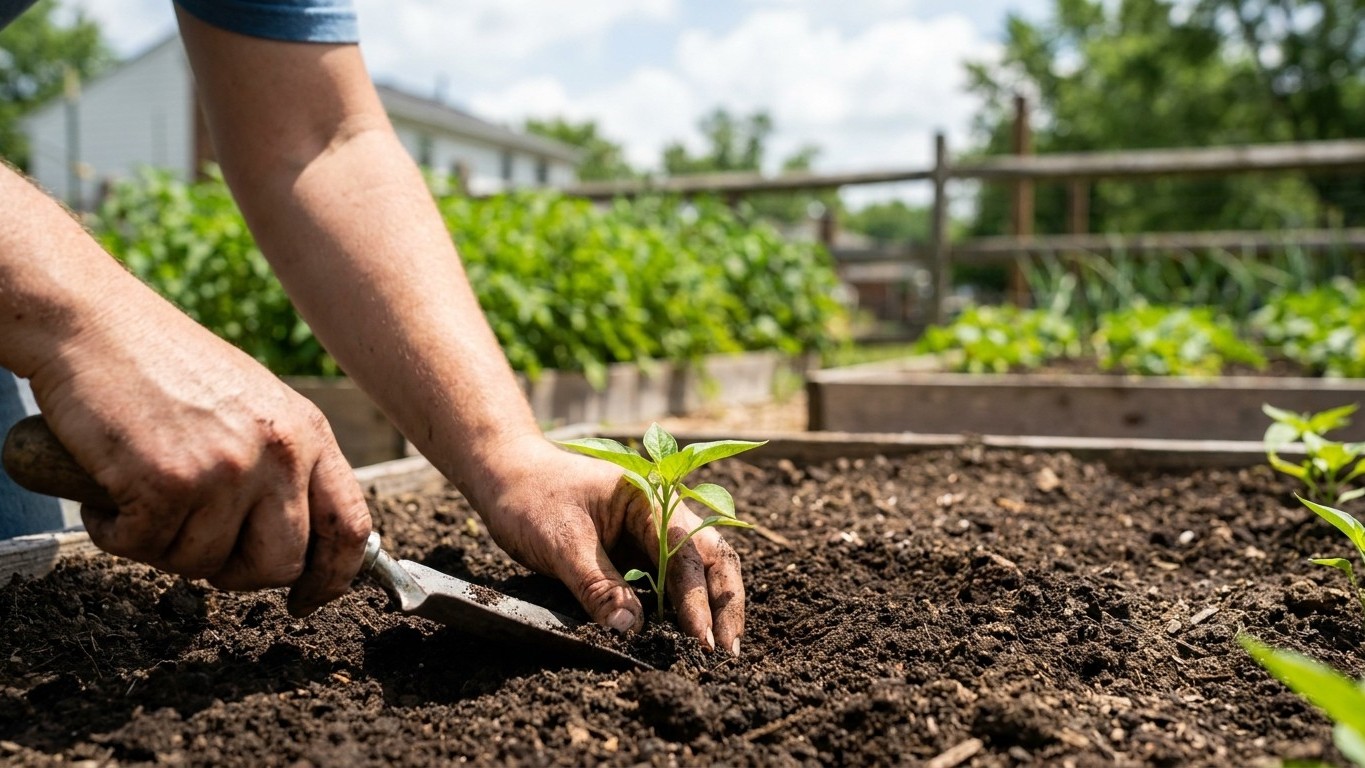

July in West Virginia sits deep inside the growing season, well past the last spring frost window of April 9 to April 23 and still more than three months from the first fall frost, which lands between October 18 and November 1. That gap means the ground is warm enough for anything heat-loving, and it’s also the exact moment to start counting backward for a fall harvest.
What goes in the ground in July

By July, soil temperature is no longer the limiting factor almost anywhere in the state. Even at higher elevations in Pocahontas or Randolph counties, where spring arrives later than it does in the Charleston river valley, ground temperatures have caught up to the air by now. The real constraint shifts from “is it warm enough” to “will this crop finish before fall frost arrives.”
Direct-sown bush beans, snap beans, and summer squash still have plenty of time to mature if seeded in the first half of the month. Cucumbers planted now for a fall pickling crop will typically size up before the October frost window closes in on them. Corn is a tighter call: only fast-maturing varieties sown early in the month stand a real chance of tasseling and filling out before the season ends, especially at the northern edge of the state where fall frost tends to arrive closer to October 18 than November 1.
Root crops for fall eating, carrots, beets, and turnips, go in through the month, since they tolerate the light frosts at the end of the season and actually sweeten after a cool snap. Late July is also the window to direct-seed or transplant fall broccoli, cabbage, and cauliflower outdoors, timed so they head up in the cooler weeks of September and October rather than trying to form heads in mid-summer heat.
| Crop | Method in July | Why it still works |
|---|---|---|
| Bush beans | Direct sow, early month | 55-60 days to harvest, clears before frost |
| Cucumbers | Direct sow | Fast crop, good for a fall pickling batch |
| Carrots, beets | Direct sow | Tolerate light frost, improve with cool nights |
| Fall broccoli/cabbage | Transplant outdoors, late month | Heads form in cooler September weather |
| Sweet corn | Direct sow, only fast varieties, early month | Needs the full runway before frost |
What to start under cover
The main indoor job in July is starting the fall brassica crop: broccoli, cabbage, cauliflower, and kale, seeded in trays or flats rather than sown straight into the summer-hot soil. Work backward from the first fall frost window of October 18 to November 1. Most of these transplants need four to six weeks under cover before they’re sturdy enough to go outside, plus another 55 to 75 days in the ground depending on variety. Counting back from the earlier end of that frost window, an early-to-mid July start gives the plants time to establish outdoors before the heat of late summer stresses young transplants, while still leaving enough days on the calendar for heads to form before cold shuts the season down.
The two ways this goes wrong are familiar to anyone who has done it more than once. Start too early and the seedlings sit too long in small cells, become rootbound, and stall out once transplanted, never quite recovering their vigor. Start too late, especially waiting until August, and the plants are still small when the first real cold arrives, leaving loose, underdeveloped heads instead of full ones.
A second, smaller job under cover is starting a fresh round of squash or cucumber seedlings in trays if the outdoor crop has been hit hard by squash vine borer or cucumber beetles. Transplanting started plants gives them a head start over direct-seeded replacements and can rescue a fall harvest that would otherwise be lost to early-season pest damage.
What is ready to pick
July is when the garden starts paying back the spring’s work in volume. Tomatoes planted in May are coloring up and ready as soon as they give slightly under gentle pressure and release easily from the vine. Zucchini and summer squash need daily checking, since a fruit left two extra days can jump from tender to woody. Cucumbers are ready when they’re firm and have good color for the variety, picked before they yellow and turn bitter.
Green beans should be picked while the pods are still slim and snap cleanly, before the seeds inside swell and toughen the pod. Blueberries, where planted, come off easily with a light tug once fully blue, and a berry that resists should be left another day or two. Garlic planted the previous fall is usually harvested by early July, once the lower leaves have browned but four or five green leaves remain up top, then set to cure somewhere dry and shaded for a few weeks.
Onions are bulbing up and some varieties are ready when their tops begin to yellow and fall over on their own, a signal not to force by bending the tops early. Early sweet corn, where planted in cooler microclimates in May, may be reaching the milky-kernel stage this month, tested by piercing a kernel with a thumbnail.
The jobs that matter this month

Water and mulch
Most vegetable gardens need roughly an inch to an inch and a half of water a week during July heat, delivered in one or two deep soakings rather than daily light sprinkles that only wet the surface. Mulch matters just as much here as watering does: two to three inches of straw or shredded leaves around tomatoes, squash, and peppers holds that moisture in, keeps root zones cooler, and cuts down on the weeds that compete for both water and nutrients during the month’s fastest growth.
Staking and support
Tomatoes, pole beans, and vining squash are at their peak growth rate right now, and a cage or stake put in place this month is far easier than trying to wrestle an already-sprawling plant into support two weeks later. Waiting means broken stems and fruit rotting where it touches the soil.
Succession sowing and pest scouting
Lettuce and other greens can still go in if given afternoon shade, sown in short rows every couple of weeks to keep a steady supply rather than one crop that bolts all at once in the heat. Walking the rows every few days to catch squash vine borer entry holes at the base of squash stems, Japanese beetle clusters on beans and grapes, and tomato hornworms before they strip a plant bare saves far more damage than treating an infestation after the fact.
Side-dressing nitrogen on corn and other heavy feeders is also a July task, timed to when plants are actively putting on growth rather than applied too early or too late to do much good.
What not to do in July
The most common July mistake in West Virginia gardens is treating fall brassica transplants like spring ones, setting them out into full, unshaded July sun the same way a gardener would in cooler April weather. Young broccoli and cabbage transplants scorch and stall in that heat. A shade cloth or even a few days of afternoon shade from a taller companion plant gets them established before the sun takes its full toll.
A second mistake is inconsistent watering on tomatoes and peppers, alternating between letting the soil dry hard and then flooding it after a missed week. That swing is a leading cause of blossom end rot, which shows up as a dark, sunken patch on the bottom of the fruit and has more to do with uneven water delivery than with any lack of calcium in the soil itself.
Heavy nitrogen applications late in the month on tomatoes and peppers push out lush green foliage at the expense of flowering and fruit set, the opposite of what’s wanted once plants are already established and producing. And letting spring lettuce or spinach sit and bolt in the heat, then trying to reseed the same crop into the same hot bed without any shade, wastes seed on a planting that’s fighting the season rather than working with it. Better to hold cool-season greens for a shaded corner or wait for the fall sowing window instead.
Checking this against your own county
A state-wide picture is a starting point, not an instruction for a specific yard. West Virginia’s terrain moves both frost dates by weeks depending on where a garden sits: valley floors near Charleston warm and freeze on a different schedule than ridge-top gardens in the eastern highlands, and the state’s hardiness zones span 5a to 7a under the USDA Plant Hardiness Zone Map, a range built on a single measure, the average annual extreme minimum temperature, not on frost timing itself. For a planting calendar and guidance specific to a county’s elevation and microclimate, the WVU Extension Service is the reliable local source.
Common questions
Is it too late to plant a vegetable garden in West Virginia in July?
No. Fast-maturing crops like bush beans, cucumbers, and summer squash still have enough season left before the first fall frost, which typically falls between October 18 and November 1. Longer-season crops like sweet corn need to go in early in the month to have a real chance of finishing.
When should fall broccoli and cabbage be started for a West Virginia garden?
Seed them indoors early in July, then transplant outdoors toward the end of the month, timed so heads form during the cooler weeks of September and October rather than in mid-summer heat.
Why are my July tomatoes getting blossom end rot?
It’s usually inconsistent watering rather than a soil calcium problem. Deep, regular watering and a layer of mulch to hold moisture steady between waterings solves most cases.
Does the whole state of West Virginia share the same frost dates?
No. The published frost windows come from a Charleston-area station in a river valley; higher elevations across the state freeze earlier in fall and thaw later in spring, sometimes by several weeks.
Gardeners who plant by the Moon can check the July 2027 moon planting calendar, a tradition rather than a proven method.