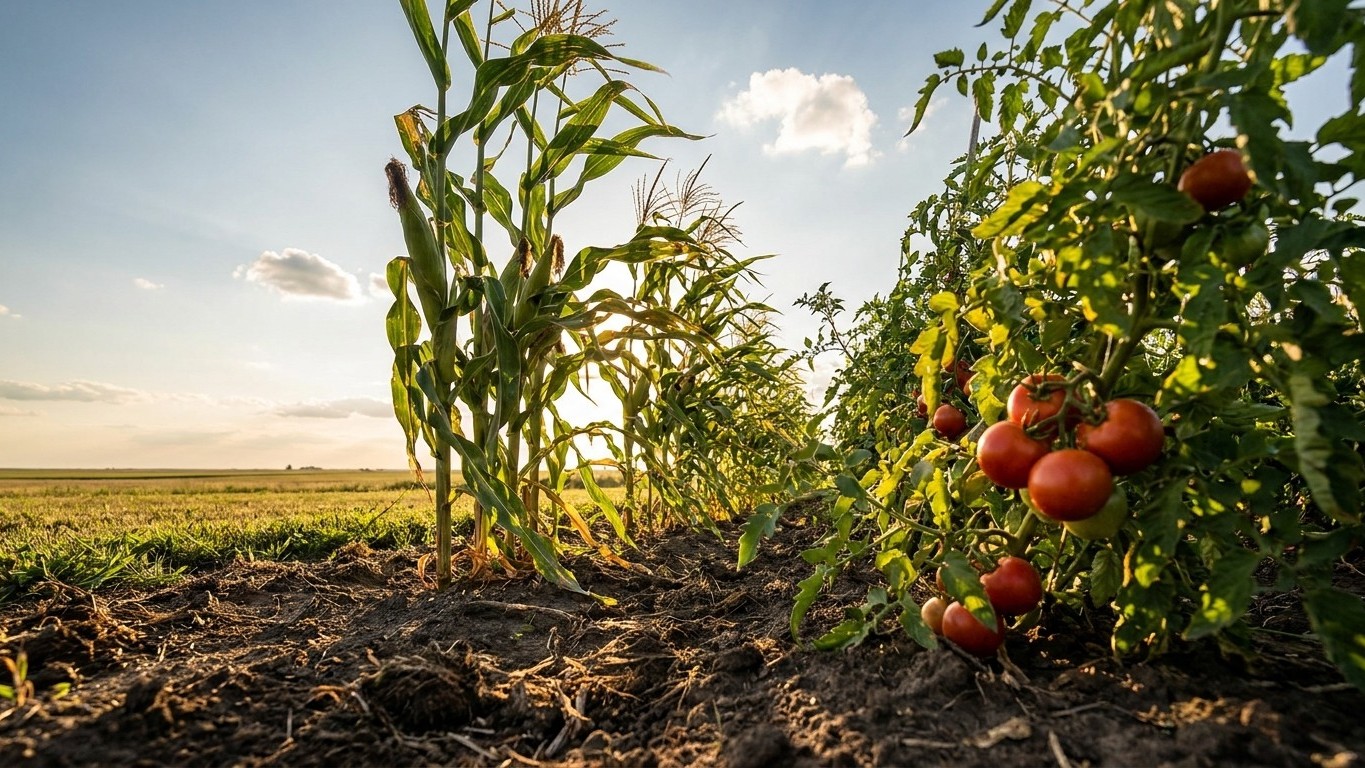

Sweet corn gets eaten in three stages. Soil-dwelling and seedling feeders hit just after planting, leaf chewers work the young plants before tassel, and ear feeders and wildlife arrive once the silks show. Which exact species are active depends on the county, and West Virginia University Extension is the service that tracks that for the state. What you see first on the plant tells you which stage you are dealing with.
Which pests attack corn in West Virginia
West Virginia University Extension, through its county offices, is the service that documents which insects and animals are working garden corn in the state, and it is the one to ask for a species name. Before you get there, it helps to sort the culprits by the part of the plant they eat, because the sorting narrows the field fast.
The first group works at or below the soil line. These feeders go after seed and seedlings, so the damage is a thin or gappy stand, with plants that never emerged or that wilt and fall over within days. The second group chews leaves and the tight whorl at the center of young plants. Holes show up when the leaf unfolds, usually in a line across the blade. The third group goes for the ear: silks, kernels at the tip, sometimes the whole cob. Birds and mammals belong here too, since they pull husks back and strip kernels once the ears fill out.
What does not belong on the list
Insects that feed on tree fruit, shrubs or cool-season greens often wander through a garden, and a few will land on corn leaves. They are not eating the corn. A beetle sitting on a leaf is not evidence of a corn pest, and a nearby apple tree’s problems tell you nothing about the corn rows. Judge by chewing damage on the corn itself and by the plant stage when it appears.
One planting decision changes who shows up. Soil should be at least 50 F at the 4-inch depth for ordinary sweet corn, and 65 F for extra-sweet types. Seed sown into colder ground sits for days, and slow seed is easy prey for everything that eats seed and seedlings. The timing section below shows how that plays out over the season.
When each one shows up, and what it does first
The calendar starts with the frost-free window. At the Charleston reference station, NOAA’s Climate Normals put the last spring frost between April 9 and April 23, and the first fall frost between October 18 and November 1. Charleston sits in a river valley, so higher ground across the state freezes noticeably earlier in fall. Soil reaches 50 F at 4 inches well after the last frost date, and 65 F later still, so the planting date comes from a soil thermometer, not from the frost date. The sweet corn also needs 60 to 90 days from planting, so a late variety on high ground may not fit the season at all. The When to Sow Sweet Corn in West Virginia guide covers the planting side.
Seedling feeders come first, in the first couple of weeks after sowing. You see missing plants in the row, or seedlings cut off at the base or yellowing and wilting for no clear reason. If you dig, the seed or root zone often shows chewing.
Leaf feeders follow as the plants grow toward tassel. The first sign is a row of small holes across a new leaf, or a ragged, shredded whorl. Dark pellets of droppings packed into the whorl point to an insect rather than weather.
Ear feeders show up when silks emerge. Watch for chewed or clipped silks, then a tunnel or frass (the gritty droppings) at the ear tip when you pull back the husk. Corn planted late silks after earlier plantings nearby have already drawn these insects in, so the late ones often take the heaviest load.
Wildlife arrives last and fast. Husks peeled back, kernels stripped, stalks bent or knocked flat, all overnight, mean animals. They come as ears fill, and the days from silk emergence to harvest are both the harvest window for you and the window when animals decide the patch is worth visiting. That clock is separate from the 60 to 90 days from planting, which only tells you whether the crop fits the season. Heat adds stress on top of all of it: Charleston averages 16.0 days a year at 90 F or more, and stressed plants take damage worse. For the picking side, see Will Sweet Corn Ripen in West Virginia?
Telling the damage apart from everything else
Plenty of corn problems look like insect work and are not. A wrong diagnosis sends gardeners off to treat a pest that is not there, so check the plant against a few look-alikes before assuming anything is eating it.
| What you see | Possible cause | What settles it |
|---|---|---|
| Ragged leaves across the whole patch after a storm | Wind or hail tearing | Torn edges everywhere, no droppings in the whorl |
| Holes in a line across new leaves | Chewing insect | Pellets of droppings in the whorl, damage limited to a few plants |
| Lower leaves yellow from the tip inward | Nutrient shortage | Even yellowing across plants, no chewing, no insects on the leaf |
| Leaves roll and look gray-green in the afternoon | Water stress | Leaves open again by evening, soil dry a few inches down |
| Ear with bare patches of missing kernels | Poor pollination | Bare cob with no chewing or tunnels, plants grown in a single row or a thin planting |
| Starchy, tough kernels on an otherwise clean ear | Sweet corn types that tasseled at the same time | No damage to husk or silk, ear looks normal outside |
| Husks pulled down, kernels stripped, stalks bent | Animals | Damage along the edge of the patch, overnight, no tunnels or droppings in the ear |
Two rows deserve a closer look. Missing kernels usually trace back to pollination, and sweet corn needs to be planted in blocks of three or more rows so pollen reaches the silks. A single long row loses pollen to the wind. Starchy kernels come from the cross-pollination problem, which happens when su, se and sh2 types tassel at the same time. The cure is timing and separate plantings, so the types do not tassel together.
Leaf spots, streaks and lesions are a different category again: those are usually disease, and insects do not leave them. If you cannot place a symptom, take a clear photo and a sample to your county office of West Virginia University Extension. A person who sees the plant can say what a gardener cannot tell from a description.
What actually works here, and what is a waste of time
A physical barrier set at the right moment beats a treatment. Floating row cover laid right after planting keeps many early insects off the seedlings, and it comes off before tassel so pollination can happen. Fencing or netting around the patch works against animals only if it goes up before the ears fill, because by the time the first ear is stripped the animals have learned the route.
The calendar does more work than any product. Plant when the soil has reached the right temperature, since the extension guidance reads: “Do not plant before the soil temperature at the 4-inch depth is at least 50 ºF. Wait to plant extra-sweet varieties until soil temperatures reach 65 °F.” Seed that germinates fast outgrows the early feeders. A single planting that tassels together also means a single short window of ear exposure, instead of a patch staggered across weeks that keeps feeding something alive.
Scouting beats guessing. Look at the whorl and the silks weekly, and pull back one husk on an ear that has been silking for a while. Pick when the three signs agree: dry brown silks, husks still moist and green, and milky juice from a punctured kernel. Ears left on the stalk past that point invite damage.
What wastes time is spraying on a calendar “just in case.” Insects inside the whorl or under the husk are shielded from most of what you spray, and a treatment applied after the hole is visible arrives late. Home remedies like mothballs and scattered hair rarely hold animals for more than a night. Planting early to beat the pests backfires in cold soil, where seed sits and rots, especially the extra-sweet types that need 65 F.
Whether any product is appropriate, and which are approved for use in the state, is a question for the county office. West Virginia University Extension is the one source that knows what is currently labeled for garden use.
Where to check this for your own county
The county office of West Virginia University Extension is the right place to take a damaged plant. County agents see what is moving through gardens in your area this season, and they can confirm a diagnosis from a sample that a description alone cannot.
Pest pressure varies inside the state, not just between states. A bottomland garden along a river and a ridge-top plot a few miles away have different frost dates, different soil warm-up, and different animals nearby. Charleston’s dates describe a river valley, and higher elevations freeze earlier in fall. What is documented across the state does not tell you what is eating the corn in your rows.
Before you spend money or spray anything, bring the evidence: a few leaves with the damage, a husked ear if the injury is at the tip, and notes on when you planted and when the silks appeared. Your county agent can start from those and tell you what to do next. A broader overview of the crop is in Growing Sweet Corn in West Virginia.
Your next step is a phone call or a visit to your county office, with a photo of the damage on your phone and a sample in a sealed bag.
Common questions
Do I have to spray sweet corn in West Virginia?
Not automatically. Row cover at planting, fencing before ears fill, and picking on time prevent much of the damage. If you think a treatment is needed, ask your county office of West Virginia University Extension what is approved in the state for garden use.
When do pests start attacking sweet corn?
Seedling and soil feeders start right after planting, leaf chewers work the young plants before tassel, and ear feeders and animals arrive once silks emerge. Planting into soil at the right temperature shortens the first stage.
How can I tell insect damage from animal damage on ears?
Insect damage usually shows tunnels and droppings at the ear tip, often under an intact husk. Animals pull husks down, strip kernels, and bend or flatten stalks, typically near the patch edge and overnight.
How do I know when to pick before something else does?
Check three signs together: dry brown silks, husks that are still moist and green, and milky juice when you puncture a kernel. Watch the ears fill after silk emergence to know which week to look, and keep that separate from the 60 to 90 days from planting.