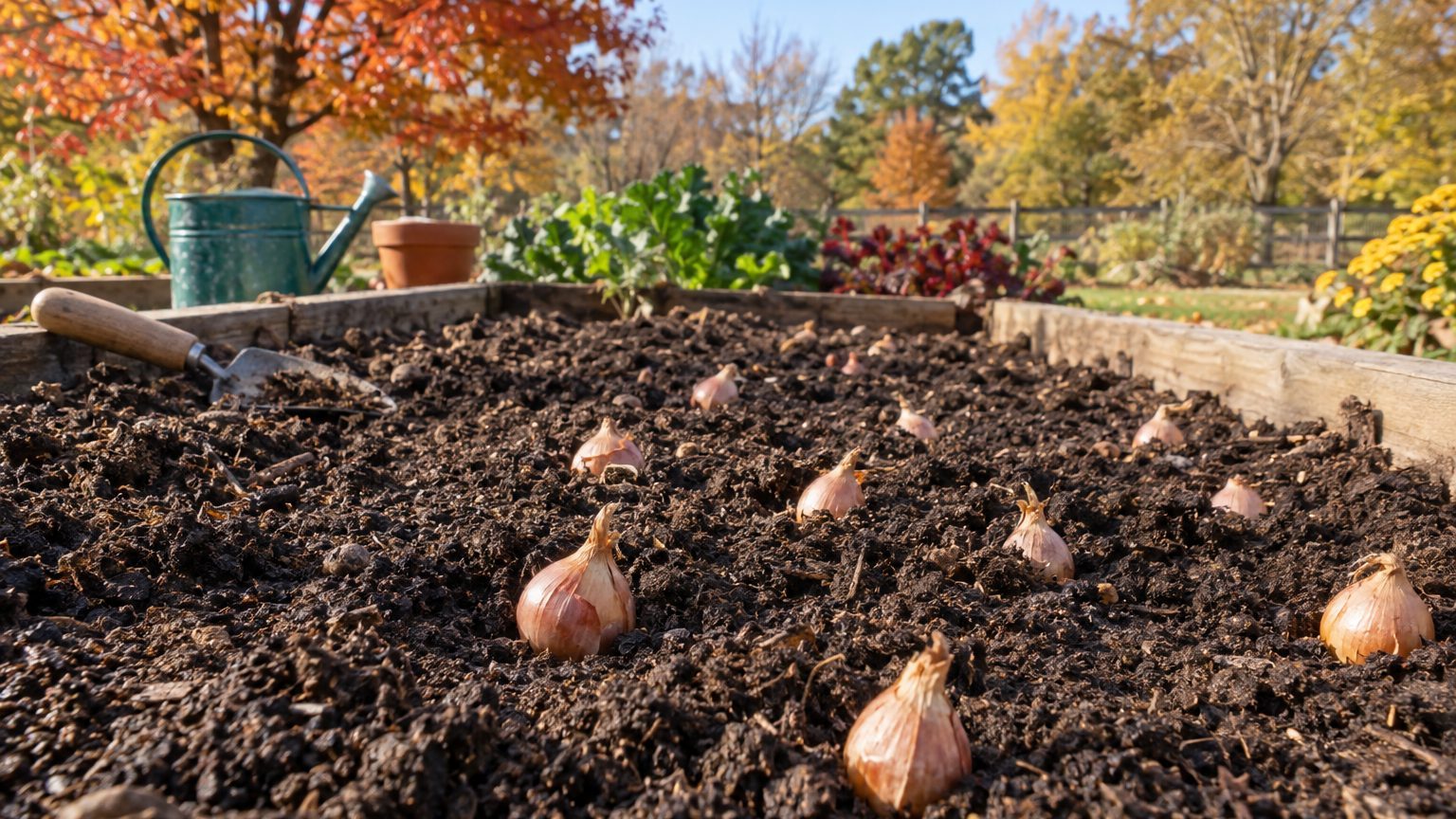

Shallots go in the ground at one of two times in Wisconsin: April, once the soil can be worked, or in fall, for a crop that overwinters under mulch. Spring is the safer default. Fall planting rewards gardeners who get the timing and the mulch right. The dates below come from frost odds at a southeastern reference station, so northern gardeners will need to shift them.
The short answer for Wisconsin
Plant shallot sets in spring as soon as the soil is workable, which at the Milwaukee reference station lines up with April 16 to April 29. Those dates mark when the odds of one more 32°F freeze in spring sit between 30 and 70 percent, based on NOAA’s 1991-2020 climate normals. For fall planting, the first 32°F freeze at the same station falls between October 17 and October 29 on the same 30 to 70 percent odds, and sets go in after the soil has cooled, a few weeks before the ground locks up.
Both windows are bands of odds. Some years the last spring freeze comes in early April, and some years it lingers into May. Shallots handle that better than most vegetables, because dormant sets and young green leaves shrug off a light freeze. So the last-frost date is not the gate. Soil condition is. Pick up a handful and squeeze it. If it holds as a sticky ball, wait. If it crumbles when poked, plant.
Should you plant shallots in spring or fall in Wisconsin?
Spring planting is simpler, and it suits anyone who missed the fall window or lives where winters hit early. Fall planting gives the bulbs a start before winter, so they often size up and mature a little earlier the next summer. The tradeoff is winter exposure, which is why mulch matters.
| Spring planting | Fall planting | |
|---|---|---|
| When | Soil workable, around April 16 to April 29 in the Milwaukee area | After the October 17 to October 29 first-freeze band, before the ground freezes hard |
| Set depth | Tip at or just under the surface | About 1 inch deep, then mulched |
| Winter cover | None needed | Several inches of straw or shredded leaves |
| Harvest | Mid to late summer, when tops fall over | Often a little earlier |
For the full picture of the crop, from sets to curing, see Growing Shallots in Wisconsin.
What will not work here

Planting too early in fall is the classic miss. Sets pushed into warm September soil sprout green tops within weeks, and a winter where the coldest month averages a daily minimum of 17.2°F at Milwaukee has no mercy for leaves standing in January. The plant spends its reserves and often rots or stalls in spring. Wait until the soil has cooled and the first freeze has come through.
Fall planting without mulch fails for a different reason. Southern Wisconsin soil freezes and thaws repeatedly through winter and early spring, and that cycle shoves shallow sets up toward the surface, where roots snap and bulbs dry out. A few inches of straw or shredded leaves keeps the soil temperature steadier. Pull it back in spring as shoots push through.
Slow shallots grown from true seed run into the calendar. Seed-grown types need a late winter start indoors, then transplanting once the soil is workable, and they still have to bulb up before a freeze arriving from mid-October on the lakeshore, and much sooner inland and in the north. A gardener who starts seed in April has missed the season for a full-size bulb.
Late spring planting is another miss. Shallots need a long season to build leaves before they bulb, so sets planted in late May or June have little time to build leaves first. The result is a crop of small, thin-necked bulbs that store poorly.
Cold, saturated soil also defeats early eagerness. Heavy clay across much of the state stays sticky for weeks after thaw, and sets pushed into it can rot before they root. A gardener who waits a week for the squeeze test to pass usually ends up ahead of one who planted on the first warm weekend.
Finally, the lake can mislead. Lake Michigan delays the first fall freeze at the lakeshore, but inland southern Wisconsin typically freezes in early October, and the north far earlier. A fall planting date borrowed from a Milwaukee neighbor will land too late for a garden farther west or north.
What changes across Wisconsin
Wisconsin spans USDA hardiness zones 3b to 6a on the 2023 USDA Plant Hardiness Zone Map. That is a wide spread, and no single planting date fits all of it. The zone system rests on one variable, the average annual extreme minimum temperature, so it tells you how cold winter gets and little about how long the season runs. Milwaukee’s dates sit near the mild end of the state, and a garden in the northern counties lives in a different climate.
How should northern Wisconsin gardeners shift the dates?
Move spring planting later, since soil in the north can stay frozen or soggy for weeks beyond the April 16 to April 29 window at Milwaukee. Move fall planting earlier, because the first hard freeze arrives far sooner and the ground closes up quickly. Mulch more heavily, since colder winters and deeper frost punish thin cover. And favor quicker, hardy varieties over slow ones. The Best Shallots to Grow in Wisconsin covers which types suit a shorter season.
Local terrain shifts things within a single county, too. Low spots and valley floors collect cold air and stay frosty longer, while south-facing slopes and spots near a house foundation warm sooner. Higher ground in the north can run colder than a town a few miles away.
Look up your own zone on the USDA map by ZIP code rather than guessing from the state range. Then read it as a winter-cold measure, and let the soil and the local frost record set the actual dates.
Where to check this for your own county
University of Wisconsin Extension runs a county office in every part of the state, and its horticulture staff and Master Gardener volunteers know local conditions that no statewide date can capture. A county recommendation beats a state one, and what you are reading here is the state one, anchored on one reference station.
Start by finding your county office through the extension site. Then ask for two things. First, the local planting calendar for onions, garlic and shallots, since extension services often publish calendars crop by crop, and shallots may sit under the onion family. Second, the varieties trialled in your county, so you can pick types that have already proved themselves in your soil and season.
Ask about local frost dates for your area as well. Staff can tell you how your town compares with the lakeshore and how far the spring thaw typically lags in your part of the state. If fall planting appeals, ask how mulch holds up through your winters, because that is where counties differ most.
Checking this against your own garden
Your own observations outrank every date above. Three are worth tracking, and none needs more than your hands and a notebook.
- Soil warmth by feel. Push a hand into the bed at planting depth. If it feels cold enough to ache after a few seconds, roots will sit idle, so wait. A crumbly, cool-but-not-icy bed is ready. Where this happens earlier on your lot than at a neighbor’s, you have a warm microclimate.
- First green shoots. Note the date shoots break through in spring, and in fall whether fall-planted sets sprouted before freeze. Tops several inches tall before winter mean you planted too early, so plant later next year.
- Where snow melts first. Bare patches in March show your warmest and best-drained ground, and slow-melting spots show where cold air pools.
Write the dates down for two or three seasons. They will give you a local calendar sharper than any statewide band.
Common questions
Can I still plant shallots in late October in Wisconsin?
Often yes, if the ground is not frozen. Plant the sets shallow and cover them with a generous layer of straw or shredded leaves. Gardeners inland and in the north may find the window already closed, since freezes arrive there earlier than at the lakeshore.
Will a spring frost kill newly planted shallots?
Light frosts rarely do. Sets and young green leaves tolerate freezing temperatures, and the worst outcome is browned leaf tips. A hard freeze on a mulch-free bed is the bigger worry, so keep some straw handy.
Is fall or spring planting better for shallots in Wisconsin?
Spring is easier and more reliable, especially in the north. Fall planting can produce earlier, larger bulbs, but it depends on cool soil at planting and good mulch through winter.
How deep and how far apart should shallot sets go?
Set them root end down. In spring the tip should sit at or just under the surface, and in fall set them shallow under mulch. Space them apart in rows, which gives each bulb room to divide into a cluster.