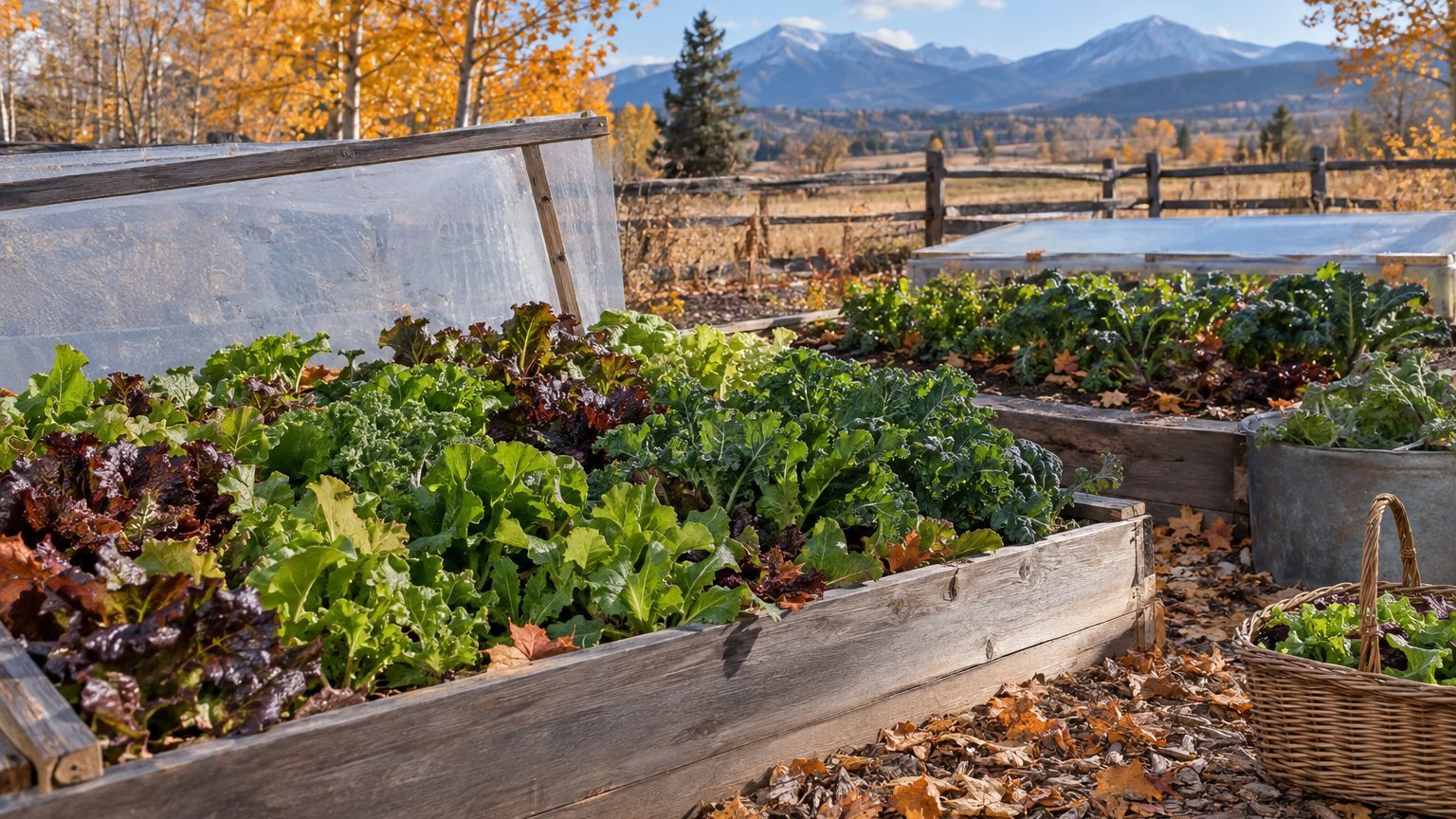

Yukon winter salads are a late-summer sowing cut in the fall, not a crop that stands out in the snow. The cold here ends most leaf crops long before midwinter, so the gardeners who keep cutting are the ones with glass, plastic or fabric over the bed. Set up a cold frame or low tunnel before you sow anything, because the cover decides how late you cut far more than the sowing date does.
When the soil is warm enough in Yukon

Environment and Climate Change Canada (ECCC) puts the average last spring frost at Whitehorse A, the airport station, on June 5, in its Canadian Climate Normals for 1981-2010. That is a mean, so in one year out of two the last frost falls later. Read it as the middle of a window, not a safe date. It also describes Whitehorse only. Valley bottoms, uplands and communities farther north run weeks behind, and Canadian normals cover 1981-2010 while the US figures cover 1991-2020.
Frost is a proxy, soil is the test
The frost date tells you about the air. Your seed cares about the soil, and soil lags the air by a good margin. In a Yukon spring the top layer thaws first and the ground beneath stays cold, wet and slow. Seed sown into that sits, swells and rots, or comes up in patches. Test the soil, not the calendar. Push a trowel in to seed depth. The soil should be fully thawed there and crumble in your hand instead of smearing. A soil thermometer read in the morning, when the bed is at its coldest, is better still.
Raised beds and beds under clear cover warm sooner than open ground, sometimes by a week or more, which is one reason cover pays off before the crop even needs it. A dark board or sheet of plastic laid on the bed for a few days before sowing does the same job at no cost.
What that means for a winter crop
The spring sowing is rarely the important one for a winter salad. The hardy types you want for late cutting, such as spinach, mâche (corn salad), claytonia, arugula, mustard greens and baby kale, are best sown once the summer is well under way. A sowing made close to midsummer meets the very long Yukon days, and those push spinach, arugula and some mustards to bolt. Later sowings meet shortening days and cooler nights, which is what these crops want.
If you sow in the June window anyway, treat it as a summer salad and pull it before it runs to seed. Prepare a fine seedbed and sow thinly, as the general guide Winter Salads: What Grows When Lettuce Will Not walks through. Grow these crops in beds and containers you control.
How long the season lasts here
ECCC’s 1981-2010 normals for Whitehorse A give an average first fall frost of August 25. Count from the mean last spring frost on June 5 to that date and you get about 81 days, a little under twelve weeks. Both dates are means, so a late spring followed by an early autumn can cut that window a great deal, and a kind year can stretch it. Other Yukon districts will differ, so treat 81 days as a Whitehorse working figure, not a territory-wide one.
What a window that short allows
Eighty-odd days is the frost-free stretch, and it is the yardstick for tender crops. Hardy salad greens keep growing after the first frost, but only while there is enough light, and in Yukon the light drops away quickly through September. So the window is really the period in which your winter salad has to reach useful size, and what comes after is a slow hold, not fresh growth.
That shapes three decisions:
- Direct sow mâche, spinach, arugula and mustard greens. They resent root disturbance and you have no days to spare recovering from it.
- Transplant only what you start indoors and harden off properly, and only into a bed that is already warm under cover.
- Sow small batches every week or two instead of banking on one big second sowing that will not have time to size up.
A full second crop after the first has finished rarely fits inside 81 days. Staggered small sowings do fit, and they spread the cutting across the autumn instead of giving you a glut in one week.
Neighbors to the west face a similar squeeze, and Winter Salads for Alaska Gardens shows how a nearby northern climate handles the same trade-off. Their frost dates differ from Whitehorse’s, so take the method and leave the dates.
Heat and water in Yukon

Heat is not the problem here. Check ECCC’s climate normals for the station nearest you if you want them. In a cool northern summer the risks run the other way from a hot climate. Growth is slow, seed germinates unevenly in cold soil, and if the weather turns wet, mildew and leaf spots move in on crowded leaves. Space plants for airflow and water the soil, not the foliage. Gardeners in the desert Southwest have the opposite job, and Winter Salads for Nevada Gardens shows how heat rewrites the calendar.
The cold decides everything
ECCC’s 1981-2010 normals for Whitehorse give a mean daily minimum of -19.2 °C in the coldest month. That is an average night, so the worst nights run colder. Natural Resources Canada’s plant hardiness map puts Whitehorse in Canadian zone 1b. Together those figures sort the salad crops into three groups:
- Stand uncovered: only in early and mid fall, through light frosts. None of these is dependable through a Yukon winter without help.
- Need cover to stay edible: the hardiest types, such as spinach, mâche, claytonia and baby kale, under a cold frame or a tunnel with fabric inside it.
- Cannot manage: tender lettuce and other soft-leaved types, once nights turn hard, even under a single layer.
A cold frame in Yukon is a windbreak and a few degrees of shelter, not a heated room. Snow banked around the sides and a blanket or straw mat over the glass on the coldest nights add more protection than the frame does alone. Open the lid on mild days, because a shut frame in bright sun can cook the leaves.
The first fall frost sets the other limit. Once the light fails, plants stop putting on leaf. A sowing that has not reached a cuttable size by then will sit as small seedlings until spring, so the last useful sowing date falls earlier than you expect. Work backward from the late-August frost mean, allow generous time for slow autumn growth, and check the result against your own first sowings.
Which winter salads suit Yukon
Choose by type, and let three facts steer you. The season is short, so favor the types that size up quickly. The cold is severe, so favor the ones that tolerate hard frost and low light. And a cool, potentially damp summer makes mildew resistance the first thing to look for on a packet.
| Type | Speed to cutting size | Cold tolerance | Role in Yukon |
|---|---|---|---|
| Mustard greens (baby leaf) | Fast | Moderate | First to cut, sow late in the window |
| Arugula | Fast | Light frost only | Quick filler, bolts in long days |
| Spinach | Moderate | High | Backbone of the cover crop |
| Mâche (corn salad) | Slow | High | Small rosettes, holds well under cover |
| Claytonia | Moderate | High | Copes with low light under a frame |
| Baby kale | Moderate | High | Tough leaves, good for late cuts |
| Loose-leaf lettuce | Moderate | Low | Only early, inside a frame |
These are general tendencies for each type. Your microclimate, your cover and the year all move them.
Why no cultivar names
The cultivars that perform in Yukon are the ones that have been trialed in Yukon soil and light. Naming a variety that thrives in Vermont or Oregon would send you into a short season with the wrong seed. Ask Agriculture and Agri-Food Canada or your territorial agriculture office which varieties they have seen work, and ask local growers what they sowed and when.
Take days-to-maturity figures on seed packets as a rough guide only. They are counted under kind conditions and shift by a week or two with the season, and they run longer in autumn light. The hardiness zone for Whitehorse in Natural Resources Canada’s 1991-2020 data is 1b in the Canadian system. That system uses seven climate variables and has no direct conversion to a USDA zone, so a “zone 3” tag on an American seed packet says nothing reliable about how it will fare here.
Common questions
Can I leave winter salad in the ground all winter in Yukon?
Not uncovered, and not with any expectation of steady harvests even under cover. Plants stop growing once light fails, and what you cut in late autumn is what grew before that. Treat the cold frame as a way to hold and extend the harvest, not as a winter garden.
Do containers work better than beds here?
Beds usually win for holding cold. Soil in a pot chills through the sides and freezes faster than soil in the ground. A portable container does let you move plants against a warm wall or into an unheated porch when a hard night is due.
Can I gather watercress from a creek for a winter salad?
No. Wild watercress growing in water that livestock have grazed can carry liver fluke, and other plants resemble young salad greens but are seriously toxic. Grow salad from seed you have bought, in beds and containers.
Does the June 5 frost date mean I can sow on June 5?
No. ECCC’s figure is an average, so the last frost falls after it in about half of years, and the soil warms later than the air. Sow when the soil at seed depth is thawed and crumbly. A winter salad sown a few weeks later usually does better anyway, because it grows in cooler nights and shorter days.