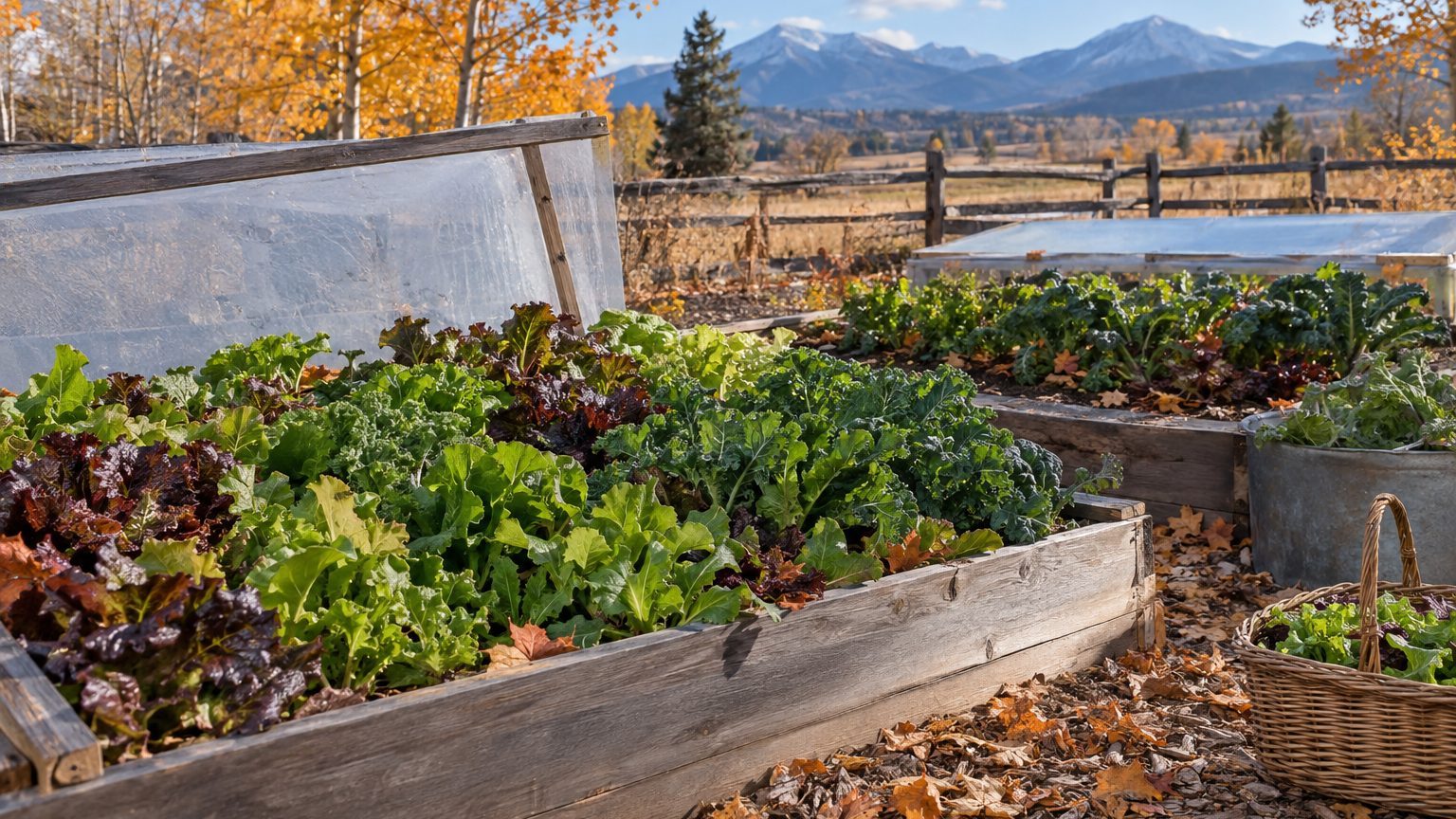

Winter salads in Alaska start in two windows: a spring sowing once the ground thaws, and a late-summer sowing meant to finish under a cover. Anchorage gardeners have the most room to work with. The Interior and the north have far shorter seasons. Cold decides almost everything here, and summer heat hardly matters.
When the soil is warm enough in Alaska

The mean last spring frost at the Anchorage reference station falls between May 3 and May 12. That comes from the NOAA NCEI 1991-2020 Climate Normals, station USW00026451, and it marks the 30-70% band of 32F freeze probabilities. Any given year can land on either side of that window.
Soil follows its own schedule. In Alaska the ground thaws from the top down, and the layer below stays cold and wet for weeks after the last freeze. Seed sown into that soil sits and rots. Winter salads wait for soil that has thawed, drained and started to warm, which comes after the frost risk ends. Plan on a sowing date a little past the frost window, and let the soil confirm it.
How do you tell the soil is ready for salad greens?
Push a soil thermometer two inches down in the morning, when the reading is at its lowest. Many hardy greens sprout when the soil has warmed enough to work, well below what tomatoes or beans need. Then squeeze a handful. If it holds together as a sticky ball and sheds water, the bed is still too wet. If it crumbles when you poke it, you can sow.
Raised beds and containers usually reach that point days or weeks ahead of open ground, because they drain and warm faster. A low tunnel or a layer of row cover set over the bed a week before sowing warms it further. Everything here is grown in beds and containers, and the rule holds for all of them.
Do these dates apply across Alaska?
They apply to Anchorage and nearby ground. The USDA Plant Hardiness Zone Map 2023 (built on average annual extreme minimum temperature) spans zones 1a to 8a across the territory, so a gardener in Fairbanks or on the Kenai Peninsula works to a different calendar. Anchorage is one of the mildest inhabited parts of the state. The Interior and the north have far shorter seasons, and the same rule about warm soil applies there on later dates.
For the varieties trialled in your own region, check with University of Alaska Fairbanks Cooperative Extension Service. The broader Winter Salads: What Grows When Lettuce Will Not covers the crops themselves.
How long the season lasts here
The Anchorage reference station has about 143 frost-free days between the mean last spring frost (May 3 to May 12) and the mean first fall frost (September 22 to October 1). Long summer daylight partly makes up for a season that is short by Lower 48 standards.
That window allows two sowings. A first sowing goes in once the soil is ready in May, for cutting in early summer. A second sowing goes in during mid to late summer, so the plants reach useful size before the first fall frost. The second one carries the winter harvest, since it finishes in cool weather under a cover. A gardener who sows only in spring ends up with greens that bolt in the long days of June and nothing to cut by autumn.
Where the window is shorter, as it is across the Interior and the north, the first sowing becomes the main one. The second may have to go straight into a tunnel or cold frame. Transplanting also gets harder to justify. Leafy greens dislike root disturbance, and a transplant check can cost a week, which is a big share of a short season. Direct sowing wins unless you are starting seedlings indoors to get ahead of a cold spring.
Anchorage gardeners have more leeway. They can start a flat of seedlings indoors in April and set it out under cover once the soil is ready, and still sow again in July. Staggering sowings two to three weeks apart keeps the beds from all coming ready on the same day. Count back from the first fall frost, allow extra time because growth slows as daylight shortens, and treat your last sowing date as a deadline for the beds.
Heat and water in Alaska

Heat is not the problem in Alaska. Hot spells are rare at the Anchorage station, and a salad bed there rarely needs shade for the roots. A warm spell in midsummer can still push lettuce and spinach to bolt under the long days, so cut baby leaves young.
Summers are cool, and late summer is often damp. A cool wet season brings its own set of problems: mildew on spinach and lettuce, slow growth, and slugs working in the dark under dense leaves. Water in the morning at the base of the plants, give them room so air moves through the bed, and ventilate a tunnel or cold frame on mild days. Leaves that stay wet through a cold night are the ones that develop disease.
The winter is another matter. The mean daily minimum of the coldest month at Anchorage is 11.0 F (NOAA NCEI Climate Normals 1991-2020). That figure sorts the crops into three groups. The hardiest, such as kale and the toughest spinach, can sit uncovered and may get through under a layer of snow, though the leaves are tougher and often damaged. Spinach, mâche and claytonia need a cover to stay in edible condition. A row cover inside a tunnel or cold frame is the usual choice, and a mulch of straw or leaves adds more. Tender head lettuce, arugula and most baby-leaf mixes cannot manage a winter at that temperature without heat.
The first fall frost (September 22 to October 1 at the same station) sets how late a sowing can go and still matter. Growth slows quickly once daylight shortens and nights cool. A late sowing needs to reach cutting size before the light fails, because after that the plants mostly hold in place instead of growing. Greens sown too late sit as tiny seedlings all winter and give nothing.
Which winter salads suit Alaska
Start with cold hardiness, because winter minimums decide what survives. Spinach, mâche (also called corn salad), claytonia and the sturdier mustard greens and kale-type leaves tolerate a hard freeze and keep their quality under cover. Tender lettuces and arugula suit the spring and early-fall sowings and give out as the cold deepens.
A short season favors the earliest types. Baby-leaf greens cut young and the faster mustards make use of the first sowing window, while slow, heading types may not finish. Where summers are cool and damp, disease resistance should be the first thing you look for on a seed packet, especially mildew resistance in spinach and lettuce. Heat tolerance matters much less here than in the Lower 48.
A variety that performs in Anchorage may fail in Fairbanks or in the wet Southeast, because light, snow cover and soil differ sharply between regions. A name copied from a Lower 48 catalog says little about how a plant handles an Alaskan autumn. The trials run by University of Alaska Fairbanks Cooperative Extension Service and its local offices are the recommendation that counts, so call or visit the office nearest you before you order seed.
If you garden farther north or in a cold, wet coastal climate, compare notes with Winter Salads for Yukon Gardens and Winter Salads for Newfoundland and Labrador Gardens. Both face a similar fight with short seasons and cold, damp weather.
Common questions
When should I sow winter salads in Anchorage?
Sow the first crop once the soil has thawed and drained, usually shortly after the May 3 to May 12 frost window. Sow a second crop in mid to late summer, early enough to reach cutting size before the first fall frost, which falls between September 22 and October 1.
Can winter salads grow outdoors in Alaska without a cover?
Only the hardiest types stand a chance, and the leaves often come out damaged. With a coldest-month mean minimum of 11.0 F at Anchorage, most winter salads need a row cover, cold frame or tunnel to stay edible.
Do the same dates apply in Fairbanks or the north?
No. The dates here come from the Anchorage reference station, and the Interior and the north have far shorter seasons. Ask your local extension office for dates and varieties that match your area.
Is summer heat a problem for salad greens in Alaska?
Rarely. Hot spells are uncommon, and cool, damp weather causes more trouble through mildew, slugs and slow growth. Space plants for airflow and water at the base in the morning.