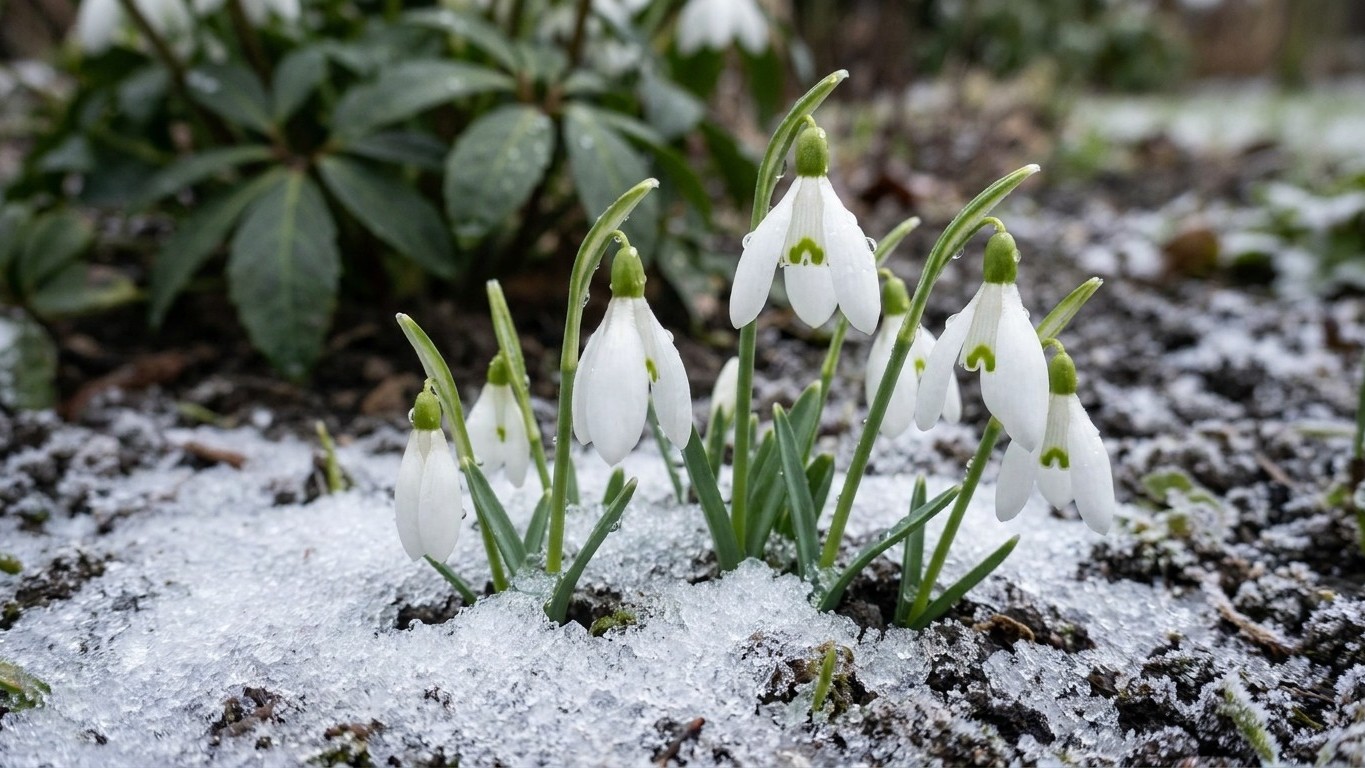

Two numbers matter before you buy a single bulb: 12 to 15 weeks below 45°F, and USDA zones 3 through 7. Get those right and the rest of growing this small white bulb is mostly patience. Get them wrong and you’ll have leaves with no flowers to show for the wait.
What Snowdrop actually is

Snowdrop belongs to the botanical group galanthus, and it’s built around a single hard requirement: 12 to 15 weeks of temperatures below 45°F, according to Cornell University, Department of Horticulture : Flower Bulb Research Program. That figure isn’t a suggestion. A bulb that gets less cold than this often produces leaves and nothing else, or a flower stem so short it never clears the foliage. If your winter runs right at the edge of that 12-week minimum, don’t assume total failure or full success — expect the uncertain middle ground, where flowering is thin or delayed rather than absent.
Hardiness runs USDA zones 3 through 7, which is worth naming precisely because it’s an American system, and a Canadian zone map is built on a different set of climate variables entirely. The two numbers look similar. They don’t convert.
Bloom time is late winter, and this is where the bulb earns its reputation: it’s often the first thing to flower in the whole yard, sometimes pushing straight up through a crust of snow while crocuses and daffodils are still weeks away underground. That timing is the entire appeal for a lot of gardeners tired of looking at bare dirt in February.
One habit worth knowing before you plant rather than after: the flowers are white, and the foliage that produces them often starts to die back while the bloom is still open and looking fine. That’s normal, not a sign of disease or a watering problem, the plant is already shifting energy into next year’s bulb while this year’s flower is still on display. The heat is also the plant’s limiting factor southward. It dislikes hot summers, and that’s precisely what keeps it out of zone 8 and beyond, regardless of how mild the winter might be there.
How deep and how far apart
The planting figures are specific, not approximate, and they matter more than they look:
- Depth: 3 inches. That depth buffers the bulb against freeze-thaw cycles in the topsoil, plant shallower and repeated freezing and thawing can physically heave the bulb up out of the ground over a winter or two.
- Spacing: 3 inches apart. This is tight compared to larger spring bulbs, and it’s tight on purpose: at 3 inches, a cluster of a dozen or more bulbs reads as a solid drift of white rather than a scattered row of dots.
Orientation matters, but the bulb usually tells you what it wants. Plant it pointed-end up, root plate (the flatter, sometimes slightly fuzzy end) down. When a bulb has been in storage and the shape gives no clear signal either way, the safest move is to plant it on its side rather than guess wrong, the shoot will find its way upward regardless, and a sideways placement removes the risk of planting it fully upside down.
Because these figures are so small, drainage does more work here than with a large tulip or daffodil bulb planted a foot down. A 3-inch planting hole sits close enough to the surface that standing water after a heavy rain can sit right against the bulb. If your bed holds water, working in some grit or coarse compost at planting depth is worth the extra ten minutes.
Plant in fall, well before the ground freezes solid, since the bulb needs that full stretch of cold weeks to set up next year’s bloom. Once the ground is frozen hard, the planting window is effectively closed until spring, and a spring-planted bulb of this type won’t get its cold requirement met in time to flower well that year.
Will it come back next year
This is the honest question, and for this bulb the answer is genuinely good news: it comes back, and it multiplies, given the two conditions it actually asks for. That puts it in a different category from bulbs that flower once spectacularly and fade to nothing by year three, those are often sold as perennials but behave more like a one-season purchase. Galanthus, planted at the right depth in a spot with the cold weeks it needs, tends to build clumps over years rather than shrink.
The mechanism is straightforward biology, not marketing. After the flower fades, the leaves keep photosynthesizing and sending sugars back down into the bulb, that’s the process building next year’s flower bud inside the bulb tissue, right now, while the leaves are still green and doing their job. Cut the foliage back while it’s still green and productive, and you’ve cut off next year’s flower before it ever formed. Left alone, the leaves yellow on their own schedule, usually within a handful of weeks after bloom, and that yellowing is the visible signal that the bulb has finished storing what it needs.
The practical instruction, then, is simple and non-negotiable: let the foliage die back naturally, however untidy it looks in the bed for those few weeks. Mowing over it, braiding it, or tucking it away early is the single most common reason a planting that flowered beautifully the first year produces fewer flowers, or none, the second. There’s no shortcut around this, it’s the plant’s own resupply process, not a cosmetic preference.
What eats it, and what leaves it alone
Rodents avoid this bulb, and that’s worth stating plainly rather than hedging, because it’s one of the more reliable pieces of good news in the whole spring-bulb category. Squirrels, voles, and chipmunks that will dig up and eat tulip and crocus bulbs without hesitation typically leave galanthus alone. The reason comes down to chemistry: bulbs in this family carry alkaloid compounds that make them unpalatable, and in some cases mildly toxic, to the rodents that treat other bulbs as a buried snack stash.
That protection is a real advantage if you’ve ever lost a fall planting to squirrels before it even had a chance to root. It also means this bulb pairs well in a mixed bed with something rodents do target, plant the vulnerable bulbs deeper in the same bed, or surround them with a ring of this one, and you get a natural deterrent effect without any extra product.
If squirrels are still an issue in your yard for other reasons, the fix that actually works is wire mesh laid flat over the planting area, left in place until the ground freezes solid. Repellent sprays and granules wash off or lose potency within days; mesh doesn’t. Once the soil is frozen, digging is no longer worth the effort for most animals anyway, and the mesh can come off until next fall.