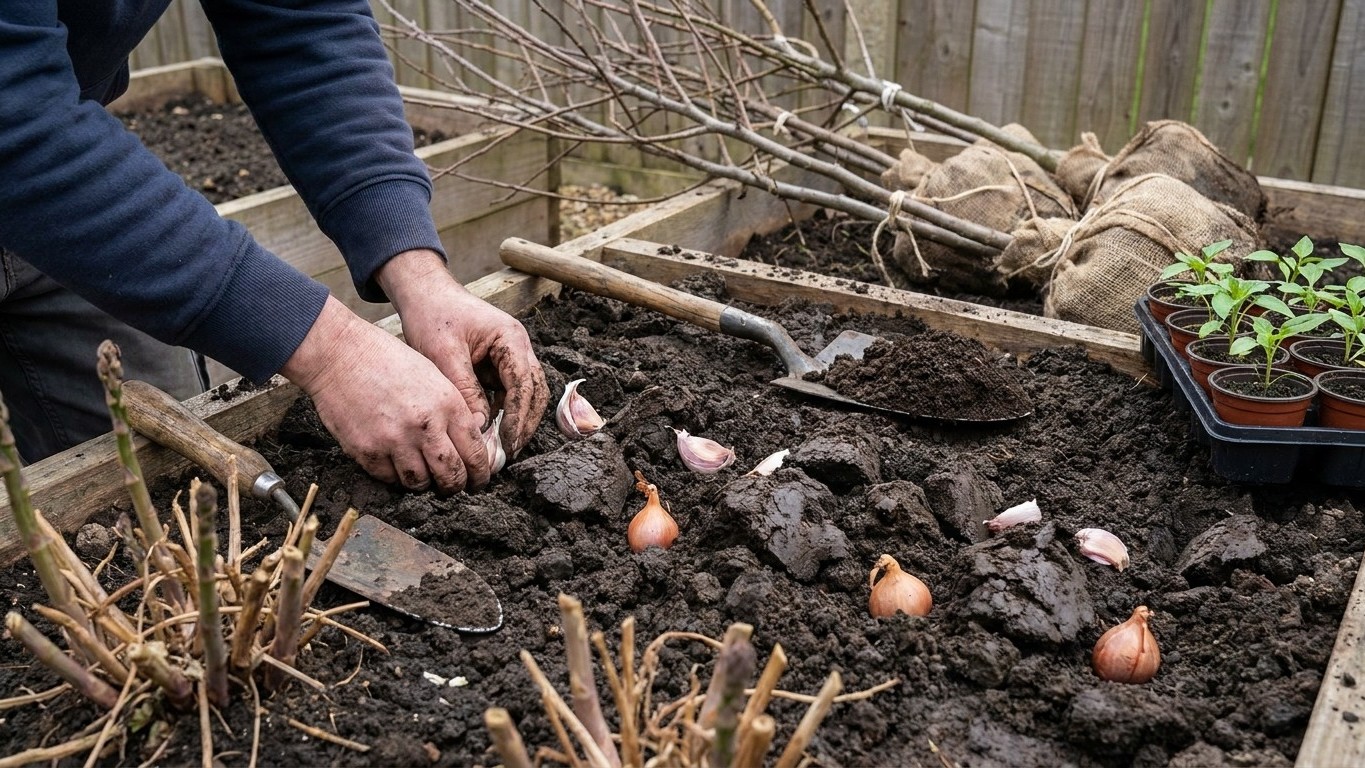

February in Arkansas sits about four to six weeks ahead of the last spring frost window, so the ground is still too cold for tomatoes, peppers, or beans no matter how mild a Tuesday feels. What actually goes in this month: garlic and shallots where the soil is workable, bare-root fruit trees and canes, asparagus crowns, and a short list of frost-hardy greens and peas in the southern half of the state once soil temperatures climb into the 40s.
What goes in the ground in February

The decision isn’t the calendar, it’s the soil. NOAA’s 1991-2020 climate normals for station USW00013963 put the last spring frost (32F) somewhere between March 12 and March 28, which means February falls squarely in the pre-frost stretch across most of Arkansas. That doesn’t rule out outdoor planting, it just narrows what survives the cold nights that are still coming.
Garlic and shallots are the clearest yes. If cloves didn’t go in during the fall window, a late planting in early February can still work in southern and central Arkansas, though bulbs will run smaller than a properly overwintered crop. Bare-root fruit trees, grapevines, and cane berries also belong in the ground now, while they’re still dormant and before buds swell. Asparagus crowns follow the same logic: get them into a trenched bed while the plant has no leaves to protect.
The gamble crops
English peas and fava beans can go into direct-sown rows toward the back half of February in the southern tier of the state, once soil has dried out enough to crumble rather than clump. Spinach, kale, and mustard greens tolerate the same conditions and often germinate at soil temperatures in the low 40s. In northern Arkansas and at higher elevation, push all of this two to three weeks later, or start it under a cold frame instead.
Everything else, sweet corn, squash, tomatoes, peppers, beans, needs soil in the 60s and air well clear of frost. Putting them in now isn’t early, it’s a loss. Onion sets and transplants can go in toward the end of the month in the warmer southern counties, but hold them back further north until soil workability improves.
What to start under cover
Work backward from the frost window instead of a fixed date. With the last spring frost falling between March 12 and March 28 depending on where you are in the state, tomatoes and peppers, which need six to eight weeks indoors before transplanting, should be started roughly from mid-January through mid-February. Anyone starting them now is on the later edge of that window, especially in the north.
Broccoli, cabbage, and other cole crops need less lead time, four to six weeks, and can go out into the garden as young transplants while it’s still cool, since they tolerate a light frost far better than tomatoes ever will. Onions from seed are the outlier: they want ten to twelve weeks of indoor growth before transplanting, so February is really the tail end of a good start date, not the beginning.
The two failure modes show up every season. Start too early and tomato seedlings turn leggy and rootbound long before the ground is warm enough to receive them, forcing an awkward upsizing into bigger pots just to keep them alive. Start too late and there isn’t enough calendar left before the last frost to grow a transplant with real root mass, which means a slower, weaker start once it hits the garden. Splitting the difference by counting weeks rather than trusting a date on a seed packet is the more reliable approach, particularly given how wide that March frost window runs.
What is ready to pick
Little comes out of an open Arkansas garden in February, and that’s simply the season, not a failure of planning. What’s actually feeding the table this month comes from crops planted months earlier and from storage, not from anything freshly sown.
Overwintered kale, collards, and turnip greens keep producing through cold snaps and often taste better after a hard frost sweetens the leaves. Leeks left in the ground since fall can still be pulled as needed; their tolerance for cold is one of the better-kept secrets of a winter garden. Brussels sprouts, if they made it through without splitting, are often at their best flavor right now. Anything under a cold frame or low tunnel, spinach, lettuce, mâche, is worth checking weekly since growth slows but doesn’t fully stop.
Indoors, sprouts and microgreens fill the gap for anyone wanting something fresh on a shorter timeline; both are ready in one to three weeks from seed with no outdoor risk involved. This is also the month to walk the root cellar or pantry shelf and check stored potatoes, sweet potatoes, winter squash, and onions for soft spots, sprouting eyes, or that give-away sweet smell that means rot has started. Pulling one bad squash out now can save the rest of the bin.
The jobs that matter this month
February carries more weight than the empty rows suggest, and most of the work here has a real deadline attached to it.
Dormant pruning of apple, pear, and peach trees, along with blackberry and raspberry canes, needs to happen before buds break. Once new growth starts, every cut costs the plant stored energy it needed for the coming season, so this is the window, not a suggestion. Seed ordering belongs on the same list: popular varieties of tomatoes, peppers, and heirloom beans sell out from suppliers well before planting season, and waiting until March often means settling for whatever’s left.
Soil testing pays off now because results take a couple of weeks to come back, and any lime or sulfur needed to adjust pH works into the soil slowly, months before it matters for spring crops. A compost pile that’s been sitting since fall should get turned to keep the decomposition active through the cooler weeks, and tools, pruners, hoes, shovels, are worth cleaning and sharpening while there’s time to do it properly instead of mid-planting.
Structural repairs
Raised beds that shifted over winter, fencing that sagged under ice, trellises that leaned, all of it is easier to fix now while the garden is empty than once seedlings are in the ground and every repair risks trampling something. Planning next season’s crop rotation also belongs here, on paper, before the excitement of spring planting makes it easy to put the same family of crops in the same bed for a third year running.
What not to do in February
The most common mistake is trusting a warm afternoon over the soil thermometer. A run of 70-degree days in February doesn’t mean frost season is over, it means the average is still weeks away, and a single cold night can wipe out anything tender that got planted on optimism alone.
Pulling mulch off beds too early after a mild stretch is a close second. That layer is protecting soil moisture and moderating temperature swings for dormant perennials and overwintered crops; removing it early exposes roots to the next cold snap with no buffer left.
Heavy nitrogen feeding is also mistimed this month. Fertilizing dormant fruit trees or perennial beds now pushes soft, early growth that a late frost can damage outright, and it’s better spent closer to active spring growth. Similarly, working wet soil, whether for a new bed or to plant garlic, compacts it in a way that takes a full season to undo; if it clumps and holds its shape in a fist rather than crumbling, it’s not ready.
Checking this against your own county
A state-wide month is a starting point, not an instruction. Arkansas spans USDA hardiness zones 6b to 8a, and elevation, along with the real distance between the northern and southern halves of the state, shifts these frost windows by two to three weeks in either direction. A garden in the Ozarks is working with a noticeably later spring than one near the Louisiana line.
For a county-level frost calendar and planting guidance built for Arkansas specifically, the University of Arkansas System Division of Agriculture Cooperative Extension Service is the reliable next stop before finalizing a planting date.
Common questions
Can I plant tomatoes in Arkansas in February?
Not outdoors. The last spring frost falls between March 12 and March 28 across most of the state, and tomatoes have no frost tolerance. Started indoors, February is on the late edge of the six-to-eight-week head start they need before transplanting.
Is it too early to plant potatoes in February?
In the southern half of the state, seed potatoes can go in toward late February once soil is workable and not waterlogged. Further north, waiting two to three more weeks reduces the risk of rot in cold, wet soil.
What vegetables tolerate frost in Arkansas?
Kale, collards, spinach, turnip greens, and garlic all handle temperatures well below freezing. Peas and fava beans tolerate a light frost once established, though young seedlings are more vulnerable than mature plants.
When should I prune fruit trees in Arkansas?
While they’re still fully dormant, which in most of the state means before mid-to-late February. Pruning after buds swell wastes stored energy the tree needs for spring growth and can reduce the season’s fruit set.