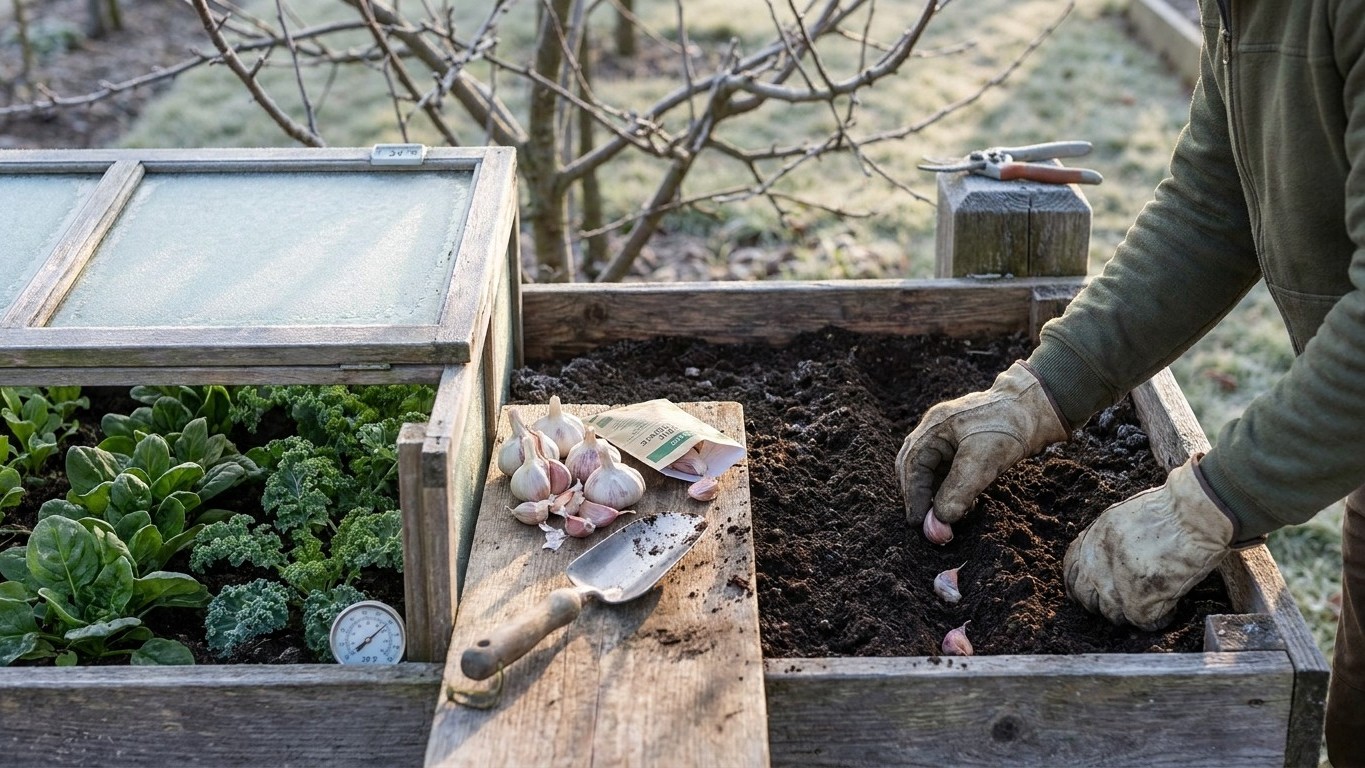

Nothing safely goes into open Arkansas soil this month for tender crops, but the answer isn’t “wait.” Garlic and shallots still go into workable ground, cold frames keep hardy greens growing, and dormant fruit trees get pruned while they sleep. January is a planning and prep month, not an empty one.
What goes in the ground in January

The state sits in USDA hardiness zone 6b-8a, and the last spring frost across the reference station falls between March 12 and March 28. That’s roughly ten to twelve weeks out from January, which rules out anything tender: tomatoes, peppers, beans, squash. Soil temperature, not the calendar, decides this. Warm-season seeds simply rot in cold, wet ground, and even a mild afternoon won’t change what’s happening six inches down.
What still works is narrow but real. Garlic and shallot cloves can go into beds wherever the ground isn’t frozen solid or waterlogged, since both crops want a long cold spell before they bulb up in late spring. Bare-root fruit trees, roses, and cane fruit (raspberries, blackberries) can be planted while they’re dormant, as long as the hole can be dug without hitting frozen clay. Cold frames and low tunnels let a gardener push spinach, arugula, and mache seed into the ground weeks earlier than open air would allow, since the plastic or glass buys several degrees of protection overnight.
Indoors, this is prime time for forcing. Rhubarb crowns dug and moved into a dark, warmish spot will push tender pink stalks in a few weeks. Belgian endive (chicory) roots, lifted from the garden or bought dormant, force the same way in a bucket of sand in a dark closet. Neither needs light to start, which makes them useful projects for a gardener who wants something to harvest before spring greens are anywhere close to ready.
Peas are the edge case worth naming. In the milder parts of the state, particularly south of Little Rock, a late-January sowing of English or snap peas under a row cover can survive and get a jump on spring, but it’s a gamble tied to that specific microclimate, not a statewide green light.
What to start under cover
Seed starting this month should be counted backward from the frost window, not forward from January 1. With the last frost falling March 12 to March 28, a crop that needs 10 to 12 weeks indoors before transplanting, like onions from seed or celery, needs to go into trays now if it’s going to be ready in time. Cole crops for an early spring planting (broccoli, cabbage, kale started as transplants rather than direct-sown) typically want 6 to 8 weeks under lights, which puts their start date in late January to early February depending on which end of the frost window a gardener is planning around.
The arithmetic is simple to redo for any county: take the local last-frost date, subtract the number of weeks the seed packet lists for indoor starting, and that’s the sowing date. Get it wrong in one direction and the seedlings sit in tiny cells far too long, turning rootbound and leggy, stretching for light and never fully recovering once they’re in the ground. Get it wrong the other way and the transplants are still too small when the soil warms up, losing weeks of growing season that can’t be recovered later.
Onions deserve particular attention here because they’re the crop most often started too late. A seed-grown onion wants a long head start, often 10 weeks or more, before it goes outside as a pencil-thick seedling. Started in January under grow lights, onions have time to build the root and leaf mass that determines bulb size later. Started in March instead, they never catch up.
What is ready to pick
Little comes out of an open Arkansas garden this month, and that’s worth saying plainly rather than padding the list. What’s still feeding a household is what was planted or protected months earlier. Kale, collards, and leeks that overwintered in the ground keep producing usable leaves and stalks even through a hard freeze, especially once they’ve been sweetened by cold, since a freeze converts starches to sugars in these crops. A quick check under any row cover or mulch layer usually turns up something pickable even after a stretch of freezing nights.
Cold frames extend this further. Spinach, mache, and mizuna sown in the fall often sit半-dormant through the coldest weeks, then start growing again on any sunny afternoon warm enough to lift the frame lid. Harvest a few outer leaves rather than cutting the whole plant, and it’ll keep producing into spring.
Indoors, sprouts and microgreens fill the gap. A jar of sprouting mung beans or a tray of pea shoots on a windowsill goes from seed to harvest in one to two weeks, no garden required.
The other January job on the food side is inspection, not harvest. Stored squash, potatoes, and onions should get pulled out and checked by hand every few weeks. A soft spot on a squash, a sprouting potato, or an onion going soft at the neck means it needs to be used or composted before it spreads rot to the rest of the bin.
The jobs that matter this month
Dormant pruning is the single biggest task on the calendar right now, and the window is real: apple, pear, and peach trees, along with blackberry and raspberry canes, should be cut back while they’re fully dormant and before buds swell. Prune too late, once sap is moving, and the tree wastes energy healing cuts instead of pushing new growth, and open wounds become easier entry points for disease.
Seed ordering belongs on this month’s list too, and it’s a deadline gardeners tend to underestimate. Popular varieties, especially heirloom tomatoes and specialty peppers, sell out from seed companies weeks before the average gardener starts thinking about spring. Ordering now means having what’s actually wanted on hand when the indoor starting calendar (see above) kicks in.
Soil testing is another task that pays off far more in January than in April. A test sent to the state’s extension lab now gives enough lead time to add lime or sulfur and let it adjust pH before planting season, something that can’t be rushed once beds are already in use. Turning the compost pile, even just once, keeps decomposition moving through the cold months instead of letting the pile go fully dormant.
Round out the month with maintenance that has no other natural slot: sharpening and oiling pruners and shovels, repairing raised bed corners and fence posts while nothing is growing to work around, and mapping out crop rotation for the coming season so beds that grew tomatoes or squash don’t repeat the same family again.
What not to do in January
A run of 60-degree afternoons is Arkansas’s classic January trap. The air feels like spring, and it’s tempting to get warm-season seed into the ground or move tender seedlings outside. The soil hasn’t caught up, though, and a week later a hard freeze arrives and undoes it. Wait for the frost window, not the thermometer on a single afternoon.
The same mild spell tempts gardeners to strip mulch and pull row covers off overwintering crops to “let them breathe.” That exposed soil then takes the next freeze directly, and plants that were fine under cover can be damaged or killed once uncovered. Leave protection in place until the frost pattern has actually shifted, not after one warm week.
Nitrogen fertilizer is another timing mistake. Feeding dormant fruit trees, garlic, or overwintering greens with a high-nitrogen product this month pushes soft new growth right before the next cold snap, and that tender growth is exactly what freezes first. Save the nitrogen for when plants are actively growing in spring, and stick to phosphorus- and potassium-focused amendments now if soil testing calls for anything at all.
Working wet clay soil is the last common error. Digging beds or turning compost while the ground is saturated compacts the structure for months. If a handful of soil forms a muddy ball instead of crumbling, it’s too wet to work; wait for a drier stretch instead.
Checking this against your own county
Everything above is a statewide starting point, and Arkansas is big enough that it shouldn’t be treated as a single instruction. Elevation in the Ozark and Ouachita highlands runs frost dates later than the Delta lowlands, and the difference between the far north and the far south of the state can shift planting windows by two or three weeks in either direction. The reference frost dates cited here come from one station and are a guide, not a guarantee for any specific address.
The University of Arkansas System Division of Agriculture Cooperative Extension Service publishes county-level guidance and soil testing services that narrow these ranges down to a specific location, and it’s worth checking before committing seed or money to a planting date.
Common questions
Can I plant tomatoes in Arkansas in January?
No, not outdoors. Tomato seedlings can’t survive anywhere near the January soil or air temperatures found across the state. Tomato seed can be started indoors under lights, but timed backward from the last frost window of March 12 to March 28, usually 6 to 8 weeks ahead, which points toward late January or February rather than the start of the month.
Is it too late to plant garlic in Arkansas in January?
It’s later than ideal but not necessarily too late. Garlic planted in fall gets a longer cold period and typically produces larger bulbs, but cloves put in the ground in January, as long as the soil is workable, can still bulb up by early summer, just with a smaller yield than fall-planted garlic.
What vegetables can survive an Arkansas winter outdoors?
Kale, collards, leeks, and spinach that were established before the coldest weather routinely survive outdoor winter conditions across the state, especially with mulch or row cover. Freezing temperatures actually sweeten kale and collards by converting starches to sugar in the leaves.
When should I start seeds indoors for an Arkansas spring garden?
Count backward from the local last frost date rather than from a fixed calendar date. With the statewide range running March 12 to March 28, long-lead crops like onions and celery (10 to 12 weeks) should start in January, while broccoli and cabbage (6 to 8 weeks) can wait until late January or early February.