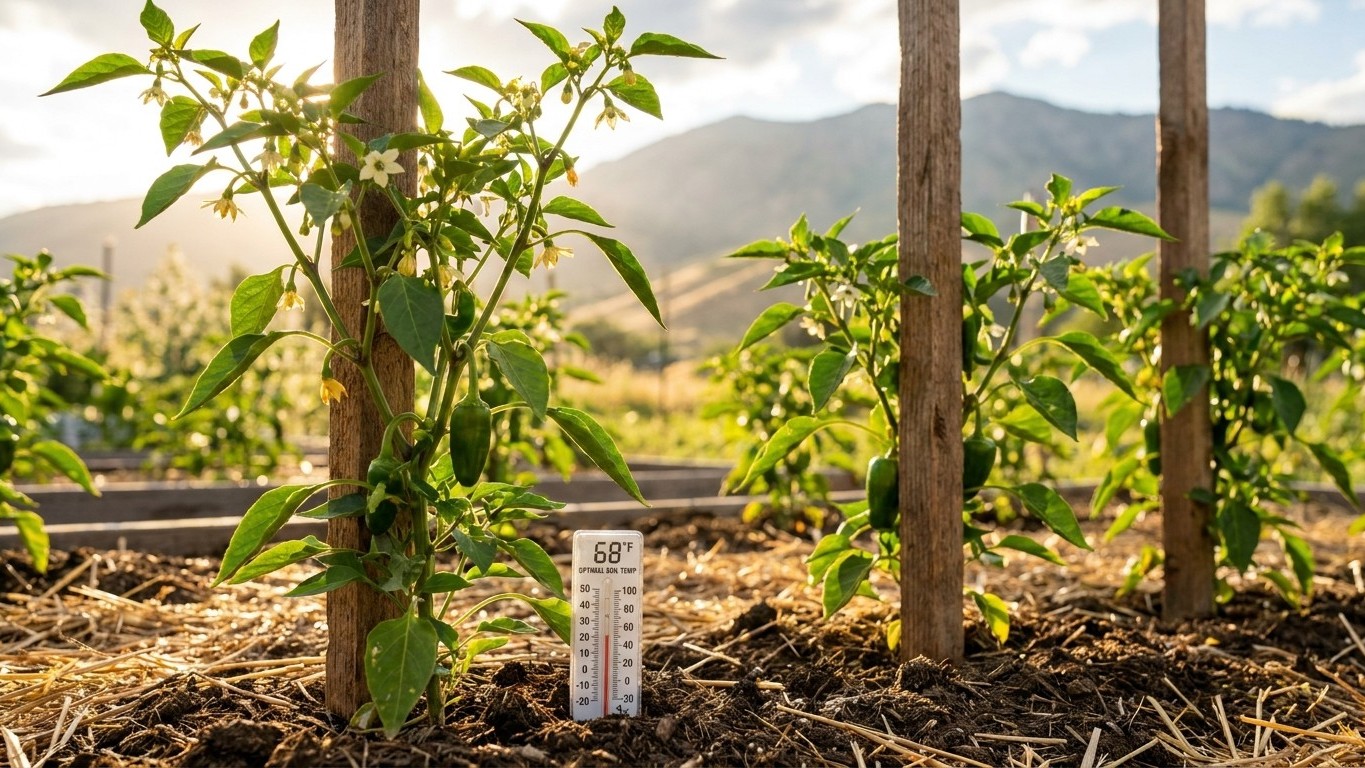

Charlotte’s Piedmont averages 35.0 days a year at or above 90°F, and that heat load is the reason pepper harvests here run long but never carefree. The plants that ripen reliably are the ones that keep setting fruit through July’s hottest stretches while still tolerating the occasional cool night that can shut flowering down just as fast as the heat does.
The short answer

Thirty-five days a year at 90°F or hotter, measured at the Charlotte reference station, is the number that matters most for anyone growing peppers in this part of North Carolina. That’s not an average summer temperature. It’s a count of how many days the mercury climbs high enough to stress a pepper plant’s ability to set fruit at all. Pepper flowers can abort when daytime heat runs too high for too long, so a stretch of 90-plus days in mid-July, right when a lot of plants are flowering, can mean blossoms that open, wither, and drop without ever becoming a pepper.
The Utah State University Extension guide on peppers puts a number on the other failure point too: nights below 55°F. Cool nights slow pollen viability the same way extreme heat does, just from the opposite direction. A plant can look healthy, covered in flowers, and still produce almost nothing if the nights it’s flowering through are running too cold.
Here’s where a grower in Charlotte, Hickory, or Fayetteville needs to do some homework this data can’t do for them. This site tracks days above 90°F because that figure is measured and published for the region. It does not carry summer night minima, and there’s no reliable way to back into that number from latitude, elevation, or how cold January gets in a given county. A river-bottom garden and a hillside garden ten miles apart can have meaningfully different overnight lows on the same June evening. The only way to know if your peppers are flowering through 55°F nights is to check your own thermometer, ideally with a minimum-recording one left in the garden, not on a porch or near a house wall that holds heat.
What this means practically: expect a wide, forgiving planting window for early growth, since Charlotte’s spring and early summer rarely see the kind of night chill that shuts fruit set down. The bigger risk sits in the peak of summer, when a run of 90-plus days lines up with flowering. Growers who stagger their plantings, or who choose varieties known for holding blossoms through heat, tend to come out ahead of a garden planted all at once in early May.
When to start seed here
The arithmetic for pepper timing in this area works backward from two dates: when the soil is safely warm and when the seedlings need to go in the ground. Here’s how to run those numbers for your own county.
- Start with the frost window. NOAA’s 1991-2020 climate normals put Charlotte’s last spring freeze, the point where the odds of a 32°F morning drop into the 30 to 70 percent range, somewhere between March 23 and April 5. That’s a Piedmont number. West toward the Blue Ridge, expect the safe window to run several weeks later; east toward the coastal plain, it typically arrives earlier.
- Add the soil-temperature check. Frost date alone isn’t enough. Pepper transplants need soil at 60°F before they go in the ground, and cold spring soil can lag behind the air by a week or two even after the last freeze has passed. A simple soil thermometer pushed a few inches into the bed, checked in the morning over a few consecutive days, tells you more than any calendar date.
- Count backward 8 to 10 weeks. Utah State University Extension recommends starting pepper seed indoors 8 to 10 weeks before transplant. If your soil reliably hits 60°F by mid-April in the Piedmont, that puts indoor seed-starting somewhere in early to mid-February, depending on how quickly your particular setup gets seedlings to transplant size.
- Build in a buffer for a slow spring. Some years the soil warms fast after the last frost; other years a cool, wet stretch keeps beds cold well past the average date. Starting seed at the early edge of that 8 to 10 week window, rather than the late edge, gives sturdier transplants some room to wait out a slow spring without getting rootbound indoors.
The mountains and the coastal plain each shift this math in their own direction, but the method stays the same everywhere in the state: find your local frost probability, confirm soil temperature rather than trusting the calendar alone, and count back from there.
What goes wrong here
Most pepper problems in this climate trace back to the same two thresholds already covered, plus a couple of physical issues that show up once fruit is on the plant.
- Blossom drop during a hot spell. When daytime highs push into the 90s while plants are flowering, blossoms can open and fall without setting fruit. There’s no fix for the heat itself, but light afternoon shade cloth over flowering plants during the worst stretches, and keeping soil moisture even so the plant isn’t fighting drought stress on top of heat stress, both help flowers hang on longer.
- Blossom drop during a cool snap. The same failure can happen at the opposite extreme, when a run of nights drops below the range pepper flowers need to set fruit. Since this data doesn’t track summer night lows for the region, the practical remedy is to keep an eye on your own overnight readings during flowering and, if a cool stretch is forecast, hold off on additional transplanting until temperatures settle.
- Sunscald on exposed fruit. Strong summer sun on peppers that have lost leaf cover, whether from disease, over-pruning, or wind damage, can bleach or blister the skin on the sun-facing side. Leaving enough foliage on the plant to shade developing fruit, and avoiding heavy pruning once fruit has set, cuts this down significantly.
- Blossom-end rot. Dark, sunken patches on the bottom of the fruit usually point to inconsistent watering rather than a soil deficiency, since uneven moisture interrupts how the plant moves calcium into developing fruit. Mulching to hold soil moisture steady and watering on a regular schedule rather than letting beds dry out between soakings addresses most cases.
Common questions
Do I need to worry about cool nights in a Charlotte summer?
Possibly, but this data doesn’t say either way. Summer night minima aren’t part of the published record used here, and they can vary a good deal between a low-lying garden and one on higher ground even within the same county. Track your own nights during flowering if fruit set seems weak despite warm days.
Is 35 days above 90°F a lot compared to the rest of the state?
That figure comes from the Charlotte reference station and reflects the Piedmont specifically. The coastal plain and the mountains each have their own heat profiles, and neither is covered by this particular number, so a grower outside the Piedmont should look for a heat-day count tied to their own region rather than assuming Charlotte’s number applies.
How early can I transplant peppers in the Piedmont?
Not before the soil hits 60°F and the last frost has passed. Given Charlotte’s last-frost window of March 23 to April 5, most Piedmont gardeners are looking at mid to late April for safe transplanting, though a soil thermometer is a better guide than any date on the calendar.
What causes peppers to flower but not produce fruit?
Fruit set fails at both extremes, either nights below 55°F or days above 90°F, according to Utah State University Extension. Since the 35 to 45 days needed for fruit to develop are counted from flowering rather than from sowing or transplant date, a heat spike or cool snap during that specific flowering window matters more than the season’s average conditions.