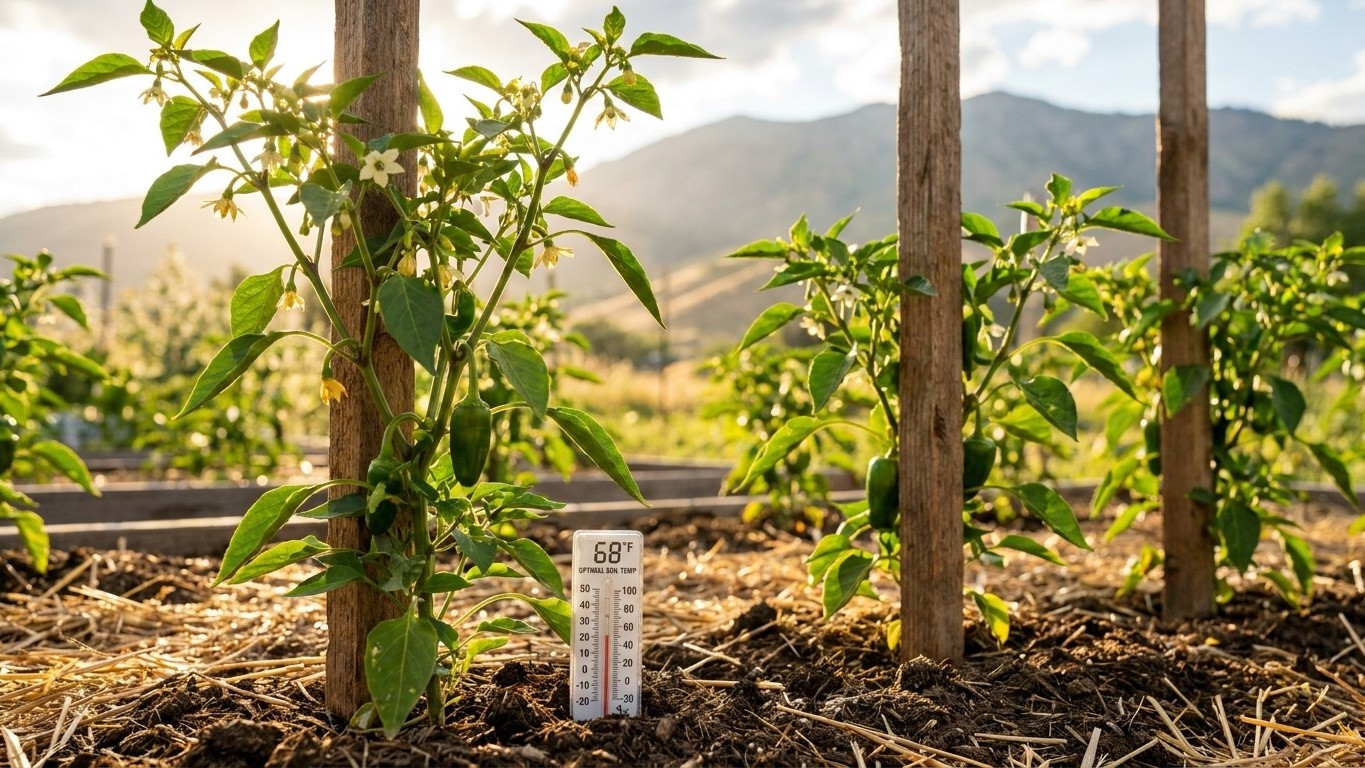

Ohio peppers ripen within a real but narrow window: soil warm enough to transplant by mid-May in zone 6a, then a summer that hits 90 F on roughly 15 days a year at the Columbus reference station. Fruit set fails on both ends of that range, so the calendar matters as much as the variety you choose.
The short answer

Start with the number that actually runs the season: 15.3 days a year at or above 90 F, averaged from the 1991-2020 NOAA NCEI Climate Normals at the Columbus reference station. That’s not a heat wave tucked into one bad August. It’s spread across a typical summer, and it lands right when most Ohio pepper plants are trying to set their first flush of fruit. Above 90 F, pepper blossoms drop instead of holding and swelling into fruit. Utah State University Extension is blunt about this: fruit set fails at the hot end just as surely as it fails at the cold end. Fifteen days doesn’t sound like much until you realize those days often cluster in mid-to-late July, exactly when a May-planted pepper is flowering for the first time.
The practical takeaway is timing, not variety selection. A grower who gets plants in early, with a strong root system established before the heat arrives, gives the first flowers a chance to set before the 90-degree stretch hits. A grower who transplants late is asking the plant to bloom straight into the hottest week of summer, and the flowers simply won’t hold. This is also why afternoon shade cloth and consistent watering during a heat spell aren’t cosmetic fixes. They lower leaf and flower temperature just enough, in some seasons, to keep a plant setting fruit through a run of 90-degree days instead of shutting down.
The other end of the range gets less attention in Ohio, and that’s the mistake. Pepper fruit set also fails when nights drop below 55 F, according to the same Utah State University Extension guidance. Cool nights in the 40s aren’t rare here in a cold May or a chilly early June, and they show up again in September as fall closes in. This site tracks days at or above 90 F for Ohio, but it does not carry summer night minimum temperatures for this location. That’s not a small gap. Night lows vary by county, by elevation, and by how close a garden sits to a river valley or an open field where cold air pools. Don’t guess at this number from Ohio’s latitude or from how cold the coldest month of the year gets. Those two things don’t predict a July or August night low. Keep a thermometer on the porch, or check a local weather station’s overnight data, and watch your own numbers through the season.
When to start seed here
Work the calendar backward from the date peppers actually go in the ground, and the seed-starting date falls out on its own. Ohio State University Extension’s Ohio Gardening Calendar puts the last spring frost between May 5 and May 15 for zone 6a, which covers most of the state’s pepper-growing regions. That date is the anchor for everything else.
- Set the transplant date. Peppers go outside after the last frost has passed and only once soil temperature has reached 60 F, per Utah State University Extension. In zone 6a that generally means the back half of the May 5 to May 15 window, sometimes a few days later if a cool, wet spring keeps soil temperatures lagging behind the calendar.
- Count back 8 to 10 weeks. Utah State University Extension recommends starting pepper seed indoors 8 to 10 weeks before that transplant date. If you’re aiming to transplant around May 15, count back to somewhere between March 6 and March 20 for sowing indoors.
- Check your own county, not just the state average. Zone 6a covers a lot of ground, and a county along Lake Erie can lag several days behind a county in the southern part of the state. Pull your specific county’s typical last frost date from a local extension office before locking in a sowing date, then run the same 8-to-10-week countback from there.
- Build in a buffer for soil, not just air temperature. Air can feel warm on a 65-degree April afternoon while the soil six inches down is still sitting in the 40s. A simple soil thermometer, checked over several mornings, tells you when 60 F has actually arrived, rather than assuming it tracks the air temperature on the nightly weather report.
This arithmetic is the same every season, which is exactly why it’s worth doing on paper once and keeping the numbers on the seed packet or a kitchen calendar. A grower who sows on March 1 without checking the transplant-ready soil temperature risks holding leggy, root-bound seedlings indoors for weeks longer than planned. A grower who sows too late ends up transplanting small plants into a heat spell instead of giving them the head start they need before the 90-degree days show up in July.
What goes wrong here
- Blossom drop during a hot spell. When daytime highs push into the 90s during flowering, blossoms fall off before they set fruit, a direct consequence of the heat load Ohio sees on its roughly 15 days a year above 90 F. The remedy is shade cloth over the row during the worst afternoon hours, deep watering the morning before a forecast heat spell (not during it), and mulching to keep root-zone temperatures more stable. Plants that are already stressed by dry soil drop blossoms faster than well-watered ones.
- Blossom drop during a cool night. The same failure shows up at the other extreme, when nights fall below 55 F, according to Utah State University Extension. This is most likely in a cold snap right after transplanting or during a chilly stretch in early fall. Since this site doesn’t carry night-minimum data for Ohio, the fix starts with watching your own overnight lows rather than assuming a “typical” number. Row cover pulled over plants on a night that’s forecast to dip into the 50s can hold enough heat to protect open blossoms.
- Sunscald on exposed fruit. Strong summer sun on fruit that’s lost its leaf cover, whether from pruning, wind damage, or disease-related leaf drop, causes pale, papery patches on the sun-facing side of the pepper. Leave foliage intact rather than pruning heavily for airflow, and use a light shade cloth over rows during the sunniest stretch of summer if leaf cover is thin.
- Blossom-end rot on developing fruit. A dark, sunken patch at the blossom end of the fruit usually points to inconsistent watering rather than a soil nutrient problem outright, since uneven moisture interrupts the plant’s ability to move calcium into developing fruit. Even, regular watering, mulch to hold soil moisture steady, and avoiding the swing from bone-dry to soaked go further than any calcium spray applied after the damage shows up.
Common questions
What’s the best week to transplant peppers in Ohio?
There’s no single week that works statewide. The frost-safe window for zone 6a runs May 5 to May 15, per Ohio State University Extension, but the real trigger is soil temperature reaching 60 F, not the calendar date alone. Check both before moving plants outside.
Do Ohio’s hot summer days really stop pepper plants from producing?
Yes, on the specific days when temperatures reach 90 F or above. Ohio averages 15.3 such days a year at the Columbus reference station, and Utah State University Extension confirms that fruit set fails once daytime highs cross that threshold, even though the plant itself usually survives the heat.
Should I worry about cool nights even in summer?
Yes. Fruit set also fails when nights drop below 55 F, a threshold that can show up in a cool early-June stretch or as fall approaches in September. This site doesn’t track night-minimum temperatures for Ohio, so check your own local overnight lows rather than assuming they match the season’s daytime heat data.
How early can I start pepper seeds indoors?
Count back 8 to 10 weeks from your expected transplant date, per Utah State University Extension. For a mid-May transplant target in zone 6a, that puts indoor sowing somewhere in early to mid-March, adjusted for your specific county’s frost pattern.