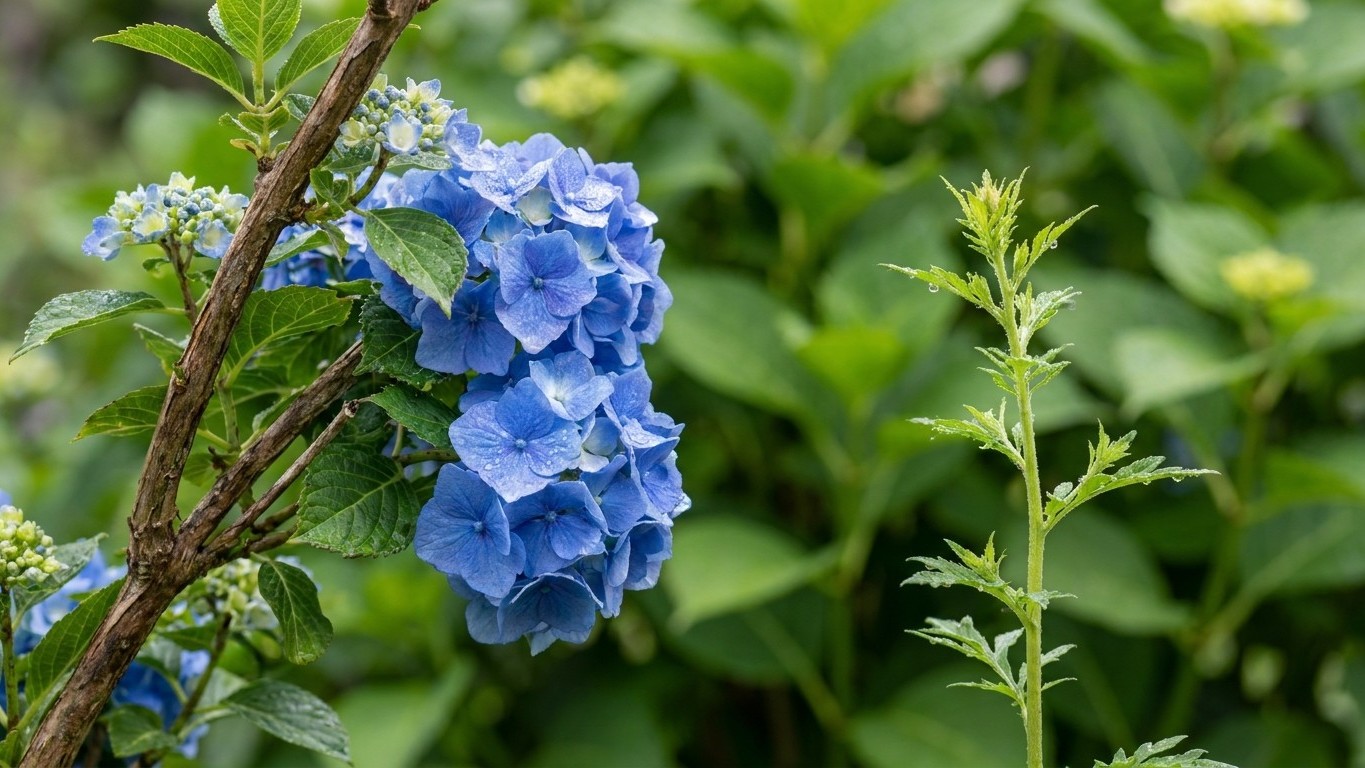

Ohio winters seldom kill a hydrangea outright. What they kill are the flower buds and the upper stems, which is why a bigleaf can look healthy in June and never bloom. The fix is a layer of mulch over the crown, a cage of leaves or straw around the stems, and the patience to leave it all in place until spring is settled. Panicle and smooth types usually need none of it.
What this comes down to in Ohio

The protection season in Ohio sits between two frost windows. At the zone 6a reference point in Ohio State University Extension’s Ohio Gardening Calendar, the first fall frost arrives October 5 to October 15, and the last spring frost falls May 5 to May 15. Protection goes on after the plant has gone dormant, which happens some weeks after that fall window opens, and it comes off in stages once the spring window has passed.
That is a long stretch of cover for a shrub that is often unwrapped early by a gardener who mistakes a warm week for spring. Ohio’s winter swings make this more than a matter of the lowest temperature. A mild stretch in late winter can wake buds that a cold snap then freezes.
Which hydrangeas need winter protection in Ohio?
The answer depends on where the plant sets its flower buds. Types that bloom on old wood form next summer’s buds the previous late summer and carry them on the stems all winter. Types that bloom on new wood grow their flowering stems in spring, so a cold winter costs them very little.
| Type | Blooms on | Winter protection in Ohio |
|---|---|---|
| Bigleaf (Hydrangea macrophylla) | Old wood, with some reblooming kinds also using new wood | Worth doing every year, especially in open sites |
| Mountain (Hydrangea serrata) | Old wood | Worth doing in exposed spots |
| Oakleaf (Hydrangea quercifolia) | Old wood | Mulch the crown; cage in windy sites |
| Panicle (Hydrangea paniculata) | New wood | Rarely needed once established |
| Smooth (Hydrangea arborescens, the Annabelle type) | New wood | Rarely needed |
How cold does an Ohio winter actually get for hydrangeas?
The USDA Plant Hardiness Zone Map (2023 version) places Ohio in zones 5b to 7a. That system rests on a single variable, the average annual extreme minimum temperature, so it tells you how low a typical winter bottoms out and nothing about swings, wind, or a freeze after buds have started to swell. A bigleaf rated for your zone can still lose its buds. The zone sets the ceiling on what the plant can survive, and the protection decides how much of it you keep.
For the general growing basics, spacing, soil and watering, see our guide to growing hydrangeas in Ohio. What follows covers only the cold months.
Working it out for your own garden
Start with the dates, then confirm them on the plant. Take the first fall frost window, October 5 to October 15, and add a few weeks. That puts the protection job after the leaves have dropped or gone brown and the shrub has stopped growing. Covering earlier traps warmth around a plant that is still active.
Spring runs the other direction. The last frost window, May 5 to May 15, is the average timing of the last spring frost, so buds are only reasonably safe once it has passed, and a later freeze is still possible. Begin loosening the cover in stages, pulling the outer wrap and the top of the mulch first once the ground has thawed and the weather has turned steadily mild. Take the rest off as the window closes. Keep an old bedsheet or a row cover handy until the window has passed, because a late freeze after the buds open can do the same damage as a deep winter one.
How do you know which type you have?
Look for the plant tag first. If it is long gone, think back to when the shrub bloomed. Flowers in early to midsummer on stems that stood through winter point to old wood. Flowers from late summer into fall on stems that grew that spring point to new wood. A gardener whose bigleaf blooms only on the stems that survived winter has an old-wood plant, and that one gets the full treatment. A panicle that flowers heavily after being cut to the ground in early spring does not.
How do you tell whether buds survived?
Wait until the leaves begin to open, then bend a thin stem. A live stem is flexible and green when scratched with a thumbnail. A dead one snaps and is brown or gray inside. Plenty of gardeners prune bigleafs in early spring because they look dead, then cut off buds that were about to open. Hold off until growth shows you where the live wood ends, and prune back to just above the first healthy pair of buds.
What changes across the state
Ohio is not one winter. Zones 5b to 7a already tell you the state spans a range, and the frost dates above belong to one reference point, so yours may land earlier or later. Colder areas shift the whole season: fall frost arrives sooner and spring frost lingers longer, which stretches the stretch you need to keep a cover on.
The northern tier, along Lake Erie, runs on a different logic from the interior. The lake holds heat into fall and cools spring down, so buds there tend to open later. The same lake feeds heavy snow in the snowbelt of the northeast. A deep, steady snow cover is excellent insulation for a hydrangea crown, and shrubs under it often fare better than those in a milder area with bare, windy ground.
The south and the Ohio River valley see milder winters, but the warmth cuts both ways. Buds wake earlier there, and an April cold snap catches them swollen and exposed. Gardeners in those areas can lose buds as often to a freeze after growth has started as to midwinter cold.
Elevation matters too. The higher ground in the eastern foothills runs colder overall, though low valley spots can pool cold air on still nights, and open western farmland with little windbreak sends cold air straight across a planting. A shrub on the north or west side of a house, where wind scours the stems, will need more cover than the same variety tucked on the south or east side beside a foundation.
The mistakes this state punishes

Covering too early is a common one. Mulch or a wire cage put on while the shrub is still growing, or after only the first light frost, holds in warmth and moisture and invites rot. Wait until the leaves have dropped and the ground is about to freeze.
Plastic is the second. Sheet plastic wrapped around the stems cooks the plant on a sunny January afternoon and then freezes it that night. Use burlap, or a cage of chicken wire or hardware cloth filled loosely with shredded leaves or straw, so air still moves through.
Third, pulling everything off on the first warm spell. Ohio often sees a run of mild days in March, then a hard cold return. Buds that woke up in the warm days are far more vulnerable than buds that never stirred. Remove protection in stages, and let the frost window have the final word.
Dry soil going into winter hurts hydrangeas more than people expect. Water deeply before the ground freezes, especially after a dry fall. Late fertilizing is another trap: a nitrogen feeding in late summer pushes soft growth that cold kills first. Finally, rodents. Voles nest in mulch and chew the bark at the base, so keep mulch from piling against the stems and wrap the cage base with hardware cloth.
Checking this against your county
The dates above are a reference point, not an instruction for your yard. Your county’s frost dates, your elevation, and how close you are to the lake or river all move them. Ohio State University Extension has an office in every county, and the staff there can tell you what frost dates and winter patterns to expect locally and which hydrangeas have done well nearby. Pair that with the state hydrangea guide, and you will have the full picture for your yard.
Common questions
Do I have to protect hydrangeas every winter in Ohio?
Only the old-wood types: bigleaf and mountain hydrangeas, and oakleaf in exposed sites. Panicle and smooth hydrangeas bloom on new wood and shrug off most winters, so a layer of mulch over the roots is enough.
Can I use burlap, or does it have to be a cage?
Either works. Burlap wrapped around a loose frame lets air through. A cage of wire filled with leaves or straw adds insulation. The key is that the covering stays loose and breathable.
When should I take winter protection off?
Loosen it in stages as spring turns steadily mild, and remove the last of it after the May 5 to May 15 frost window passes. Keep a sheet or row cover nearby in case a late freeze arrives after buds have opened.
Why did my bigleaf leaf out but never bloom?
The flower buds probably died over winter or in a late freeze, while the leaf buds or lower stems survived. Many old-wood bigleafs behave this way after a hard winter. Better protection next year, or a reblooming kind that also flowers on new wood, improves the odds.