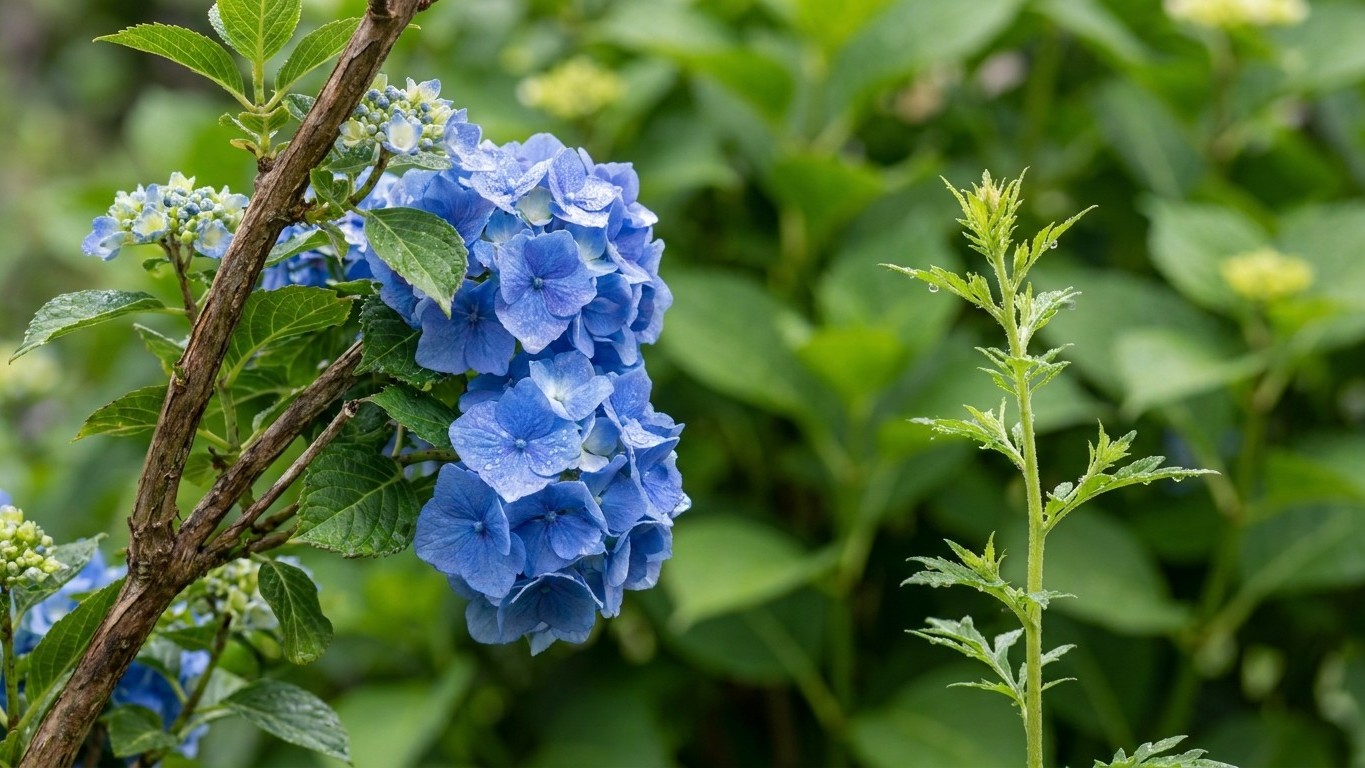

Panicle and smooth hydrangeas are hardy across Ohio and flower on new wood, so a hard freeze rarely costs you a bloom. Oakleaf types handle most of the state too. Bigleaf hydrangeas are the gamble: the plant lives, but flower buds formed the previous summer often die. Ohio sits in zones 5b to 7a on the USDA Plant Hardiness Zone Map, and that range decides which group your garden belongs to.
What this comes down to in Ohio

In zone 6a, the average last spring frost falls between May 5 and May 15 and the average first fall frost between October 5 and October 15, according to Ohio State University Extension’s gardening calendar. Zone 6b runs about a week earlier in spring. Hydrangeas vary in winter hardiness, so check the zone rating of each variety against your local conditions. Roughly five months separate the last spring frost from the first fall frost, giving a hydrangea time to grow and set buds.
Two separate risks decide whether you get flowers. The first is winter cold, which the USDA zone captures. That system rests on one variable, the average annual extreme minimum temperature, and Ohio’s 5b to 7a is a statewide range, so gardens in different parts of the state can sit a full zone or more apart. The second risk is a freeze after leaf-out. Buds on old wood are already swelling in April, and a frost inside the May window can burn them even if the plant sailed through January. New-wood bloomers largely avoid both problems because they grow their flower buds fresh each spring.
The cultivars below run roughly from the most dependable bloomers to the most marginal ones in Ohio, so you can see where the line falls for your own zone.
Annabelle
A smooth hydrangea with large white rounded blooms in early summer on new wood. It flowers even when frozen to the ground, which makes it nearly foolproof in any Ohio county. The stems can flop under heavy rain.
Incrediball
A stouter-stemmed relative of Annabelle. White blooms open from new wood, so winter dieback does not matter. It suits gardeners who like Annabelle’s flowers but are tired of staking them.
Limelight
A panicle hydrangea. Cone-shaped blooms open lime green, turn white, and blush pink in fall, all on new wood. It handles northern Ohio cold with room to spare and tolerates more sun than the other types here.
Endless Summer
The original reblooming bigleaf selection, with blue or pink mophead blooms depending on soil acidity. It flowers on both old and new wood. If winter kills the old-wood buds, the plant still produces blooms later in summer, though fewer and later than in a mild year.
Snow Queen
An oakleaf hydrangea with white cone-shaped blooms that age to pink on old wood. It is dependable through most of Ohio. In the coldest pockets of zone 5b, a sheltered spot near a wall protects its buds, and the burgundy fall foliage rewards the effort.
Nikko Blue
A classic bigleaf with blue flowers in acidic soil and pink in alkaline soil, all on old wood. It sits right at the edge of Ohio’s range. In the southern counties it blooms in mild winters, and across the north it often produces leaves and no flowers.
Working it out for your own garden
Start with your zone, then compare it to the cultivar’s rated range and ask one question: does it bloom on old wood or new wood? Your zone comes from the USDA Plant Hardiness Zone Map, which you can look up by ZIP code. Ohio’s range is 5b to 7a, so find which end you are on. Then check the plant tag.
Take Limelight as a worked example. Check its zone rating against your local conditions to see how much margin you have. It blooms on new wood, so even a winter that kills every stem above ground leaves the plant free to regrow and flower by midsummer. It should flower in every Ohio county, with no winter protection needed for established plants.
Now take Nikko Blue, the marginal case. Its rated range begins at zone 6, so check whether your garden falls within it. Because it blooms only on old wood, every flower depends on stems surviving the winter and then avoiding a late spring frost (the average last frost is May 5 to May 15 in zone 6a). A zone 6b garden in a sheltered spot often gets flowers. A zone 5b garden, or any open, windy site, should expect leaves and few blooms. A rated zone is where a plant can live, and a bloom reliably appearing needs more margin than that.
How do you tell whether a hydrangea survived winter?
Wait until the shrubs have had time to leaf out, which in much of Ohio means late May. Bigleaf and oakleaf stems can look dead for weeks while buds low on the plant are still alive. Scratch a little bark with a fingernail. Green underneath means the stem is alive, and brown and dry means it is not. Cut out only the stems that stay bare after the plant leafs out. Panicle and smooth hydrangeas can be cut back hard in late winter without losing flowers.
What changes across the state
Ohio is not one climate. The shore of Lake Erie stays milder in winter than the inland counties around it, because the lake holds heat well into the cold months. It also cools spring, which holds buds back and can help old-wood bloomers dodge a late freeze. East of Cleveland, in the snowbelt, lake-effect snow often piles up and insulates stems and roots, so the plants sometimes fare better than the thermometer suggests.
The northwest corner is flat and open, with little to break the wind. Winter air can scour exposed hydrangeas there, and a shrub that does fine in a sheltered town yard may lose buds on an open farm lot. Farther south, the Ohio River valley runs warmer, and bigleaf varieties such as Nikko Blue bloom there far more often than they do up north. The trade-off is that warm spells arrive earlier in spring and coax buds out before the last frost has passed, which makes a late freeze more damaging.
Elevation matters too. The higher ground of the eastern plateau runs colder than low valleys a few miles away, and cold air drains downhill and pools in low spots on clear nights. Two neighbors with the same plant can have different results simply because one yard sits at the bottom of a slope. When you pick a variety, start with the zone you actually live in and then adjust for wind, slope, and shelter.
The mistakes this state punishes

Planting into cold soil after a warm spell is a common one. Ohio often gives a week of 70-degree weather in March or April, and gardeners rush to the nursery. Then the cold returns and new leaves get burned. Wait until the average last-frost window (May 5 to May 15 in zone 6a, about a week earlier in zone 6b) has passed, or plan to cover young plants overnight with a sheet when a freeze is forecast.
The second mistake is buying a bigleaf for the north because the flowers look good at the garden center. A bigleaf in zone 5b that blooms only on old wood will often disappoint. Choose a panicle, smooth, or reblooming type instead, and keep the old-wood varieties for sheltered spots. Even Endless Summer, which does flower on new wood, gives a smaller show after a hard winter.
The third is pruning at the wrong time. Cutting an old-wood hydrangea in fall or early spring removes next summer’s flowers along with the stems. Prune those only after they bloom, and leave panicle and smooth types for late winter.
A fourth mistake is feeding late in summer. Heavy nitrogen in August or September pushes soft growth that cold kills. Stop feeding by midsummer, and let the shrub harden off before the first fall frost between October 5 and October 15. A layer of shredded bark mulch spread in late fall keeps the roots steadier through freeze and thaw cycles.
Checking this against your county
A statewide range is a starting point. Your county’s extension office knows the local soil, microclimate, and which varieties have held up in nearby yards. Ohio State University Extension has an office in every county and can tell you what happened to local hydrangeas after the last hard winter. For planting basics beyond winter survival, see our guide to growing hydrangeas in Ohio.
Common questions
Will bigleaf hydrangeas bloom after a cold Ohio winter?
Often not on old wood, which is where most bigleaf types set their buds. Reblooming varieties such as Endless Summer produce some flowers on new growth later in the season. Expect better results in the south and in sheltered spots.
Do hydrangeas need winter protection in Ohio?
Panicle and smooth types do not. Old-wood bloomers in zone 5b can benefit from a ring of chicken wire filled with leaves or a burlap windbreak, and from a thick layer of mulch over the roots. Take protection off after the average last-frost window (May 5 to May 15 in zone 6a) has passed.
When should I cut back hydrangeas that look dead in spring?
Wait until the plant has leafed out, then remove only the stems that stay bare. A scratch test on the bark tells you which are alive.
Which hydrangea is safest for northern Ohio?
Annabelle, Incrediball, and Limelight, all blooming on new wood. A late freeze or a hard winter rarely costs them their flowers.