
Colorado’s growing window rewards peppers that flower before the hottest stretch of July and August hits, and that finish setting fruit within a few weeks of that first bloom. The state’s heat load, real even at 5,280 feet on the Front Range, sits close to the edge where pepper fruit set shuts down entirely. What actually ripens here has less to do with a variety’s name on a seed packet and more to do with timing the plant’s flowering to dodge both ends of that stress window.
The short answer

Denver’s reference station logs an average of 39.6 days a year at or above 90°F, based on NOAA’s 1991-2020 Climate Normals. That’s nearly six weeks of heat load stacked somewhere into a growing season that, on the Front Range, typically runs from early May to the first hard fall frost. For pepper plants, that figure matters because fruit set collapses once daytime highs push past 90°F for any real stretch: pollen turns sterile, blossoms drop, and a plant loaded with flowers one week can stop producing fruit entirely until the heat breaks. Thirty-nine days doesn’t mean forty days of total failure, since the 90-degree days rarely all land back to back, but it does mean most Colorado gardens will hit at least one multi-day heat spell in July or August that stalls fruit set, regardless of which pepper variety is in the ground.
The other edge of that same window is just as unforgiving, and it’s the one gardeners tend to overlook. Pepper fruit set also fails when nights drop below 55°F, according to Utah State University Extension. A cool snap in late May or a chilly run in early September can stop pollen from developing just as effectively as a heat spell does, even while the days themselves feel pleasant. This site tracks the state’s days-above-90 count because that figure is measured and published at the reference station level, but it does not carry summer night minima for Colorado counties. Front Range valleys, mountain parks, and the plains east of Denver can post very different overnight lows on the same calendar date, and elevation alone won’t tell you which one your garden is sitting in.
That gap is the honest limit of any climate-based planting guide: the hot end is on record here, the cool end isn’t, at least not at county resolution. A gardener at 5,280 feet on the plains and a gardener thirty miles west at 7,500 feet share the same state-level heat-day count but almost certainly different night temperatures come June and September. The only reliable fix is watching your own thermometer through the shoulder weeks of the season, since no latitude-based rule and no statewide average will tell you whether your nights are running above or below that 55°F threshold in any given week.
When to start seed here
Working backward from the transplant date is the only way to time pepper seed-starting that actually fits a Colorado season, and the math is simple enough to redo for any county once you know your own frost data.
- Find your last spring frost window. NOAA’s 1991-2020 Climate Normals put the 32°F freeze probability for the Denver-area reference station, USW00003017, somewhere between May 1 and May 11, the span where freeze odds fall from 70% down to 30%. Mountain towns run far shorter seasons than this and can see frost into July; the western slope follows its own separate pattern. Pull your own county’s data before committing to a date.
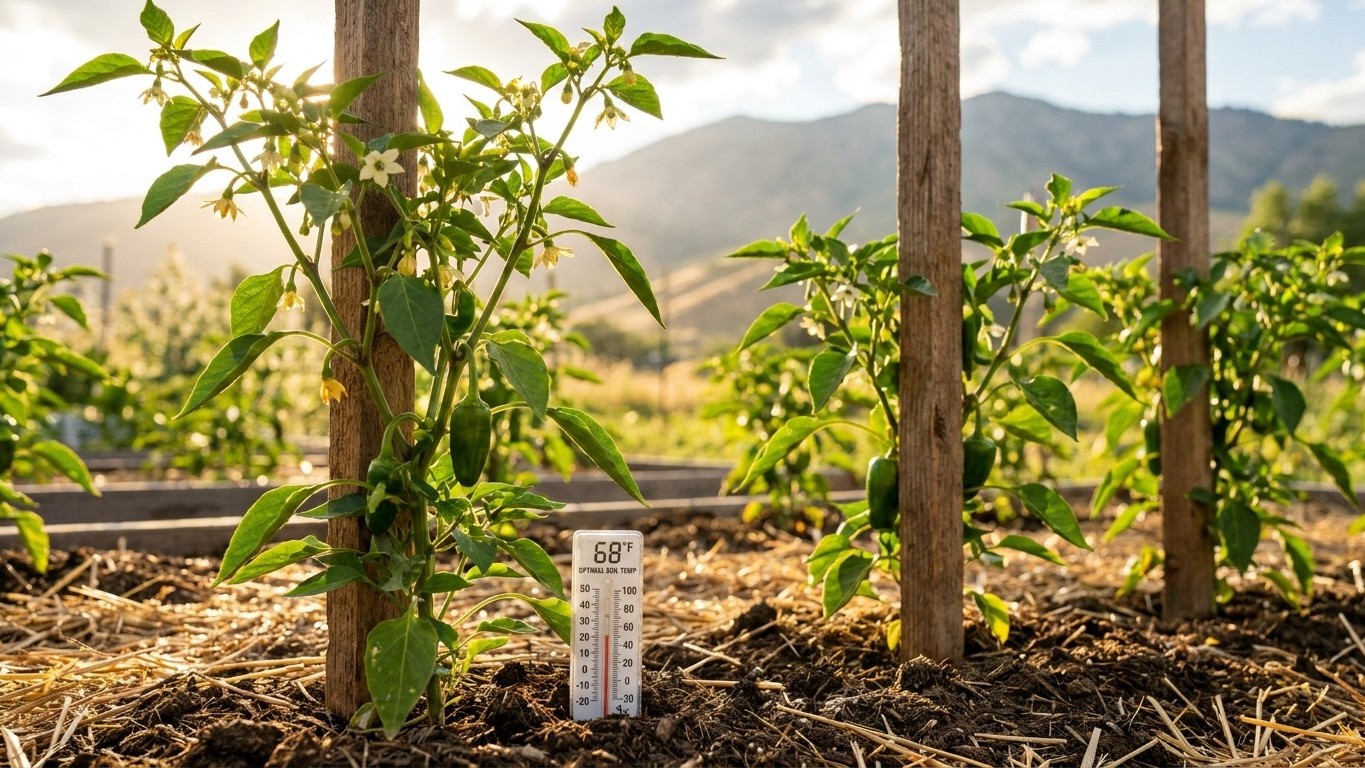
- Wait for soil, not just air, to warm. Utah State University Extension recommends transplanting peppers only after frost has passed and soil temperature has reached 60°F. Air can feel warm on a sunny April afternoon while soil six inches down is still cold from winter, so a soil thermometer beats a calendar guess here.
- Count back 8 to 10 weeks for indoor seed-starting. That’s the window Utah State University Extension gives for starting pepper seed indoors before it goes into the ground. If soil hits 60°F and frost risk clears around mid-May, counting back 8 to 10 weeks lands seed-starting somewhere in early to mid-March for most Front Range gardens.
- Build in a buffer. Because the frost-probability window itself spans ten days, and soil warms unevenly from yard to yard, add a few extra days of cushion rather than starting seed for the earliest possible date. A transplant set into cold soil stalls for weeks and rarely catches up to one started a week later into properly warmed ground.
- Track flowering, not sowing, for the fruit-set clock. Once flowers appear, fruit set runs on its own timeline tied to daytime highs and nighttime lows, separate from when the seed went into the tray. A plant seeded right on schedule can still stall at flowering if it hits a 90°F stretch or a night under 55°F.
What goes wrong here
Most pepper failures in Colorado trace back to the same two stress points, plus two problems that show up once fruit is already forming.
- Blossom drop during a heat spell. Once daytime highs sit above 90°F for several days running, flowers open and fall without ever setting fruit. Give plants afternoon shade during the worst stretches, water deeply in the morning so roots aren’t stressed on top of the heat, and hold off on high-nitrogen fertilizer, which pushes leafy growth instead of helping flowers hang on.
- Blossom drop during a cool night. A night that drops below 55°F can stall pollen development just as thoroughly as heat does, even mid-summer at higher elevations. Since this site doesn’t track night minima by county, watch your own overnight lows through late spring and early fall, and cover plants with row fabric on nights that feel unusually cold for the date.
- Sunscald on exposed fruit. Colorado’s intense high-elevation sun can scorch pale patches onto fruit that loses its leaf cover, whether from over-pruning or from wind damage. Leave foliage in place to shade developing peppers, and use light shade cloth over the row during the sunniest weeks rather than stripping leaves back.
- Blossom-end rot on the fruit itself. Irregular watering interrupts calcium uptake and shows up as a sunken, leathery patch on the fruit’s blossom end. Keep soil moisture consistent with regular deep watering and a layer of mulch, rather than letting the root zone swing between soaked and bone-dry.
Common questions
Do all pepper varieties fail at the same heat and cold thresholds?
Utah State University Extension names the same fruit-set failure points, nights below 55°F and days above 90°F, without publishing a heat rating, a days-to-maturity figure, or a size for individual varieties. No published figure here should be attached to a specific variety name.
Does Denver’s 39.6 heat-day average mean the same thing statewide?
No. That figure comes from the Denver reference station specifically. Mountain towns, the western slope, and other parts of the state carry their own separate heat-day counts, and this site does not extend that Denver number to the rest of Colorado.
Can I just plant earlier to dodge the late-May frost risk?
Not safely. NOAA’s freeze-probability data puts the risk window between May 1 and May 11 for the Denver-area station, and pushing a transplant out ahead of that window risks a freeze that a pepper plant won’t survive. Soil temperature at 60°F matters as much as the calendar date.
What should I do if I don’t know my own nighttime lows?
Track them yourself with an outdoor thermometer through late spring and early fall, since this site does not publish summer night minima at the county level, and no statewide average or latitude estimate substitutes for a reading from your own yard.