
Start pepper seed indoors 8 to 10 weeks before your transplant date. In most of Colorado, that transplant date lands after your last spring frost and once soil has warmed to 60 F, which for the Denver area falls between May 1 and May 11. Count backward from there, and sowing typically happens in late February to mid-March. But the calendar is only half the story here.
The short answer
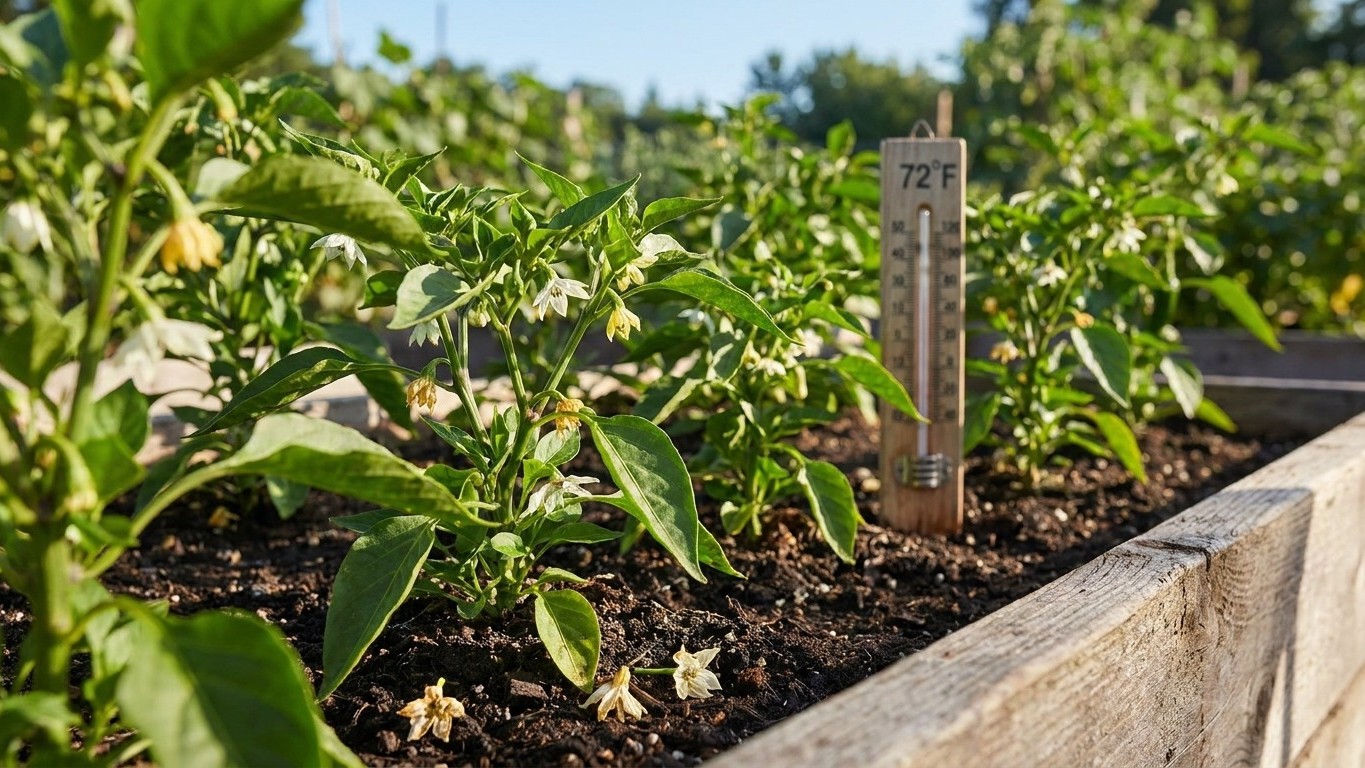
Denver averages 39.6 days a year at or above 90 F, according to NOAA NCEI Climate Normals for 1991-2020. That’s not a handful of hot afternoons. It’s more than five weeks scattered through the growing season where pepper flowers can abort before they ever set fruit. Peppers stop setting fruit when daytime temperatures climb past 90 F, and Colorado’s Front Range hits that mark often enough that timing your planting to dodge the worst of it matters more than picking a specific week on the calendar.
The practical effect: if you push transplants out too late and your plants start flowering right as July’s heat arrives, you can watch blossoms drop for days without a single pepper forming. Getting seed started early enough that plants are already flowering and setting fruit before the hottest stretch of summer gives you a head start. Once fruit has set, the plant tends to hold it through a hot spell better than it handles the initial flowering window.
Now the other end, and it’s just as real. Pepper fruit set also fails when nights drop below 55 F, according to Utah State University Extension. A cool snap in late spring, even one that never gets close to frost, can stall flowering the same way a heat wave does. This is where the guidance gets harder to hand you on a plate: this site tracks daytime heat data (that 39.6-day count above), but it does not carry summer night-time low temperatures for Colorado locations.
That means the cool-end risk is yours to watch directly. Don’t assume your nights are warm just because you’re at a lower elevation or further south in the state, and don’t guess based on how cold your winters run. Elevation swings temperatures fast in Colorado, sometimes by 20 degrees or more between a valley floor and a bench a few miles away, and early June nights can dip into the 40s even after your last frost date has passed. Check your own overnight lows through late spring and early summer before you assume your peppers are past the risk window.
When to start seed here
The math for Colorado growers works the same way no matter which county you’re in, but the dates that plug into it shift with elevation. Here’s how to build your own timeline.
- Find your last spring frost window. For the Denver reference station (USW00003017), NOAA NCEI’s 1991-2020 normals put the 32 F freeze probability window between May 1 and May 11. If you garden at higher elevation or in a mountain valley, your window runs later, sometimes much later, and a July frost is not unheard of in the highest towns. The western slope runs on its own pattern again. Look up your local station rather than assuming Denver’s dates apply.
- Add the soil temperature check. Frost passing doesn’t mean the ground is ready. Peppers need soil at 60 F before transplanting, and cold spring soil in Colorado, especially at altitude, can lag well behind the air temperature. A simple soil thermometer pushed 4 inches down, checked over a few mornings, tells you more than the calendar does.
- Set your transplant date at whichever comes later: frost-safe date, or 60 F soil. In a slow spring, that push soil warming several weeks past the frost date, especially in a shaded or north-facing bed.
- Count back 8 to 10 weeks from that transplant date. That’s your indoor sowing date. For a transplant target in the first half of May, that means starting seed indoors somewhere between late February and mid-March, depending on which end of the 8-to-10-week range you use.
- Adjust for your own elevation and microclimate. A gardener in a mountain valley with a June transplant date simply shifts the whole sequence later by the same number of weeks. The 8-to-10-week rule doesn’t change; only the anchor date does.
Redoing this arithmetic for your own county each spring is worth the ten minutes it takes. A grower in a high mountain valley and a grower on the eastern plains can be six or more weeks apart on both frost date and soil warm-up, even though they’re following the identical formula.
What goes wrong here
- Blossom drop in a hot spell. When daytime highs push past 90 F, a stretch Colorado’s Front Range sees on average close to 40 days a year, flowers can drop before pollination completes. There’s no fix for the heat itself, but shade cloth over plants during the worst afternoons, and timing your sowing so flowering happens before peak summer heat, reduces how many blossoms you lose.
- Blossom drop in a cool night. The flip side: a cold snap pushing nights below 55 F can stall fruit set just as effectively as heat does. Since summer night lows aren’t tracked on this site, keep a simple min-max thermometer in the garden through late spring so you catch a cool stretch before it costs you a flush of blossoms. Floating row cover pulled over plants for a few nights can buy enough warmth to get through a short cold snap.
- Sunscald. Colorado’s intense high-altitude sun, especially once you’re above the plains and into foothill or mountain gardens, can scald exposed fruit and leaves with little warning. Peppers that lose foliage to disease or over-pruning suddenly expose fruit that was previously shaded, and the skin can blister and turn papery white or tan within a day or two. Keep the plant’s own leaf canopy intact rather than stripping leaves to “let light in,” and consider light shade cloth during the most intense midday stretch in July and August.
- Blossom-end rot. This shows up as a sunken, leathery dark patch on the bottom of the fruit and it’s a watering problem more often than a soil problem. Inconsistent soil moisture, common when a hot, dry spell alternates with a heavy watering, interrupts the plant’s calcium uptake even if the soil has enough calcium in it. Even, regular watering and a layer of mulch to buffer soil moisture swings matter more here than adding calcium products to the soil.
Common questions
Can I start pepper seed earlier than 8 weeks to get a jump on the season?
Starting much earlier than 10 weeks before transplant usually backfires. Plants get root-bound in their containers, stall, and transplant poorly, often producing later and smaller yields than seed started on the recommended 8-to-10-week schedule.
What if my soil hits 60 F before the frost-free date?
Wait for the frost-free date anyway. A late frost can kill transplants outright even if the soil beneath them is warm enough to support growth. Use whichever of the two conditions, safe frost date or 60 F soil, arrives later as your transplant trigger.
Do peppers recover once a hot spell passes?
Often yes, especially if the plant is otherwise healthy and well watered. New flowers set once temperatures moderate, though a plant that dropped several rounds of blossoms in a row may show a lag in total yield for the season.
Does mountain-town gardening change this timeline significantly?
Yes, and more than most new gardeners expect. Shorter frost-free windows, later last-frost dates, and the possibility of a summer frost in high valleys mean the whole sequence, sowing date, transplant date, and expected harvest, shifts later and compresses. Check your local frost data rather than applying Denver-area dates to a mountain garden.