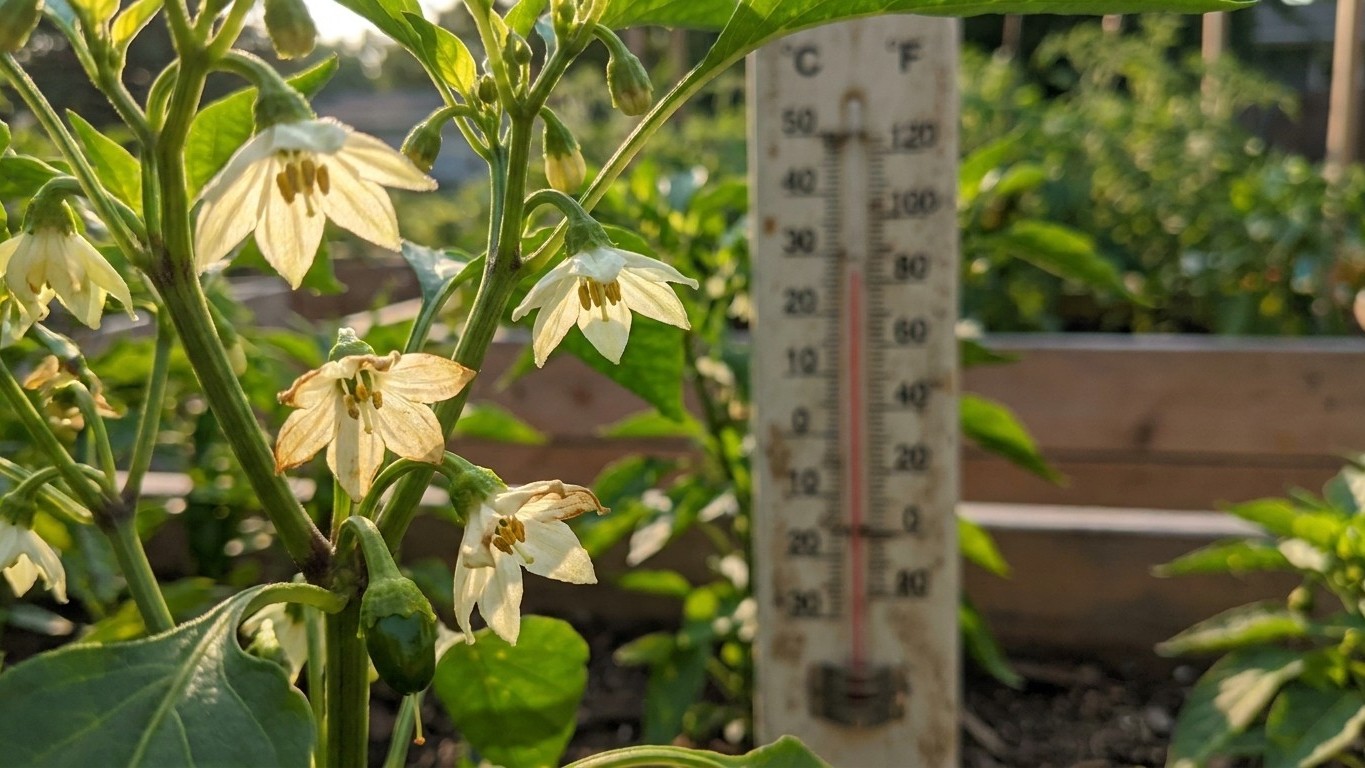

Peppers set fruit in the Twin Cities area only when nights stay above 55 F and days stay below 90 F, a window that Minnesota summers hit but also periodically blow past. The reference station logs 10.6 days a year at or above 90 F, and this site does not track summer night lows at all. That gap matters more than the heat count does, and it’s worth understanding before you ever start a seed.
The short answer

Start with the number that’s actually measured here: 10.6 days a year at or above 90 F, averaged over the 1991-2020 period at the Minneapolis reference station, according to NOAA NCEI Climate Normals. That’s not a wall of heat lasting all summer. It’s roughly ten scattered days, sometimes bunched into a single stretch in July, sometimes spread thin across June and August. For pepper plants, that distinction matters. A single 90-plus afternoon rarely does lasting damage. A run of three or four in a row, especially with humidity holding overnight temperatures up, is what stalls flowering and drops young fruit.
Utah State University Extension’s guidance on pepper fruit set is blunt about the mechanism: pollen becomes unviable and flowers abort when daytime highs climb above 90 F. For a deeper look at Why Peppers Fail to Set Fruit in Minnesota, it helps to know that ten and a half days a year isn’t a guarantee of failure, but it’s not nothing either. In a typical Twin Cities summer, expect at least one heat event long enough to notice a pause in fruit set, usually followed by a recovery once temperatures ease back into the 80s.
Then there’s the other end, and this is where a lot of gardeners get tripped up. The same USU Extension source is just as clear that fruit set fails when nights drop below 55 F, not just when days get too hot. This site carries the daytime heat count for Minnesota, but it does not carry summer overnight minimum temperatures for this or any territory. That’s a real gap, and it’s one you have to fill yourself, not by guessing.
Don’t estimate your nighttime lows from Minnesota’s latitude, and don’t use the coldest month of the year as a stand-in. Neither one tells you what your yard does on a July or August night, and both are common shortcuts that lead gardeners astray. Elevation, tree cover, distance from pavement and even how close you are to a lake all shift nighttime temperatures more than latitude does. A property inland from open water can run several degrees cooler overnight than one closer to the metro core, even at the same latitude.
The practical move is to put an outdoor min-max thermometer near your pepper bed for a few weeks in midsummer and read it in the morning. If you’re consistently seeing nights in the upper 50s or warmer, you’re in the zone where fruit set holds. That same nighttime data should also guide your When to Start Pepper Seed in Minnesota decisions, since starting too early or too late can leave plants flowering right when temperatures are working against them. Choosing from the Pepper Varieties That Ripen in a Minnesota Season can also help stack the odds in your favor before the weather does its part. If you’re dipping into the low-to-mid 50s or below on a regular basis, that’s a real limiting factor, and it’s one no seed catalog or planting calendar can predict for your specific yard.
When to start seed here
Working backward from transplant date is the most reliable way to time pepper seed-starting in this state, and the math is simple enough to redo for your own county.
- Find your last spring frost window. For the Twin Cities area, NOAA NCEI’s 1991-2020 climate normals put the 32 F freeze probability window at April 17 to April 30. That’s the mild south of the state. Northern Minnesota runs two to three weeks tighter at both ends of the season, so a gardener near Duluth or International Falls should expect a later safe transplant date and an earlier fall cutoff, not the same calendar the Twin Cities use.
- Add the soil temperature requirement. Frost passing isn’t the only threshold. USU Extension specifies that peppers should go into the ground once soil temperature reaches 60 F, not just once air frost risk has passed. Cold soil under 60 F stalls root growth even if the air feels warm enough, so a soil thermometer pushed a few inches into the bed on a sunny morning is worth more than a glance at the calendar.
- Combine the two into a transplant date. In the Twin Cities, that typically means waiting until early-to-mid May at the earliest, since soil usually needs a few extra warm days after the last frost date to climb to 60 F. If you garden farther north, push that transplant window later to match your local frost pattern.
- Count back 8 to 10 weeks for seed-starting indoors. USU Extension’s figure for pepper transplants is 8 to 10 weeks indoors before transplant. If your target transplant date is early May, that puts your indoor seed-starting date in late February to early March. If your county’s frost-free window runs later, shift the whole calendar back by the same number of weeks.
- Separate flowering time from sowing time. Once transplanted, peppers still need time to flower and then set fruit, and that clock only starts at flowering, not at the seed tray. Don’t fold that stretch into your seed-starting math. It happens after transplant, and it’s a separate wait layered on top of the seed-to-transplant timeline.
Redo this arithmetic with your own county’s frost dates rather than borrowing the Twin Cities figures wholesale. A gardener in a river valley or a low-lying frost pocket may need to push both ends of this calendar later than the regional average suggests.
What goes wrong here
- Blossom drop during a heat spell. When daytime highs push above 90 F, even for a day or two, flowers can abort before they ever set fruit. This tracks directly with the state’s 10.6-day average of 90-plus days a year. The remedy is shade cloth over the bed during the hottest afternoons of a heat spike, plus consistent watering so the plant isn’t fighting drought stress on top of heat stress. Once temperatures ease, most plants resume flowering within a couple of weeks.
- Blossom drop during a cool night. The flip side, and just as real: nights below 55 F can cause the same flower abortion as excess heat. Since this site doesn’t track summer night minimums, the fix starts with monitoring your own yard with a simple outdoor thermometer. If a cool snap is forecast, a floating row cover pulled over the bed in the evening can hold in a few extra degrees of warmth overnight.
- Sunscald on exposed fruit. Minnesota’s summer sun is plenty strong enough to scald pepper fruit that’s left uncovered by foliage, especially after a hard pruning or in a plant that’s lost leaves to wind or disease. The pale, papery patch that results isn’t a disease, it’s sun damage. The fix is keeping foliage full through the fruiting period and avoiding aggressive pruning during the hottest stretch of summer, so leaves stay in place to shade developing fruit.
- Blossom-end rot. The dark, sunken patch on the bottom of a pepper is a calcium delivery problem, usually triggered by inconsistent watering rather than a soil calcium shortage. Uneven moisture, a dry week followed by a heavy soak, interrupts the plant’s ability to move calcium into developing fruit. Even, regular watering and a layer of mulch to buffer soil moisture swings solves most cases without needing a soil amendment at all.
Checking this against your own county
Everything above comes from statewide reference data and university-published pepper physiology, not from a reading taken in your specific garden. Soil warms at different rates depending on drainage and sun exposure, frost pockets form in low spots that a regional frost date doesn’t capture, and microclimates near buildings or water can shift both your last frost and your summer night lows in either direction.
For county-level planting guidance, current seasonal outlooks, and help identifying pepper problems that don’t match the pattern here, contact University of Minnesota Extension. They can speak to conditions in your specific part of the state in a way that a statewide average never fully will.
Common questions
Can I grow peppers successfully in northern Minnesota with this same timeline?
Not on the same calendar. The frost dates and soil-warming pattern described here reflect the Twin Cities, described as the mild south of the state. Northern Minnesota runs two to three weeks tighter at both the spring and fall ends, so seed-starting and transplant dates both need to shift later, and the safe fall harvest window closes sooner.
Does a hot summer always ruin my pepper harvest in Minnesota?
No. The state’s 90-plus-day count averages 10.6 days a year, meaning most of a Twin Cities summer sits in a range where fruit set can proceed normally. The risk is concentrated in short heat spikes, not the whole season, and plants typically resume setting fruit once temperatures drop back below 90 F.
How do I know if my yard’s nights are too cool for peppers?
Place an outdoor min-max thermometer near the bed and check it each morning for a few weeks in midsummer. If overnight lows are regularly falling below 55 F, that’s the threshold Utah State University Extension identifies as a fruit-set failure point, and it’s specific to your yard, not something you can infer from regional data.
Is blossom-end rot a sign I need to add calcium to my soil?
Usually not. It’s most often caused by inconsistent watering interrupting calcium movement within the plant, rather than an actual calcium shortage in the soil. Even, regular watering and mulch to steady soil moisture resolve most cases without any soil amendment.