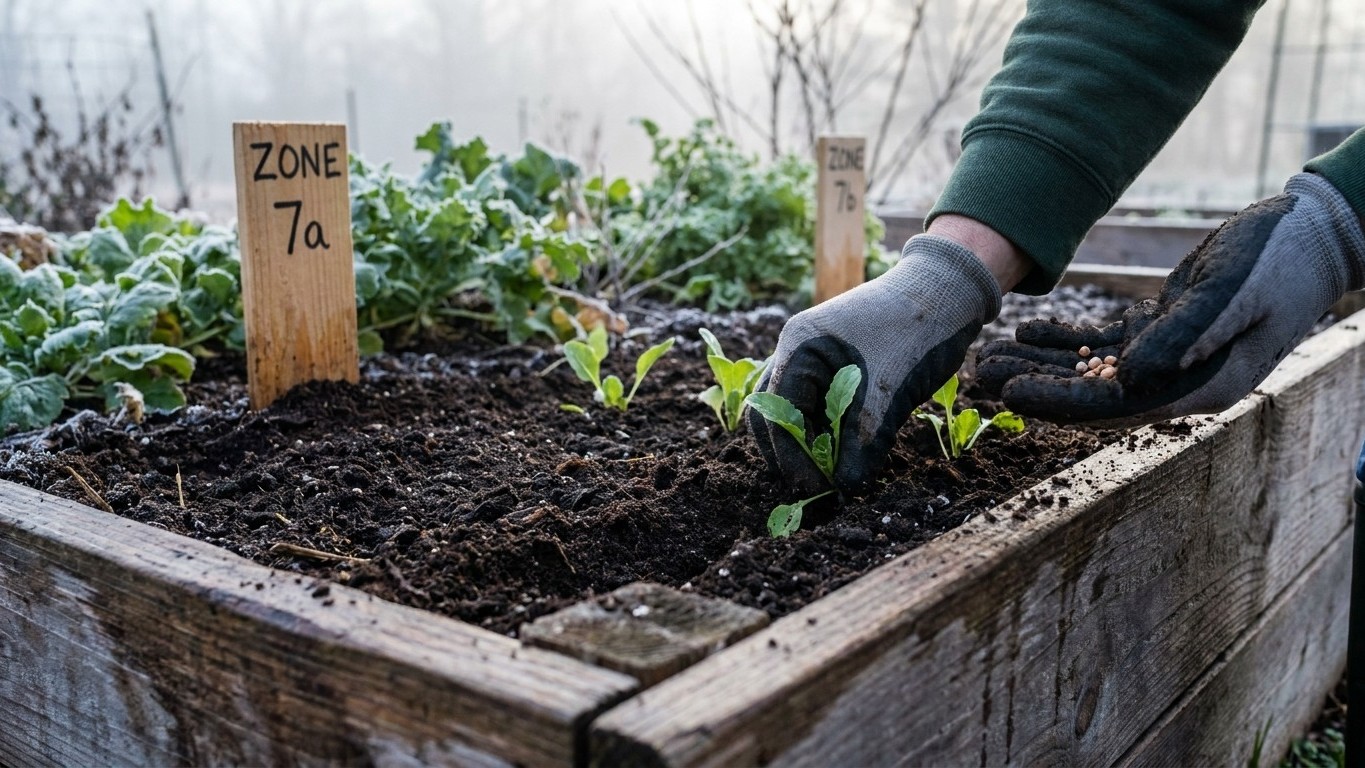

March in Arkansas splits the season in two. Cold-hardy crops go into the ground now, tender ones wait in trays. Peas, spinach, lettuce, radishes, carrots, beets, onion sets and seed potatoes can go outside through the month, while tomatoes, peppers and beans stay indoors until frost risk clears. That risk is real: the state’s 32-degree frost window runs from March 12 to March 28. Start warm-season seedlings indoors now, and hold tender transplants until after that window closes.
What goes in the ground in March

The calendar turning to March means nothing to a tomato plant. What matters is soil temperature and the frost window, and in Arkansas that window is still wide open. NOAA’s 1991-2020 climate normals put the last 32-degree freeze, at the station used for the central part of the state, somewhere between March 12 and March 28. That’s a probability band, not a promise: frost can still show up after the window closes, and it can also ease off before March 12 in a mild year. Treat the whole month as frost territory.
That doesn’t mean the garden sits empty. Arkansas’ hardiness zones run from 6b in the higher country to 8a along the southern border (USDA Plant Hardiness Zone Map), and the state’s mild winters mean soil is workable well before the last frost clears. Crops that shrug off a light freeze are the ones to plant now: peas, spinach, lettuce, radishes, turnips, mustard greens, kale and collards can all go into the ground as direct-sown seed through the month. Onion sets and onion transplants belong in that same window, and carrots and beets tolerate the cool soil just fine once it’s dry enough to rake into a bed.
Seed potatoes are the other March staple in Arkansas gardens. Cut and cured pieces go into trenches through the month, and because the eyes take a couple of weeks to push through, the plants are usually still underground when the frost risk peaks. If shoots do emerge before the window closes, hilling soil over them protects the new growth through another cold snap or two.
What stays out of the ground: tomatoes, peppers, eggplant, corn, beans, squash and anything else that dies at 32 degrees. Warm soil is what these crops need, not warm air, and a 70-degree afternoon in mid-March doesn’t move soil temperature nearly as fast as it moves the thermometer on the porch. Planting into cold ground doesn’t just risk frost death, it stalls the roots even on the days that don’t freeze, and a stalled tomato transplant rarely catches up to one planted three weeks later into warm soil.
What to start under cover
Work backward from the frost window instead of forward from a date on the seed packet. Tomatoes, peppers and eggplant need roughly six to eight weeks indoors before they’re ready for the garden, and they can’t go outside until the 32-degree risk has passed, which in Arkansas runs through March 28 in an average year. Counting back from early-to-mid April, seed started indoors in the first half of March lands those transplants at the right size, not leggy, not rootbound, right around the point when the soil has had a few extra warm weeks to catch up.
Broccoli, cabbage and other cool-season transplants work on a shorter clock, four to six weeks from seed to transplant size, and since they tolerate frost themselves, they can go into a cold frame or a sunny window now for setting out later this same month or into April. Lettuce and herbs benefit from short succession batches started a week or two apart, which spreads the harvest out instead of dumping it all at once. Basil is the exception worth naming here: it hates cold and should wait for a later, warmer start regardless of what else is going in.
The two ways this goes wrong both cost a season. Start too early and seedlings outgrow their trays before the ground or the air is ready, turning into pale, leggy stems that transplant poorly and produce late. Start too late, especially with peppers and eggplant, which are slower than tomatoes to size up, and there isn’t enough season left before the first fall frost returns in November to bring a full harvest home.
What is ready to pick
March is early, but Arkansas gardens rarely sit completely empty even now. Kale, collards and spinach that overwintered under row cover or a cold frame are usually still producing, and a light frost during the month actually sweetens the leaves rather than ruining them. Leeks planted the previous fall can be dug as needed, and parsley that made it through winter is often the first fresh green worth cutting.
In the milder parts of the state, zone 7b and 8a along the southern tier, established asparagus crowns can begin sending up their first spears in the back half of the month. Newer plantings, less than three years in the ground, should be left alone regardless of what’s showing, since cutting spears too early weakens the crown for years afterward.
What’s stored is worth a check now too. Winter squash, potatoes and onions held over from the previous fall are hitting the point where a few will start to turn no matter how carefully they were cured. Go through the bins and look for a soft spot, a sprouting eye, or a papery onion skin that’s gone damp, and pull those out before they take the rest of the batch with them. Sprouted potatoes with firm flesh can still be eaten once the sprouts are cut away, but anything soft or moldy goes to the compost pile, not back in storage.
The jobs that matter this month
Dormant pruning of fruit trees and bramble canes has a deadline, and March is close to it. Apple, pear and peach trees should be pruned before the buds swell, since cuts made after growth starts waste stored energy the tree needed for its first flush. The same goes for blackberries and raspberries: cut out the canes that fruited last season, thin the rest, and get it done before new growth makes the job messier and more damaging to the plant.
Soil work pays off now in a way it won’t in June. A soil test, through a home kit or the state extension lab, tells you whether lime or sulfur needs time to adjust pH before the growing season gets going, and both work slowly enough that March amendments are still doing their job by summer. Turning the compost pile speeds up decomposition right as the pile is waking up from winter’s slow crawl, and working finished compost into beds now gives it weeks to integrate before seeds go in.
Seed orders are a race against other gardeners more than against the weather. Popular varieties of tomatoes, peppers and heirloom vegetables sell out from seed companies well before planting season peaks, and a late order often arrives too late for anything but the most common types.
Set stakes and trellises for peas and other climbers while the plants are still seedlings, not after they’ve flopped over each other in a tangle. It’s a five-minute job now and a frustrating one done later around plants that are already sprawling. Round out the month by cleaning and sharpening pruners and hoes, checking fence lines and raised bed frames for winter damage, and giving stored crops one more look for anything that’s started to turn.
What not to do in March
The most common mistake is planting by air temperature instead of soil temperature. A run of 75-degree afternoons in mid-March feels like spring, and it tempts gardeners into setting out tomato and pepper transplants weeks before the frost window has closed. The plants that survive the warm spell often get hit by the next cold night, and the ones that dodge frost sit stalled in cold soil, gaining nothing over a transplant put in three weeks later.
A related error: pulling mulch and row covers off garlic beds, strawberries or perennial herbs the moment a warm stretch arrives. That protection exists for the cold nights still ahead, not just the ones already passed, and plants are often more vulnerable right after being uncovered and pushed into new growth than they were sitting dormant underneath.
Nitrogen timing trips people up on fruit trees and brambles. Feeding a heavy dose of nitrogen before the last frost has passed pushes soft, leafy growth that a late freeze can burn back in a single night, costing the tree the energy it would have otherwise put into fruit set. Fruit trees do better with nitrogen held until growth is already underway and frost risk has eased.
Working wet clay soil, common across much of Arkansas, is worth avoiding too. Tilling or even walking heavily on a bed that hasn’t dried out compacts it into clumps that take a season to break back down, undoing months of careful soil-building for the sake of an early start.
Checking this against your own county
A statewide frost window is a starting point, not an instruction for a specific yard. Elevation in the Ozarks and Ouachitas pushes the last frost later than the March 12-28 average, sometimes by two or three weeks, while lower, warmer Delta counties along the southern and eastern edges often clear frost risk closer to the early end of that window. Arkansas’ hardiness zones span from 6b to 8a for a reason: growing conditions in the northwest hill country and the southern lowlands aren’t the same garden.
The University of Arkansas Division of Agriculture Cooperative Extension Service tracks county-level frost data and keeps a planting calendar tuned to local conditions, and it’s worth checking before committing seed to the ground based on a single statewide date.
Common questions
Can I plant tomatoes in Arkansas in March?
Not outdoors, in most of the state. The 32-degree frost window runs March 12 to March 28, and tomato transplants set out before that closes usually stall or die in a late freeze. Start seed indoors during March instead, and transplant once the frost window has passed and the soil has warmed.
What vegetables can I plant in March in Arkansas?
Peas, spinach, lettuce, radishes, turnips, kale, collards, mustard greens, carrots, beets, onion sets and transplants, and seed potatoes all tolerate direct sowing or planting into March soil and frost.
When is the last frost date in Arkansas?
Per NOAA NCEI 1991-2020 climate normals for station USW00013963, the 32-degree last spring frost falls between March 12 and March 28 in an average year, based on the 30-70% freeze probability band. A lighter 36-degree frost threshold runs later: NWS Little Rock lists April 3 for that measure, which matters more for genuinely tender plants.
Is it too early to plant potatoes in Arkansas in March?
No, March is the classic window for seed potatoes in Arkansas. The plants take a couple weeks to emerge, so they typically break ground close to when frost risk is easing, and hilling soil over any shoots that appear early protects them from a late cold snap.