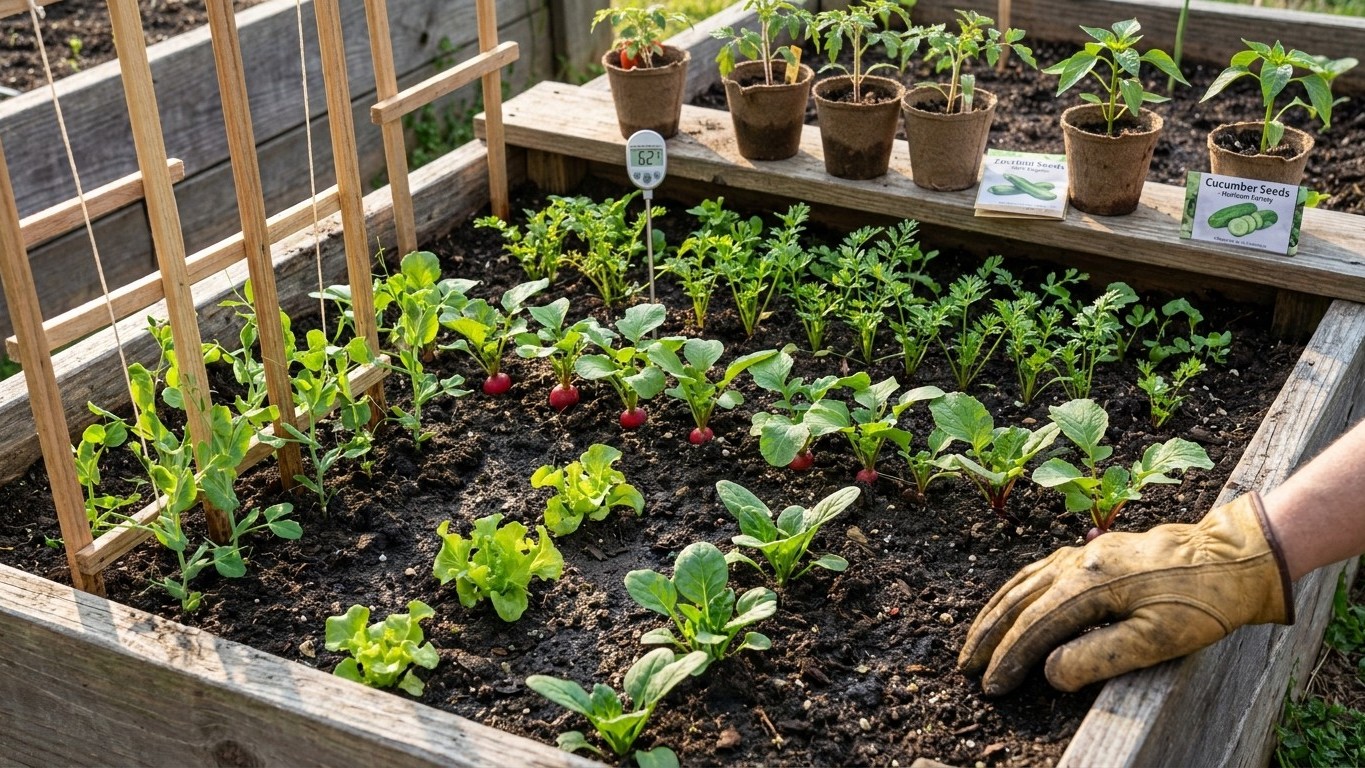

By April, Arkansas gardeners can plant with real confidence. The statewide 32°F frost window closes between March 12 and March 28, and NWS Little Rock places the last light frost (36°F) at April 3. That clears the way for a full month of direct-sown cool-season crops, with warm-season transplants following once soil catches up to the calendar, timing that shifts by weeks between the Delta and the Ozark highlands.
What goes in the ground in April

The frost date tells you when the air is safe. It does not tell you when the soil is ready, and that gap trips up more gardens than any late cold snap. Seeds germinate on soil temperature, not on the forecast, so a 70°F afternoon means nothing if the top few inches of dirt are still cold from a wet March.
Cool-season crops do not wait on that soil-warming lag. Peas, lettuce, spinach, radishes, beets, carrots, kale, chard, and onion sets can all go into the ground as direct seed through the entire month, and they tolerate the occasional cool night without complaint. Garlic planted in fall is already up and needs nothing but weeding at this point.
Warm-season crops are the ones that reward patience. Beans, corn, squash, and cucumbers can be direct-sown once soil has warmed consistently, which in practice means the second half of April for the Delta and southern lowlands, and closer to late April or early May for the Ozark highlands. Tomatoes, peppers, and eggplant go in as transplants rather than seed, and only after the 36°F light-frost risk has cleared locally, which the NWS Little Rock station places at April 3 for the central part of the state.
| Region | Typical frost clearance | Warm-season transplant window |
|---|---|---|
| Southern Delta / lowlands (zone 8a) | Earliest in the state | Early to mid-April |
| Central Arkansas (near Little Rock) | 36°F clears by April 3 | Mid-April |
| Ozark highlands / north (zone 6b) | Runs weeks behind the Delta | Late April into early May |
The gamble crops are the ones planted on a warm afternoon without checking either the calendar or the dirt. If a transplant is going in before the local frost risk has actually cleared, the safer move is a cold frame, a low tunnel, or simply waiting a week.
What to start under cover
Counting backward from the frost window matters more here than following a fixed date. Tomatoes and peppers typically need six to eight weeks of indoor growth before they are ready for the garden, which means the ones destined for an April transplant should have been started back in February. If that window was missed, buying started transplants from a local nursery is a better bet than sowing seed indoors now and rushing a stunted plant into the ground.
What still makes sense to start under cover in April are the fast growers: cucumbers, summer squash, melons, and cantaloupe only need three to four weeks indoors before transplanting, so seed started early in the month is ready to move outside by mid-May. A second batch of lettuce or brassica seedlings started under cover now also sets up a June planting once the spring crop finishes.
The two ways this goes wrong are opposite problems with the same result: a disappointing garden. Starting too early, back when there was no clear transplant date in mind, produces leggy, rootbound seedlings that sulk for weeks after going into the ground. Starting too late, especially with long-season crops like peppers, means the plant never catches up before summer heat or fall frost cuts the season short. The fix for both is the same arithmetic: pick the local transplant date first, then count backward by the crop’s actual indoor requirement, not by habit.
What is ready to pick
April is when the garden starts paying rent again. Asparagus beds that are two or more years established begin sending up spears, and the spears are ready once they reach roughly 6 to 8 inches and before the tips start to loosen or feather out, a sign they are turning woody at the base.
Spinach, lettuce, and other greens sown in late winter or early spring are usually ready for a first cutting by now, and the harvest rule is simple: take outer leaves and let the center keep producing, rather than pulling the whole plant, which stretches the harvest window before warm weather pushes these crops toward bolting. Radishes sown three to four weeks earlier show their shoulders pushing up out of the soil line when they are ready, usually well before the greens on top look impressive.
Green onions and chives planted the previous fall or very early spring are typically pickable by April as well, and cilantro sown in March gives a short window of leaf harvest before it, too, bolts once the days lengthen and warm up. None of this is a large harvest yet, but it is the first real return on a garden that has mostly been soil and seed up to this point.
The jobs that matter this month
April rewards the gardener who works ahead of the plants rather than behind them. Soil preparation tops the list: working compost or aged manure into beds while the ground is still workable and before the season’s plantings go in gives roots a head start they cannot get later. Skipping this step now means feeding plants after the fact, which never closes the gap as well.
Mulching comes next, and the timing matters. Laid down too early, mulch keeps soil cold longer than it should stay; laid down once soil has started to warm, it holds that warmth in and conserves moisture as April afternoons get longer and drier. Staking and caging belong on this same early list. Tomato cages and pea trellises are far easier to set before the plant has anything to catch on than after it has sprawled across the bed.
Watering rhythm shifts this month too. Seedlings and new transplants need frequent, shallow watering to keep the top inch of soil from drying out, while established plants benefit more from deeper, less frequent watering that pushes roots downward rather than keeping them shallow and dependent.
Succession sowing pays off for anyone who wants more than one cutting of lettuce, radishes, or beans. Dropping in a new short row every two to three weeks, rather than one big planting, spreads the harvest out instead of dumping it all at once. Pest scouting rounds out the list: aphids cluster on new growth early in warm weather, flea beetles start showing up on brassica leaves, and cutworms can take down a young transplant overnight. Checking plants every few days catches all three before they do real damage, and hardening off any transplants over seven to ten days before they go in the ground prevents the sunscald and wilting that undoes weeks of indoor growing in a single afternoon.
What not to do in April
The most common mistake is transplanting warm-season crops into soil that has not actually warmed, just because the air felt right for a few days. Tomato and pepper roots stall or rot in cold, wet soil even when daytime highs look perfect, and a plant that sits stalled for two weeks rarely catches up to one planted a week later into warmer ground.
A close second is pulling covers or mulch off too early after a mild stretch. The statewide frost window runs from March 12 to March 28 on average, which means some springs bring a cold snap well after gardeners have already assumed the danger has passed. Keeping row covers handy through the first half of April, rather than storing them the moment a warm week arrives, costs nothing and protects against exactly this kind of setback.
Heavy nitrogen fertilizing at the wrong point is the third classic error. Feeding transplants a strong dose of nitrogen right at planting pushes leafy growth before the root system has established, leaving a top-heavy plant with a weak base. The better approach is a light feed at transplant time, with the bulk of fertilizing held back as a side-dress once the plant is visibly growing and rooted in. Skipping the hardening-off period for indoor-started seedlings belongs on this list too: a seedling moved straight from a windowsill to full sun often shows sunscald or collapses within a day, undoing weeks of careful growing in an afternoon.
Checking this against your own county
A statewide month is a starting point, not an instruction. The USDA hardiness zone range for Arkansas runs from 6b to 8a, and that spread alone means gardeners in the Ozark highlands are typically working several weeks behind those in the southern Delta and lowlands, even though both are following the same calendar page. Elevation, local cold-air pooling, and simple north-south distance all move these windows in ways a single statewide date cannot capture.
The most reliable next step is checking conditions against local data rather than a generic date. The University of Arkansas System Division of Agriculture Cooperative Extension Service publishes county-level guidance and planting calendars built for exactly this kind of variation.
Common questions
Is it safe to plant tomatoes in Arkansas in April?
In most of the state, yes, once the local light-frost risk has cleared. NWS Little Rock places that date at April 3 for the central region, but northern Arkansas and the Ozark highlands should wait longer into the month, since they sit in the cooler end of the state’s 6b to 8a hardiness range.
What vegetables can I direct sow in Arkansas in April?
Cool-season crops are the safe direct-sow options all month: peas, lettuce, spinach, radishes, beets, carrots, kale, and chard. Warm-season crops like beans, corn, squash, and cucumbers can be direct-sown once soil has warmed, typically the second half of the month in southern Arkansas and later in the north.
When is the last frost date in Arkansas?
The statewide 32°F frost window, based on NOAA NCEI 1991-2020 climate normals, runs from March 12 to March 28. For tender plants sensitive to lighter frost, NWS Little Rock uses a 36°F threshold and gives April 3 as the relevant date for that station.
What USDA hardiness zone is Arkansas?
Arkansas spans USDA hardiness zones 6b through 8a, according to the USDA Plant Hardiness Zone Map built on 1991-2020 normals. That range reflects average annual extreme minimum temperature only, and it varies significantly between the northern highlands and the southern lowlands within the state.