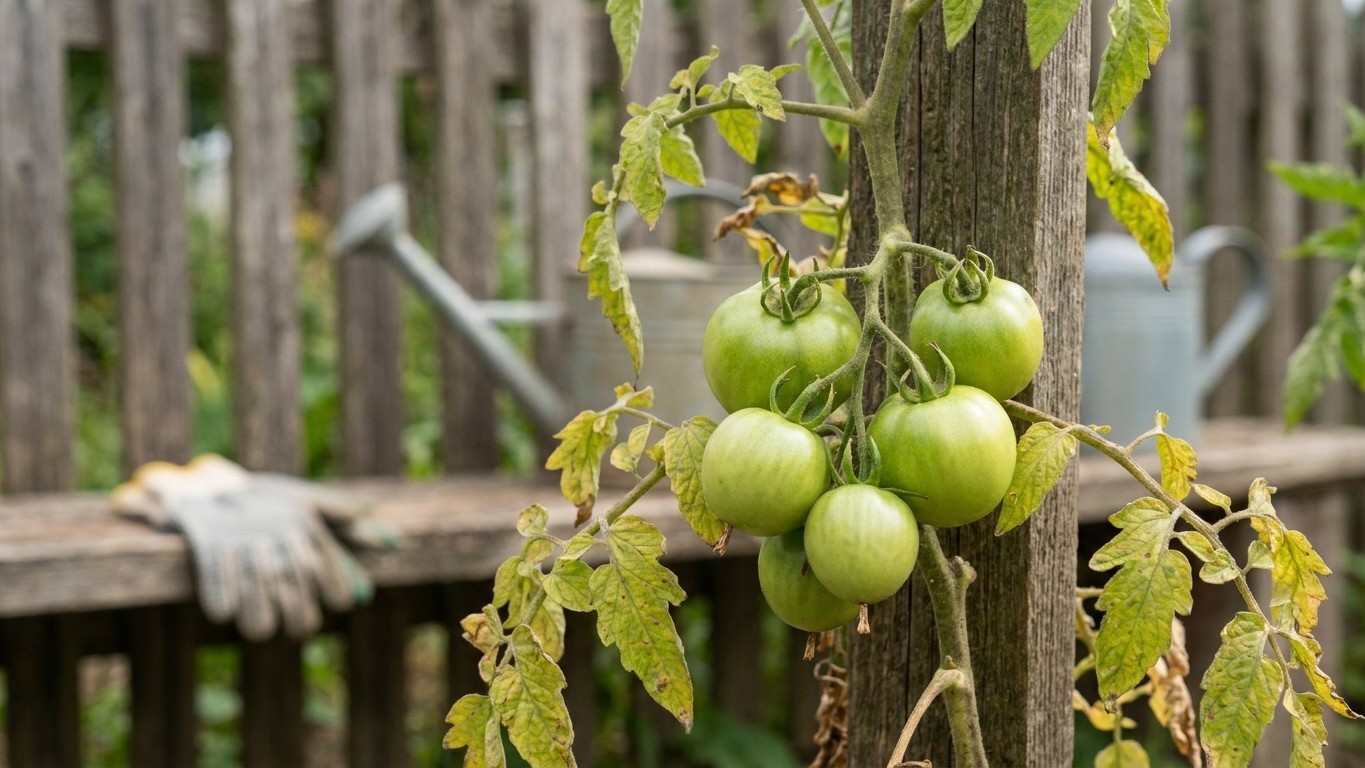

Tomatoes stop ripening on the vine because heat shuts down the enzymes that build red pigment, not because the fruit needs more time or the plant is sick. When daytime temperatures climb into the mid-80s Fahrenheit and stay there for stretches, and nights don’t cool off much either, ripening can stall for days or weeks even on a healthy plant. Pick fruit that has started to blush and finish it indoors out of direct sun rather than leaving it to bake.
What you are looking at

Heat-stalled tomatoes usually look one of two ways. Either the whole fruit stays hard and uniformly green well past the days-to-maturity on the tag, or it ripens unevenly: the blossom end colors up while the shoulders near the stem stay green, yellow, or take on a hard, pale patch. This second pattern, often called blotchy ripening or green shoulder, is the more common complaint in a hot summer because it looks like something is actively wrong rather than just slow.
What to check before you decide
- Is the fruit still firm and green all over, with no soft spots? That points to a simple heat stall.
- Is the shoulder near the stem green or yellow while the rest colors normally? That is blotchy ripening or green shoulder disorder.
- Is there a sunken, leathery, dark patch at the blossom end (opposite the stem)? That is blossom end rot, a separate problem caused by uneven water and calcium movement, not heat alone.
- Is the skin near the top scalded, papery, and bleached white or tan? That is sunscald from direct sun exposure, often after aggressive pruning.
None of these should be confused with a fruit that is simply immature. A tomato picked too early, before it has reached full size for its variety, will never ripen properly even indoors because it hasn’t finished developing internally. Heat-stalled fruit, by contrast, is full size and has done its growing. It is just waiting on pigment production that heat has paused. If leaves are also curling or discoloring, that’s a separate issue worth checking against Curling Tomato Leaves: Telling Stress Apart From Herbicide Damage and Virus rather than assuming it’s connected to the ripening problem.
What actually causes it
Tomatoes turn red through two pigment processes running at once: chlorophyll (green) breaks down, and lycopene and beta-carotene (red and orange) build up. Both are enzyme-driven, and those enzymes have a temperature range where they work well. Once temperatures climb into the mid-80s Fahrenheit and higher, lycopene production slows sharply and essentially stops well above that. Chlorophyll can keep breaking down a little even in the heat, which is part of why you sometimes see a dull, washed-out yellow-green instead of a clean green. The fruit is not sick. It is biochemically paused, and it will resume coloring once temperatures drop back into a more moderate range.
The common myth is that green tomatoes in a heat wave need more water, more fertilizer, or more time. None of those fix a heat-paused enzyme. Overwatering or a nitrogen-heavy feed in this situation usually just pushes more leafy growth, which shades the fruit further and can delay things more, not less.
A few other causes produce similar-looking symptoms, and it’s worth telling them apart before you change anything. Potassium deficiency can cause blotchy, uneven ripening with hard yellow patches, usually alongside other signs like scorched leaf edges. Certain tomato viruses cause internal browning or a hard white core even when the outside looks red, which heat stress alone does not do. If only a handful of fruit on an otherwise fine plant are affected while everything else ripens normally, look harder at individual fruit exposure and recent pruning before blaming the weather across the board.
What to do now

Fruit that is already hard, green, and fully sized will not ripen faster by waiting on the vine during a heat wave. Pick it at the first sign of color change, sometimes called the breaker stage, a faint pink or yellow blush starting at the blossom end, and let it finish indoors on a counter out of direct sunlight at a moderate room temperature. This is not the old myth of ripening in a dark drawer. Tomatoes ripen fine in indirect light; what they need is to be away from the same heat that stalled them outdoors.
Fruit that already shows sunscald or a hard, dry, sunken patch is not going to recover and is best used young, cut around the damage, or composted if it’s gone soft and started to rot. That loss is real, but it is limited to the fruit already on the plant during the heat event. It does not mean the plant itself is failing.
Protect what is still coming
Focus effort on the trusses still flowering or just setting, since prolonged heat also affects pollination and fruit set, a separate problem covered in Tomato Plants Not Setting Fruit: Temperature, Pollination and Too Much Nitrogen. A temporary shade cloth over the hottest part of the afternoon, water kept consistent rather than let-it-dry-then-flood, and holding off on nitrogen-heavy feeding all reduce stress on the plant while you wait out the heat. None of this speeds up ripening on fruit already stalled, but it protects the next several weeks of production, which matters more for total yield than the truss you’ve already lost color on.
What does not work
A lot of the fixes gardeners reach for first are aimed at the wrong problem entirely. Crushed eggshells, foliar calcium sprays, and adding lime to soil that already has enough calcium are remedies for blossom end rot, a calcium-transport problem, not for heat-stalled ripening. Most garden soils already contain plenty of calcium; the issue in blossom end rot is that the plant can’t move it to the fruit fast enough during uneven watering, not that there isn’t enough in the ground. Applying any of these to a green, heat-stalled tomato does nothing, because there was never a calcium deficiency causing that fruit to stay green in the first place.
Stripping leaves to expose fruit to more direct sun is another common move, and it backfires. Exposed shoulders don’t ripen faster in direct sun; they scald, turning white, papery, and permanently damaged, on top of whatever ripening delay already existed. Wrapping green fruit in foil or newspaper while still on the vine, hoping to trap heat or ethylene, does not concentrate enough gas to make a difference outdoors. Commercial ripening gels and ethylene sachets sold for home use work reasonably well in an enclosed container indoors, but they do nothing applied to a fruit still attached to a hot, open-air plant.
Extra fertilizer, especially anything nitrogen-heavy, does not push a stalled fruit toward red. It’s more likely to encourage new leafy growth, which further shades the fruit and can make the problem worse rather than better.
Preventing it next time
The single change that matters most is picking earlier during heat waves rather than waiting for full vine-ripening, and finishing color indoors. This alone prevents most of the losses described above, because it takes the fruit out of the conditions causing the stall.
Afternoon shade cloth, in the 30 to 40 percent shade range, over the hottest few hours of the day reduces fruit surface temperature without meaningfully cutting the light the plant needs for photosynthesis. Consistent soil moisture, through mulch and a regular watering schedule rather than feast-or-famine, keeps the plant under less overall stress, which helps it recover pigment production as soon as temperatures allow.
Variety choice
Some cultivars are bred specifically to set and ripen fruit better under heat, and it’s worth naming a few rather than just saying “choose a heat-tolerant variety.” ‘Heatmaster’ (about 75 days to maturity), ‘Solar Fire’ (about 70 days), and ‘Phoenix’ (about 75 days) were all bred for continued fruit set and ripening in high heat, and catalogue days-to-maturity figures like these are counted from transplant and typically vary by a week or two depending on the season. Cross that catalogue number against your own local frost window, available from your state’s cooperative extension service or NOAA’s climate normals for your area, to see whether a shorter-season variety also helps you avoid ripening into the hottest stretch of summer altogether.
Avoid heavy pruning in the weeks before and during a hot spell, since a fuller canopy shades fruit naturally and reduces sunscald risk along with the ripening delay. If yellowing leaves are also showing up on a plant otherwise dealing with heat stress, it’s worth checking the pattern against Yellow Leaves on Tomato Plants: What the Pattern Tells You before assuming the two problems share one cause.
Common questions
Will my tomatoes ripen once it cools down?
Yes, in most cases. Fruit that is heat-stalled but not sunscalded or rotting will typically resume coloring once daytime and nighttime temperatures drop back into a moderate range. It isn’t a race against a deadline the way an immature fruit is; the pigment-building enzymes just need cooler conditions to switch back on.
Can I speed things up by putting green tomatoes in a paper bag?
A closed paper bag with the fruit, sometimes with a banana or apple added, does help by trapping the small amount of ethylene gas the fruit produces, which is a legitimate indoor ripening trick. It works because the bag is enclosed at room temperature, not because of anything about the bag itself, so doing the equivalent outdoors on the vine doesn’t have the same effect.
Why are some tomatoes on the same plant ripening fine while others aren’t?
Exposure is usually the difference. Fruit that’s more shaded by leaves stays cooler and often ripens closer to normal, while fruit exposed to direct afternoon sun on the same plant can hit much higher surface temperatures and stall or scald. Position on the plant, not anything wrong with the plant as a whole, usually explains the split.
Should I pick every green tomato before a heat wave hits?
No, only pick fruit that has already started to show color, the breaker stage. Fully green, immature fruit picked too early won’t ripen well even indoors, so it’s better to leave those on the plant and protect them with shade rather than harvesting everything preemptively.