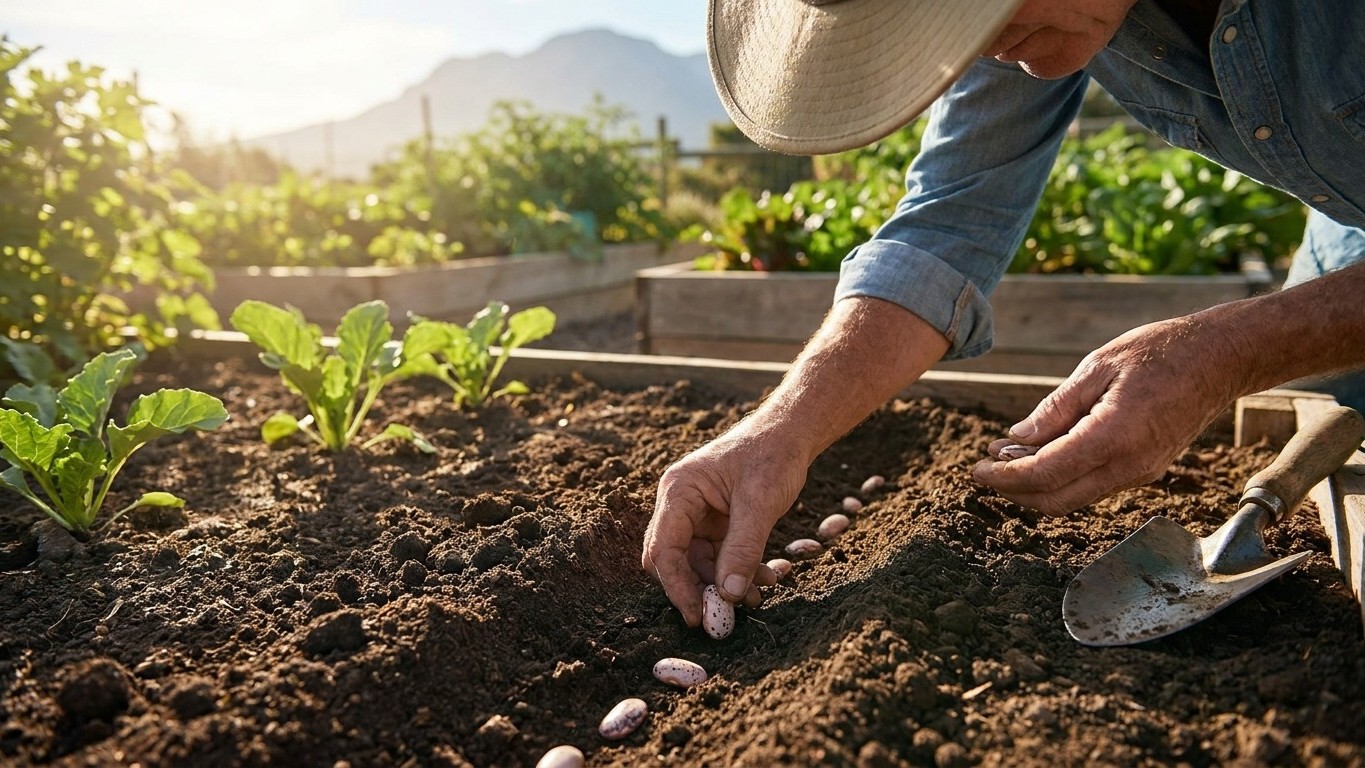

By July, British Columbia’s coastal and southern valleys are running about three and a half to four months clear of the average last spring frost, so the direct answer is simple: this is the month for beans, squash, cucumbers, corn, and a fresh round of lettuce, carrots and beets, plus the first sowings of fall brassicas timed to beat the return of frost in the fall.
What goes in the ground in July

The frost math is what makes July generous rather than risky. Environment and Climate Change Canada’s 1981-2010 normals put the average last spring frost at Vancouver Int’l A around March 18 and the average first fall frost around November 10. That is a mean date, not a guarantee: in roughly half of all years frost arrives later than that, so treat both dates as the middle of a window, not a line you can plant right up to. By July, though, the season is well past the spring end of that window and still has a long stretch left before the fall one closes, which is exactly why this is the month to be direct-sowing heat lovers and starting the second half of the garden year at the same time.
Bush and pole beans, summer squash, zucchini, cucumbers and sweet corn can all go straight into warm soil now, along with another round of carrots, beets, radishes and heat-tolerant lettuce for a harvest in late summer. Coastal and Lower Mainland gardens, sitting in Canadian hardiness zone 9a around Vancouver, generally have enough season left to also direct-sow quick brassicas like turnips and fast Asian greens for fall eating. Interior valleys such as the Okanagan run hotter and drier through the day but see nights cool off faster once September arrives, so the same crops need to go in earlier in the month there rather than later.
Northern BC and higher-elevation districts are a different story. Their growing window is shorter on both ends, and a gardener there should treat July as the last realistic month for anything that needs more than 60 days to mature outdoors. Garlic planting, by contrast, is a fall job everywhere in the province and does not belong in a July bed.
What to start under cover
Counting backward from the November 10 average fall frost is the safest way to decide what still has time to mature, and July is the month that math starts to matter. A cabbage or cauliflower transplant needs roughly four to six weeks in a tray or cell before it goes out, then another eight to ten weeks in the ground to head up. Sown from seed under cover in the first half of July, that timeline lands transplanting in mid-to-late August and harvest before the frost window opens in November on the coast, tighter in the interior and the north.
Broccoli, cauliflower, cabbage and leeks for a fall harvest are the classic July starts, sown into trays or a cold frame rather than open ground so they get consistent moisture through the warmest stretch of summer. Lettuce and other quick greens can also be started under light shade cloth if the tray sits somewhere that bakes in the afternoon sun.
The two ways this goes wrong are worth naming plainly. Start too early in July and the transplants sit too long waiting for cooler weather to set them out, turning rootbound and stunted in their cells. Start too late, especially in the interior or in northern BC, and the plants are still small when the days shorten and the cold arrives, leaving heads that never fill out. Splitting a sowing across the first and third week of July, rather than doing it all at once, hedges against both mistakes.
What is ready to pick
July is when the garden starts paying back the spring’s work. Garlic planted the previous fall usually comes ready this month across most of BC, and the tell is the lower leaves browning while four or five green ones remain up top; pull a test bulb and check the wrapper before lifting the whole bed. Early potatoes are often ready to dig once their flowers open, and a light scratch at the soil edge will show whether the tubers are a usable size yet.
Peas are usually finishing up as the heat builds, so pick them clean and pull the vines to free the space for a July-sown crop. Zucchini and summer squash move fast in warm weather, going from perfect to oversized in a couple of days, so a daily check under the leaves saves a lot of woody, seedy fruit. Bush beans, cucumbers and the first raspberries or a second flush of strawberries are also typically coming in through the month on the coast, a little later in cooler interior and northern gardens.
Tomatoes and peppers are usually still filling out rather than ripening in most of BC through July, with real color showing later in summer. Herbs like basil, cilantro gone to seed, and dill are worth cutting hard now, both for the kitchen and to stop them bolting further in the heat.
The jobs that matter this month
Watering rhythm is the single biggest lever in a BC July, because the province’s dry summer pattern, especially away from the immediate coast, means rain can’t be counted on to do the work. Deep, infrequent watering that reaches down six inches or more builds roots that can ride out a dry stretch; shallow daily sprinkling does the opposite and leaves plants dependent on it. A two-to-three-inch mulch layer over beds holds that moisture in and keeps soil temperature more even for anything with shallow roots, like beans and lettuce.
Staking and caging matter now because tomatoes, peas and vining squash put on their fastest growth of the year in July heat, and a plant that sprawls for even a week is much harder to lift and support afterward without breaking stems. The same logic applies to succession sowing: a new short row of beans, carrots or lettuce every two to three weeks through July keeps the harvest coming into September instead of arriving all at once and then stopping.
Pest scouting earns its keep this month too. Aphid colonies and cabbage worms build up fast in warm weather, and catching them on the underside of a few leaves is a five-minute job compared to the hour it takes once a colony is established. Checking coastal tomatoes and potatoes for the first spots of blight after any humid, still spell is worth doing on a weekly walk through the garden, since BC’s damp coastal air can push fungal disease faster than drier interior gardens ever see.
What not to do in July
The most common mistake is treating July’s warm air as license to plant things that actually need more remaining season than they have, particularly in the interior and the north where the fall frost window arrives sooner than on the coast. A corn or squash sown in the last days of July in a shorter-season district may simply run out of time before it can finish.
Overwatering shallowly is the second trap. A quick daily splash from a hose wets the surface and looks like care, but it trains roots to stay near the top of the bed where they dry out fastest in the next hot stretch. Watering less often but more deeply, and letting the mulch layer do the rest, produces sturdier plants.
Heavy nitrogen feeding is a mistake specifically at this point in the season for fruiting crops like tomatoes, squash and beans. Nitrogen pushes leafy growth at the expense of flowers and fruit, so a plant fed hard in July can end up lush and green with disappointing yield. A lower-nitrogen, higher-potassium feed suits fruiting crops better once they’re flowering. Leaving garlic in the ground past its point of readiness, waiting for bigger bulbs, is its own trap too: it risks the bulbs splitting or rotting in whatever damp spell comes through.
Checking this against your own county
A province-wide answer for July is a starting point, not an instruction, and British Columbia makes that gap wider than most places. The frost dates and hardiness zone used here come from the Vancouver Int’l A station and its reference city, and the coast, the Okanagan, the Kootenays and the north are different climates entirely, with elevation and distance from the ocean able to shift a planting window by several weeks in either direction.
| Region | General July pattern |
|---|---|
| Coastal / Lower Mainland | Mild, longer frost-free stretch, higher summer humidity |
| Okanagan / Southern Interior | Hot, dry days, cooler nights arrive sooner in fall |
| Northern BC / high elevation | Shorter season on both ends, July is late for long-season crops |
For local guidance tuned to a specific valley or coastline, the BC Ministry of Agriculture and Food’s extension resources are the place to check before trusting a province-wide date.
Common questions
Is it too late to plant tomatoes in BC in July?
Transplants set out in early July can still ripen fruit before the fall frost window on the coast, though it’s tight in the interior and risky in the north. Seed started from scratch this late generally will not have time to mature outdoors.
Can I still start a vegetable garden from scratch in July in BC?
Yes on the coast, where three to four months remain before the average fall frost. Fast crops like beans, salad greens, radishes and summer squash are the realistic choices rather than long-season crops like corn or winter squash.
When should I harvest garlic in British Columbia?
Most BC garlic comes ready in July, signaled by the lower leaves turning brown while four or five upper leaves stay green. Pulling a test bulb before lifting the whole row confirms the wrapper is intact and the cloves are separated.
Why does my garden dry out so fast in a BC July?
Much of the province, outside the immediate coast, sees a dry summer pattern with little reliable rain through July. Deep, infrequent watering and a two-to-three-inch mulch layer do far more than frequent shallow watering to keep roots supplied.