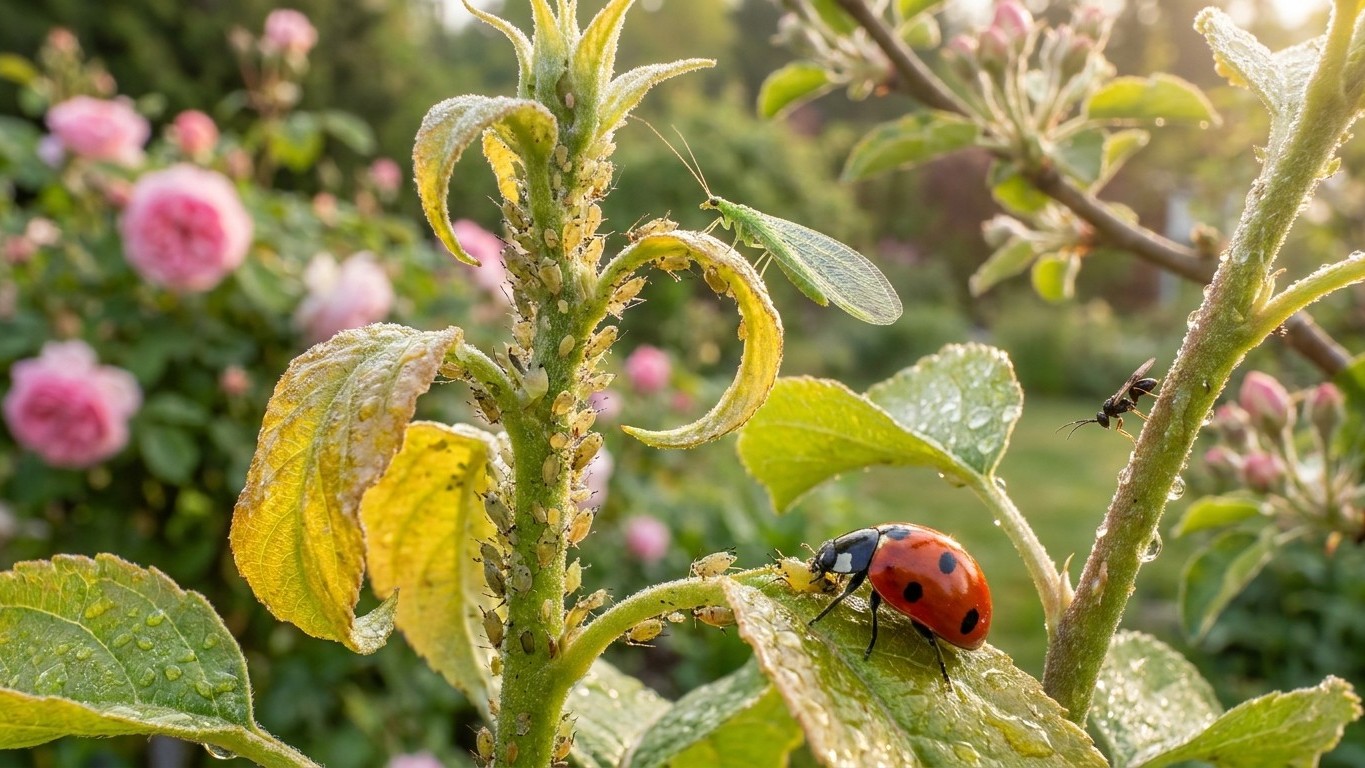

Aphids show up in British Columbia as early as late March along the coast and not until mid-May in the Interior, tracking closely with when temperatures hold steady above 50°F for a week or more. What stops them isn’t a single product but a combination of natural predators (ladybugs, lacewings, parasitic wasps), consistent monitoring, and knocking down early colonies before they explode into the sticky, curling-leaf mess most BC gardeners recognize by June.
When Aphids Appear Across BC’s Climate Zones

British Columbia isn’t one climate. It’s several, and aphid timing shifts with each one. On southern Vancouver Island and the Lower Mainland, where winters rarely dip below freezing for long, aphid eggs overwinter easily on rose canes, fruit trees, and perennial stems. The first hatch often happens in late March, sometimes earlier during a mild winter.
Move inland to the Okanagan or the Thompson-Nicola region, and the picture changes. Cold winter nights kill off more overwintering eggs, so populations tend to start later, usually late April into May, but they build fast once summer heat kicks in. Kelowna’s dry, hot July and August days actually slow some aphid species down, since many prefer cooler, humid conditions. That’s a small mercy for Okanagan orchardists already fighting other pests.
Northern BC, think Prince George or the Peace River region, runs on a compressed calendar. Frost can linger into May, and the growing season closes earlier in fall. Aphids there are a shorter-window problem, often peaking in June and tapering by late August as nights cool.
Why Rainfall and Humidity Matter More Than Heat
Aphids reproduce through parthenogenesis, meaning females can produce live young without mating, sometimes dozens per week under the right conditions. Warm, humid weather without heavy rain is their favorite setup. A soggy Vancouver spring can actually suppress early populations because heavy rain physically knocks aphids off plants. Compare that to a dry, mild April in the Fraser Valley, and colonies can triple in size within two weeks.
Species Common to British Columbia
Not every aphid in BC behaves the same way, and knowing which one you’re dealing with changes the response.
- Green peach aphid — widespread across coastal and Interior gardens, targets vegetables and stone fruit, and is a known vector for plant viruses in potato and pepper crops.
- Rose aphid — shows up every spring on rosebuds and new growth, particularly common in Victoria and Vancouver home gardens.
- Woolly apple aphid — leaves a white, cottony residue on apple bark and roots, a recurring headache in Okanagan orchards.
- Spruce and pine aphids — affect conifers across the province, sometimes mistaken for adelgids, which produce a similar waxy coating.
The BC Ministry of Agriculture and Food has tracked green peach aphid resistance to certain insecticide classes in Interior potato and vegetable operations, which is one reason commercial growers increasingly lean on rotation of control methods rather than repeated chemical spraying.
What Actually Stops Aphids in BC Conditions
Biological control does most of the heavy lifting in a well-managed BC yard or small farm. Ladybugs and their larvae are the most visible predators, but lacewing larvae and hoverfly larvae often do more damage to aphid colonies pound for pound. Parasitic wasps in the Aphidiinae family lay eggs inside aphids, and the telltale sign is a swollen, papery “aphid mummy” left behind on the leaf, a small but reliable clue that biological control is already working before you intervene.
Encouraging these predators means avoiding broad-spectrum insecticides that kill beneficial insects along with the target pest. Planting yarrow, dill, fennel, or alyssum near vegetable beds gives hoverflies and parasitic wasps a nectar source, which keeps them patrolling the garden even when aphid numbers are low.
Physical and Cultural Controls That Work Locally
A strong jet of water from a garden hose, aimed at the undersides of leaves, dislodges aphids effectively and doesn’t harm plant tissue when done in early morning. This works especially well on roses and young vegetable transplants in coastal gardens, where humidity already favors reinfestation, so repeating the spray every few days during an active outbreak matters more than doing it once.
Pruning out heavily infested shoot tips, then bagging and disposing of them rather than composting, removes concentrated colonies before they spread to healthy growth. This is standard advice from extension programs across the Pacific Northwest and applies directly to BC’s rose growers and orchardists dealing with curling new leaves each spring.
Ants complicate aphid control in a way many BC gardeners overlook. Ants farm aphids for their sugary honeydew secretion and will actively protect colonies from predators, sometimes carrying aphids to new plant locations. Controlling ant trails around a plant’s base, using sticky barriers on trunk bark, can indirectly reduce aphid pressure by removing their bodyguards.
Treatment Options When Populations Get Out of Hand
Insecticidal soap and horticultural oil remain the most commonly recommended treatments for home gardeners across BC, largely because they break down quickly and have minimal impact on pollinators when applied correctly, in the evening, away from open blooms. Both work by disrupting the aphid’s outer coating rather than through systemic poisoning, which is part of why resistance builds more slowly compared to synthetic pyrethroids.
Neem oil is another widely used option, though its effectiveness drops in temperatures above 80°F, a real consideration during Okanagan summer heat. Coastal gardeners in Victoria or Nanaimo have more flexibility here since summer temperatures rarely climb that high for extended stretches.
Systemic insecticides exist for severe infestations, particularly in commercial orchard and nursery settings, but they carry higher risk to pollinators and are generally discouraged for home use unless a licensed pest control professional recommends a targeted application. The BC government’s integrated pest management guidelines for agriculture emphasize scouting and threshold-based treatment, meaning growers wait until aphid counts justify chemical intervention rather than spraying preventively.
Timing Treatment for Maximum Effect
Early intervention beats late intervention every time with aphids, since colonies grow exponentially once established. Checking new growth weekly starting in March on the coast, or April in the Interior, catches populations while they’re still small enough for soap sprays or water blasts to handle. Waiting until leaves are visibly curled or coated in sticky honeydew usually means the colony has already been established for two to three weeks, and predator populations haven’t caught up yet.
A cool, wet spring, common in much of coastal BC, buys extra time before treatment becomes urgent. A warm, dry spring in the Interior compresses that window considerably, sometimes to just a week or two between first sighting and needing to act.
What Sets BC Apart From Other Aphid-Prone Regions
Compared to hotter climates in the American Southwest, where aphid pressure is often more consistent year-round in greenhouse and irrigated settings, BC’s aphid season is genuinely seasonal and regionally variable. That variability is actually useful information for anyone managing a garden or small orchard here: it means the “when” question has real, location-specific answers rather than a single blanket date, and paying attention to your specific microclimate, coastal fog, Interior heat, or northern short seasons, tells you more about aphid timing than any generic pest calendar ever could.
Related guides
- Aphids in Yukon: When It Shows Up and What Stops It
- Aphids in Northwest Territories: When It Shows Up and What Stops It
- Aphids in Florida: When It Shows Up and What Stops It
- Aphids in Georgia: When It Shows Up and What Stops It
- Imported cabbageworm in British Columbia
- Earwigs in British Columbia
- Armyworms in British Columbia
- Aphids in Washington: When It Shows Up and What Stops It
- Aphids in Pennsylvania: When It Shows Up and What Stops It