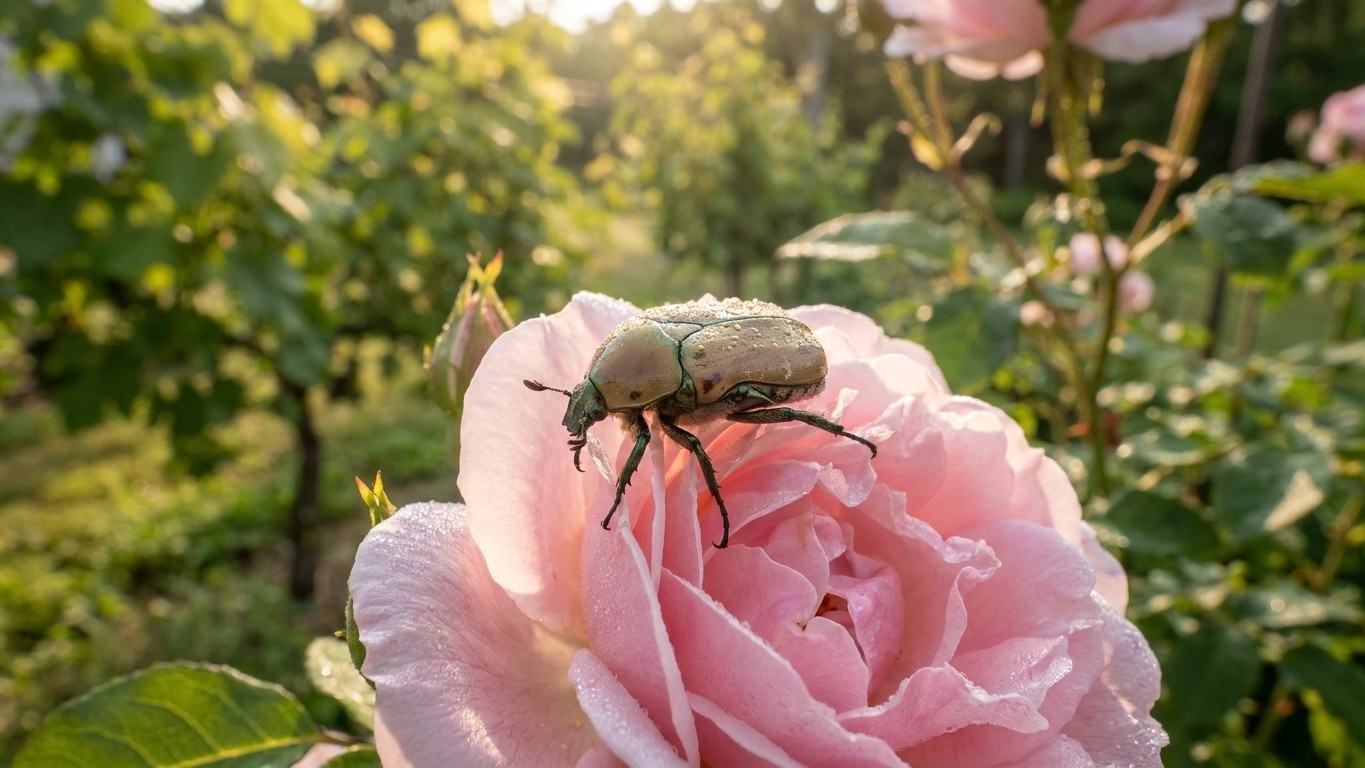

Roses do well across most of British Columbia’s coast, but the calendar and the plant list both shift once you leave the Lower Mainland. Plant bare-root or potted roses from mid-March through May, choose disease-resistant shrub or rugosa types where summers stay damp, and watch for aphids, spider mites, slugs and earwigs rather than the beetles gardeners further south worry about.
When to plant Roses in British Columbia
The reference point for coastal BC is the Vancouver Int’l A weather station, where Environment and Climate Change Canada puts the average last spring frost at March 18 and the average first fall frost at November 10, based on the 1981-2010 climate normals. That’s a mean date, not a promise. In roughly half of all years, frost arrives later than March 18 on the coast, so treat that date as the middle of a window rather than a green light. Move inland or uphill, into the Fraser Valley, the Okanagan, or anywhere near Prince George, and both frost dates shift, with spring frost lingering weeks longer and fall frost arriving weeks sooner. No single station speaks for the whole province.
Most home gardeners plant roses as bare-root stock or container plants rather than seed, and the safest window opens once the ground has thawed and can be worked, typically from mid-March on the coast through the end of May. Bare-root roses actually prefer to go in while still dormant, before leaves push out, so an earlier planting date inside that window beats a later one as long as you can still work the soil. Fall planting, from September into October, also succeeds in the milder coastal zones because the soil stays warm enough for roots to establish before winter, while the top growth stays dormant.
Growing roses from seed, usually collected from rose hips, is slower and less common, but if you want to try it the count-back arithmetic works the same way it does for other perennials. Rose seed needs a cold, moist stratification period of roughly ten to twelve weeks before it will germinate reliably, so many gardeners sow in a sealed bag of damp sand or peat in the refrigerator starting in early January, aiming to have seedlings ready to pot up by the time the last spring frost mean of March 18 has passed. Harden seedlings off over seven to ten days, moving them outside for a few hours at a time before leaving them out overnight, and don’t transplant into open ground until the real risk of a hard frost, not just the mean date, has clearly passed in your district.
Grafted roses need one more consideration at planting time: the bud union, the knobby joint where the top growth meets the rootstock, should sit an inch or two below soil level in colder interior gardens for winter protection, but closer to soil level on the milder coast where rot is the bigger risk.
Soil and site preparation
Roses want at least six hours of direct sun, and morning sun matters more than most gardeners assume, since it dries dew and overnight moisture off the leaves and cuts down on the fungal problems that thrive in BC’s damp coastal air. Pick a site with airflow around the plant rather than one tucked against a solid fence.
The ideal soil is a well-drained loam with a slightly acidic pH, somewhere in the 6.0 to 6.5 range, but few home gardens start there. Heavy coastal clay holds water long enough to rot roots, while fast-draining sandy soil on the interior dries out too quickly, so both benefit from generous organic matter worked in weeks ahead of planting rather than the same day. Spread two to three inches of compost or well-aged manure over the bed and dig it into the top eight to twelve inches of soil at least two to four weeks before you plant, giving it time to settle and start feeding the soil life rather than sitting as a raw layer around fresh roots.
Where drainage is genuinely poor, a raised bed six to eight inches high solves more problems than any amendment will. Dig the planting hole itself wide rather than deep, roughly twice the width of the root ball, so roots can spread outward into loosened soil instead of hitting a hard wall a few inches out.
Spacing depends on the type of rose more than any other single factor. Compact shrub roses and modern floribundas need three to four feet between plants to keep foliage from staying wet and crowded, hybrid teas can go slightly closer at two to three feet, and climbers need six feet or more of wall or trellis space to reach their full spread without competing for light.
Varieties that suit British Columbia
Two traits matter more than any others here: how a variety handles disease pressure in a wet coastal climate, and how well it survives cold in the interior valleys and higher elevations where winter dips much lower than Vancouver’s mild average. A third trait worth weighing is whether the rose grows on its own roots or on grafted rootstock, since own-root plants regrow true to type even after severe winter dieback, while a grafted rose that dies back to the ground often regrows as the rootstock instead.
Matching the rose to the region
Rugosa roses tolerate poor soil, salt spray, and damp air with little complaint, which makes them a strong pick for exposed coastal sites and gardeners who don’t want to spray. The Explorer and Parkland rose series, both bred through Canadian breeding programs aimed at surviving harsh prairie winters, grow on their own roots and shrug off cold that would kill a grafted hybrid tea, so they suit interior BC gardens where winter lows run well below what the coast ever sees. Modern disease-resistant shrub roses, widely sold under repeat-blooming shrub rose lines, handle black spot and powdery mildew better than older hybrid teas and need less spraying in a humid coastal summer. English-style shrub roses, prized for fragrance and full blooms, tend to need more attentive disease management and generally do better in the milder, better-ventilated coastal gardens than in damp, shaded interior yards.
| Type | Strength | Best fit |
|---|---|---|
| Rugosa roses | Disease and salt tolerance | Exposed coastal sites, low-spray gardens |
| Explorer / Parkland series | Cold hardiness, own-root recovery | Interior valleys, cold winters |
| Modern disease-resistant shrub roses | Repeat bloom, black spot resistance | Humid coastal gardens |
| English-style shrub roses | Fragrance, full form | Milder, well-ventilated coastal beds |
What to plant alongside
Some companion pairings for roses hold up under scrutiny, others are mostly garden folklore repeated without much evidence behind them. Catmint and lavender planted at the base of roses do genuinely earn their keep: both draw pollinators and beneficial insects, and their low, spreading habit shades the soil around rose roots, which helps keep moisture from evaporating as fast in a dry summer stretch. Alliums, including chives, garlic, and ornamental onions, are often planted near roses on the claim that their scent confuses aphids, but the evidence for that effect is thin and inconsistent. They’re worth growing nearby anyway simply because they don’t compete hard for the same nutrients and don’t share rose diseases, so there’s little downside even if the pest-confusion claim doesn’t fully hold up.
Marigolds get recommended constantly as an all-purpose companion, and while they do suppress certain soil nematodes in vegetable beds, there’s no solid evidence they do anything similar for roses specifically, so treat that pairing as unproven rather than confirmed.
What to avoid: don’t crowd roses against other heavy-feeding shrubs or perennials that will compete hard for the same water and fertilizer, since a stressed rose is far more vulnerable to black spot and aphids. Keep roses apart from other rose plants that already show black spot or powdery mildew, since planting susceptible varieties close together simply speeds up how fast a fungal problem spreads through the bed.
Watering, feeding and support
Established roses want deep, infrequent watering rather than frequent shallow sprinkles. A soak that delivers roughly an inch of water once or twice a week, adjusted upward during a dry summer stretch, encourages roots to grow down rather than staying shallow and vulnerable to drying out. Drip irrigation or a soaker hose at the base beats overhead sprinklers here, since wet foliage sitting overnight is exactly what invites black spot in a coastal climate that already delivers plenty of ambient humidity.
A two to three inch layer of mulch, kept a few inches back from the crown itself, holds soil moisture, keeps weeds down, and moderates soil temperature swings through the season. Feed with a granular rose fertilizer once new growth starts in spring after the first pruning, again lightly after the first flush of bloom fades to support the next round, and then stop feeding by late summer so the plant can slow down and harden its wood before fall frost rather than pushing tender new growth into the cold.
Pruning happens in late winter while the plant is still dormant: remove dead, damaged, or crossing canes, thin out crowded growth to improve airflow, and cut repeat-blooming types back by roughly a third to encourage strong new canes. Deadhead spent blooms through summer on repeat bloomers to push out the next flush, but stop deadheading in early fall so the plant can form hips and shift its energy toward hardening off rather than flowering.
Grafted roses send up suckers from the rootstock below the bud union, and those suckers look like ordinary rose growth but bloom differently or not at all, so pull or cut them off at the base as soon as you spot them rather than letting them draw energy from the grafted variety above. Climbers and tall standards need support tied in early, since a cane whipped around by wind through a wet coastal winter snaps far more easily than one already secured to a trellis or stake.
Common problems
Black spot and powdery mildew are the two fungal problems coastal BC rose growers run into most, driven by the same damp, humid conditions that make the region so good for growing almost everything else. Black spot shows up as dark, roughly circular spots on leaves that yellow and drop, working from the bottom of the plant upward, while powdery mildew coats new leaves and buds in a grey-white film that stunts growth and distorts blooms. Both spread faster on crowded, poorly ventilated plants with wet foliage, so the fixes are the same ones already covered above: water at the base, space plants for airflow, and remove fallen infected leaves from around the base rather than letting them sit through winter.
Among insect pests, aphids and spider mites appear on the pest list published by the University of Idaho and Washington State University extension services, and while that list comes from a neighboring US state’s extension office rather than a BC provincial source, both pests are genuine problems on roses on either side of the border. Aphids cluster on new growth and buds, sucking sap and leaving a sticky residue that can invite sooty mold, and a strong jet of water or an insecticidal soap knocks most infestations back without heavier chemical control. Spider mites show up as fine stippling on leaves and, in bad cases, faint webbing, and they tend to explode during hot, dry stretches, so regular watering and an occasional forceful hosing of the foliage undercuts them.
Slugs, also on that same extension list, chew irregular holes in young leaves and can strip an emerging shoot overnight, and they’re worse in the damp, mulched conditions roses actually prefer, so a ring of coarse grit or a beer trap near vulnerable young plants helps without resorting to broad pesticide use. Earwigs, listed alongside corn earworm on that pest roster, feed on rose petals themselves, leaving ragged holes in open blooms, and trapping them in rolled damp newspaper or a scrunched paper tube set near the base overnight, then shaking the catch out in the morning, controls them without spraying. British Columbia does not publish an equivalent province-wide home garden pest list, so for firm identification of anything unfamiliar on your own plants, a provincial agriculture office remains the better call than guessing from a neighboring state’s roster.
Ripening before the frost comes back
Roses don’t ripen fruit the way a tomato does, but the underlying question is the same: does the plant have enough frost-free time to get established and harden off before winter closes back in. On the coast, using the Vancouver Int’l A averages, that window runs 237 frost-free days between the March 18 mean last frost and the November 10 mean first frost. That’s a wide margin for an established rose, but a newly planted bare-root rose set out in spring is racing against a shorter effective clock, since it needs to grow a working root system, push several flushes of top growth, and then slow that growth down again before the cold returns, all inside one season.
No standardized “days to maturity” figure exists for roses the way it does for vegetable crops, and nothing in the published data here sets a firm number of weeks a given rose needs from planting to its first flush, so don’t expect one. What horticultural practice does support is this: most bare-root roses planted in the recommended March-to-May window produce at least a partial first bloom flush the same season, while own-root roses and slower-establishing shrub types often take a full second season before they reach the size and bloom count they’ll settle into for years afterward. That’s simply the tradeoff of starting on their own roots rather than a fast-growing graft.
If you’re gardening in a colder interior district where the effective frost-free window runs well short of the coastal 237 days, a few tools buy back time. Starting bare-root roses in large pots indoors or in an unheated garage a few weeks before your local last frost gives roots a head start before transplanting. A cold frame or simple cloche over a newly planted rose in a cold spring protects tender new growth during a late frost without delaying planting itself. Black plastic mulch laid down early warms the soil a few degrees faster than bare ground, which matters most in the coldest interior valleys where every extra week of root growth counts. Run this same math for your own district using your own frost dates rather than borrowing Vancouver’s, since a province this size is never one climate.
Harvest and end of season
Cut roses for the vase in the early morning while stems are still cool and fully hydrated, choosing buds that have just started to unfurl rather than ones fully open, since they’ll finish opening in water and last longer than blooms cut past their peak. Strip lower leaves that would sit in the water, change the water every couple of days, and a fresh cut roses in a cool spot away from direct sun and ripening fruit will typically hold for five to seven days.
Through summer, deadhead spent blooms on repeat-flowering types just below the first set of healthy leaves to push out another round of buds. Stop deadheading in early fall, roughly a month or so before the November 10 mean first frost, and let the last blooms fade into hips instead. That shift signals the plant to slow down and start hardening its new wood rather than continuing to push tender growth that a frost will simply kill back.
As that first fall frost date approaches, stop feeding entirely, reduce watering to match cooler soil, and mound extra mulch or soil over the base of grafted roses to insulate the bud union through winter, more heavily in interior gardens than on the mild coast. Leave seed hips on the plant rather than cutting them off, both for winter interest and because birds will work through them over the colder months. Cut back only the longest, most exposed canes on climbers and taller shrubs to reduce wind rock, and save the real structural pruning for late winter once the worst of the cold has passed.
Local help
Frost dates, soil conditions, and pest pressure all shift noticeably once you leave the coast, so a county-level or regional check matters more here than almost anywhere else in the province. The British Columbia Ministry of Agriculture and Food publishes regional guidance and can point you toward soil testing and local growing information for your specific district, and it’s worth a look before you commit to a planting date: British Columbia Ministry of Agriculture and Food.
Common questions
Can I plant roses in British Columbia in early March?
On the coast, early March usually still sits ahead of the mean last frost of March 18, so bare-root roses can go in since they’re dormant and tolerate a light frost, but hold off transplanting actively growing container roses until the frost risk has genuinely passed in your specific area.
Do roses need winter protection in British Columbia?
Coastal gardens rarely need more than a mound of mulch over the bud union, but interior valleys and higher elevations with harder winters benefit from mounding soil over the base of grafted roses and choosing own-root, cold-hardy varieties in the first place.
Why do my roses get black spot every summer?
Persistent black spot usually points to overhead watering, crowded plants with poor airflow, or fallen infected leaves left sitting around the base over winter, all of which are fixable without switching varieties, though a disease-resistant type reduces the pressure further.
Are the pests listed for this region accurate for British Columbia?
The pest list referenced here comes from University of Idaho and Washington State University extension services in a neighboring US state, not a BC provincial source, so treat it as a strong indicator of what crosses the border biologically rather than an official provincial list, and confirm anything unfamiliar with a provincial agriculture office.
How long before a new rose blooms well?
Many bare-root roses show a partial bloom flush the same season they’re planted, but own-root and slower shrub types often need a full second season to reach the bloom count they’ll hold in following years, and no standardized week-by-week timeline is published for this.