
December in California splits sharply by region. Along the coast and through Southern California, where no freeze occurs in an average year, gardeners keep planting cool-season crops straight through winter. In the Central Valley, the Sierra foothills and the north, frost is real and December is a dormant month built around pruning, soil work and bare-root planting. There’s no single December for a state that spans USDA hardiness zones 5a to 11a, the right answer depends on which California is under your boots.
What goes in the ground in December

Soil temperature and the local frost window decide what goes into the ground this month, not the date on the calendar. In coastal and Southern California, NOAA’s climate normals show no computable freeze normal for the region: zero days at or below 32°F recorded across 30 years of daily data, with a frost-free season listed at 365 days. December there is a genuine planting month, not a wind-down. Gardeners in these zones are limited by heat and drought most of the year, and that constraint flips once winter rain arrives, making it one of the easier months to get seedlings and transplants established.
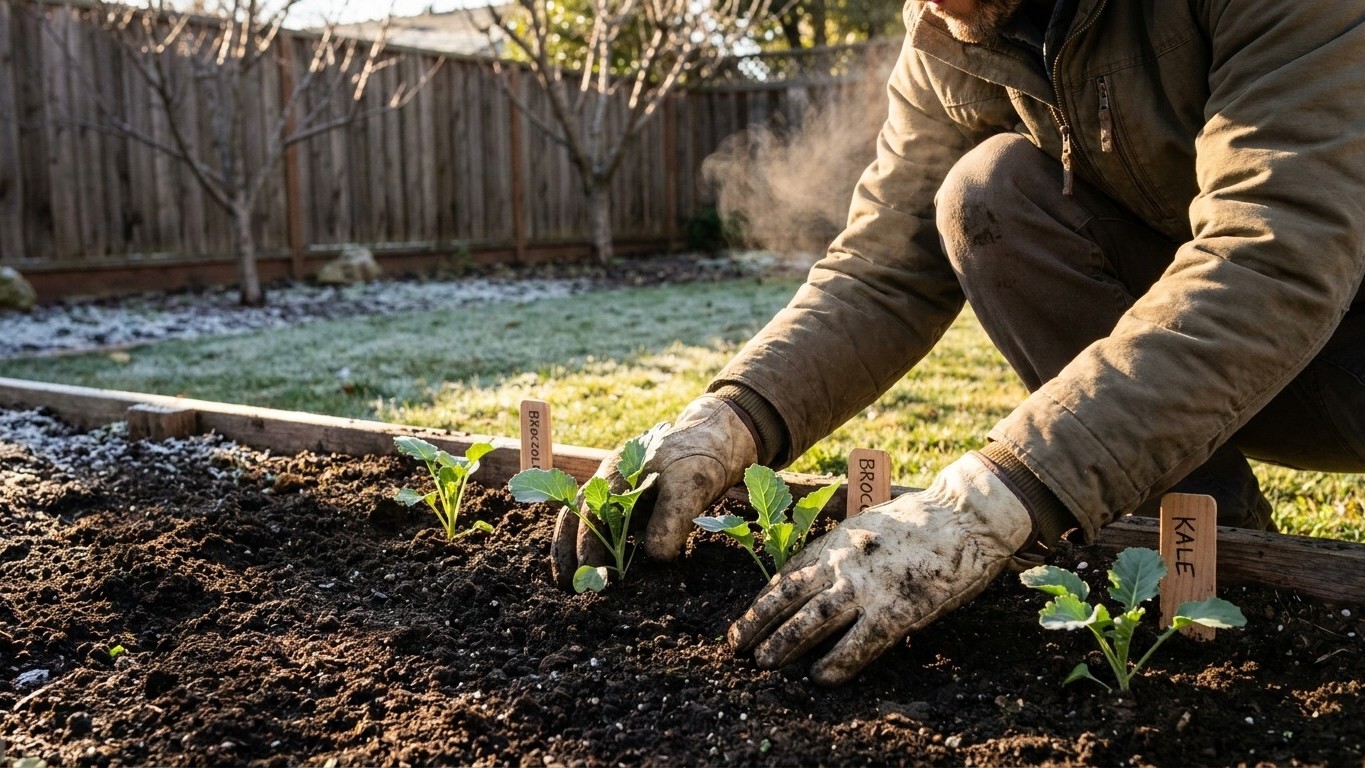
In frost-free areas, direct-sow lettuce, spinach, arugula, radishes and peas, and set out transplants of broccoli, cabbage, cauliflower and kale. Garlic, shallots and onion sets go in now for a summer harvest, and carrots, beets and turnips can still be direct-sown where soil stays workable.
Northern California, the Central Valley and the Sierra sit in cooler USDA zones and do freeze in a typical winter, so December there calls for more caution. In the coldest interior and mountain pockets, the honest answer is that nothing goes safely into open ground this month. What still works statewide, freeze zones included, is garlic and shallots planted where the ground hasn’t locked up, cold frames and low tunnels over hardy greens, and bare-root planting of roses, fruit trees, cane berries and dormant perennials, which December is built for.
What to start under cover
Seed-starting math usually runs backward from a frost date: figure out how many weeks a variety needs to reach transplant size, then count back from the average last frost. That arithmetic doesn’t apply along the coast and through Southern California, because there’s no computable freeze normal there to count back from. Growers in those zones work from soil temperature and day length instead: tomatoes, peppers and eggplant started under cover now are timed to hit transplant size once nights warm in spring, not to dodge a frost that isn’t coming.
For Northern California, the Central Valley and the Sierra, where freezes do happen, a single average last-frost date for the interior isn’t published in the data behind this page. Elevation and cold-air drainage move it by weeks from one valley to the next, which is exactly why the local county extension office is the source to check rather than a statewide figure.
What holds everywhere is the two ways this goes wrong. Start too early under December’s short, weak light and seedlings stretch, go leggy and become rootbound before they ever see the garden. Start too late and there aren’t enough weeks of decent growing weather left to size plants up before they’re needed outside. December under cover is mostly for onions and leeks from seed, which need eight to ten weeks before transplanting, plus early brassicas and anything destined for a cold frame.
What is ready to pick
Citrus carries the harvest in frost-free California this month. Navel oranges, mandarins and lemons ripen through winter, and the test isn’t the calendar but the fruit itself: ready citrus should have full color and give slightly to a squeeze, since it won’t ripen further once picked. Alongside that, fall-planted lettuce, kale, chard, broccoli and carrots are maturing fast in the cool, wet conditions coastal and Southern California get this time of year.
Further north and at elevation, December harvests thin out considerably. Overwintering kale and leeks can still be pulled from the ground even under snow cover in the coldest pockets, and cold-frame greens keep producing where they’ve been protected. Indoors, sprouts and microgreens fill the gap when nothing outside is ready.
Wherever crops went into storage earlier in the season, December is the month to check them. Winter squash, potatoes and onions should be inspected regularly: a soft spot, a sweet smell or a shriveled patch means that item needs to be used or composted before it spreads rot to the rest of the batch.
The jobs that matter this month
Dormant pruning of fruit trees and cane berries is the headline job across the freeze-prone parts of the state. Pruning now, while trees are leafless and sap isn’t flowing, cuts disease risk and shapes the tree before spring growth starts. In frost-free zones, citrus pruning is lighter and timed more around removing dead wood than shaping for dormancy.
Seed catalogs move fast in December, and ordering now beats losing a popular tomato or pepper variety to a sellout in late winter. It’s also the natural month to sketch next season’s rotation, since beds are bare or nearly so and it’s easier to see the whole layout without a season’s growth in the way.
Soil testing and amending pays off more now than at almost any other point in the year, because amendments like lime or compost need weeks to break down and adjust pH before spring planting. Turning the compost pile keeps it active through the cool months instead of stalling. Tools benefit from a real cleaning and sharpening while they’re not in daily use, and any bed frames, trellises or fencing that took a beating over the growing season are easier to repair now than in the rush of spring.
Given the state’s ongoing water restrictions in many districts, December’s rain is also the moment to check or set up rain catchment, since every gallon collected now reduces the pressure on irrigation later. And checking stored crops for the first sign of rot, covered above, belongs on this list too: it’s a five-minute job that prevents a much bigger loss.
What not to do in December
A run of warm, sunny days in Southern California can trick gardeners into treating December like spring. Planting tomatoes, peppers or basil into soil that’s still cold from winter nights sets them back badly even where the air feels mild, because root growth depends on soil temperature, not air temperature. Wait for a genuine warming trend in the soil, not a single sunny weekend.
In the Central Valley and northern counties, the classic mistake runs the other way: uncovering cold frames or removing row cover after a mild stretch, only to have a freeze move back in and hit newly exposed plants hard. Keep protection in place until the pattern, not just the last few days, has turned reliably milder.
Fertilizing at the wrong point in the season causes trouble in both regions. Feeding citrus or roses heavy nitrogen in December pushes soft, tender new growth right when a cold snap is most likely to damage it in the interior, and it’s largely wasted on dormant plants anywhere else. Hold off on nitrogen until growth is actively resuming, and let this month’s work stay focused on soil, structure and protection instead of feeding.
Checking this against your own county
A statewide December is a starting point, not an instruction. California’s elevation range, its coastal fog belt and the gap between its northern and southern halves can shift these windows by weeks in either direction, and a hardiness zone system built on one variable, the average annual extreme minimum temperature, can’t capture all of that on its own. Before acting on any of this, check it against the University of California’s cooperative extension network at ucanr.edu, which breaks recommendations down by county and can flag local frost risk that a statewide page can’t.
Common questions
Does it ever frost in California in December?
Along the coast and through Southern California, no: the climate data shows no computable freeze normal there, with zero days at or below 32°F over 30 years of records. Northern California, the Central Valley and the Sierra are a different story and do experience freezes in a typical winter.
Can I still plant vegetables in December in California?
In frost-free coastal and Southern California, yes, leafy greens, alliums, peas and root vegetables can all still go in. In the colder interior and mountain regions, planting options narrow mostly to garlic, shallots and anything protected under a cold frame or low tunnel.
What fruit is ready to harvest in California in December?
Citrus is the standout: navel oranges, mandarins and lemons ripen through the winter months in frost-free zones. Check for full color and a slight give when squeezed, since citrus doesn’t continue ripening after it’s picked.
Why does California have such a wide hardiness zone range?
The state’s USDA Plant Hardiness Zones run from 5a to 11a, reflecting the huge swing in average annual extreme minimum temperature between low desert and coastal areas and the high Sierra. That range is exactly why a single statewide planting date doesn’t work and local extension guidance matters more here than in most states.