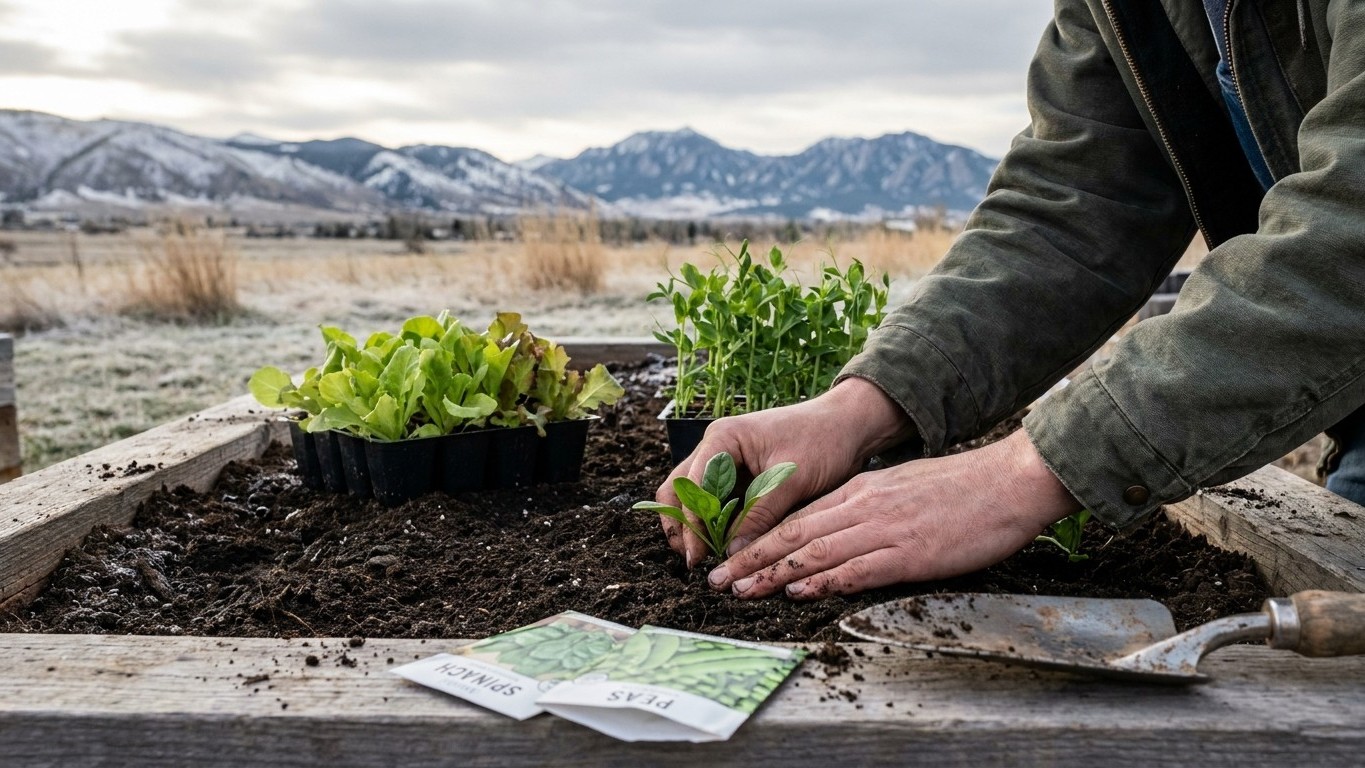

In April, most of Colorado is still weeks away from safe planting for tender crops. The Denver area’s last spring frost falls between May 1 and May 11, so this month belongs to hardy greens, alliums, peas, and indoor seed-starting rather than tomatoes and peppers in open soil.
What goes in the ground in April

Soil temperature decides what survives this month, not the date on the calendar. Cold, wet ground stunts roots and invites rot even when the air feels warm on a sunny afternoon. Since the Denver area’s last frost window runs May 1 to May 11, April sits squarely inside frost risk across the plains, and higher elevations run behind that even further.
What handles it: spinach, lettuce, arugula, and other leafy greens shrug off a light frost and germinate in soil that’s still on the cool side. Peas go in as soon as the ground can be worked, since they actually prefer cool starts. Onion sets, shallots, and any garlic that missed a fall planting can still go into open beds. Potatoes can go in toward the back half of the month in workable soil, though a late cold snap means covering the rows if shoots emerge early.
What’s a gamble: tomatoes, peppers, squash, beans, and other warm-season crops. Setting these out in April, even under a warm afternoon sky, risks a hard stop the next morning. The USDA Plant Hardiness Zone Map places the state across zones 3b to 7b, built on average annual extreme minimum temperatures, and Denver itself sits in the milder end of that range. Mountain towns and high valleys run colder and shorter seasons, sometimes seeing frost into July, while the western slope follows its own separate rhythm.
Cold frames and low tunnels buy real ground time this month. A simple hoop of row cover over a bed can push soil temperature up several degrees and let a gardener sneak lettuce or spinach in two to three weeks earlier than open ground allows. This is also the window for bare-root fruit trees, roses, and perennials, planted while they’re still dormant and before leaves break.
What to start under cover
Seed starting works backward from the frost window, not forward from a fixed date. With the last frost falling between May 1 and May 11 in the Denver area, tomatoes, peppers, and eggplant, which typically need six to eight weeks indoors before transplanting, should already be started or going in now to be ready by early May. Wait past mid-April to start these and the transplants may still be small when the ground finally warms.
Cucumbers, squash, and melons need less lead time, usually three to four weeks, so they can wait until later in the month without falling behind. Starting them too early just means fighting rootbound, leggy seedlings stuck indoors waiting for warm soil that isn’t ready yet.
Cool-season crops benefit from a head start under cover too. Broccoli, cabbage, and other brassicas started indoors now can be hardened off and moved to the garden well before the frost window closes, giving them a jump on the heat that stresses them later.
The two failure modes worth naming plainly: starting too early leaves a gardener with tall, weak, rootbound plants stretching for light on a windowsill, while starting too late means transplants go into the ground stunted and never catch up before summer heat arrives. Counting back from the local frost date, rather than from a habit or a calendar page, is what keeps the timing honest.
What is ready to pick
April is a lean month in the open garden across most of the state. Little that’s freshly planted has had time to mature, so the honest answer is that outdoor harvests are thin.
What still comes out of the garden: any kale, spinach, or leeks that overwintered under mulch or snow cover often bounce back with tender new growth as soon as the ground softens, and this regrowth is usually sweeter than fall-grown leaves because cold exposure converts starches to sugars. Cold frames planted in late winter may already be yielding baby lettuce and spinach thinnings. In warmer pockets and lower elevations, early asparagus spears can start pushing through by late April, though at higher elevations and on the plains this often runs into May instead.
Indoors, sprouts and microgreens fill the gap for households wanting fresh greens without waiting on the garden. A tray of pea shoots or radish microgreens on a counter takes one to two weeks from seed to harvest, regardless of what’s happening outside.
This is also the month to check stored crops before they turn. Potatoes sitting in a dark, cool spot should be firm; any that have gone soft, sprouted heavily, or developed a green tinge need to be pulled and composted. Squash stored since fall can develop soft spots near the stem end, a sign it’s breaking down from the inside. Onions that feel spongy or have started growing green shoots from the top are past their prime and worth using immediately rather than storing further.
The jobs that matter this month
April carries a full list of tasks that pay off only if they happen now, before growth accelerates and the window closes.
Pruning, soil, and structure
Dormant pruning of fruit trees and cane berries needs to wrap up before buds break; cutting into active growth stresses the plant and invites disease. Soil testing and amending should happen now too, since compost and amendments need weeks to integrate before planting begins in earnest. Turning the compost pile speeds decomposition right when the garden will need finished compost most.
Ordering, planning, and prep
Seed catalogs sell out of popular varieties fast, so any ordering that hasn’t happened yet is running against the clock. This is also the month to finalize crop rotation plans, since deciding where tomatoes went last year (and where they shouldn’t go again) only matters if it’s settled before beds fill up.
Physical prep matters just as much: cleaning and sharpening tools, repairing raised beds and fencing before plants are in the ground to get tangled in, and checking irrigation lines for winter cracks before the watering season starts. Staking material for peas and early climbers should go in now, before vines sprawl and staking becomes a wrestling match. Succession sowing of quick greens like radishes and lettuce, spaced a couple weeks apart, keeps a steady harvest coming instead of one glut followed by a gap. Pest scouting starts now too; aphids and flea beetles show up early on the first tender greens, and catching them on a handful of plants is far easier than treating an infestation later.
What not to do in April
The classic mistake this month is planting warm-season crops into cold soil because the air felt warm for an afternoon or two. A 70-degree day doesn’t mean the soil six inches down has caught up, and tomatoes or peppers set out too early often just sit stalled, or worse, get nipped when temperatures drop back overnight. Checking soil temperature with a simple probe thermometer beats guessing from the air.
Uncovering beds too early after a mild stretch is another common error. A few warm days followed by a return to frost is normal for this stretch of spring, and pulling row covers or mulch off too soon exposes tender growth right when a cold snap circles back. Given that the Denver area’s frost window runs into early May, patience with covers costs nothing and protects weeks of work.
Feeding nitrogen too heavily too early is a quieter mistake. Applying nitrogen-rich fertilizer before plants have real root systems established pushes soft, leafy growth that’s more vulnerable to both cold and pests. Better to wait until plants show active growth and can actually use the nutrients, rather than force growth the season can’t yet support.
Working wet soil rounds out the list. Turning or tilling ground that’s still soggy from snowmelt compacts it, squeezing out the air pockets roots need. Waiting a few extra days for soil to dry to a crumbly texture is worth more than the days saved by rushing in.
Checking this against your own county
A statewide month is a starting point, not an instruction. Elevation alone can shift frost windows by weeks: a garden at 5,280 feet in the Denver area follows a different clock than one in a high mountain valley or on the western slope, where growing seasons run shorter and colder. The 3b to 7b hardiness range spans a wide gap, and the right answer for one county can be off by a month for another.
For local frost data, soil conditions, and variety recommendations tuned to a specific area, the Colorado State University Extension is the resource built for exactly that kind of adjustment.
Common questions
Is it safe to plant tomatoes outdoors in Colorado in April?
No, not in most of the state. The Denver area’s last spring frost falls between May 1 and May 11, and tomatoes set out before that window closes risk frost damage or death. Start them indoors now instead and transplant after the frost date passes locally.
What vegetables can handle a late frost in April?
Spinach, lettuce, kale, peas, radishes, and onions all tolerate light frost and can go into open ground this month. These crops actually grow better in cool soil than in the heat that arrives later in the season.
Why does elevation matter so much for planting dates in Colorado?
Higher elevations stay colder longer into spring and see frost return earlier in fall, compressing the growing season. A mountain town can still see frost in July even as the plains have moved well past their last frost date, so a single statewide date never fits every garden.
When should fruit tree pruning finish in April?
Pruning should wrap up before buds break and active growth starts. Cutting into a tree once it’s pushing new leaves stresses the plant and opens it to disease, so this is one of the firmer deadlines on the April task list.