
Flea beetles wake up in Colorado when soil temperatures climb into the 50s, which typically happens between mid-April and early May along the Front Range, and closer to late May in higher-elevation mountain towns. They target brassicas first: arugula, radish, cabbage, and kale seedlings still soft from transplanting. The fix that actually works is a combination of timing your planting to dodge the first wave, using floating row covers until plants toughen up, and treating soil-borne larvae with beneficial nematodes if last year’s damage was severe.
When Flea Beetles Show Up in Colorado

Colorado’s patchwork of elevations means flea beetle emergence isn’t a single date, it’s a moving target tied to soil warmth. In Denver, Colorado Springs, and Pueblo, adults typically crawl out of winter hiding spots in garden debris and topsoil once daytime temperatures hold steady in the 60s, usually the last two weeks of April. Grand Junction and the Western Slope, with their earlier springs and warmer soil, often see activity by early April. Mountain valleys like Steamboat Springs or Leadville push the timeline back a full month or more, sometimes not seeing beetles until late May or early June.
The insects overwinter as adults, tucked under leaf litter, mulch, or the top inch of undisturbed soil near where host plants grew the previous year. That’s why a garden bed that had flea beetle trouble last summer is almost guaranteed to have them again this spring, often before the first true leaves on your seedlings even unfurl. In most of Colorado, the beetles produce one generation per year, though warmer pockets on the Western Slope occasionally squeeze in a partial second generation by late summer.
A hard freeze doesn’t wipe them out the way you’d hope. Adult flea beetles are built for cold survival, and Colorado’s dry winters, low humidity, minimal snowpack in many years, actually help them persist rather than hurt them. Moisture is what kills overwintering insects, and the state’s semi-arid climate simply doesn’t deliver much of it.
Regional Timing at a Glance
Front Range gardeners should expect first activity mid-to-late April. Western Slope growers, especially around Grand Junction and Montrose, often see beetles two to three weeks earlier. High country gardens above 7,500 feet get a reprieve until late May, sometimes June, simply because the ground takes longer to lose its winter chill.
How to Tell It’s Flea Beetles and Not Something Else
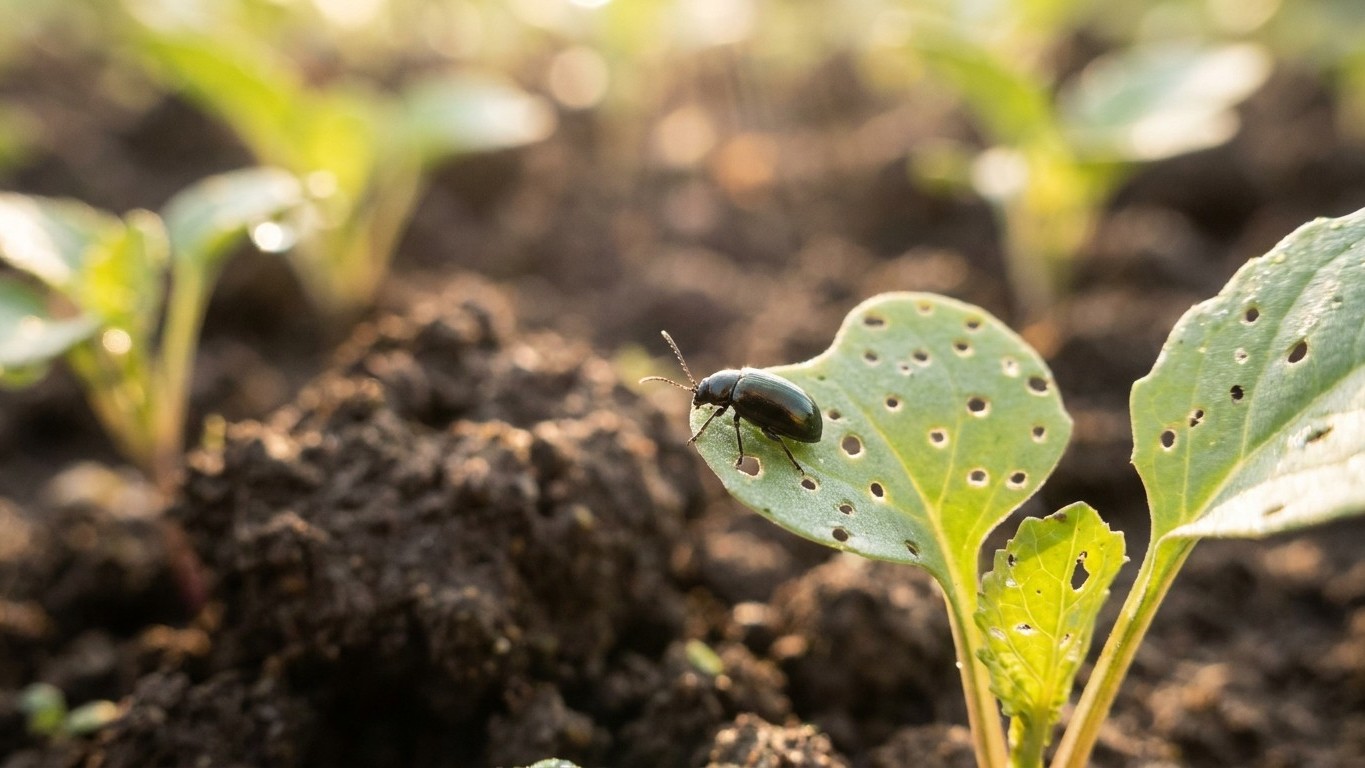
The signature damage is small, round or irregular holes scattered across leaves, sometimes described as looking like the plant got hit with buckshot. On radish and arugula leaves, the holes can be so dense the leaf looks like lace. The beetles themselves are tiny, roughly 1/16 to 1/8 inch long, shiny black or dark bronze, and they jump the instant you get close, which is where the name comes from. Some Colorado populations, particularly the striped flea beetle, show pale yellow stripes down the back.
Seedlings and young transplants take the worst hit because they have less leaf surface to spare. A mature cabbage plant can shrug off flea beetle feeding with barely a cosmetic mark, but a two-week-old radish sprout can be stunted or killed outright if beetle numbers are high. Eggplant and potato are also frequent targets in Colorado gardens, and tomato seedlings occasionally show damage, though tomatoes are less preferred than true brassicas.
There’s a second, less visible stage of damage that gardeners often miss. Flea beetle larvae live in the soil and feed on roots, particularly of radish, turnip, and other root brassicas. This shows up as scarring or tunneling on the root itself, not the leaves, and it’s one reason a radish crop can look fine above ground but come out of the soil pitted and unmarketable.
If you’re unsure whether it’s flea beetles or another culprit, check the timing and the pattern. Flea beetle holes are small and numerous, appear early in the season on cool-weather crops, and the insects themselves are visible if you tap the plant, since they’ll jump away instantly. Larger, ragged holes usually point to cabbage loopers or slugs instead.
What Actually Stops Flea Beetles in a Colorado Garden
Timing your planting is the single most effective, lowest-cost defense. Delaying brassica seeding by even two to three weeks past the typical local emergence window means seedlings emerge with sturdier leaves by the time beetle pressure peaks, and they tolerate feeding far better than a plant that’s barely got its first leaf. This matters more in Colorado than in milder climates because the short growing season tempts gardeners to plant brassicas as early as possible, right into the beetles’ peak activity window.
Floating row covers, the lightweight fabric sold at most garden centers, physically block adult beetles from reaching seedlings. They need to go on at planting time, before beetles arrive, and get sealed at the edges with soil or stakes since flea beetles will find any gap. Covers come off once plants are established enough to tolerate some feeding, or when flowering crops need pollinator access.
Diatomaceous earth, dusted on dry leaves, damages the beetles’ exoskeletons and works well in Colorado’s low-humidity climate since the powder stays effective longer than it would in a humid region where it clumps and washes away. Reapplication after watering or rain is necessary, but Colorado’s dry summers mean that’s less often than gardeners in wetter states deal with.
For heavier infestations, insecticidal soap or spinosad-based products give faster knockdown than physical methods alone. Spinosad, derived from soil bacteria, is approved for organic use and breaks down quickly in sunlight, which fits Colorado’s intense high-altitude UV exposure. It’s most effective applied in early morning or evening when beetles are actively feeding and before UV degradation kicks in.
Dealing With the Soil-Dwelling Larvae
If root damage has been a recurring problem, beneficial nematodes applied to the soil in early spring target flea beetle larvae before they mature into next season’s adult population. This is a longer-term strategy, since results show up the following year rather than immediately, but it addresses the part of the life cycle that sprays and covers can’t touch.
Reducing the Chance They Come Back Next Year
Crop rotation matters more in Colorado’s compact growing season than gardeners often assume. Moving brassicas to a different bed each year, ideally not returning them to the same spot for three years, disrupts the beetles’ habit of emerging right next to last year’s food source. In small urban lots this isn’t always practical, but even rotating within raised beds or containers helps.
Clearing garden debris in fall, rather than leaving spent plants to overwinter in place, removes the shelter flea beetles rely on to survive Colorado’s cold, dry winters. This is a small task with outsized payoff: a clean bed in October means fewer beetles waking up six inches from your spring seedlings in April.
Trap cropping works surprisingly well against flea beetles specifically. Planting a border of radish or mustard greens, both intensely attractive to flea beetles, around the perimeter of a bed pulls beetles toward the sacrificial crop and away from the main planting. Gardeners in Fort Collins and Boulder have had good results using this alongside row covers, treating the trap crop with insecticidal soap while leaving the main crop untouched.
Healthy, vigorous transplants started indoors and moved out once they have several true leaves tend to outpace beetle damage entirely, compared to direct-seeded crops that spend their most vulnerable days right in the ground during peak emergence. For a state with a growing season that’s already tight, giving seedlings a head start indoors, then hardening them off before transplant, sidesteps a good chunk of the problem without any spraying at all.
One detail Colorado gardeners sometimes overlook: yellow sticky traps placed at plant height, not staked above the canopy, double as an early warning system. Because flea beetles are attracted to yellow, a few strategically placed traps checked weekly can flag an emerging population before visible leaf damage shows up, giving enough lead time to get row covers on or apply treatment before the worst of the feeding starts.
Related guides
- Flea beetles in Wyoming: When It Shows Up and What Stops It
- Flea beetles in Utah: When It Shows Up and What Stops It
- Flea beetles in Maryland: When It Shows Up and What Stops It
- Flea beetles in Michigan: When It Shows Up and What Stops It
- Flea beetles in Pennsylvania: When It Shows Up and What Stops It
- Flea beetles in South Dakota: When It Shows Up and What Stops It